

PROTECT YOUR DNA WITH QUANTUM TECHNOLOGY
Orgo-Life the new way to the future Advertising by AdpathwayFederal investigators say the officer had recently returned to duty after a stroke and heart failure diagnosis, highlighting gaps in return-to-work medical clearance
March 16, 2026 10:21 AM •
MONTGOMERY COUNTY, Md. — A NIOSH LODD investigation highlights how gaps in medical clearance policies and communication procedures can intersect with the already high physical demands of fireground operations.
The 46-year-old lieutenant had recently returned to duty after a serious medical event that included hospitalization, a stroke diagnosis and newly identified congestive heart failure. He was back on shift and serving as a driver/engineer when he collapsed during exterior operations at the scene.
| SURVEY: Take the newest What Firefighters Want survey focused on training
The report makes clear that this was not only a medical emergency that unfolded in front of crews. It was also a department systems issue involving return-to-duty procedures, shift coverage practices and fireground communication. For fire service leaders, the death is a stark reminder that administrative gaps can carry operational consequences. When a firefighter returns after a significant illness or injury without a formal evaluation tied to the actual demands of the job, departments may be exposing that member and everyone around them to preventable risk.
Incident overview
A 46-year-old fire lieutenant serving as a driver/engineer collapsed and later died while operating at a residential structure fire in Maryland. The incident occurred Jan. 11, 2025, during the lieutenant’s second shift back after several months away from work due to a medical event.
Investigators found that the officer collapsed shortly after throwing ladders and performing exterior tasks on the fireground. Despite immediate resuscitation efforts by firefighters and paramedics, he never regained a pulse and was pronounced dead at the hospital.
The investigation identified medical, administrative and communication factors that contributed to the incident, including the absence of a return-to-work medical evaluation after the lieutenant’s recent hospitalization and newly diagnosed heart condition.
Key investigation findings
One key finding involved the lieutenant’s medical history and the absence of a return-to-duty evaluation. The officer had suffered a stroke in October 2024 and was newly diagnosed with congestive heart failure during his hospitalization. Instead of taking formal medical leave, he used the department’s shift substitution policy to cover missed shifts. Because he did not return through the medical leave process, no return-to-work physical was conducted by a department physician familiar with firefighting duties.
Investigators noted that heart failure can increase the risk of sudden cardiac death and may require duty restrictions under fire service medical standards. Without a formal evaluation prior to returning to operational duties, the department missed an opportunity to assess whether the lieutenant could safely perform the strenuous tasks associated with firefighting.
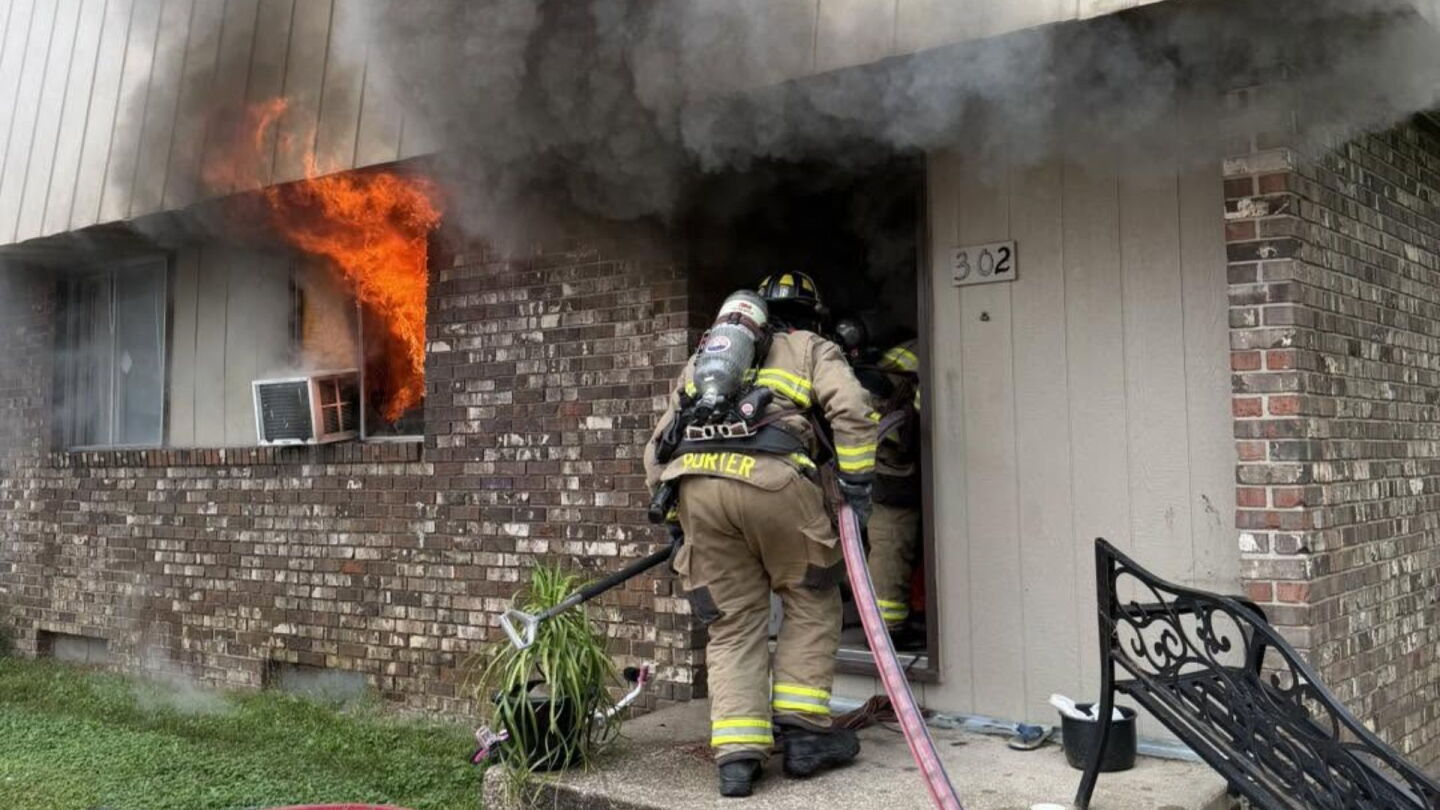
The incident itself unfolded rapidly after the first-arriving chief established command at a split-level home with heavy fire in the carport extending into the first floor. The lieutenant, assigned as the driver of a tower ladder, began performing exterior tasks including throwing ground ladders and stretching a hoseline. Minutes later, a firefighter from a nearby engine company saw him collapse face down after throwing a ladder to the second story.
Firefighters initially suspected the lieutenant had slipped due to snowy conditions at the scene. Crews quickly called for advanced life support and moved him closer to the roadway so paramedics could access him with a stretcher. He was found unresponsive, not breathing and pulseless. Paramedics initiated CPR and advanced cardiac life support, including defibrillation for ventricular fibrillation, but he remained in cardiac arrest during transport and at the hospital.
The investigation also highlighted communication challenges on the fireground. The request for advanced life support over the radio was not acknowledged by EMS units, though paramedics ultimately responded after observing the emergency. NIOSH concluded that clear communication between mutual aid companies is essential to ensure critical radio traffic is heard and understood during rapidly evolving incidents.
Recommended department actions
- Require a return-to-duty evaluation by a physician who understands firefighting demands. That helps departments identify whether a member can safely resume full operational work under NFPA 1582.
- Review shift substitution and leave policies so medical clearance cannot be bypassed. Administrative workarounds should not replace a formal fitness-for-duty process.
- Strengthen radio discipline and acknowledgment procedures on mutual aid incidents. Clear emergency communications support faster recognition and response when a firefighter goes down under NFPA 1561.
- Coordinate post-incident procedures with automatic aid partners for firefighter medical emergencies and line-of-duty deaths. Clear expectations help departments manage operations, scene control and member welfare during high-stress events.
Training room discussion questions
- How does your department ensure firefighters receive proper medical clearance before returning to duty after significant illness or injury?
- What procedures are in place to guarantee that emergency radio traffic is acknowledged and acted upon immediately?
- Could current scheduling or shift-trade policies in your department allow a firefighter to bypass required medical evaluations?

Three people were killed and nine others, including five firefighters, were injured in a four-alarm fire in Queens
March 16, 2026 04:39 PM
·

Commissioner Lillian Bonsignore, the first former EMT to lead the FDNY, reflects on the department’s uneasy 1996 merger with EMS

Advocates and lawmakers warn staffing shortages at the World Trade Center Health Program are causing treatment delays for sick 9/11 responders and survivors

A Boston firefighter suffered cardiac arrest during a fire in Hyde Park

$50,000 in fire department grants and 350 pancake breakfast fundraiser kits will be awarded

Bill Carey is the associate editor for FireRescue1.com and EMS1.com. A former Maryland volunteer firefighter, sergeant, and lieutenant, Bill has written for several fire service publications and platforms. His work on firefighter behavioral health garnered a 2014 Neal Award nomination. His ongoing research and writings about line-of-duty death data is frequently cited in articles, presentations, and trainings. Have a news tip? He can be reached at [email protected].


















 English (US) ·
  French (CA) ·