

 3 weeks ago
19
3 weeks ago
19
PROTECT YOUR DNA WITH QUANTUM TECHNOLOGY
Orgo-Life the new way to the future Advertising by AdpathwayThe National Marine Fisheries Service has opened a public comment period on an application from BBC Natural History and Factual Productions Ltd. to film gray seals at Monomoy Island off Cape Cod, Massachusetts, using both ground crews and drones. Written comments are due on or before October 8, and the agency published the notice in the Federal Register on Tuesday, September 8.
The application seeks a 15-month permit for what the agency describes as "commercial and educational photography on pinnipeds" for a documentary series. Under the terms laid out in the notice, up to 1,000 gray seals could be harassed during ground-based and uncrewed aircraft system filming and behavioral observations. Smaller numbers of three other species could be affected incidentally: up to 23 hooded seals, up to 23 harp seals and up to 23 harbor seals may be unintentionally harassed, observed and opportunistically filmed.
For Cape Cod residents, commercial fishermen and the summer economy built around Chatham and the outer beaches, this is a rare formal opening. Federal decisions about who may approach the region's seal colonies, and how closely, are usually made without much public visibility. This one carries a deadline and an email address.
Inside the Application the Agency Posted for Review
The filing is administratively modest and substantively specific. It runs a single page in the Federal Register, carries agency docket number RTID 0648-XG024, and was signed by Larissa Plants, deputy director of the Office of Protected Resources at the National Marine Fisheries Service. The named responsible party for the applicant is Briony Jones, at the company's offices in Bristol, England.
Authority comes from the Marine Mammal Protection Act and the regulations governing taking and importing of marine mammals. The agency has forwarded copies of the application to the Marine Mammal Commission and its Committee of Scientific Advisors, which is standard practice for permits of this kind.
One access detail deserves attention. The application and related documents are not posted online. The notice states they are available for review upon written request by email. A resident who wants to read what the production company actually proposed, rather than the summary, has to ask for it first and then comment before the deadline.
Harassment Under Federal Law Is Not the Same as Injury
The word "harassment" in these notices routinely alarms readers, but the statutory meaning is narrower than the everyday one.
Under the Marine Mammal Protection Act, the second tier of harassment covers acts that have the potential to disturb a marine mammal by disrupting behavioral patterns, including migration, breathing, nursing, breeding, feeding, or sheltering. A drone flying low enough to make a hauled-out group lift their heads, shift position, or flush into the water would fall within that definition. No injury is required, and none is proposed here.
That framing matters for how readers should interpret the figure of 1,000 animals. It is an authorized ceiling on disturbance events across 15 months. It is not a prediction of harm, and not a count of animals expected to be hurt. The number is large because gray seal haul-outs are large and because a single drone pass over a beach can affect many animals at once.
A Categorical Exclusion Skips the Deeper Environmental Review
The notice includes a line that carries real procedural weight. The agency has made an initial determination that the proposed activity is categorically excluded from the requirement to prepare an environmental assessment or an environmental impact statement under the National Environmental Policy Act.
A categorical exclusion is a finding that a class of actions does not individually or cumulatively have a significant effect on the environment, so the fuller analysis is not triggered. It is a routine and lawful mechanism used across federal agencies. It also means the public comment period, rather than a published environmental analysis, is the main formal channel for raising concerns about drone altitude, flight frequency, pupping-season timing or cumulative disturbance from multiple permitted operators working the same beaches.
Anyone who believes those questions warrant more scrutiny can also request a public hearing. The notice specifies that such a request must be in writing and must set out the specific reasons a hearing would be appropriate. A general objection will not meet that standard.
Monomoy Sits at the Center of a Long Cape Cod Argument
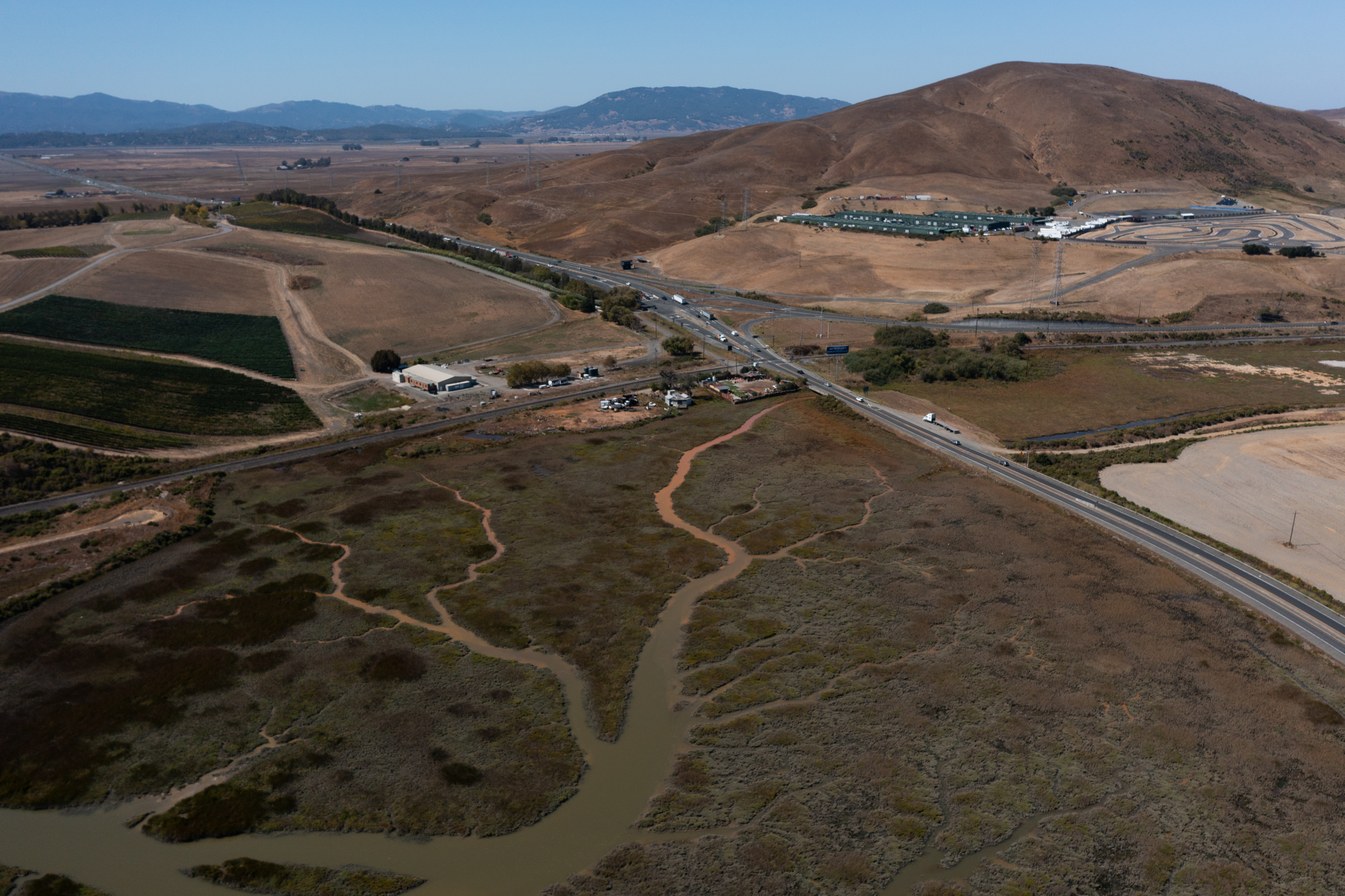
Monomoy is a shifting barrier island system south of Chatham, and it is one of only four established gray seal pupping colonies in U.S. waters, alongside Muskeget Island in Massachusetts and Green and Seal Islands in Maine.
That colony exists because the species recovered. Gray seals were hunted for bounty in New England waters into the late 1960s, a period that federal scientists say may have severely depleted the U.S. stock, and NOAA attributes the subsequent recolonization of northeastern pupping sites in large part to protection under the Marine Mammal Protection Act of 1972.
The recovery is not universally celebrated locally. Commercial fishermen have argued for years that seals damage gear and compete for catch. Beachgoers and town officials weigh the seals against the white sharks that follow them inshore. Conservation groups point to the colony as one of the clearer successes in American wildlife law. A documentary crew arriving with drones lands squarely in the middle of that dispute, which is part of why the comment period is worth flagging to residents rather than treating as paperwork.
Readers considering a comment should be specific and factual. Comments that identify concrete conditions, such as minimum drone altitude, buffer distances, seasonal restrictions around pupping, or limits on repeat flights over the same haul-out, are more useful to agency staff than general support or opposition. Comments become part of a public docket, and personal information included in the text or attachments may be publicly viewable.
Filing a Comment Before the October Deadline
Comments go by email to the Office of Protected Resources, and the agency asks that File No. 29915 appear in the subject line so the submission is routed correctly. The same address handles requests to review the application and requests for a public hearing. Agency staff listed for questions are Sara Young and Jennifer Skidmore, reachable by telephone at the Office of Protected Resources.
Background on how these authorizations work is available through NOAA Fisheries' pages on marine mammal and sea turtle research permits and on the NOAA Fisheries guide to the statute. The complete filing appears in the Federal Register as a notice of receipt of application, with an official printed version posted by the Government Publishing Office.
What happens next is not yet fixed. After the comment period closes, the agency may issue the permit, issue it with added conditions, deny it, or hold a hearing first. No decision date has been announced, and the notice does not commit the agency to one. Nothing in the filing indicates when filming would begin if the permit is granted.
What Readers Want to Know
What is being proposed? BBC Natural History and Factual Productions Ltd. has applied for a 15-month federal permit to film gray seals at Monomoy Island off Cape Cod for a documentary series, using ground-based crews and drones.
Which animals would be covered? Up to 1,000 gray seals could be harassed during filming and behavioral observation. Up to 23 hooded seals, 23 harp seals, and 23 harbor seals could be unintentionally harassed, observed, and opportunistically filmed.
Would any seals be harmed? No injury is proposed. Harassment under federal law includes activity with the potential to disturb normal behavior, such as causing hauled-out animals to shift position or enter the water.
How can residents comment? Written comments must reach the National Marine Fisheries Service on or before October 8, submitted by email to the Office of Protected Resources with File No. 29915 in the subject line.
Can the public request a hearing? Yes. A written request must be submitted to the same address and must state the specific reasons a hearing on the application would be appropriate.
Why is there no environmental impact statement? The agency made an initial determination that the activity is categorically excluded from that requirement under the National Environmental Policy Act, meaning the comment period is the principal formal channel for public input.
When will a decision be made? No decision date has been announced. The agency may grant the permit, add conditions, deny it, or convene a hearing after the comment period closes.
© 2026 NatureWorldNews.com All rights reserved. Do not reproduce without permission.


















 English (US) ·
  French (CA) ·