

 2 months ago
90
2 months ago
90
PROTECT YOUR DNA WITH QUANTUM TECHNOLOGY
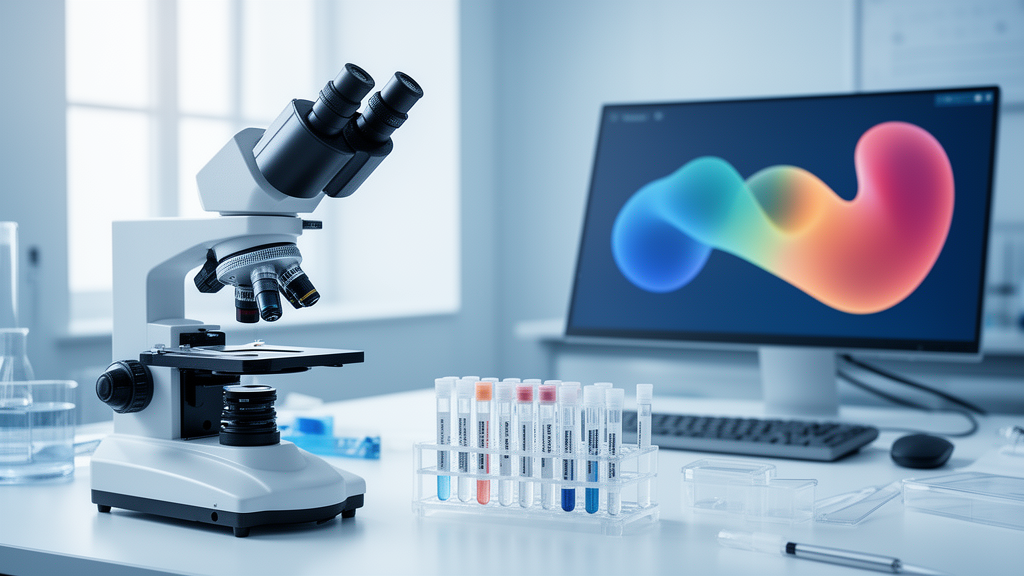
Orgo-Life the new way to the future Advertising by AdpathwayThe U.S. National Science Foundation has awarded Boston University $20 million to help build a nationwide network of AI-infused cloud laboratories. The initiative will let researchers request advanced science and engineering experiments remotely—without needing specialized equipment or on-site expertise. Instead of shipping samples and waiting for scarce lab time, scientists would be able to “order” complex protocols through an online workflow.
The NSF plan is designed around 20 distributed laboratory nodes across the country, each tuned for different research domains. BU’s node focuses on biotechnology and engineered biological systems, targeting use cases such as vaccine development, DNA sequencing, and genetic engineering. In practical terms, the goal is to make experimental access scalable, repeatable, and faster than traditional lab commissioning.
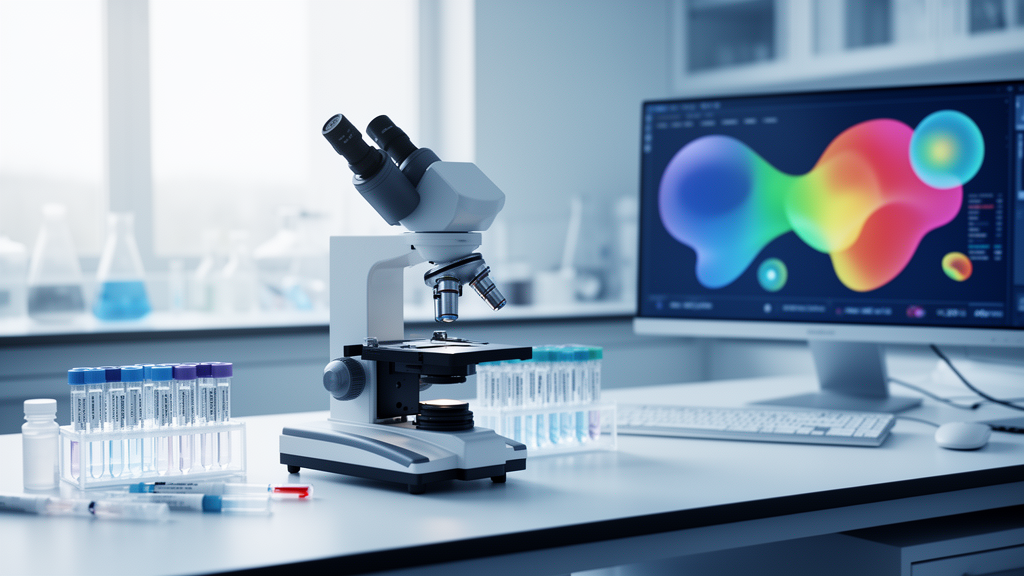
BU’s platform is already a working model. The Design, Automation, Manufacturing, and Processes (DAMP) Laboratory enables studies of biological matter, chemicals, and liquids without researchers physically visiting campus. Powered by high-speed liquid-handling robots, the facility can process thousands of samples with minimal human intervention. During the COVID-19 pandemic, it operated as the University’s primary diagnostic site, running 6,000 tests per day.
With the new four-year NSF award, the DAMP Lab will expand its capabilities and connect to partner labs nationwide. The NSF has allocated $380 million across the 20 successful teams, supported by additional investment from the Astera Institute. The networking aspect is critical: labs must communicate through standardized interfaces so that experiments can continue seamlessly as they move between nodes.
A core technical ambition is to convert user intent into executable lab actions. BU’s team plans to develop AI systems that translate natural-language experiment requests into lab code, safety-aware protocols, and automated scheduling. A large language model will help coordinate the full sequence of steps, from planning to execution, while mechanisms for learning from user feedback improve performance over time.
Researchers would benefit from “round-tripping” across the network—moving protocols between labs as experiments evolve—without getting lost in incompatible equipment settings or proprietary workflows. The vision is national competitiveness through network effects, not isolated innovation.
Supporters argue cloud labs could reverse declining R&D productivity by reducing capital barriers and accelerating discovery cycles. Congressman Jake Auchincloss has highlighted the broader policy momentum behind cloud-lab expansion, framing it as essential infrastructure for health, manufacturing, defense, and agriculture. By the end of the grant, BU aims to produce a replicable template so new DAMP-style labs can be bootstrapped with shared standards.
Ultimately, the project treats lab automation as critical public research capability. If future bio-readiness is required, the system should be able to scale rapidly—assembling distributed experimental capacity across regions using interoperable, AI-guided pipelines rather than rebuilding from scratch.
Keywords
Artificial intelligence, Laboratories, Cloud labs, Robotics, Biotechnology, Automation, National research networks
Subject of Research: Cloud labs, AI-driven biotechnology automation
Article Title: NSF Funds BU to Build Nationwide AI-Infused Cloud Lab Network
Web References: https://www.nsf.gov/tip/updates/nsf-announces-400m-investment-new-national-network-ai
References: https://www.damplab.org/ , https://www.bu.edu/research/profile/kenneth-lutchen/
Image Credits:
Tags: AI-infused cloud laboratoriesautomated biological sample processingbiotechnology research platformsCOVID-19 diagnostic testing facilitiesdistributed laboratory nodesDNA sequencing and genetic engineeringhigh-speed liquid handling robotsnational cloud lab networkNSF funding for scientific infrastructureremote laboratory collaborationremotely accessible scientific experimentsscalable experimental access














 English (US) ·
  French (CA) ·