

 1 hour ago
3
PROTECT YOUR DNA WITH QUANTUM TECHNOLOGY
Orgo-Life the new way to the future Advertising by AdpathwayA water infusion made from the leaves of Hydrocotyle bonariensis, a creeping herb long used in traditional medicine across Côte d’Ivoire and other parts of Africa, has shown a striking ability to lower blood sugar in a rat model of type 2 diabetes. In a study published in Clinical Phytoscience, researchers at Ahmadu Bello University in Nigeria report that three weeks of oral treatment with the leaf extract reduced fasting blood glucose by 61.4 percent at a low dose of 250 milligrams per kilogram of body weight and by 66.4 percent at a high dose of 500 milligrams per kilogram, outperforming the standard diabetes drug metformin in the same experiment.
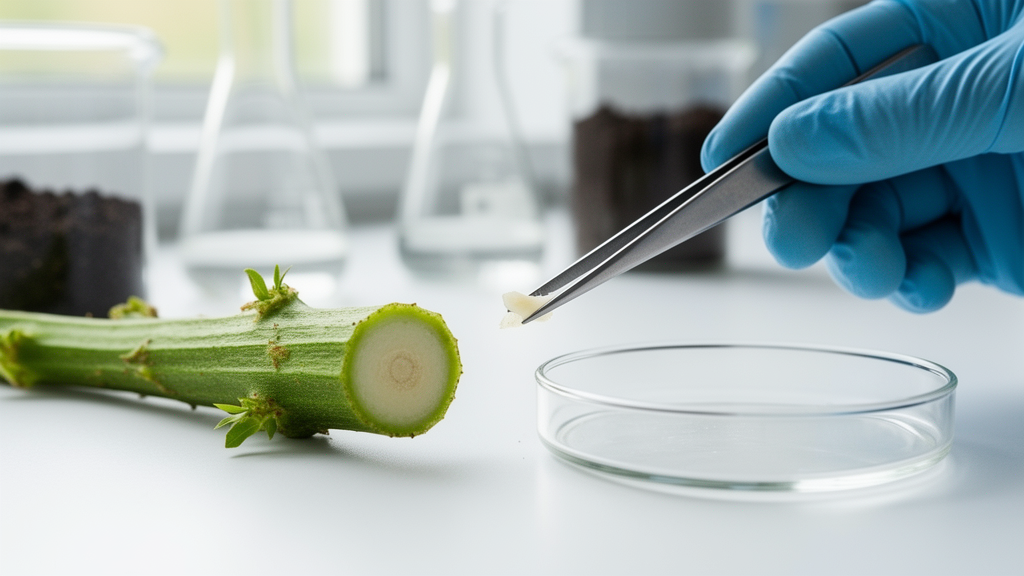
The research team set out to validate a traditional claim rather than to discover a new drug from scratch. Hydrocotyle bonariensis, commonly known as large leaf pennywort, is a member of the Araliaceae family with prostrate, creeping or floating stems that root at their nodes. It grows naturally in South and West African countries including South Africa, Côte d’Ivoire, Nigeria and Togo. Traditional healers use the leaf, taken either as an infusion or eaten raw, against ailments ranging from hypertension and rheumatism to diabetes mellitus. Earlier pharmacological studies had already credited the leaf with antioxidant, anti-inflammatory and hypotensive properties, and two strong antioxidant compounds, quercetin and 3-O-β-D-glucopyranosyl-sitosterol, had been isolated from a methanol extract. Yet, according to the authors, no study had previously evaluated the hypoglycemic activity of the leaf in vitro, in vivo or in human subjects, leaving the diabetes claim scientifically untested.
To build a realistic model of type 2 diabetes, the researchers fed male Wistar rats a high-fat diet containing 55 percent fat, 35 percent carbohydrate and 10 percent protein for fifteen days, then injected a low dose of streptozotocin, a chemical that damages pancreatic beta cells. Diabetes was confirmed when fasting blood glucose exceeded 200 milligrams per deciliter measured with a glucometer. Twenty-five rats were then divided into five groups of five: a normal control, a diabetic model left untreated, a diabetic group given metformin at 300 milligrams per kilogram, and two diabetic groups given the pennywort water extract at 250 or 500 milligrams per kilogram. All treatments were delivered by oral gavage once daily in the morning for three weeks, with dosages selected on the basis of a pilot study.
The glucose results were unambiguous. Induction of diabetes significantly elevated fasting blood glucose compared with normal controls, and after three weeks of intervention the extract significantly lowered it at both doses compared with the untreated diabetic group. The reduction was not only statistically significant but numerically greater than that achieved by metformin, the benchmark oral antidiabetic drug in the experiment.
Beneath the glucose numbers, the extract appeared to act on the underlying machinery of insulin resistance. Serum insulin levels and calculated HOMA-IR scores, a standard index of insulin resistance, were significantly elevated in the untreated diabetic animals, while HOMA-β scores, which estimate pancreatic beta-cell function, were depressed. Treatment with the water extract significantly reduced circulating insulin and HOMA-IR while raising HOMA-β above even the metformin-treated group. Histological examination of pancreatic tissue reinforced this picture: the diabetic controls showed damaged islets with reduced numbers of beta cells and morphologically deformed cells, whereas the extract-treated groups, especially at the high dose, had relatively larger islets with higher numbers of beta cells comparable to the normal controls.
Not every result favored the plant. The extract showed only weak control of the diabetes-induced lipid disturbances. Total cholesterol, triglycerides and LDL-cholesterol were significantly elevated and HDL-cholesterol significantly depressed in the untreated diabetic rats, but oral administration of the extract produced a significant increase only in HDL-cholesterol. In fact, levels of total cholesterol, triglycerides and LDL-cholesterol were significantly higher in the extract-treated groups than in the diabetic controls. The authors suggest that the three-week treatment window may simply have been too short to reveal meaningful improvement in lipid metabolism, and they note that the reason for the weak lipid effect remains unclear.
To probe how the extract might work, the researchers turned to the two enzymes that digest dietary carbohydrates. Inhibiting α-amylase and α-glucosidase delays the breakdown of starch and sugars into absorbable monosaccharides, slowing intestinal glucose absorption and blunting the postprandial spike in blood glucose, a strategy already exploited by drugs such as acarbose. The pennywort water extract significantly inhibited both enzymes, with a particularly strong effect on α-glucosidase, although its inhibition of that enzyme was weaker than that of acarbose. The authors propose this enzymatic inhibition as a plausible mechanism behind the extract’s antihyperglycemic activity.
Chemical profiling by gas chromatography-mass spectrometry identified the major constituents of the water extract as aromatic compounds: 1,3-benzodioxole, 4-methoxy-6-(2-propenyl), 1,2,3-trimethoxy-5-(1E)-1-propen-1-ylbenzene, thymol and D-limonene, along with the fatty acid derivative hexadecanoic acid, methyl ester. The authors suggest that the extract’s activity may arise from the individual or combined effects of these detected compounds rather than from a single dominant molecule.
A computational layer added further, though preliminary, support. Molecular docking using AutoDock Vina assessed how the identified compounds fit into the catalytic pockets of α-amylase (PDB ID: 1B2Y) and α-glucosidase (PDB ID: 3W37). The best-scoring interaction paired 1,2,3-trimethoxy-5-(1E)-1-propen-1-ylbenzene with α-amylase at a docking score of −5.8 kilocalories per mole, stabilized by a hydrogen bond with His305, a carbon-hydrogen bond with Tyr62 and additional pi-hydrophobic contacts. Thymol docked with α-glucosidase at −5.1 kilocalories per mole, forming hydrogen bonds with Ile106 and Arg113 alongside pi-anion and alkyl interactions, while hexadecanoic acid, methyl ester scored −5.0 kilocalories per mole against the same enzyme, anchored by hydrogen bonds with His626 and Asp357 and a cluster of alkyl and pi-alkyl contacts. All top-scoring compounds fit well within the protein binding pockets, consistent with the inhibitory activity measured in the enzyme assays.
The study’s limitations are candidly stated. The authors lacked molecular or gene and protein expression data that could clarify the mechanisms behind their findings, and they acknowledge that GC-MS, the technique used for phytochemical detection, is better suited to less polar extracts than the water infusion they tested. The authors conclude that the data confirm the traditional use of Hydrocotyle bonariensis leaf water extract in improving glycemia and recommend detailed molecular and toxicological studies to support the present findings before any clinical application can be considered.
Subject of Research: Hypoglycemic activity of Hydrocotyle bonariensis leaf water extract in a high-fat diet and streptozotocin-induced type 2 diabetes rat model
Article Title: Hypoglycemic effect of Hydrocotyle bonariensis Comm. Ex Lam. leaf extract in an experimental type 2 diabetes rat model
Article References: Zakari, M., Suleiman, M. A., Garba, A., Mohammed, A., & Umar, I. A. (2026). Hypoglycemic effect of Hydrocotyle bonariensis Comm. Ex Lam. leaf extract in an experimental type 2 diabetes rat model. Clinical Phytoscience, 12(1), Article 13. https://doi.org/10.1186/s40816-026-00426-4
Image Credits: AI Generated
DOI: 10.1186/s40816-026-00426-4
Keywords: Hydrocotyle bonariensis, type 2 diabetes, pennywort, fasting blood glucose, insulin resistance, HOMA-IR, pancreatic beta cells, alpha-glucosidase, alpha-amylase, molecular docking, GC-MS, traditional medicine


















 English (US) ·
 French (CA) ·