

 1 hour ago
8
PROTECT YOUR DNA WITH QUANTUM TECHNOLOGY
Orgo-Life the new way to the future Advertising by AdpathwayIn a perspective published in Frontiers in Epidemiology, forensic pathologists Matteo Nioi and Ernesto d’Aloja argue that cause-of-death attribution requires a formal diagnostic architecture comparable to those used for complex clinical conditions. The authors contend that while international mortality systems successfully standardize the certification, coding, and statistical comparability of death data, they lack a general framework for determining whether a specific lesion, toxin, genotype, or physiological event was lethal in an individual case. This conceptual analysis proposes an upstream diagnostic layer situated between autopsy findings and the International Classification of Diseases (ICD), aiming to make causal attribution transparent, reproducible, and empirically testable.
The central premise of the article is that cause-of-death attribution remains medicine’s last diagnosis, yet it is not supported by the same explicit diagnostic structures that govern many other clinical areas. Modern medicine has progressively transformed diagnosis from implicit expert judgment into explicit, testable systems for conditions such as sepsis, acute respiratory distress syndrome, and myocardial infarction. These conditions are supported by consensus definitions, operational criteria, measurements, exclusion rules, and periodic revision. In contrast, cause-of-death attribution often relies on narrative expertise and local convention, leaving the diagnostic reasoning that produces the attribution largely unstandardized.
The authors highlight that current systems are strong downstream but weak upstream. International systems like the ICD standardize mortality language, certification, and coding, while autopsy and professional guidelines standardize examination, sampling, and reporting. Disease-specific guidelines define many entities relevant to death investigation. However, these systems do not constitute a general diagnostic architecture for transforming heterogeneous postmortem evidence into an individual cause-of-death diagnosis. The missing layer is not semantic; it is a diagnostic grammar that allows observations to become causal statements, represents uncertainty, and adjudicates competing explanations.
This distinction matters significantly for clinical genetics, family prevention, public-health surveillance, research reproducibility, and legal proceedings. A death attributed to an inherited arrhythmia, an adverse drug reaction, or undiagnosed cancer generates profoundly different consequences for families, clinicians, and health systems. In sudden cardiac death, for instance, postmortem findings can trigger cascade screening and prevention in surviving relatives. Furthermore, cause-of-death attribution is a critical research variable; global burden estimates and vital statistics depend on the quality of the original causal attribution before it is transformed into statistical codes. If upstream attribution is inconsistent, downstream statistics may be precise but not diagnostically robust.
The legal implications are equally direct, as the difference between natural disease, intoxication, trauma, neglect, and undetermined death can affect criminal proceedings, civil litigation, and public accountability. Many difficult causes of death, such as drowning, anaphylaxis, sepsis, and sudden arrhythmic death, often rest on probabilistic evidence rather than a single pathognomonic finding. The problem is not that expert judgment is unreliable by definition, but that it remains difficult to audit when its criteria are implicit. The authors argue that a positive diagnostic framework would specify what findings, in what combination, are sufficient to establish a cause, moving beyond the current reliance on exclusion.
The proposed framework would comprise three complementary dimensions: diagnostic entity, causal role, and diagnostic certainty. The entity dimension identifies the candidate diagnosis, while the causal-role dimension distinguishes underlying cause, immediate mechanism, contributory condition, competing alternative, incidental finding, and undetermined role. The certainty dimension distinguishes established, probable, possible, and unascertained diagnoses. This structure would allow the same autopsy finding to be recorded as causal, contributory, or incidental depending on context, available investigations, and expert interpretation, thereby making the inference visible and auditable.
The authors note that existing initiatives such as PERFORM-P, the INFERENCE framework, CHAMPS DeCoDe, and the Post-Mortem Diagnostic Certainty Scale (PMDCS) have strengthened evidence-based reporting, causal reasoning, and diagnostic uncertainty in specific domains. However, these remain domain-specific or focused on certification and reporting. None provides a diagnostic grammar across adult and pediatric, natural and unnatural, clinical and forensic settings. The proposed approach would function as a keystone, allowing existing components like autopsy, toxicology, genetics, and scene investigation to operate as a coherent diagnostic system.
Each diagnostic entity within this architecture would be organized as a modular structure comprising entity-specific criteria, exclusion criteria, minimum investigations, evidence-specific interpretability requirements, causal-role definitions, certainty categories, and validation metrics. The authors emphasize that the framework must distinguish negative evidence from unavailable or uninterpretable evidence. Failure to demonstrate a diagnostic feature does not necessarily establish its absence at the time of death, as detectability may depend on the postmortem interval, autolysis, and preservation conditions. Criteria that cannot be reliably assessed should be recorded as unavailable rather than negative, and these limitations should be incorporated into the level of diagnostic certainty.
The perspective also addresses the role of artificial intelligence in death investigation. The authors argue that AI cannot solve the conceptual problem unless the target diagnosis is defined. A model trained on historical certifications may reproduce local practice, inconsistency, and bias. A transparent diagnostic architecture would make AI safer and more useful by defining labels, required inputs, and validation endpoints. The bottleneck is conceptual, not computational. Once diagnostic entities and evidentiary requirements are defined, multicentre digital infrastructures could provide a basis for external validation and AI-assisted forensic research, though AI should remain a decision-support tool rather than an autonomous system.
The authors propose a practical roadmap for implementation, suggesting that an international working group should first define shared principles for causal role, certainty, and minimum investigation. Pilot entities should then be selected from areas where diagnostic ambiguity is common and consequences are high, such as sudden cardiac death, pulmonary embolism, sepsis, and drowning. Each pilot entity should be translated into structured criteria and tested using retrospective cases, blinded expert panels, and prospective registries. This incremental approach would allow the system to be periodically revised as evidence, biomarkers, and epidemiology evolve.
The framework is intended to structure scientific diagnostic reasoning and is not intended to determine legal responsibility, criminal negligence, or civil liability, which depend on additional legal and contextual considerations. The authors clarify that the goal is not a literal “DSM of death,” but an evidence-based architecture that makes causal attribution transparent. The approach must remain applicable across the life course, allowing evidentiary requirements to be adapted to age and developmental stage, particularly in fetal, perinatal, and pediatric deaths where causal assessment may require consideration of the mother–placenta–fetus system.
By defining what counts as evidence, how competing causes are excluded, and how certainty is expressed, this positive diagnostic architecture would make the last diagnosis explicit. Its purpose would not be to eliminate expert judgment, but to make that judgment transparent, reproducible, and open to scientific improvement. The authors conclude that medicine has built diagnostic systems for the living, and the last diagnosis deserves the same formal structure to ensure that causal attribution is robust and scientifically sound.
The authors illustrate the diagnostic gap with specific clinical scenarios where a single finding carries multiple potential meanings. For instance, atherosclerosis may be the lethal cause in one case but merely an incidental finding in another. Similarly, a genetic variant might be decisive, irrelevant, or uninterpretable depending on the context, while a toxicological concentration could indicate poisoning, therapeutic use, postmortem redistribution, or mixed causation. These examples underscore that cause-of-death attribution is a diagnostic conclusion about causality rather than a mere label. The same autopsy finding may be recorded as causal, contributory, incidental, or unexplained based on available investigations and expert interpretation, highlighting the need for a standardized grammar to transform these observations into causal statements.
Historically, death investigation evolved from two distinct traditions: clinical pathology, which focuses on disease mechanisms, and forensic medicine, which focuses on legal evidence. Neither tradition developed a general diagnostic grammar for causal attribution because each assumed that relevant findings, whether disease or injury, would speak for themselves. In practice, they do not.
The perspective also addresses the specific challenges of postmortem evidence degradation. These effects are evidence-specific rather than uniform; the postmortem interval may substantially affect the interpretability of some findings while leaving others comparatively preserved.
Implementation of such a framework would require collaboration among forensic pathologists, clinical pathologists, epidemiologists, intensivists, geneticists, toxicologists, statisticians, certifiers, public-health agencies, and legal stakeholders. The authors note that some deaths will remain unexplained despite optimal investigation, and a good diagnostic grammar should protect that conclusion rather than obscure it.
This is particularly relevant in fetal, perinatal, and pediatric deaths, where causes and mechanisms may differ substantially from those encountered later in life. Additionally, the framework acknowledges that demographic, socioeconomic, and geographic factors may influence patterns of disease and mortality, forming part of the contextual evidence against which postmortem findings are interpreted, rather than serving as diagnostic criteria in themselves.
Subject of Research: Proposal for a diagnostic framework to standardize cause-of-death attribution
Article Title: The last diagnosis: why cause-of-death attribution needs a diagnostic framework
Article References: Nioi, M., & d'Aloja, E. (2026). The last diagnosis: why cause-of-death attribution needs a diagnostic framework. Frontiers in Epidemiology, 6, Article 1973945. https://doi.org/10.3389/fepid.2026.1973945
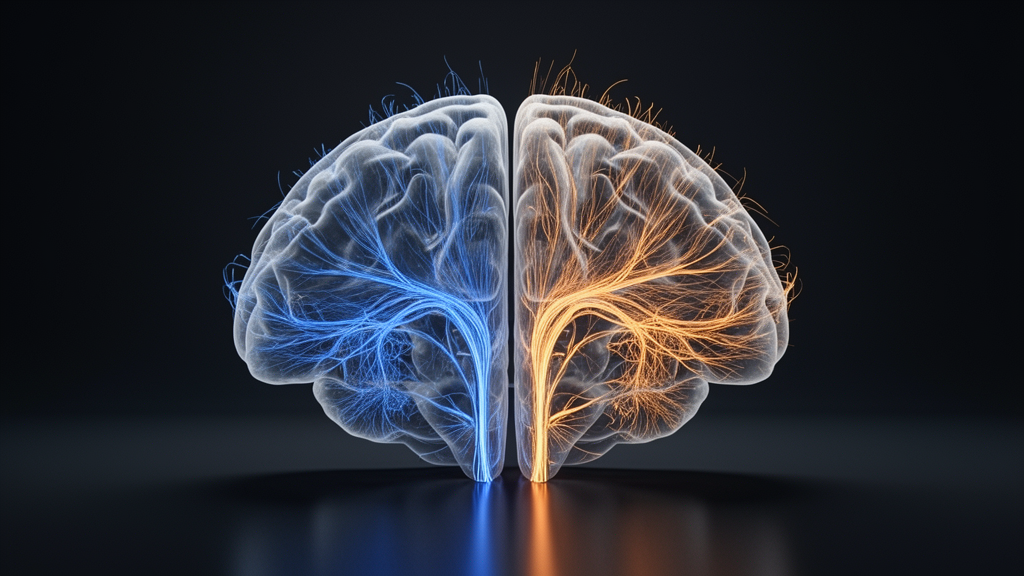
Image Credits: AI Generated
DOI: 10.3389/fepid.2026.1973945
Keywords: forensic pathology, cause of death, diagnostic criteria, mortality statistics, medical diagnosis, postmortem investigation, clinical genetics, public health, last, diagnosis, cause-of-death, attribution



















 English (US) ·
 French (CA) ·