

 1 month ago
88
1 month ago
88
PROTECT YOUR DNA WITH QUANTUM TECHNOLOGY
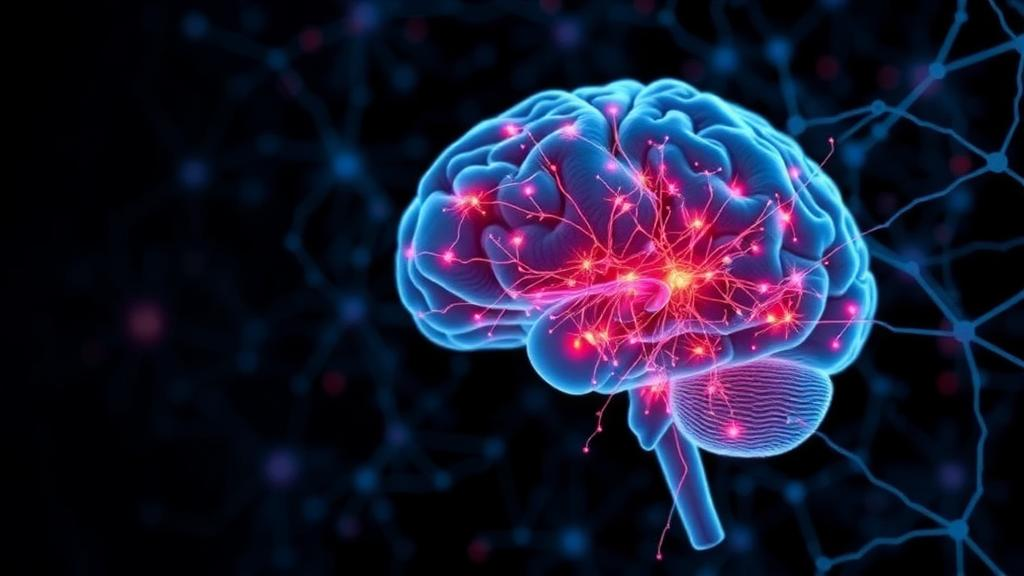
Orgo-Life the new way to the future Advertising by AdpathwayDeep brain stimulation may offer a new way to restore speech and swallowing after traumatic brain injury, according to a proof-of-concept study from the University of Pittsburgh School of Medicine. The research, published in Nature Communications, found that carefully tuned, low-frequency electrical stimulation of the motor thalamus improved activity in muscles involved in facial movement, speech and swallowing. The result challenges the long-standing assumption that deep brain stimulation is mainly useful when it suppresses abnormal neural activity. In this study, stimulation appeared to enhance communication between surviving brain circuits and the muscles required for verbal expression and safe swallowing, raising the possibility that an implanted neural device could one day complement rehabilitation for people whose injuries have disrupted their ability to communicate.
Speech and swallowing are among the most complex motor behaviors controlled by the human brain. They require precisely timed coordination among the tongue, lips, jaw, throat, respiratory muscles and vocal tract. Signals from several brain regions must travel through interconnected pathways before they reach the muscles that shape sounds or move food and liquid safely through the throat. Traumatic brain injury can damage or disconnect these pathways, producing dysarthria, a motor speech disorder characterized by weak, slow or poorly coordinated speech, and dysphagia, which can make eating and drinking difficult or dangerous. More than 5 million people in the United States are estimated to live with dysphagia or dysarthria, conditions that can affect health, employment, independence and social relationships.
The Pittsburgh team focused on the motor thalamus, a deep brain structure that helps relay and coordinate movement-related signals between areas including the motor cortex and lower motor-control networks. Rather than applying the high-frequency stimulation commonly used in some established deep brain stimulation therapies, the researchers tested lower frequencies between 50 and 80 hertz. Conventional stimulation for disorders such as Parkinson’s disease or essential tremor often operates near 130 hertz and can inhibit or disrupt certain patterns of neural activity. Previous research has also associated high-frequency stimulation with worsening speech in some patients. By reducing the frequency by almost threefold, the investigators sought to activate or reinforce residual motor pathways instead of suppressing them.
The study first examined eight people with intact speech and swallowing systems who were undergoing implantation of deep brain stimulation electrodes as treatment for essential tremor. During the procedures, the researchers measured muscle activity while delivering stimulation at different frequencies. Low-frequency stimulation of the motor thalamus increased activation in muscles of the face and throat without producing a detectable decline in speech performance. These observations provided physiological evidence that the stimulation could influence the motor networks used for communication and swallowing. They also suggested that the effect was not simply a consequence of electrical activity near the electrode, but reflected frequency-dependent modulation of a broader circuit linking deep brain structures with the motor cortex and cranial muscles.
The most striking result came from a participant with traumatic brain injury who had chronic moderate dysphagia and severe dysarthria. When low-frequency stimulation was switched on, the participant showed improved facial muscle movement, swallowing control and speech performance. Word intelligibility increased by 8%, 20% and 16% during three separate testing sessions compared with stimulation-off conditions. The researchers noted that a 7% change is considered a small clinically significant improvement, while a 15% change is considered large. The findings do not indicate that the participant’s communication difficulties disappeared, but they demonstrate that even a damaged speech-motor system may retain pathways capable of responding immediately to targeted neuromodulation.
The researchers believe the stimulation may work by strengthening or synchronizing signals that remain after injury. A traumatic brain injury can interrupt connections without destroying every neuron or muscle-control pathway in a region. In theory, low-frequency stimulation could increase the excitability of relevant neural populations, improve the timing of signals passing through the motor thalamus, or help the brain recruit alternative routes around damaged tissue. Because speech depends on rapid coordination rather than strength alone, even modest improvements in timing and muscle activation could make words easier to understand. Similar mechanisms may help swallowing, where the precise sequencing of tongue, throat and respiratory movements is essential for preventing food or liquid from entering the airway.
The work builds on previous Pittsburgh research examining neuromodulation for arm and hand movement after brain injury. Elvira Pirondini, assistant professor of physical medicine and rehabilitation at the University of Pittsburgh and co-senior author of the study, said that speech deficits are often a higher priority for patients than loss of mobility because communication affects nearly every aspect of daily life. Jorge A. Gonzalez-Martinez, professor of neurological surgery and the study’s other co-senior author, emphasized that the results show why stimulation parameters matter. The location of an electrode is important, but so are frequency, intensity and timing. A setting that is effective for suppressing tremor may not be appropriate for rebuilding the motor control needed for speech.
The study remains an early demonstration rather than a clinical trial. Only one participant with traumatic brain injury had the speech and swallowing impairments being targeted, and the reported improvements were measured during short testing sessions with stimulation on and off. The results therefore cannot yet establish whether the benefits would persist, grow with practice or translate into safer eating and more natural conversation in everyday life. Deep brain stimulation also requires brain surgery and carries potential risks, including bleeding, infection, seizures, hardware complications and unwanted changes in movement or cognition. Larger studies will be needed to determine which patients are most likely to benefit, how long stimulation should be delivered, whether rehabilitation enhances its effects and whether similar approaches work after stroke or other brain lesions.
The Pittsburgh group is now testing whether stimulation can produce lasting improvements in speech as well as hand and arm function. A clinical trial listed on ClinicalTrials.gov is recruiting participants and will measure the effects of stimulation over four weeks, a substantially longer period than the immediate-response experiments described in the current report. Future research could combine implanted electrodes with intensive speech-language therapy, swallowing rehabilitation and computational systems that adjust stimulation according to a patient’s neural or muscular activity. If larger studies confirm the findings, low-frequency motor thalamus stimulation could become part of a new generation of restorative neurotechnology aimed not merely at controlling abnormal movement, but at helping injured brains communicate with the body again. For now, the study’s central message is both promising and precise: in brain stimulation, the right circuit may only work when the electrical rhythm is right.
Subject of Research: Low-frequency motor thalamus deep brain stimulation for improving speech and swallowing after traumatic brain injury.
Article Title: Frequency-dependent effects of motor thalamus deep brain stimulation on speech and swallowing
News Publication Date: 18-Aug-2026
Web References: https://www.nature.com/articles/s41467-026-75588-3; https://clinicaltrials.gov/study/NCT06303869
References: Nature Communications, DOI: 10.1038/s41467-026-75588-3
Image Credits: University of Pittsburgh; image of Elvira Pirondini, Ph.D., assistant professor of physical medicine and rehabilitation at the University of Pittsburgh’s Rehab Neural Engineering Laboratory.
Keywords: Deep brain stimulation, motor thalamus, traumatic brain injury, speech disorders, dysarthria, dysphagia, swallowing, neuromodulation, brain stimulation, neuroscience, neurological rehabilitation, speech restoration.
Tags: brain injury treatment innovationsbrain-muscle communicationcortical and subcortical pathway repairdeep brain stimulation for speech and swallowinglow-frequency electrical stimulationmotor thalamus stimulationneural circuit enhancementneural devices for TBIneuromodulation techniquesneurorehabilitation advancementsspeech and swallowing restorationtraumatic brain injury recovery


















 English (US) ·
  French (CA) ·