

 1 month ago
81
1 month ago
81
PROTECT YOUR DNA WITH QUANTUM TECHNOLOGY
Orgo-Life the new way to the future Advertising by AdpathwayScientists have developed a new fermentation-based method for producing hydroxycinnamoyltyramines, a family of plant-derived phenolic compounds that has attracted growing interest because of its potential biological and pharmaceutical value. The process uses genetically engineered Escherichia coli as a manufacturing platform, but the key catalytic machinery comes from plants. In a bench-scale bioreactor, the system converted soluble starting materials into solid products that precipitated directly from the fermentation broth, allowing researchers to recover them through filtration rather than relying on lengthy extraction procedures. The work, reported in Applied Microbiology and Biotechnology, could offer a practical route toward manufacturing compounds that are difficult to obtain efficiently from plant tissue.
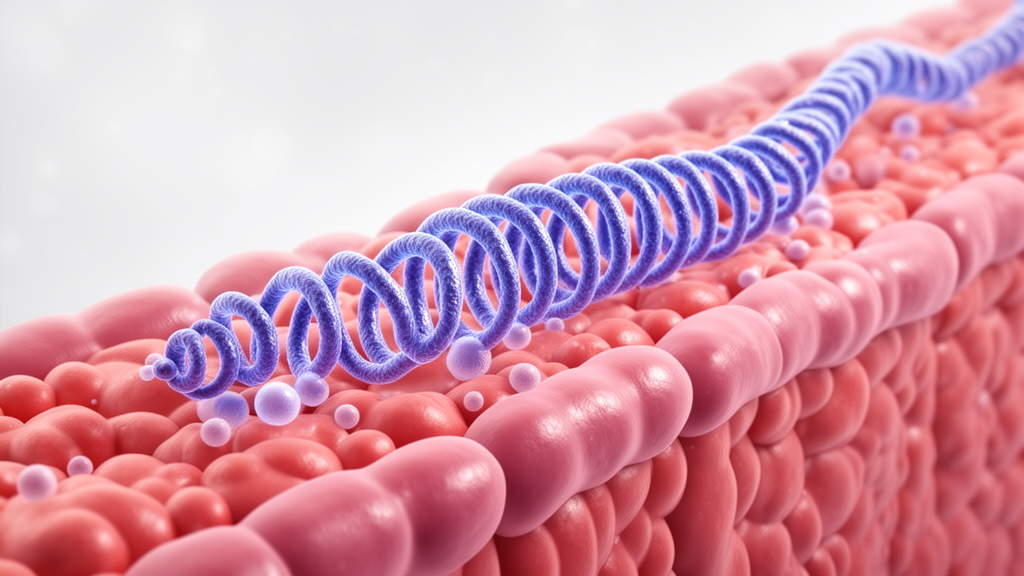
Hydroxycinnamoyltyramines are formed when hydroxycinnamic acids, including ferulic acid and coumaric acid, are chemically joined to tyramine. They belong to the broader group of phenolic amides, molecules that plants produce as part of their responses to environmental stress, injury and microbial attack. Their structures combine an aromatic hydroxycinnamic acid region with a tyramine-derived amine group, giving them chemical properties that differ from those of their individual building blocks. Feruloyltyramine, coumaroyltyramine and isoferuloyltyramine are among the best-known members of this group. However, extracting such compounds from plants is often inefficient because they occur at low concentrations and within chemically complex mixtures containing pigments, oils, sugars, proteins and other phenolics.
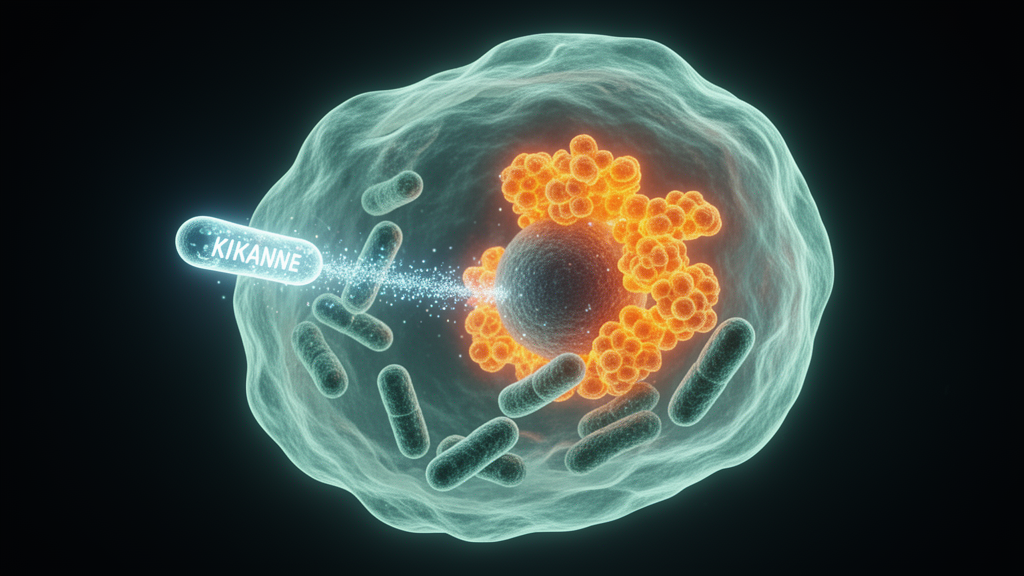
The new strategy addresses that problem by separating biological synthesis from plant cultivation and extraction. The researchers introduced two plant enzymes into E. coli: 4-coumarate:CoA ligase from Arabidopsis thaliana and hydroxycinnamoyl-CoA:tyramine N-(hydroxycinnamoyl)transferase from potato, Solanum tuberosum. The first enzyme activates hydroxycinnamic acids by attaching them to coenzyme A, creating reactive hydroxycinnamoyl-CoA intermediates. The second enzyme transfers the activated acyl group to tyramine, producing the target hydroxycinnamoyltyramine. In simplified terms, the engineered cells function as microscopic production units: one plant enzyme prepares the chemical substrate, while the second completes the coupling reaction that creates the desired phenolic amide.
Although the enzyme cascade was conceptually straightforward, making it productive at reactor scale required careful control of the biological process. Recombinant plant enzymes can be unstable or poorly folded when produced at the temperatures commonly used for bacterial fermentation. The researchers therefore developed a temperature-adapted process in which enzyme production and product formation were handled in sequential phases. Lower temperatures were used to support the activity and stability of the plant-derived catalysts, while the overall fermentation was organized to maintain high cell density and sufficient metabolic capacity. This staged design was important because the cells had to tolerate aromatic substrates and products that can disrupt membranes, interfere with cellular metabolism or become toxic at elevated concentrations.
The researchers also introduced a controlled substrate-feeding strategy rather than adding all of the starting material at once. Substrates were supplied at a rate of 5 millimoles per liter per hour, allowing the reaction system to process the compounds while limiting the accumulation of toxic phenolics. This approach helped match the rate of chemical input with the catalytic capacity of the engineered cells. The study identifies carbon transfer rate as a practical indicator of phenolic toxicity and process performance. If the cells receive carbon faster than they can convert or tolerate it, growth and enzyme activity may decline. If the supply is too slow, the reactor is underused. Monitoring and adjusting this balance allowed the team to improve productivity while maintaining a robust bioprocess.
At the one-liter reactor scale, the system produced 31.9 grams per liter of feruloyltyramine, corresponding to approximately 102 millimoles per liter. The same platform generated 14.4 grams per liter of coumaroyltyramine, or about 50.7 millimoles per liter, and 14.6 grams per liter of isoferuloyltyramine, equivalent to roughly 46.5 millimoles per liter. Feruloyltyramine reached a space-time yield of 1.75 grams per liter per hour. Space-time yield is a key industrial metric because it describes how much product a reactor generates in a given volume over a given period. A higher value generally means that a manufacturing facility can produce more material without proportionally increasing reactor size, making the process more attractive for scale-up.
The most striking feature of the process was not only how much product the cells made, but also where the product ended up. Most of the hydroxycinnamoyltyramine formed as an insoluble precipitate inside the production system. Because the products were poorly soluble under the reactor conditions, they separated from the liquid broth as solid particles instead of remaining dissolved. This phenomenon created what is known as in situ product precipitation. It may also have helped protect the bacterial catalyst from exposure to high concentrations of dissolved product, reducing one form of product inhibition. At the end of a feruloyltyramine production run, the solid material could be collected by filtration through a glass filter with a pore size of 16 to 40 micrometers.
After filtration and washing, the resulting feruloyltyramine filter cake contained 99 percent product by mass, according to the study. That level of purity is notable because conventional recovery of plant phenolics often requires multiple operations, such as solvent extraction, liquid-liquid partitioning, adsorption, concentration and crystallization. Each step adds energy consumption, equipment requirements and opportunities for product loss. In the new process, the physical properties of the product itself simplified downstream processing. The researchers further recrystallized the material and confirmed its identity using nuclear magnetic resonance spectroscopy, a technique that reveals the molecular environment of atoms and can distinguish the expected structure from chemically similar by-products.
The findings demonstrate how enzyme engineering, microbial fermentation and process design can work together to overcome limitations associated with natural-product production. Rather than attempting to recover a dilute compound from harvested plant tissue, the researchers built a controlled system in which a microorganism performs the relevant plant chemistry and the product separates itself from the broth. The use of plant enzymes also preserves the catalytic selectivity that is often difficult to reproduce through purely chemical synthesis. At the same time, the platform retains the advantages of bacterial cultivation, including rapid growth, established fermentation technology and the possibility of operating in closed, controlled vessels.
The researchers describe the process as robust, cost-effective and scalable, although larger reactors will still need to address challenges such as oxygen transfer, mixing, heat removal, particle handling and consistent enzyme expression. Solid accumulation can alter broth viscosity and influence mass transfer, while phenolic substrates may impose stronger stresses as reactor volume increases. Future development will therefore depend on maintaining the same balance between substrate delivery, enzyme activity, cell health and precipitation behavior at industrial scales. Even so, the results establish a promising foundation for producing hydroxycinnamic acid–tyramine conjugates in significant quantities. By turning soluble feedstocks into easily filtered solids, the approach could accelerate access to phenolic amides for biochemical research, ingredient development and potential pharmaceutical applications.
Subject of Research: Biotechnological production and recovery of hydroxycinnamoyltyramines using plant-derived enzymes in engineered Escherichia coli
Article Title: Efficient biotechnological production of N-(Hydroxycinnamoyl)tyramines by utilizing plant-derived enzymes in a bench-scale bioreactor with in situ product precipitation
Article References: Mohamed, I. A., Al-Khawlani, Q., Milde, R. et al. “Efficient biotechnological production of N-(Hydroxycinnamoyl)tyramines by utilizing plant-derived enzymes in a bench-scale bioreactor with in situ product precipitation.” Applied Microbiology and Biotechnology (2026).
Image Credits: AI Generated
DOI: 10.1007/s00253-026-13997-6
Keywords: Hydroxycinnamic acid amide, phenylpropanoic acids, feruloyltyramine, coumaroyltyramine, high-cell-density fermentation, metabolic engineering, product recovery
Tags: biotechnological production of feruloyltyramineefficient extraction of plant-derived compoundsenvironmentally responsive plant metabolitesgenetically engineered E. coli bioprocesshydroxycinnamoyltyramines productionin situ product precipitation in fermentationmicrobial synthesis of phenolic amidespharmaceutical applications of plant phenolicsphenolic compound recovery methodsplant enzyme-based fermentationplant phenolic compounds biosynthesissustainable manufacturing of plant secondary metabolites


















 English (US) ·
  French (CA) ·