

PROTECT YOUR DNA WITH QUANTUM TECHNOLOGY
Orgo-Life the new way to the future Advertising by AdpathwayThe UL Research Institutes’ Fire Safety Research Institute analysis cites interconnected system failures for the tragic outcomes of the 2025 firestorm
October 05, 2026 10:13 AM •

UL Fire Safety Research Institute
COLUMBIA, Md. — UL Research Institutes’ Fire Safety Research Institute has released the “Southern California Fires Incident Analysis Report,” identifying 175 findings and offering 266 recommendations aimed at improving resilience, preparedness and response following the devastating Southern California fires of January 2025.
The analysis found wildfire and community conflagration outcomes were shaped by the combined performance of numerous interconnected systems rather than a single point of failure.
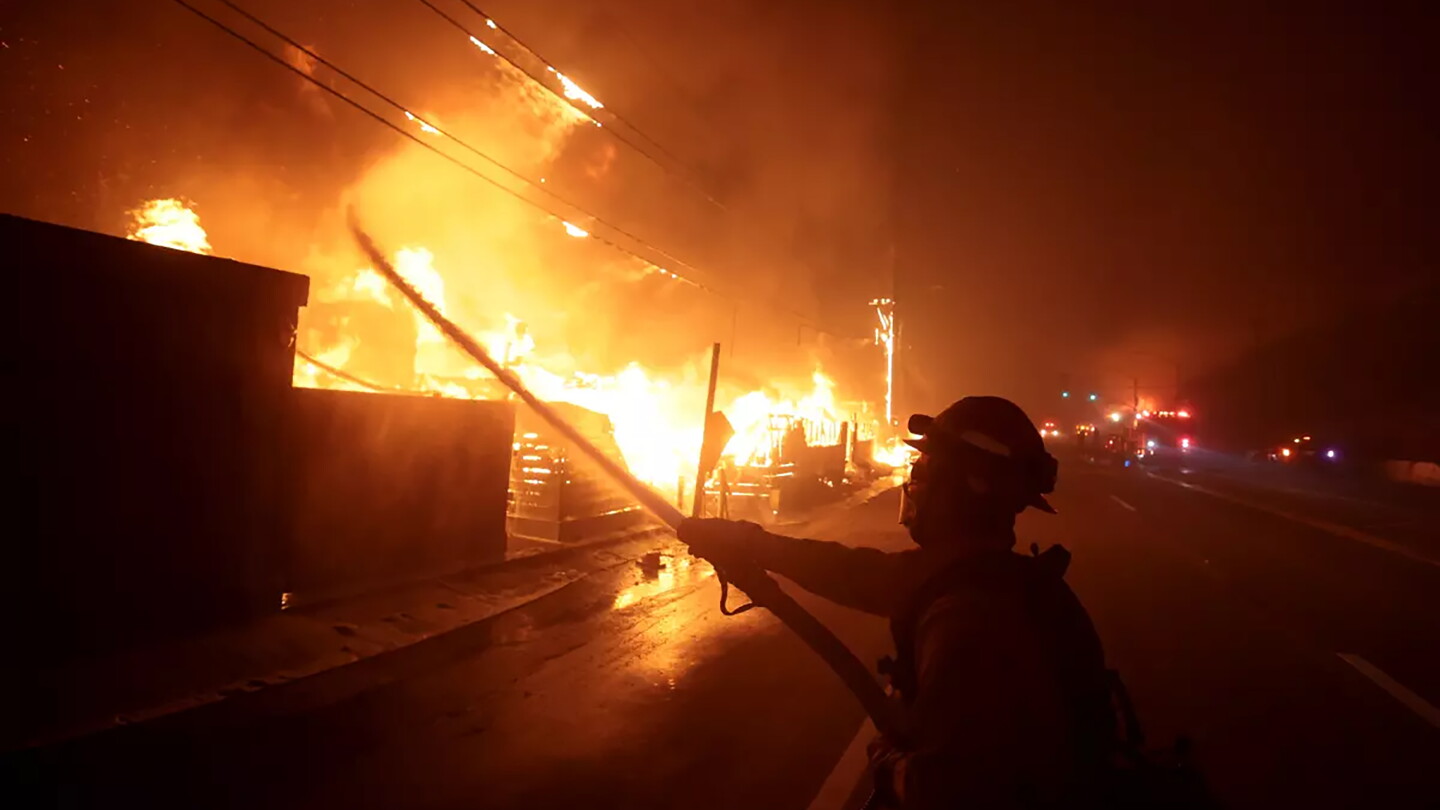
The fires, including the Palisades and Eaton fires, occurred under extreme wildfire conditions marked by powerful Santa Ana winds, critically dry vegetation and rapid fire spread from vegetation into the built environment. The fires are among the most deadly, destructive and costly wildfire disasters in California history.
UL Research Institutes conducted an extensive data collection effort, building on a similar approach used in its analysis of the 2023 Lahaina Fire, to establish a timeline and fact base around these fires. This work resulted in the publication of the first report, the Southern California Fires Timeline Report.
The new report builds on the timeline report, examining the conditions, decisions, actions and systems that influenced the wildfires and resulting community conflagrations before and during the disaster. It covers emergency preparedness and management, water and electric utilities, weather and vegetation, evacuation warnings and orders, transportation, fire and law enforcement actions and policies, fatalities and built environment factors.
Before the fires, California and local agencies had implemented a range of risk reduction and preparedness measures, including defensible space programs, vegetation management, public preparedness efforts, evacuation planning and notification systems, mutual-aid frameworks and firefighting resources. Despite these investments, the intensity, magnitude and complexity of the Palisades and Eaton Fires challenged many of the assumptions on which existing programs and response strategies were based.
According to ULRI: “The analysis identified considerable challenges in the implementation and performance of community-wide risk reduction measures, incident management processes, evacuation coordination, situational awareness, infrastructure resilience, fire suppression effectiveness, and resource accountability. Findings also indicate that wildfire exposure and structure loss are increasingly shaped by factors at the neighborhood and community scale, extending beyond individual properties and conventional mitigation practices.”
Some of the key recommendations highlighted in the newest report:
- Advancing community-scale wildfire mitigation;
- Increasing readiness for large wind-driven community conflagrations;
- Strengthening situational awareness and operational intelligence;
- Advancing fire suppression capabilities for community conflagrations;
- Expanding wildfire-resistant building practices and community preparedness;
- Improving evacuation and communications interoperability;
- Enhancing infrastructure performance under extreme conditions; and
- Developing standardized post-suppression procedures.
Read the full list of findings and recommendations in the report below.
The following timelapse animations of the Palisades and Eaton fires layer each fire’s progression and evacuation activity.

With 87% of its fire stations over 40 years old, Cleveland’s plan would repair 12, renovate or expand another 12, and replace 10 others while improving firefighter safety features and bringing EMS units back into fire stations
October 05, 2026 05:50 AM

Gov. Mark Gordon cut the ribbon on the state forestry division’s new aviation hub, which adds a hangar, hard-wired internet and closer fuel access
October 04, 2026 08:00 AM

Delaware County’s peer-support program connected 100% of engaged first responders to care through a 24/7 hotline and weekly confidential drop-in meetings
October 04, 2026 12:00 PM

Days after becoming West Virginia’s first fire department to earn NIOSH’s Gold Helmet cancer-registry designation, Fairmont is partnering with WVU Medicine on targeted screenings and behavioral health support for its 41 full-time firefighter
October 05, 2026 06:17 AM

Chuck Evans and Nick Samp Join Company as Rescue Intellitech Accelerates Growth Across North America
September 22, 2026 10:00 AM

Bill Carey is the associate editor for FireRescue1.com and EMS1.com. A former Maryland volunteer firefighter, sergeant, and lieutenant, Bill has written for several fire service publications and platforms. His work on firefighter behavioral health garnered a 2014 Neal Award nomination. His ongoing research and writings about line-of-duty death data is frequently cited in articles, presentations, and trainings. Have a news tip? He can be reached at [email protected].

















 English (US) ·
  French (CA) ·