

PROTECT YOUR DNA WITH QUANTUM TECHNOLOGY
Orgo-Life the new way to the future Advertising by Adpathway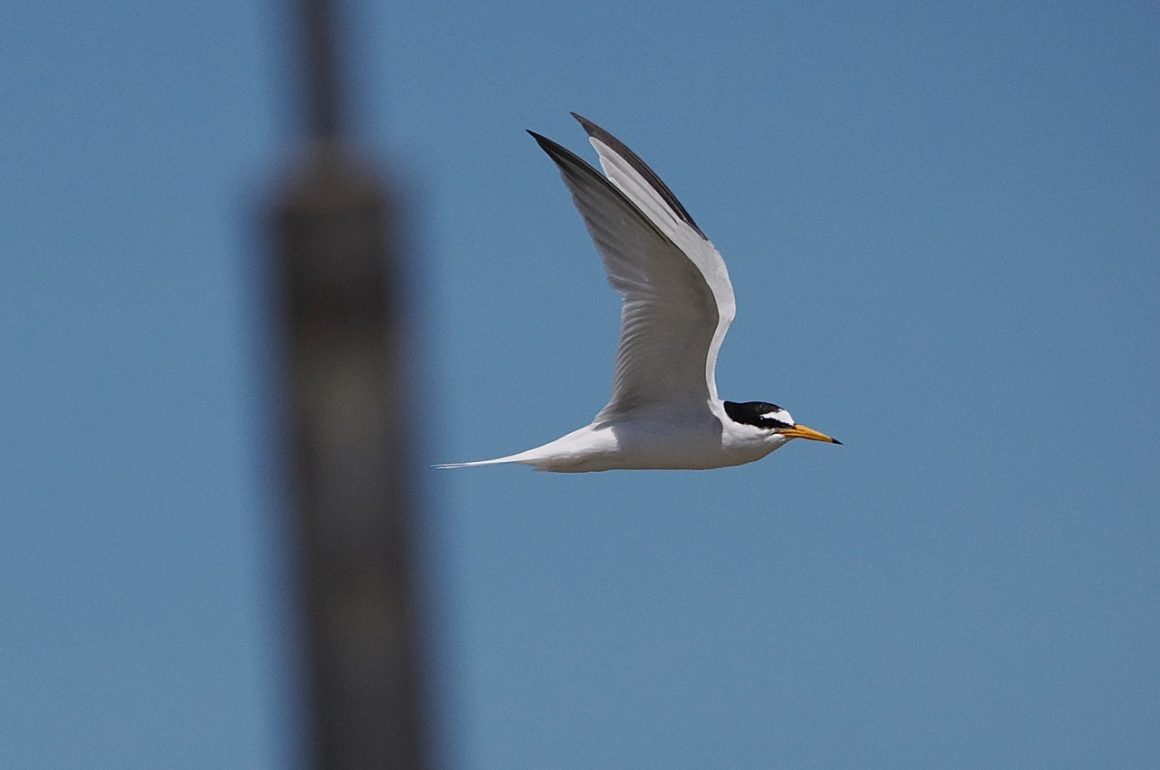
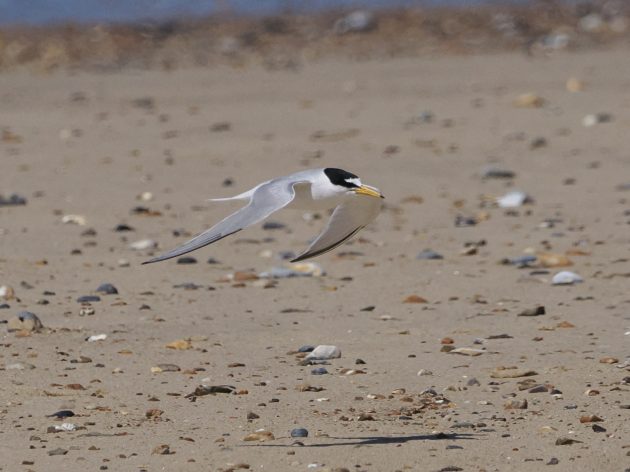
The Genus Sternula is a small family of seven look-alike species – Little, Least, Saunder’s, Yellow-billed, Peruvian, Fairy and Damara Terns. They are all dainty birds, about the same size and shape with similar colouring. All but the Damara have a white frontal patch on their black-capped heads, and they all clearly come from the same branch of the evolutionary tree. The Little Tern is by far the most widespread of the family, and this is the bird which nests throughout Europe, its range stretching from southern Spain north to the Gulf of Finland.
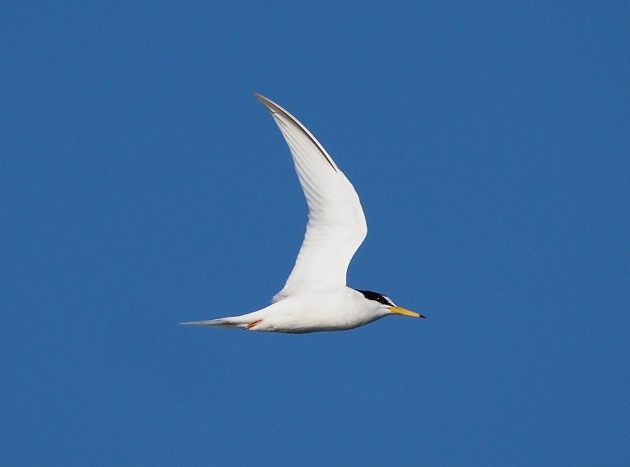
Outside Europe it has an extensive breeding range in central Asia, India, China, Japan and south to New Guinea. It also breeds in Australia, where its range overlaps with that of the Fairy Tern. Fairy and Little Terns are so similar that they occasionally interbreed.
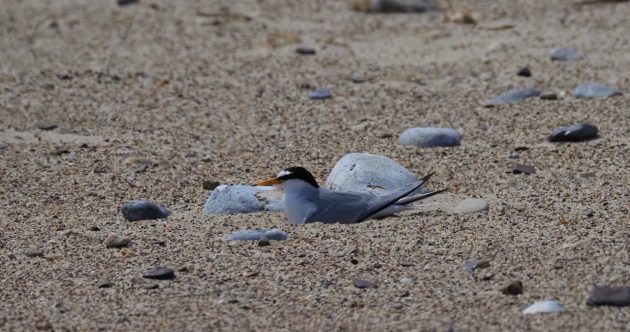
Here in Britain it’s an almost exclusively coastal bird, arriving back from its wintering grounds in West Africa in April, departing again in August and September. Elsewhere in Europe it nests along wild, untamed rivers that still have shingle islands suitable for nesting – the Loire in France is a classic example. Like all the terns, the Little is a sociable species, nesting in colonies ranging from a few pairs to several hundred.
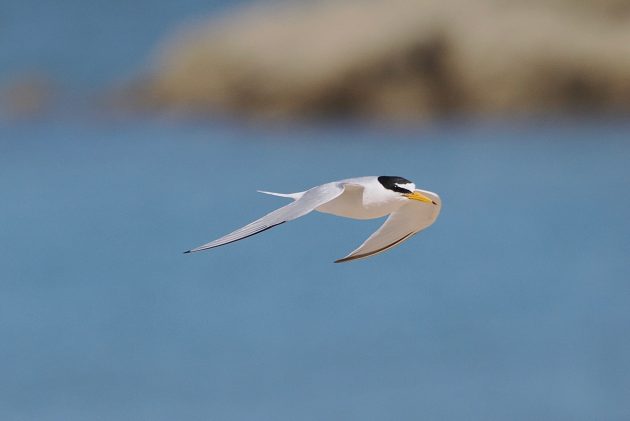
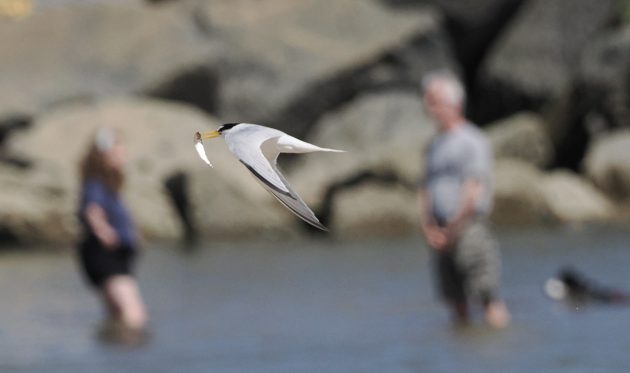
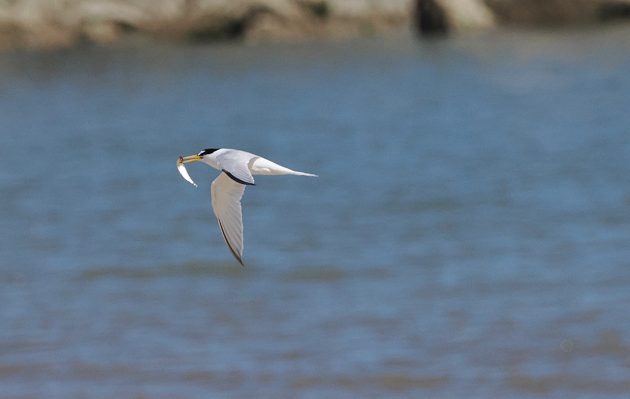
Last month I travelled to Norfolk to a small coastal village called Sea Palling. Here there’s one of the most important Little Tern colonies in Britain, numbering close to 300 pairs. I didn’t have to visit the colony to see the birds (it would have been a long tramp on the shingle); instead, I sat on the beach where I was entertained by a constant procession of these delightful terns. The birds coming from the colony were setting off to fish farther south along the coast, and flying back to the colony with a sand eel clamped in their yellow beak.
Because they nest on beaches these terns suffer badly from disturbance: it’s a problem everywhere in the world. The Sea Palling colony is protected by a simple wire fence and a seasonal warden (employed by the RSPB). Frustratingly, the fence doesn’t protect the birds from marauding dogs, ground predators such as foxes and hedgehogs, and aerial raiders, of which the Kestrel is the most serious.
Intriguingly, Kestrels are not always a problem, but when individual birds discover how easy it is to raid a colony they usually make repeated visits. A single rogue bird can ruin an entire colony’s nesting success. One way of reducing Kestrel predation is to provide supplementary feeding for the falcons breeding close to the tern colony, and this has proved quite successful.
Some colonies are long established and are occupied for decades, but others may be suddenly deserted, even in the middle of the breeding season, the birds moving to form a new colony, or to join an established one.
Forty years ago, the RSPB started a major project to protect Norfolk and Suffolk’s Little terns. Initially the protection focussed on the Little Terns nesting on Great Yarmouth beach, but it has since been expanded to include much of the Norfolk and Suffolk coasts. It’s generally reckoned that without this protection, there would be few pairs of these terns nesting successfully: elsewhere in Britain, the number of breeding birds has dropped by 39% in the last 40 years.
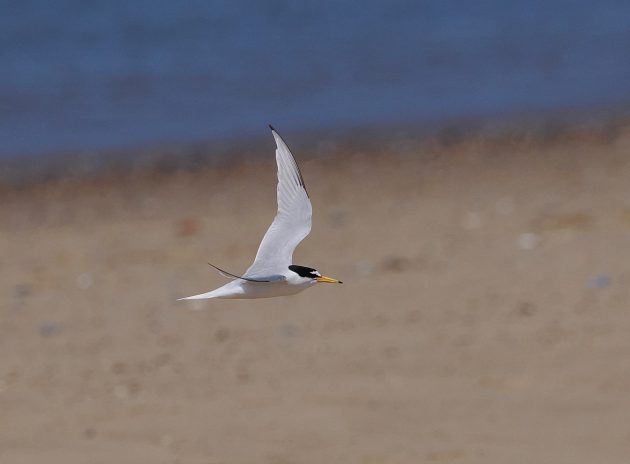
Since the beginning of the RSPB’s project hundreds of volunteers have donated many thousands of hours to helping to protect the nesting birds. So far in 2026, 81 volunteers have already donated more than 2,000 hours of their time. This is set to exceed the 2025 record of 66 volunteers who donated 3,140 hours of their time to protect these birds.
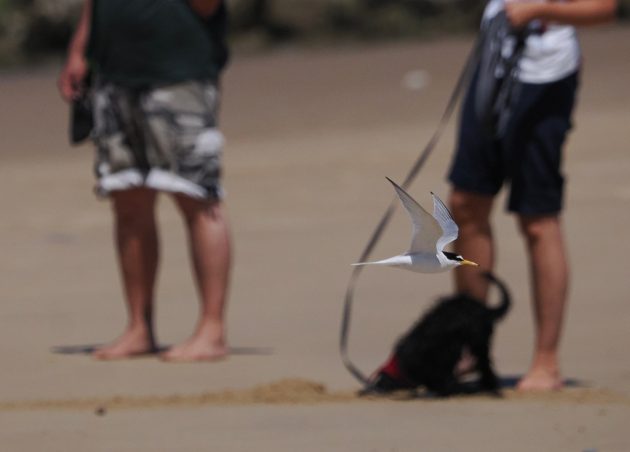
Last year the Sea Palling colony fledged over 450 chicks. Hopefully it will do as well this year. When I visited, one of the wardens told me that it was thought that about 500 chicks had hatched this summer, so the prospects look good. I certainly hope so, for this diminutive tern is one of my special favourites.
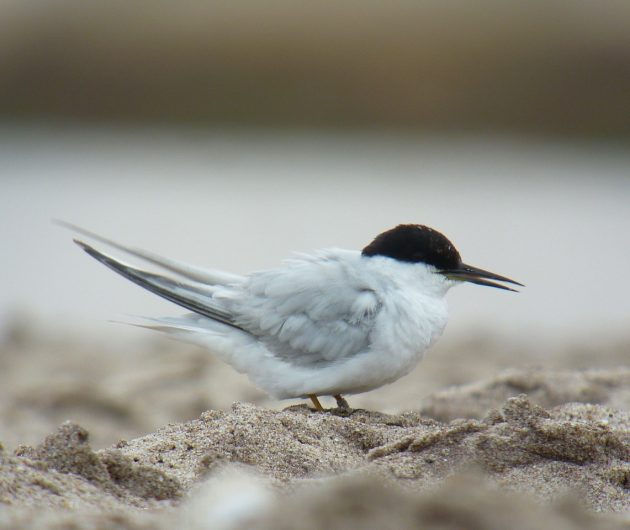
Damara Tern: The only one of the seven species of Sternula terns not have a white front to its black cap. It breeds on the coast of south-west Africa and is listed as vulnerable

Written by David T
David Tomlinson has been interested in birds for as long as he can remember, and has been writing about them for almost as long. An annual highlight is hearing his first cuckoo of the year at home in Suffolk, England, which he rates as almost as exciting as watching White-necked Rockfowls in Ghana or Steller’s Eiders in North Norway. A former tour leader, he has seen an awful lot of birds around the world, and wishes he could remember more of them. As for the name of David's beat, here is an explanation in his own words: "Brecks (Breckland) does need an explanation - it’s the name for the region on the Suffolk/Norfolk borders, renowned for its free-draining sandy soils. It has the closest to a Continental climate of anywhere in the UK. At its heart is Thetford Forest, which has the biggest population of nightjars of anywhere in the UK. The stone curlew is the other special bird of the region, again with the biggest population in the UK (over 250 pairs)."

















 English (US) ·
  French (CA) ·