

 2 weeks ago
12
2 weeks ago
12
PROTECT YOUR DNA WITH QUANTUM TECHNOLOGY
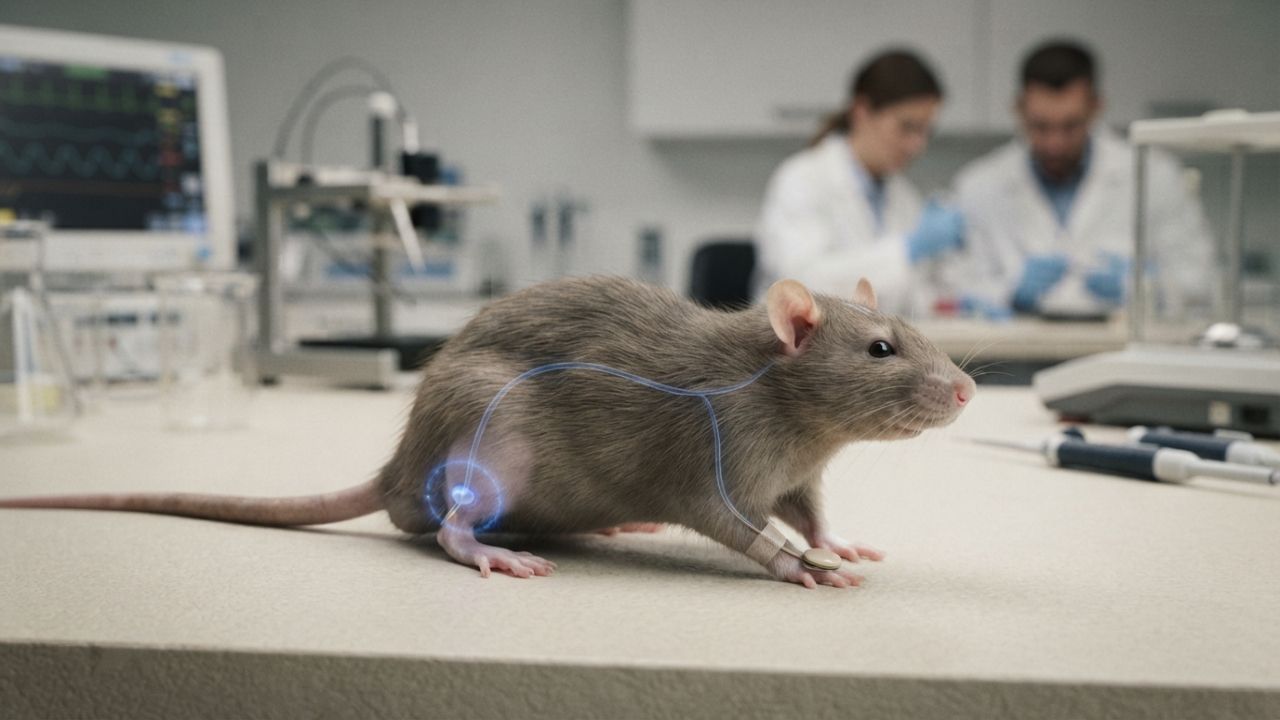
Orgo-Life the new way to the future Advertising by AdpathwaySemaglutide, the active ingredient in Ozempic and Wegovy, extended median lifespan by nearly 100 days in older female mice, according to a National Institutes of Health-funded study published in Nature. A team at the University of California, Berkeley, led by Danica Chen, began treatment when the mice were 20 months old, well into late life for the animals.
The more important finding may be how the drug worked, not just whether it did. When the team compared semaglutide directly with calorie restriction matched to the treated mice's food intake, the drug produced some benefits that eating less did not.
That raises a possibility with large implications: GLP-1 drugs may act on aging biology rather than only through reduced eating. The limits are just as important. This was a study of female mice only, and the NIH release states that the findings do not show these drugs extend human lifespan.
A Late-Life Test in 20-Month-Old Mice
In a three-month experiment, treated mice showed better muscle and cognitive function than untreated animals. Gene activity pointed to reduced inflammation and less decline in the body's ability to repair and regenerate tissue.
A separate group received semaglutide until death. Its median lifespan was nearly 100 days longer than that of untreated mice.
The team then ran a five-month comparison. One group of 20-month-old female mice received semaglutide, while another ate a 24% calorie-restricted diet designed to match the treated group's intake. Many effects overlapped, and most physiological measurements stayed stable. But only the semaglutide mice improved beyond their starting levels in exploratory behavior, spatial memory and blood sugar maintenance, and their metabolic rate held largely steady while metabolism slowed in the calorie-restricted mice.
Chen said those differences point to the possibility that GLP-1 drugs "tap into a biological pathway independent of calorie restriction." Identifying that pathway is the next scientific task.
A Busy Week of GLP-1 Findings, Most of Them Early
The mouse study arrived alongside other GLP-1 research, each with its own limits.
At the European Respiratory Society Congress in Barcelona, researchers led by Chloe Bloom of Imperial College London reported that semaglutide use was associated with nearly 40% fewer asthma attacks and about 20% fewer COPD flare-ups. The work used UK electronic health records in four parallel studies of roughly 20,000 to 22,000 people each, comparing people who started GLP-1 drugs with those who started sulfonylureas, another class of diabetes medication. It is observational and was presented at a conference, and Bloom cautioned that the findings "should not change treatment decisions on their own."
Separately, NYU Langone researchers reported a genetic link between higher GLP-1 receptor gene activity and a 7% added risk of male-pattern hair loss in men already genetically predisposed to it. The study, in the Journal of Investigative Dermatology, used genetic proxies drawn from large, mostly White databases rather than tracking people taking the drugs. Two co-investigators have past or current industry ties, including one who is a paid consultant for Eli Lilly, which makes Zepbound.
The Evidence Check on an Aging Claim
The Nature paper is a controlled, peer-reviewed animal experiment. Its scope is older female mice. It found longer median lifespan and improved health markers, some of which differed from those seen with calorie restriction. It did not show a human benefit, identify the proposed pathway, or test male mice.
Human evidence is thin so far. NIH pointed to a post-hoc analysis of the SLIM LIVER trial as one example, while stressing that further studies are needed to learn whether GLP-1 drugs meaningfully influence human aging or longevity.
Rafael de Cabo of NIH's National Institute on Aging, who wrote a commentary on the study, noted that most chronic diseases are rooted in aging. "If GLP-1 agonists do indeed slow it down, then a wide range of clinical benefits is exactly what you'd expect to see," he said. His institute is part of NIH, which funded the research through National Institute on Aging grants, so his view is informed by context rather than fully independent review.
Guidance for People Taking or Considering GLP-1 Drugs
Nothing in this research supports starting a GLP-1 drug to slow aging. These medications are prescribed for type 2 diabetes and weight management, and decisions about starting, stopping or changing a dose belong with a prescribing clinician. The respiratory researchers said people with asthma or COPD should not start these drugs specifically for their lung condition outside current prescribing guidance.
Current users who notice hair thinning or other changes should raise them with their doctor rather than stop medication on their own. Older adults and people already prescribed these drugs have the most direct interest in the research, and insurance coverage for GLP-1 medications varies by plan.
Chen said future clinical studies may test the drugs in healthy older adults, though no timeline has been announced. For now, the finding is a promising lead in aging biology, not a longevity treatment.
What Readers Want to Know
What did the semaglutide aging study find? Older female mice treated with semaglutide lived nearly 100 days longer at the median and showed better memory, muscle function and blood sugar maintenance.
Does Ozempic slow aging in people? That has not been shown. The study was in mice, and NIH says human research is still needed.
Why does the calorie restriction comparison matter? Semaglutide produced some benefits that matched food restriction did not, suggesting a possible separate biological pathway.
Should I take a GLP-1 drug for longevity? No. These drugs are prescribed for diabetes and weight management. Talk with a clinician about any medication decision.
Do GLP-1 drugs cause hair loss? Hair thinning has been reported by users. A new genetic study suggests a small added risk in predisposed men, but it did not study drug users directly.
© 2026 NatureWorldNews.com All rights reserved. Do not reproduce without permission.




















 English (US) ·
  French (CA) ·