

 1 hour ago
4
1 hour ago
4
PROTECT YOUR DNA WITH QUANTUM TECHNOLOGY
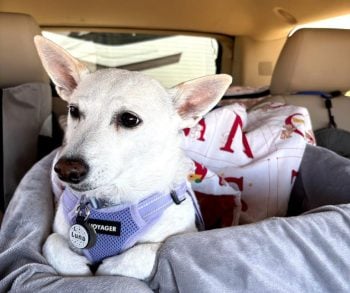
Orgo-Life the new way to the future Advertising by AdpathwayA 10-year-old Jack Russell Terrier named Luna has spent more than a month alone in Yellowstone National Park after escaping from a campground cabin during her family’s vacation. Despite freezing temperatures, early snowfall, and the park’s enormous wilderness, the little dog has repeatedly been spotted alive. Now, a dedicated rescue team is working to bring her back before seasonal closures make the search even more difficult.
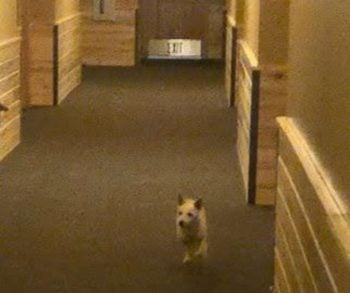
Luna disappeared on September 10 while her family from California was visiting Norris Geyser. They had left her inside their Canyon Village Campground cabin with a “Do Not Disturb” sign on the door, believing she would be safe until they returned. But when housekeeping staff opened the cabin that afternoon, Luna slipped outside and ran away.
 Credit: Facebook
A Family Vacation Takes an Unexpected Turn
What began as a family trip to one of America’s most famous national parks quickly became an exhausting search for a beloved companion. According to Katie Boucher, president of Norris Ark Training and Recovery Center in Montana, housekeeping employees initially chased Luna after she escaped instead of immediately notifying her family and park authorities.
Boucher explained that chasing a frightened, unfamiliar dog can make recovery much harder. In Luna’s case, she believes the pursuit frightened the little Terrier and pushed her farther into the surrounding forest, where the unfamiliar environment offered countless places to hide.
Luna was seen several times on the day she disappeared and again in the days that followed. A tracking dog even picked up her scent, but the search did not lead to her recovery. Her family remained in Yellowstone for a week, searching desperately before returning to California after rangers expressed concerns about Luna’s chances of surviving the cold and local wildlife.
Returning home without Luna was heartbreaking for her family. Boucher told SFGATE that they were devastated and described Luna as an incredibly important part of their lives. Even after the family left Yellowstone, the effort to find their little dog continued.
Rescuers Discover Luna Is Still Surviving
With help from park employees, visitors, and rescue volunteers, Boucher began narrowing down the area where Luna was staying. The sightings brought encouraging news: despite weeks in Yellowstone’s challenging environment, Luna was still alive and moving through the park.
Boucher herself caught a glimpse of Luna during the search. She also reported that rescuers were seeing the dog daily and that Luna had settled in a relatively stable location, giving the team a better opportunity to plan her recovery.
One detail from Luna’s past may be helping her survive. Before her family rescued her, she had spent the first year of her life living as a feral dog. Boucher believes that experience may have given Luna survival skills that are proving useful in Yellowstone’s wilderness.
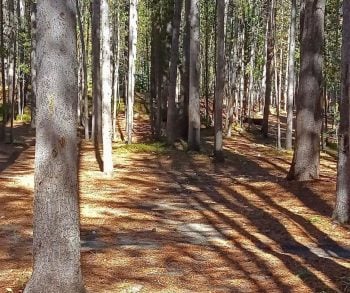
Still, finding a small dog in such a vast landscape is an enormous challenge. Luna weighs approximately 20 pounds, and the park is home to bears, wolves, coyotes, and mountain lions. Those animals also complicate the use of food as bait because attracting predators could endanger Luna and interfere with rescue operations.
 Credit: Facebook
A Race Against Yellowstone’s Seasonal Closures
As the search continued, autumn weather added another obstacle. Snow had already begun covering parts of Yellowstone, and additional storms were expected. While fresh snow could help rescuers identify Luna’s paw prints, worsening conditions threatened to bring the search to a halt.
At the time of Boucher’s interview, the rescue team had approximately one week before scheduled seasonal road and campground closures would restrict access to the area. The approaching deadline made every confirmed sighting especially important.
Fortunately, the National Park Service had been cooperating with the rescue effort. Boucher and her volunteers received special access permissions and a trapping permit, allowing them to work in locations unavailable to ordinary visitors. Delaware North also provided food and lodging to support Boucher during the search.
The team deliberately avoided sharing Luna’s precise location or detailed trapping methods. Boucher worried that well-meaning visitors might approach or chase the frightened dog, potentially driving her away from the area where rescuers had been tracking her movements.
One Small Dog and a Rescue Team That Hasn’t Given Up
Although the situation remained difficult, Boucher continued to express hope that Luna could be recovered. The repeated sightings suggested that the little Terrier had found ways to survive, and the rescue team had established a trap in hopes of safely capturing her.
 Credit: Facebook
Anyone who encountered Luna was urged not to pursue her. Instead, rescuers asked witnesses to report the time and location of sightings so trained personnel could respond without frightening her farther into the wilderness.
At the time of the report, Luna had not yet been captured, and her family was still waiting for news from Yellowstone. With a trap ready and rescuers closely following her movements, the hope was that Luna would finally enter it and have the chance to return to the people who missed her.
This content was created with AI assistance and edited by the iHeartDogs team.















 English (US) ·
  French (CA) ·