

 3 months ago
116
3 months ago
116
PROTECT YOUR DNA WITH QUANTUM TECHNOLOGY
Orgo-Life the new way to the future Advertising by AdpathwayShark bites are traumatic and can spark fear and anger alongside tragedy. Around the world, the trend is flat. But in Australia, shark bites are going up.
A recent number of bites, especially around Sydney’s famous beaches, has surfers, swimmers and politicians asking why. But the answers are not straightforward.
We will dive into why, after a look at the most important reads of the week.
Essential reads
-
Why humidity is making UK’s record-breaking June day feel hotter
-
Can the UK kick its cod habit? Fish and chip shop favourite slips down the menu as prices soar
-
‘No one believed it’: how a YouTube video accidentally proved Libya’s sand cat really does exist
In focus
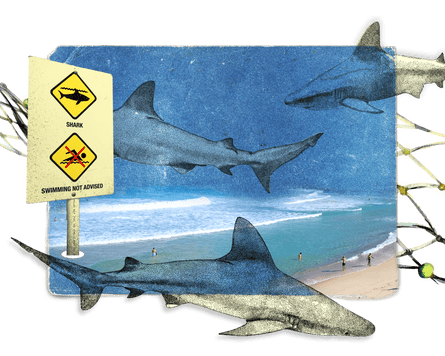
Globally, there has been little change for decades in the numbers of shark bites. There were 65 unprovoked incidents last year. The 10-year average is 72 bites a year, which is similar to the 20-year average and the 30-year average.
In Australia, though, the story is very different. There were 12 bites a year during the 2000s. This decade, they are up to 21.
Sydney’s famous beaches have seen a spate of serious and deadly bites. Earlier this year, it was bull sharks. This month, a suspected white shark caused life-changing injuries to a 34-year-old woman (as I write, Leah Stewart remains in hospital after multiple surgeries, including to amputate her arm, but is no longer in critical condition).
The bites have swimmers and surfers on edge and asking questions. The beach is central to many people’s lives, but some are choosing not to go in the water at all. Australia is home to the three species of sharks responsible for the worst bites – great whites, tigers and bulls.
Every shark bite prompts headlines calling for sharks to be culled, but the key role sharks play in the health of the ocean ecosystem is rarely mentioned. Former Australian prime minister Tony Abbott, a keen Sydney surfer, can always be relied on to call for killing sharks after any serious bite, as he did last week.
Then there are people who say sharks should be left alone, and that anyone who goes into the water is entering a shark’s home.
Between these two extremes is the question of why bites are going up – and whether anything can be done to reduce the risk.
Rob Harcourt, leader of the marine predator research group at Sydney’s Macquarie University and a daily ocean swimmer and surfer, says there is no definitive answer but some things are clear. Population growth is likely a factor. Australia’s population has grown by 7 million people in 20 years, although it is difficult to get data on how many people go in the water in places where sharks hang out. Warming waters are changing shark behaviour – tiger and bull sharks are known to be staying in the Sydney area a little longer each year.
And with more humpback whales, shark movements might also be changing, as the whales make an annual migration along Australia’s east coast and are a food source for large sharks. The same applies with some seal species – their numbers are also thought to be recovering, and they attract sharks looking for a feed. Experts think sharks that bite people have often mistaken a human for a seal. Other times, a shark bite can be exploratory or even to ward off imagined competition for food, such as a school of fish.
But while some people – such as Abbott – claim there has been an “explosion” in shark numbers, there is no evidence to back this up (experts say there’s been little change in the number of sharks getting caught in shark nets, for example). And some ask if measures that try to lower the risk could be playing a role in the rate of bites.
after newsletter promotion
States in Australia have shark-management plans that are broadly similar. On busy beaches, volunteer surf lifesavers have begun using drones to monitor for sharks and alerts go out if a tagged shark is nearby.
Some beaches also have nets designed to keep sharks out, but these are controversial as many experts say they don’t work, and instead trap hundreds of other marine species. Baited and hooked lines to catch and sometimes release big sharks, meanwhile,are also controversial – again, they catch many other marine species, and may not reduce risk.
Amid worries and these mitigations, the risk of being bitten remains incredibly small. There were five deaths from shark bites in Australia last year, but 82 from drowning at beaches. Humans naturally and understandably fear things they can’t control: a shark bite is one of those things, and that translates to a reasonable but disproportionate fear of sharks.
Reporting on shark bites is challenging. The events can be deadly and life-changing. But the answer to why bites are rising in Australia is a question without a clear answer. There may never be one.
Read more:
Is there such a thing as a ‘problem shark’? Plan to catch repeat biters divides scientists
Goblin shark with face ‘not even a mother would love’ seen alive in natural habitat for first time



















 English (US) ·
  French (CA) ·