

PROTECT YOUR DNA WITH QUANTUM TECHNOLOGY
Orgo-Life the new way to the future Advertising by AdpathwayFact Worth Sharing

The President’s Budget Request would eliminate NASA’s involvement in Venus exploration, canceling two NASA-led missions (VERITAS and DAVINCI) and NASA’s contributions to the European Space Agency’s EnVision mission.
Mission Briefings


NASA's TESS space telescope found over 11,000 new exoplanet candidates. Researchers used machine learning to help sort through light-curve data from 83,717,159 stars observed during the first year of TESS operations, looking for dips in light that signal the presence of orbiting planets. The result: 11,554 new exoplanet candidates. Pictured: An artist’s impression of an exoplanet. Image credit: ESO/L. Calçada.

The House Science Committee opposes the proposed cuts to NASA’s budget. “Our nation is nearly $39 trillion in debt,” said Committee chair Rep. Brian Babin (R-TX) at a hearing on NASA’s FY2027 budget request, “and we must address this alarming situation soon. But we must be smart in how we do so. Shortchanging NASA is simply not smart.”

A hardy fungus may challenge planetary protection efforts. A recent study has identified a fungus called Aspergillus calidoustus living in NASA cleanrooms even after decontamination. This species could potentially survive the radiation, near-vacuum, and temperature conditions of deep space, meaning it could be carried on spacecraft to Mars or other worlds.
From The Planetary Society


Artemis II made headlines, but did it impact the public? Polls suggest that most people in the United States were aware of the mission, but interest in it faded quickly once it was over. In a new article, The Planetary Society’s science editor, Asa Stahl, explores whether Artemis II resonated with the public, or merely glanced off them. Pictured: Cameras set up to capture and broadcast the Artemis II launch on April 1. Image credit: NASA/Aubrey Gemignani.
It’s a great year to celebrate human spaceflight. Yuri's Night is an annual celebration of the anniversary of Yuri Gagarin’s first spaceflight. This year, an event was held at Griffith Observatory the day after Artemis II splashed down. On this week’s Planetary Radio, host Sarah Al-Ahmed brings you conversations from the event, with educators, engineers, astronauts, and space philosophers discussing 65 years of human spaceflight and what it means to see Earth from space.
Coming up in the Planetary Society book club: ‘To Be Taught, If Fortunate.’ On Tuesday, May 5, Planetary Society members can join a live virtual Q&A with author Becky Chambers about her novella that explores how we may someday seek out new life across the stars. Host Mat Kaplan will also ask her about how she has imagined we will adapt our bodies for space travel, while still facing some of the oldest and most challenging of human trials. This is a member-exclusive event. Not yet a member? Join today.
Flash match challenge announced! A generous Planetary Society member has issued a $5,000 matching gift challenge to boost our advocacy efforts. Your donation will power our advocacy when it matters most. Make your gift today to have it doubled during this flash match challenge!
What's Up

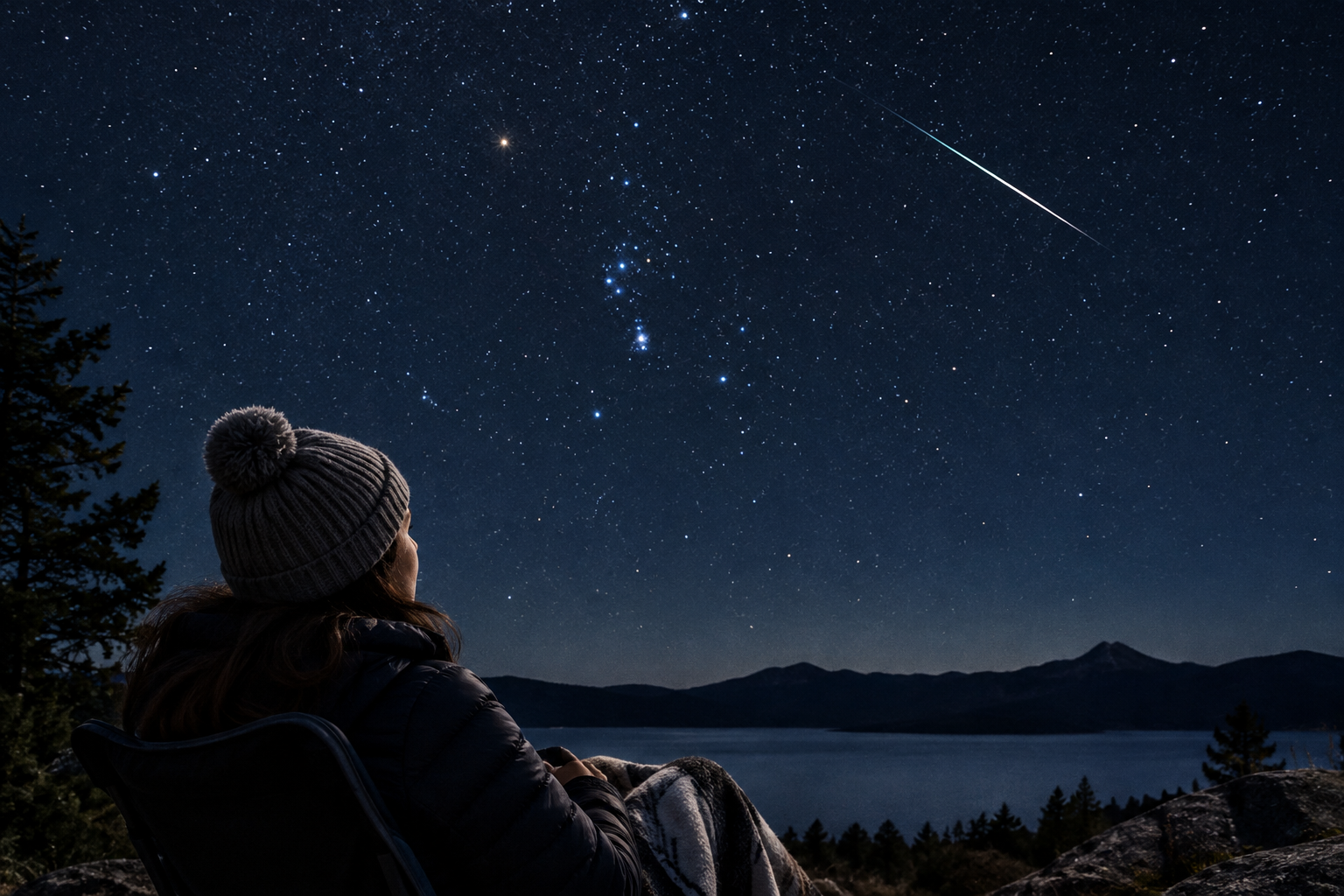
This week, look for super-bright Venus dominating the early evening western sky, with very bright Jupiter higher up. In the pre-dawn, yellowish Saturn is very low to the eastern horizon, with reddish Mars even lower. Overnight between May 5-6, the Eta Aquariid meteor shower peaks. Learn more about what’s coming up this month in our guide to May’s night skies.
Join now and save space missions

If you are not one already, become a member TODAY and help shape the future of space science and exploration by fueling mission-critical advocacy efforts. Thanks to our members' support, we were able to prevent an extinction-level budget cut to planetary exploration last year. Now we have to do it again.
Will you join us and protect the future of exploration?
Wow of the Week

Earth’s landscapes contain all kinds of beautiful features, including many that resemble letters. The Landsat program — a long-running NASA/USGS program to acquire satellite imagery of Earth — has released a delightful tool that allows you to spell out your name (or ‘SPACE,’ if you’re nerds like us) using real images of letter-shaped features on our planet, and then learn more about the features themselves. Image credit: NASA/USGS.
Send us your artwork!
We love to feature space artwork in the Downlink. If you create any kind of space-related art, we invite you to send it to us by replying to any Downlink email or writing to [email protected]. Please let us know in your email if you’re a Planetary Society member!


Account Center • Contact Us • Privacy Policy
Give with confidence. The Planetary Society is a registered 501(c)(3) nonprofit organization.
© 2026 The Planetary Society. All rights reserved.
Cookie Declaration
















 English (US) ·
  French (CA) ·