

PROTECT YOUR DNA WITH QUANTUM TECHNOLOGY
Orgo-Life the new way to the future Advertising by Adpathway






Latest Posts
- Skeptical Science New Research for Week #43 2026
- As El Niño fuels drought in Panama, trees help ranchers maintain their water supply
- Climate Trunk - Daily Life
- The strongest El Niño in a thousand years?
- 2026 SkS Weekly Climate Change & Global Warming News Roundup #42
- Skeptical Science New Research for Week #42 2026
- Climate Trunk - Governance
- Fact brief - Does onshore wind power need subsidies to compete with fossil fuels?
- How Hurricane Isaias broke through to become the first Atlantic hurricane in an extremely quiet 2026 season
- 2026 SkS Weekly Climate Change & Global Warming News Roundup #41
- Skeptical Science New Research for Week #41 2026
- Scientists link fossil fuel producers to the West’s worsening water shortages
- The world without solar and wind?
- America is hurtling toward a power grid crisis
- 2026 SkS Weekly Climate Change & Global Warming News Roundup #40
- Skeptical Science New Research for Week #40 2026
- The impacts of this year’s record-shattering El Niño
- The Worst Case Is Still on the Table
- Scientists link fossil fuel producers to the West’s worsening water shortages
- 2026 SkS Weekly Climate Change & Global Warming News Roundup #39
- Skeptical Science New Research for Week #39 2026
- India’s power-sector emissions flat for two years due to clean-energy surge
- Fact brief - Does wind power require backup from fossil fuels?
- Rapid Warming in the Himalaya Exacerbates Geohazard Cascades Beyond Adaptation Limits
- 2026 SkS Weekly Climate Change & Global Warming News Roundup #38
- Skeptical Science New Research for Week #38 2026
- The next water crisis is beneath our feet
- The Atmosphere Just Set a Water Vapor Record
- Factcheck: Reform UK’s 45 false or misleading claims about climate and energy
- 2026 SkS Weekly Climate Change & Global Warming News Roundup #37

Skeptical Science New Research for Week #43 2026
Posted on 22 October 2026 by Doug Bostrom, Marc Kodack
Open access notables
 Rapid Increase in Geogenic CO2 Emissions from Antarctic Permafrost, Ruggiero et al., Global Biogeochemical Cycles
Antarctic permafrost and ice-free soils are generally assumed to make only a minor contribution to the global carbon cycle. This study shows that this assumption is incomplete. Using repeated field measurements and carbon isotope analyses, we document a marked multi-year increase in carbon dioxide emissions from Antarctic permafrost terrain and identify a substantial contribution from deep geologic carbon rather than modern microbial activity alone. Our results show that Antarctic permafrost can act as a pathway for the release of ancient carbon. This previously unrecognized process has implications for high-latitude carbon budgets and highlights the need to evaluate Antarctica in Earth system and climate assessments.
Experimental evidence of threshold-driven gas breakthrough in thawing permafrost, Shang et al., Frontiers in Environmental Science
Gas breakthrough is an important but poorly constrained mechanism for abrupt methane release during permafrost warming. This study presents an experimental investigation of gas breakthrough in saturated permafrost analogue soils subjected to controlled freezing and progressive thawing. A silty sand collected from Alaska’s North Slope was tested using an integrated program comprising unfrozen water content measurements, direct tensile tests, constant-volume gas breakthrough experiments, and stress-controlled breakthrough tests under confining pressures representative of shallow to deep permafrost. Unfrozen Water Content (UWC) measurements revealed a sharp, nonlinear reduction below 0 °C, with residual unfrozen water persisting at low temperatures and minor thermal hysteresis between freezing and thawing paths. Tensile strength increased nonlinearly with decreasing temperature, transitioning from ductile behavior near −2 °C to brittle failure at lower temperatures, while tensile resistance near −1 °C was negligible. Gas breakthrough occurred only when gas pressure exceeded thresholds governed by temperature-dependent unfrozen water content, tensile resistance, and confinement. Under high confinement, breakthrough pressures substantially exceeded unconfined tensile strength and occurred primarily during thawing near −1 °C. These results demonstrate that permafrost thawing significantly increases susceptibility to gas breakthrough and provide experimental constraints for assessing methane release from degrading permafrost.
Palaeoclimate constraints narrow uncertainty in future Arctic winter sea ice projections, Fu et al., Nature Geoscience
Arctic sea ice decline has been observed across all seasons and is projected to continue in the future. Relative to historical observations, climate models show their largest biases and uncertainties during winter, when ice cover strongly regulates air–sea heat exchange, ocean mixing and atmospheric circulation. Palaeoclimate records offer opportunities to evaluate model performance beyond the historical period, but applications have remained largely qualitative. Here we compile an Arctic-wide database of mid-Holocene (5–7 thousand years ago) biomarkers to assess sea ice simulations of this past warm period. Using a recently developed proxy system model, we present a Bayesian palaeoclimate model weighting scheme that refines the multi-model mean winter sea ice extent through fully quantitative proxy-model comparisons, accounting for model interdependence and non-stationary proxy seasonality. We demonstrate that, by adjusting the contribution of each model to the ensemble mean based on proxy evidence, model weights can eliminate biases and reduce uncertainties by 85%, to the level of interannual variability. Weighted projections using the same climate models indicate that future winter sea ice extent may be nearly 1 million km2 lower than prior estimates across forthcoming decades and possible emissions scenarios, with broad implications for Arctic ecosystems, mid-latitude weather, and cryosphere stability.
Resolving short-term meteorological variability amplifies projected glacier loss and sea-level rise, Tricht et al., Nature Communications
Global glacier models typically rely on temperature-index mass balance calculations forced with aggregated meteorological data, limiting their ability to resolve short-term variability. Here, we develop a daily-resolution version of the Global Glacier Evolution Model (GloGEM), which we apply globally and compare against the monthly configuration. Our results show that the daily model more closely reproduces mass balance observations and provides a more detailed representation of glacier runoff. Accounting for short-term meteorological variability leads to systematically greater projected mass loss, with up to 25% greater loss in Svalbard. These differences arise from extreme melt days, precipitation-phase transitions, and surface-type feedbacks not fully represented at monthly resolution. Globally, the daily model yields ice volume losses of 26 ± 10% under low-emission and 47 ± 17% under high-emission scenarios over 2025-2100 (ensemble mean ± 1 StD), resulting in an additional 5-10% mass loss (20-33 mm of global mean sea-level rise) relative to the monthly implementation. Resolving high-frequency forcing, or accounting for its effects through parameterisations, is therefore essential for robust glacier projections, while its omission may systematically underestimate future glacier loss.
From this week's government/NGO section:
The Myth of “Baseload” Power in Modern Power Grids, Jennifer Danis and Christoph Graf, Institute for Policy Integrity
the authors the term “baseload” power, together with other reliability-related energy concepts that are often used interchangeably, or in various combinations, to describe the resources’ role in electricity markets and regarding grid reliability. They also discuss why, despite the rhetoric indicating that electric grid reliability is at risk because of retiring “baseload,” “dispatchable,” or “firm” resources, these terms have distinct meanings for reliability in a diversely resourced grid.Sounding the Alarm, Inside Track
The authors are deeply concerned that the level of physical climate and environmental risk they are seeing is increasing at a dangerous rate. The frequency, severity, and unpredictability of hazards are broadly increasing, as are the exposure and vulnerability of many parts of society to these hazards. They are worried that the risk levels we are seeing either are not being communicated to or are not being properly internalized by government. Without intervention these physical risks will translate into major economic risk. The undermining of the mortgage market drove the Global Financial Crisis – they are worried a major increase in uninsured, high-risk properties could manifest in a similar way as climate effects intensify.Emissions Gap Report 2026: The point of return – Urgent emissions cuts needed to come back from overshoot of 1.5°C, Olhoff et al., United Nations Environment Programme
The authors detail the cuts to emissions needed by 2030, 2035 and 2040 to get on a return pathway — finding that the cuts needed are far above what current Nationally Determined Contributions deliver. However, the authors find that it is possible to close this emissions gap — pointing to many successful climate policies that have already delivered real-world emissions cuts and could be scaled up globally to accelerate action.138 articles in 57 journals by 932 contributing authors
Physical science of climate change, effects
Enhanced Efficacy Contributes to Tropical Cyclone Intensification in Warmer Climates via Stronger Storm-Scale Radiative Feedbacks, Zhang et al., Journal of Climate 10.1175/jcli-d-25-0570.1
Estimating the Maximum Mean Precipitation in Hothouse Climates, Bonan & Schneider, Journal of Climate pdf 10.1175/jcli-d-25-0593.1
Heatwave intensification and associated driving mechanisms across High Mountain Asia, Zhao et al., Advances in Climate Change Research Open Access 10.1016/j.accre.2026.10.004
Improved Estimates of Equilibrium Climate Sensitivity From Non-Equilibrated Climate Simulations, He et al., Journal of Geophysical Research Atmospheres Open Access 10.1029/2026jd046855
Increased southward swings of the South Indian convergence zone under greenhouse warming, Wang et al., Nature Climate Change 10.1038/s41558-026-02767-x
Interdecadal Changes in the ENSO-Induced Summertime Anomalous Western North Pacific Anticyclone, Wu et al., Journal of Climate 10.1175/jcli-d-26-0211.1
Local and Cross-Basin Driving Mechanisms for Marine Heatwaves in the Kuroshio Extension Region, Cao et al., Journal of Geophysical Research Oceans Open Access pdf 10.1029/2026jc024634
Modulation of Global-Scale Warming of the Atmosphere and Subsurface Ocean by Diathermal Heat Transport in the Equatorial Pacific Cold Tongue, Iyer & Moum, Journal of Physical Oceanography 10.1175/jpo-d-26-0100.1
Why the midlatitude ocean is warming faster in summer than in winter, Vimont et al., npj Climate and Atmospheric Science Open Access 10.1038/s41612-026-01567-6
Most cited from this section, published 2 years ago: Adjustments to Climate Perturbations—Mechanisms, Implications, Observational Constraints, AGU Advances, 10.1029/2023av001144 16 cites.
Observations of climate change, effects
Changes in precipitation seasonality over the Indochina Peninsula during 1981–2020: observational evidence and attribution of anthropogenic forcing, Zhang et al., Frontiers in Earth Science Open Access pdf 10.3389/feart.2026.1937024
Heatwave intensification and associated driving mechanisms across High Mountain Asia, Zhao et al., Advances in Climate Change Research Open Access 10.1016/j.accre.2026.10.004
Multidecadal Changes in Atmospheric Dryness Over East Asia Dominated by Internal Climate Variability, Wang et al., Geophysical Research Letters Open Access 10.1029/2026gl125508
Rapid Increase in Geogenic CO2 Emissions from Antarctic Permafrost, Ruggiero et al., Global Biogeochemical Cycles Open Access pdf 10.1029/2026gb009134
Significant Acceleration of Wintertime Current in South China Sea Western Boundary Region During Satellite-Observed Time, Wang & Lan, Journal of Geophysical Research Oceans 10.1029/2026jc024895
Threefold Land-Use Forcing Intensifies Twofold Warming of Urban Europe, Swain et al., Journal of Geophysical Research Atmospheres Open Access 10.1029/2026jd046541
Warming-driven lower-tropospheric stratification intensifies ducting over global oceans, Zhao et al., Nature Climate Change Open Access pdf 10.1038/s41558-026-02774-y
Most cited from this section, published 2 years ago: Global rise in forest fire emissions linked to climate change in the extratropics, Science, 10.1126/science.adl5889 199 cites.
Instrumentation & observational methods of climate change, effects
Evaluating space-based methane detection through a one-year blind test, Reuland et al., Nature 10.1038/s41586-026-11115-0
Most cited from this section, published 2 years ago: Dheed: an ERA5 based global database of compound dry and hot extreme events from 1950 to 2023, Earth system science data, 10.5194/essd-17-6621-2025 9 cites.
Modeling, simulation & projection of climate change, effects
An ensemble of regional CMIP3/CMIP5 wind wave scenarios for the North Sea and the Baltic Sea: a revisit, Groll & Grabemann, Ocean science Open Access pdf 10.5194/os-22-3185-2026
Anthropogenic attribution and constrained projections of summer wet-bulb globe temperature over global land areas, Li et al., Global and Planetary Change 10.1016/j.gloplacha.2026.105737
Changing patterns of compound coastal flooding along the Pacific coast of North America: precipitation-surge interactions under climate change, Fereshtehpour et al., Weather and Climate Extremes Open Access 10.1016/j.wace.2026.100963
Declining Surface Solar Radiation Resources in Polar Regions Under Global Warming, Huang et al., Geophysical Research Letters Open Access pdf 10.1029/2026gl125763
Evaluating the Coupled GEOS-AOGCM for Climate Research: Response to an Abrupt Quadrupling of CO2 Forcing, Li et al., Journal of Geophysical Research Atmospheres 10.1029/2025jd044986
Intensification of East Asian summer extreme precipitation under a net-zero anthropogenic CO2 emission scenario, Paik et al., Science Advances Open Access 10.1126/sciadv.aec9366
Millennial-Scale Climate States Alter Atlantic Multidecadal Variability Mechanisms in a Climate Model, Kjellsson & Park, Geophysical Research Letters Open Access 10.1029/2026gl123473
NUKLEUS—A First Convection-Permitting Multimodel Ensemble for Germany: Assessment of Future Changes in Temperature and Precipitation Extremes, Beier et al., Journal of Climate 10.1175/jcli-d-25-0613.1
Probabilistic constraints on the zero emissions commitment, Hohn et al., Frontiers in Climate Open Access 10.3389/fclim.2026.1877157
Reversible Atlantic overturning despite continued Greenland ice sheet melt, Guo et al., Science Advances Open Access 10.1126/sciadv.aee5373
Significant Spatiotemporal Asymmetry in Future Global Rainstorm Flood Risk, Zhao et al., Earth s Future Open Access pdf 10.1029/2025ef007148
The 2023 North Atlantic marine heatwave could have evolved into a far more extreme event, Gregory et al., Nature Communications Open Access pdf 10.1038/s41467-026-78863-5
Most cited from this section, published 2 years ago: Projected changes in mean climate and extremes from downscaled high-resolution CMIP6 simulations in Australia, Weather and Climate Extremes, 10.1016/j.wace.2024.100733 25 cites.
Advancement of climate & climate effects modeling, simulation & projection
The Sensitivity of a Coupled Climate Model to Numerical Mixing in Its Ocean Component, Megann et al., Journal of Climate Open Access 10.1175/jcli-d-25-0661.1
Tropical Ocean Evaporation-Temperature Sensitivity to Surface Radiative Property Perturbations in Fully Coupled CESM2, Wei et al., Journal of Geophysical Research Atmospheres Open Access pdf 10.1029/2026jd048440
Most cited from this section, published 2 years ago: Implications of a Pervasive Climate Model Bias for Low-Cloud Feedback, Geophysical Research Letters, 10.1029/2024gl110525 30 cites.
Cryosphere & climate change
Abrupt permafrost thaw overwhelms vegetation-driven erosion reduction in sediment export on the Tibetan Plateau, Ma et al., Communications Earth & Environment Open Access pdf 10.1038/s43247-026-04125-3
Alaskan Glaciers in a Warming Climate, Wells et al., Earth s Future Open Access pdf 10.1029/2026ef009035
Antarctic marine-based ice destabilized when warming outpaces solid-Earth feedbacks, Swierczek-Jereczek et al., Nature Geoscience Open Access 10.1038/s41561-026-02117-8
Palaeoclimate constraints narrow uncertainty in future Arctic winter sea ice projections, Fu et al., Nature Geoscience Open Access pdf 10.1038/s41561-026-02123-w
Resolving short-term meteorological variability amplifies projected glacier loss and sea-level rise, Tricht et al., Nature Communications Open Access pdf 10.1038/s41467-026-78260-y
Seasonal surface melt onset and firn freeze-up across the central Wrangell and St. Elias Mountains, Kindstedt et al., cryosphere Open Access 10.5194/tc-20-5941-2026
Sudden collapse of ice mélange under increasing submarine melt at tidewater glaciers, Summers et al., Nature Communications Open Access pdf 10.1038/s41467-026-78423-x
Tuvaijuittuq: The Last Refuge of Multiyear Ice (MYI) Is Becoming Increasingly Open, Pu?ko et al., Journal of Geophysical Research Oceans Open Access 10.1029/2025jc023023
Most cited from this section, published 2 years ago: Seasonal changes in black carbon footprint on the Antarctic Peninsula due to rising shipborne tourism and forest fires, Science Advances, 10.1126/sciadv.adp1682 7 cites.
Sea level & climate change
Changing patterns of compound coastal flooding along the Pacific coast of North America: precipitation-surge interactions under climate change, Fereshtehpour et al., Weather and Climate Extremes Open Access 10.1016/j.wace.2026.100963
Global ice loss drives source-independent amplification of sea-level rise at Pacific and Indian Ocean Small Island Developing States, Powell et al., Communications Earth & Environment Open Access pdf 10.1038/s43247-026-04132-4
Most cited from this section, published 2 years ago: The rate of global sea level rise doubled during the past three decades, Communications Earth & Environment, 10.1038/s43247-024-01761-5 153 cites.
Paleoclimate & paleogeochemistry
Constraints on Past CO2 and Climate Sensitivity From Global Temperature and Sea Level Reconstructions Across the Plio-Pleistocene, Köhler & Clark, Geophysical Research Letters Open Access 10.1029/2025gl120608
Most cited from this section, published 2 years ago: Expanded subsurface ocean anoxia in the Atlantic during the Paleocene-Eocene Thermal Maximum, Nature Communications, 10.1038/s41467-024-53423-x 15 cites.
Biology & climate change, related geochemistry
Climate Change Experienced by Life on Earth—Drivers and Mechanisms of Future Trends in Microclimates, Wolters et al., BioScience 10.1641/0006-3568(2000)050[1089:eogcoa]2.0.co;2
Coordinated Leaf Trait Acclimation Reduces Simulated Global Photosynthesis Sensitivity to Elevated CO2 in a Land Surface Model, Bian et al., Journal of Geophysical Research Biogeosciences 10.1029/2026jg010127
Detecting long-term canopy change and vegetation shifts in northern peatlands using LAI and climate data, Burdun et al., Biogeosciences Open Access pdf 10.5194/bg-23-7289-2026
Dispersal Limitations Restrict Predicted Climate-Driven Biodiversity Dynamics Across North America, Meng et al., Global Ecology and Biogeography Open Access pdf 10.1111/geb.70321
Drought tolerance and mortality risk of European beech, Walthert et al., Agricultural and Forest Meteorology Open Access 10.1016/j.agrformet.2026.111541
Effects of climate change on marine biodiversity on the western Atlantic coast, Oliveira et al., Conservation Biology Open Access pdf 10.1111/cobi.70399
Escalating competition in changing seas: baleen whales exploit killer whale prey herding, Jourdain et al., Philosophical Transactions of the Royal Society B Biological Sciences Open Access pdf 10.1098/rstb.2025.0197
Explainable artificial intelligence reveals spatially divergent effects of global change on mammals, Song et al., Nature Communications Open Access pdf 10.1038/s41467-026-78677-5
Global grassland productivity and carbon storage benefit from functional diversity under climate change, Wirth et al., Proceedings of the National Academy of Sciences Open Access pdf 10.1073/pnas.2528067123
Hemispheric asymmetry in predicted range shifts of anti-tropical fish under future climate change, Zhang et al., Nature Communications Open Access pdf 10.1038/s41467-026-78577-8
No Net Increase in Ecosystem Water Limitation Under Greenhouse Warming, Xu et al., Earth s Future Open Access pdf 10.1029/2026ef008222
Norway spruce shows stronger growth sensitivity and weaker intrinsic water-use efficiency response than Scots pine under increasing water limitation in southern Finland, Szejner et al., Biogeosciences Open Access pdf 10.5194/bg-23-7223-2026
Persistent effects of experimental heatwave duration on population dynamics, Gruntz & Grainger, Biology Letters Open Access 10.1098/rsbl.2026.0444
Regime Shifts During Compound Drought-Heatwave Events Amplify Ecosystem and Heat Stress Risks, Yang & Tang, Geophysical Research Letters Open Access pdf 10.1029/2026gl125653
Spatio-temporal dynamics of ringed seal density and habitat use in the Arctic's Last Ice Area, MacLean et al., Ecography Open Access 10.1002/ecog.08562
Thermal Generalism Shapes Tolerance to Extreme Heatwaves in Estuarine Fishes, Mitchell et al., Global Change Biology Open Access pdf 10.1111/gcb.71143
Most cited from this section, published 2 years ago: Global exposure risk of frogs to increasing environmental dryness, Nature Climate Change, 10.1038/s41558-024-02167-z 46 cites.
GHG sources & sinks, flux, related geochemistry
Bedrock erodibility governs transient erosion and CO2 release in alpine landscapes, Marder et al., Science Advances Open Access 10.1126/sciadv.aei9275
Characterizing Point-Source Carbon Emissions by Combining TROPOMI CO and OCO CO2 Data, Leguijt et al., Journal of Geophysical Research Atmospheres Open Access 10.1029/2025jd044636
Climate Warming Impaired the CO2 Sink Capacity and Efficiency in a Suaeda salsa-Dominated Salt Marsh, Wei et al., Global Change Biology 10.1111/gcb.71151
Cross-Network Synergies Fundamental to Sustained Global Ocean Carbon Observing, Sutton et al., Earth s Future Open Access pdf 10.1029/2026ef008722
Disentangling the drivers of soil CO2 ventilation in a Mediterranean dryland using in situ and remote sensing techniques, Abril-Gago et al., Biogeosciences Open Access pdf 10.5194/bg-23-2569-2026
Divergent Spatial and Temporal Sensitivities of Forest Biomass to Climate Challenge Space-For-Time Assumptions and Models, Yang & Anderegg, Ecology Letters Open Access 10.1111/ele.70466
Drivers and implications of declining fossil fuel CO2 concentrations in Chinese cities revealed by radiocarbon measurements, Li et al., Atmospheric chemistry and physics Open Access 10.5194/acp-26-5085-2026
Drivers of long-term grassland CO2 fluxes: effects of management and meteorological conditions during regrowth periods, Wang et al., Biogeosciences Open Access pdf 10.5194/bg-23-1625-2026
Eastern Arabian Sea Is a Perennial Source of CO2 With High Coastal Fluxes: Quantifying Key Drivers, Sherin & Gupta, Global Biogeochemical Cycles 10.1029/2024gb008368
Effects of disturbance on seasonal CO2 dynamics in two boreal forest sites underlain by permafrost, Vas et al., cryosphere Open Access pdf 10.5194/tc-20-2017-2026
Experimental Determination of the Global Warming Potential of Carbonyl Fluoride (COF2), Kim et al., Atmospheric chemistry and physics Open Access pdf 10.5194/acp-26-2707-2026
Experimental evidence of threshold-driven gas breakthrough in thawing permafrost, Shang et al., Frontiers in Environmental Science Open Access pdf 10.3389/fenvs.2026.1820261
Flash drought promotes decoupling of soil CO2 emissions and CH4 uptake in seasonal subtropical wetlands: A case study in Dongting Lake, Youxin et al., Agricultural and Forest Meteorology 10.1016/j.agrformet.2026.111542
Global Anthropogenic Methane Emissions: Bottom-Up Simulations of Current Trends and Scope for Future Mitigation, Höglund-Isaksson et al., Global Biogeochemical Cycles Open Access 10.1029/2026gb009471
Global mapping of disaggregated international trade-linked transportation CO2 emissions, Luo et al., Science Advances Open Access pdf 10.1126/sciadv.adz1670
Interpretable Machine Learning Reveals Global Nonlinear Responses of Soil Respiration to Climate, Laffitte et al., Geophysical Research Letters Open Access pdf 10.1029/2026gl124051
Linking sea–air and benthic methane fluxes across seasons in a tropical seagrass meadow of Taiwan, Tseng et al., Biogeosciences Open Access pdf 10.5194/bg-23-7309-2026
Methane Uptake by Inland Waters: Fact or Fiction?, Peacock & Webb, Global Biogeochemical Cycles Open Access pdf 10.1029/2026gb009212
Microbially Mediated Soil Carbon Sequestration Under Long-Term Increased Snow Cover: Divergent Mechanisms Between Topsoil and Subsoil in a Temperate Grassland, Ma et al., Earth s Future Open Access pdf 10.1029/2025ef007819
Net CO2 Emissions From Dry Inland Waters Persist in the Presence of Vegetation, Sharma et al., Global Biogeochemical Cycles Open Access 10.1029/2025gb008801
Rapid Increase in Geogenic CO2 Emissions from Antarctic Permafrost, Ruggiero et al., Global Biogeochemical Cycles Open Access pdf 10.1029/2026gb009134
Respiration-Induced Weakening of Land Sink Contributed to the Largest CO2 Increase in 2024, Dang et al., Global Change Biology 10.1111/gcb.70831
Soil Invertebrate Body Size Groups and Effect Magnitude Jointly Influence Global Soil CO2 Emissions, Liu et al., Global Change Biology 10.1111/gcb.70770
Symbiotic nitrogen fixation sustains carbon sinks under warming Tibetan permafrost region, Xu-Ri et al., Communications Earth & Environment Open Access pdf 10.1038/s43247-026-04085-8
UEx-L-Eddies: decadal and global long-lived mesoscale eddy trajectories with coincident air–sea CO2 fluxes and environmental conditions, Ford et al., Earth system science data Open Access pdf 10.5194/essd-18-969-2026
Wetland Expansion Reduces CO2-Equivalent Emissions and Strengthens the Congo Basin's Role as a Net Carbon Sink, Byrne et al., Global Change Biology Open Access pdf 10.1111/gcb.70746
Most cited from this section, published 2 years ago: The restoration of karst rocky desertification has enhanced the carbon sequestration capacity of the ecosystem in southern China, Global and Planetary Change, 10.1016/j.gloplacha.2024.104602 70 cites.
CO2 capture, sequestration science & engineering
A Two-Phase Layered Model for Simulating Leakage Along Faults Considering the Blocking Effect of CO2 Exsolution, Jixing et al., Greenhouse Gases Science and Technology 10.1002/ghg.2384
Development and Application of a Simplified Method for Preliminary Assessment of Enhanced Oil Recovery and CO2 Geological Storage in Petroleum Reservoirs, Oliveira et al., Greenhouse Gases Science and Technology Open Access pdf 10.1002/ghg.70009
Electrified release of pure CO2 from postcapture liquid: A two-stage system lowers the total energy cost, Jung et al., Proceedings of the National Academy of Sciences Open Access 10.1073/pnas.2528655123
Experimental and Numerical Investigation on Gas–Liquid Two-Phase Breakthrough Behavior of Wellbore Micro-Annuli in CO2 Geological Storage, Zhang et al., Greenhouse Gases Science and Technology 10.1002/ghg.70049
Impact of Wettability on CO2 Mineral Trapping in Carbonate Saline Aquifers: A Reactive Transport Simulation Study, Khoramian et al., Greenhouse Gases Science and Technology 10.1002/ghg.2387
It depends on the question: How survey format shapes the measurement of public attitudes to carbon capture and storage in Norway, Andersen et al., Energy Research & Social Science Open Access 10.1016/j.erss.2026.105032
Optimization of CaO–Ni Blends for Enhanced CO2 Adsorption: Aspen Plus Simulation Study, Sarmad et al., Greenhouse Gases Science and Technology Open Access pdf 10.1002/ghg.2385
Reductions in Climate Zone Changes Under Stratospheric Aerosol Injection Compared to Unabated Warming, Brunelli & Diamond, Earth s Future Open Access pdf 10.1029/2026ef008937
Salt Precipitation-Driven Rock Failure Mode Transition During Geological CO2 Sequestration, An et al., Geophysical Research Letters Open Access pdf 10.1029/2025gl120303
Simulation of CO2 Storage in a Low-Pressure Depleted Gas Reservoir and Economic Assessment of Multiphase CO2 Injection Strategies under Two Business Models of Storage Services, Ilham et al., Greenhouse Gases Science and Technology 10.1002/ghg.70027
Temporary carbon storage can mitigate slow-responding climate changes, Dickau & Matthews, Nature Communications Open Access pdf 10.1038/s41467-026-78620-8
Most cited from this section, published 2 years ago: A global assessment of mangrove soil organic carbon sources and implications for blue carbon credit, Nature Communications, 10.1038/s41467-024-53413-z 101 cites.
Decarbonization
A multi-model analysis of hydrogen uptake in a climate-neutral Europe, Fattahi et al., Nature Communications Open Access pdf 10.1038/s41467-026-78681-9
Enviro-Economic Cement Production With Minimal CO2 Emissions: Implications to Net Zero Emissions, Rashid et al., Greenhouse Gases Science and Technology 10.1002/ghg.70013
Impact of proposed wind turbines on seismic monitoring stations at the Xiaolangdi Reservoir, Wei et al., Scientific Reports Open Access pdf 10.1038/s41598-026-75011-3
Market Integration Pathways for Enhanced Geothermal Systems in Europe, Franken et al., Zenodo (CERN European Organization for Nuclear Research) Open Access 10.5281/zenodo.21778393
Revealing the Synergistic Drivers of Air Pollutants and CO2 Emissions Reduction in China's Resource-Based Industries, Sun et al., Greenhouse Gases Science and Technology Open Access pdf 10.1002/ghg.70014
Targeting high-value uses to unlock the mitigation potential of clean hydrogen, [authors did not process], Nature Climate Change 10.1038/s41558-026-02766-y
Most cited from this section, published 2 years ago: Impacts of renewable energy resources on the weather vulnerability of power systems, Nature Energy, 10.1038/s41560-024-01652-1 111 cites.
Geoengineering climate
Most cited from this section, published 2 years ago: Early life stages of fish under ocean alkalinity enhancement in coastal plankton communities, Biogeosciences, 10.5194/bg-21-4521-2024 23 cites.
Aerosols
Forcing closure suggests stronger aerosol forcing and higher climate sensitivity than the consensus, Yuan et al., Science Advances Open Access 10.1126/sciadv.aeh6401
Climate change communications & cognition
Climate change worry and generalized anxiety among high school students in a rural district of Türkiye: a cross-sectional study, Sa?lam, BMC Public Health Open Access 10.1186/s12889-026-29987-2
Local voices for a global cause – youth in climate movements in Poland, Gorczyca et al., Climate and Development 10.1080/17565529.2026.2748877
Political affiliation impacts climate attention and choice beyond extreme weather exposure, Wyss et al., Nature Climate Change Open Access pdf 10.1038/s41558-026-02765-z
Re-examining the prevalence of Self-focused Value Profiles and Their Relation to Climate Change Outcomes: Findings from the European Social Survey, Ward et al., Journal of Environmental Psychology 10.1016/j.jenvp.2026.103245
Reciprocal Associations Between Immigration Attitudes and Climate Change Concern: An 11-Year Longitudinal Study, Zong et al., Journal of Environmental Psychology Open Access 10.1016/j.jenvp.2026.103252
Risk in the eye of the beholder: Climate-risk perception and livelihood heterogeneity among indigenous Maya households, Gonzalez & López-Feldman, Climate Risk Management Open Access 10.1016/j.crm.2026.100899
Risk perception and decision-making during multiple climate hazards, Heimbach et al., Environmental Toxicology and Chemistry Open Access pdf 10.1002/etc.3631
Most cited from this section, published 2 years ago: Climate emotions, thoughts, and plans among US adolescents and young adults: a cross-sectional descriptive survey and analysis by political party identification and self-reported exposure to severe weather events, The Lancet Planetary Health, 10.1016/s2542-5196(24)00229-8 85 cites.
Agronomy, animal husbundry, food production & climate change
Behavioral Readiness for Climate-Smart Agriculture Adoption Among Smallholder Farmers in Southwest Ethiopia, Gafaro et al., Climate Resilience and Sustainability Open Access pdf 10.1002/cli2.70071
Developing a Climate Impact Indicator Framework for the UK Agri-Food Sector: A Literature Review and Stakeholder Co-Production Approach, Mollard et al., Climate Resilience and Sustainability Open Access 10.1002/cli2.70068
Editorial: Impact of climate change on plantation crops, Tsai et al., Tree Physiology Open Access pdf 10.1093/treephys/tpy026
Explaining Climatic Drivers of Yield Anomalies in Global Crop Models Through Metamodel-Based Attribution, Oberleitner et al., Earth s Future Open Access 10.1029/2025ef007457
Multi-scale feedback mechanism and synergistic governance of carbon emissions and fragmentation in cultivated land, Liu et al., Environment Development and Sustainability 10.1007/s10668-026-08233-0
Most cited from this section, published 2 years ago: Carbon farming in India: are the existing projects inclusive, additional, and permanent?, Climate Policy, 10.1080/14693062.2024.2416497 23 cites.
Hydrology, hydrometeorology & climate change
Changes in Flood Frequency and Seasonality Across Midwestern U.S. Watersheds Under a Warming Climate: Insights From Convection-Permitting Climate Simulations and Physics-Based Hydrologic Models, Abbasian et al., Geophysical Research Letters Open Access pdf 10.1029/2026gl124622
Changes in precipitation seasonality over the Indochina Peninsula during 1981–2020: observational evidence and attribution of anthropogenic forcing, Zhang et al., Frontiers in Earth Science Open Access pdf 10.3389/feart.2026.1937024
Extreme discharge asymmetry over the Tibetan Plateau under a changing climate, XIE et al., Advances in Climate Change Research Open Access 10.1016/j.accre.2026.10.001
Flood Responses to Climate Warming on Tribal Lands Using High-Resolution Hydrodynamic Modeling, Pu et al., Geophysical Research Letters Open Access pdf 10.1029/2026gl124766
Intensification of East Asian summer extreme precipitation under a net-zero anthropogenic CO2 emission scenario, Paik et al., Science Advances Open Access 10.1126/sciadv.aec9366
Long-term changes in extreme precipitation and their non-stationary teleconnections with ENSO and PDO over Vietnam (1981–2024), Thien, Frontiers in Climate Open Access pdf 10.3389/fclim.2026.1899944
Projected intensification of soil salinization in global drylands under future aridity increase, Yu et al., Nature Communications Open Access pdf 10.1038/s41467-026-78622-6
Significant Spatiotemporal Asymmetry in Future Global Rainstorm Flood Risk, Zhao et al., Earth s Future Open Access pdf 10.1029/2025ef007148
Topology-aware and constraint-guided deep reinforcement learning for climate-resilient control of urban stormwater systems, Jing et al., Frontiers in Environmental Science Open Access pdf 10.3389/fenvs.2026.1963502
Variability and Attribution of the Surface Water Budget Under the Background of Warming and Wetting in Northwest China, Yang et al., International Journal of Climatology Open Access pdf 10.1002/joc.70599
Most cited from this section, published 2 years ago: Climate change impacts on hydrology and water resources in East Africa considering CMIP3, CMIP5, and CMIP6, Frontiers in Climate, 10.3389/fclim.2024.1453726 18 cites.
Climate change and the circular economy
Material circularity implications of battery degradation in shared electric mobility, Yang et al., Nature Sustainability 10.1038/s41893-026-01969-7
Climate change mitigation public policy research
Assessment of Brazilian household consumption patterns and their associated CO2 emissions, Santos et al., Climate and Development 10.1080/17565529.2025.2509069
Combining climate policy instruments for a just transition to a climate-neutral economy, [authors did not process], Nature Climate Change 10.1038/s41558-026-02757-z
Translating EU renewable energy community policy under geopolitical constraint: An actor-network analysis of Cyprus, Kalemis et al., Energy Policy Open Access 10.1016/j.enpol.2026.115666
Most cited from this section, published 2 years ago: The key role of sufficiency for low demand-based carbon neutrality and energy security across Europe, Nature Communications, 10.1038/s41467-024-53393-0 65 cites.
Climate change adaptation & adaptation public policy research
Adaptation Potential of Local Water Management Practices to Glacier Loss, Jésus et al., Earth s Future Open Access 10.1029/2026ef008697
Diminishing cooling returns of urban greening amid a warming climate, Leng et al., Proceedings of the National Academy of Sciences Open Access 10.1073/pnas.2616535123
Intensifying Tropical Cyclones and Expanding Renewable Energy Call for Climate-Resilient Planning in China, Zhang et al., Earth s Future Open Access 10.1029/2026ef009261
Schools in a warming world: how climate change reveals institutional vulnerability, Draelants, Environmental Sociology 10.1080/23251042.2026.2750356
Supporting climate change adaptation worldwide: a web application for exploring uncertain future changes in water resources, Döll et al., Geoscience Communication Open Access pdf 10.5194/gc-9-473-2026
Synthesizing lessons from European adaptation pathways projects for climate resilience, Zorita et al., Environmental Science & Policy Open Access 10.1016/j.envsci.2026.104525
Most cited from this section, published 2 years ago: An analytical framework for assessing heat vulnerability in urban thermal environmental planning, Urban Climate, 10.1016/j.uclim.2024.102145 14 cites.
Climate change impacts on human health
Impact of climate change on malaria incidence in Senegal and Nigeria: a machine learning approach, Diouf et al., Frontiers in Climate Open Access 10.3389/fclim.2026.1877760
Intensifying summer-monsoon human thermal stress across eastern China's major urban agglomerations, Iqbal et al., Urban Climate Open Access 10.1016/j.uclim.2026.103195
Projected climate extremes and health burden in Kenya to 2050: a scenario-based analysis under SSP245 and SSP585 pathways, Muchangi et al., Frontiers in Climate Open Access pdf 10.3389/fclim.2026.1890697
Rare diseases are an overlooked dimension in climate–health adaptation, Sasongko, Nature Climate Change 10.1038/s41558-026-02770-2
When climate risk enters the household: Climate disasters and intimate partner emotional violence, Chang et al., Climate Risk Management Open Access 10.1016/j.crm.2026.100898
[Comment] Early career insights on boundary crossing for planetary health and a just future, Kennedy et al., The Lancet Planetary Health Open Access 10.1016/j.lanplh.2026.101507
Climate change & geopolitics
Quantifying assets for the geopolitics of climate change mitigation, Pan et al., Nature Sustainability Open Access pdf 10.1038/s41893-026-01971-z
Most cited from this section, published 2 years ago: Measuring the climate security nexus: The Integrated Climate Security Framework, PLOS Climate, 10.1371/journal.pclm.0000280 13 cites.
Other
Rebels in a changing climate: insurgent perspectives on disasters and the rise or fall of rebellion, Ide et al., Global Environmental Change Open Access 10.1016/j.gloenvcha.2026.103250
The Cold Fresh Pulse in the Northwest Atlantic in 2023/2024, Gawarkiewicz et al., Journal of Geophysical Research Oceans Open Access 10.1029/2026jc024883
Most cited from this section, published 2 years ago: On the fidelity of high-resolution numerical weather forecasts of contrail-favorable conditions, Atmospheric Research, 10.1016/j.atmosres.2024.107663 13 cites.
Informed opinion, nudges & major initiatives
Global emissions slow — but world hurtles towards 2 °C of warming, Dinneen, Nature 10.1038/d41586-026-03355-x
Most cited from this section, published 2 years ago: Over-reliance on land for carbon dioxide removal in net-zero climate pledges, Nature Communications, 10.1038/s41467-024-53466-0 51 cites.
Articles/Reports from Agencies and Non-Governmental Organizations Addressing Aspects of Climate Change
World Energy Transition Outlook 2026: 1.5°C Pathway, Collier et al., International Renewable Energy Agency
The global energy transition has entered a decisive new phase. Renewable energy deployment continues to break records, technology costs have fallen significantly and electrification is advancing across transport, buildings and industry. However, the authors found that this progress remains too slow and uneven. The central challenge is increasingly one of accelerating implementation: scaling renewable energy, electrification, energy efficiency, grids, storage and flexibility together, while maintaining energy security, affordability and public acceptance. Under IRENA’s revised 1.5°C Scenario, electricity’s share of global final energy consumption would rise from around 23% today to 35% by 2035 and more than 50% by 2050, supported by around 18.4 terawatts (TW) of renewable power capacity by 2035 and 38.2 TW by 2050. By 2050, electricity would account for around 77% of final energy use in buildings, 47% in transport and 42% in industry, with sustainable bioenergy, renewable hydrogen and other sustainable fuels complementing direct electrification in hard-to-abate contexts. Delivering this transformation would also require a major expansion of grids, storage and flexibility, alongside more than USD 256 trillion in cumulative investment and expenditure between 2026 and 2050 (i.e. around 10.3 trillion/year).Dominion-NextEra merger plan may slow clean energy transition, Dennis Wamsted, Institute for Energy Economics and Financial Analysis
September’s revised merger agreement between Dominion Energy and NextEra includes clues about future resource decisions in Virginia that should concern state regulators, political leaders, and renewable energy proponents. Despite the success of the utility’s current offshore wind projects and promises of consumer fuel cost savings related to the renewable technology, the merger agreement fails to mention offshore wind at all. Prior to the merger announcement, developing additional offshore wind was clearly a consideration for Dominion, but NextEra largely dismisses offshore wind—meaning the merger could challenge the state’s renewable energy transition. NextEra is looking out for its shareholders first and foremost, and not Virginia ratepayers. Politicians, regulators, and energy advocates in the commonwealth need to keep that point front and center as they consider the massive merger proposal in the months ahead.Risk Factors and Failure Statistics of Lithium Ion BESS, Srinivasan et al., Electric Power Research Institute
Lithium ion battery energy storage system (BESS) deployment has increased exponentially in the past few years. Failure incidents are rare, but understanding their risks is important to support continued improvements in BESS safety. The authors calculated the likelihood of failures and quantify failure consequences. The risk of BESS failures is compared with risk of failure of other energy infrastructure such as transformers. Several BESS design factors, including site architecture and chemistry, are analyzed to understand the effects to risk.Sounding the Alarm, Inside Track
The authors are deeply concerned that the level of physical climate and environmental risk they are seeing is increasing at a dangerous rate. The frequency, severity, and unpredictability of hazards are broadly increasing, as are the exposure and vulnerability of many parts of society to these hazards. They are worried that the risk levels we are seeing either are not being communicated to or are not being properly internalized by government. Without intervention these physical risks will translate into major economic risk. The undermining of the mortgage market drove the Global Financial Crisis – they are worried a major increase in uninsured, high-risk properties could manifest in a similar way as climate effects intensify.Headwaters Counties: A Water Economy (Colorado), Harvey Economics, Northwest Colorado Council of Governments
This study is an update to a 2012 Report that explores the relationship between water and economic activity in a portion of western Colorado where the interaction of precipitation, elevation, and location produces water for the Headwaters Region, much of Colorado, and the western United States. The current study focuses on what has changed in the intervening 15 years for the Headwaters Counties, documenting the relationship between water and the Headwaters Counties’ economies due to new and evolving influences. One of these influences includes increased Understanding of climate change and its' effects on Headwaters Counties’ water users.30X30 Global Assessment 2026, Campaign for Nature, Campaign for Nature and Together for the Ocean
The authors assess where global progress toward 30x30 stands today, what current trajectories imply for 2030, why implementation is not on track, and which priorities can accelerate delivery. Under the 2022 Kunming Montreal Global Biodiversity Framework (GBF), Parties to the Convention on Biological Diversity (CBD) adopted Target 3, commonly known as 30x30: the effective protection and conservation of at least 30 percent of land, inland waters, marine and coastal areas by 2030 through protected areas, Other Effective Area-Based Conservation Measures (OECMs), recognizing Indigenous and Traditional Territories where applicable, while respecting the rights of Indigenous Peoples and local communities.Ocean Protection Gap Report 2026, Chia et al., Together for the Ocean
In 2026, the world passed an important milestone: more than 10% of the ocean is now reported as protected or conserved, up from 8.6% in 2025. However, progress remains far off track from the global target to protect and conserve at least 30% of the ocean by 2030 (30x30). At the recent historical pace, global coverage would reach only around 15% by 2030, halfway to the target. The expansion of marine protected and conserved areas is also not yet matched by the conditions needed to deliver effective implementation. Only 3.5% of the ocean is assessed and deemed to be effectively protected. While protection of key marine habitats is relatively high on paper, only a small share is assessed as being effectively protected: 33% of mangroves are reported as protected, but just 0.3% are fully or highly protected; for seagrass the figures are 34% and 1.1%, respectively; and while 47% of warm-water corals fall within protected areas, less than 10% are fully or highly protected.The Affordability Advantage: How Virtual Power Plants Can Alleviate Household Electricity Bill Pressure, Volume I: Summary Report, Ryan Hledik and Kailin Graham, Brattle Group
Over the past five years, electricity prices have risen faster than an already elevated rate of inflation, increasing household electricity bills and putting renewed pressure on utilities, regulators, and policymakers to address affordability. The authors evaluate how aggregating flexible household technologies—including smart thermostats, electric vehicles, and behind-the-meter batteries—could reduce system costs and translate those savings into lower electricity bills for customers.Clean Jobs America Initial Findings: Nearly 37,000 Clean Energy Jobs Lost in 2025, Timberlake et al., E2
The U.S. clean energy workforce fell by nearly 37,000 jobs last year to 3.52 million. It was the first annual job loss in the U.S. clean economy since the pandemic-driven economic crisis, ending four consecutive years of strong growth. The reversal coincided with the sharp increase in clean energy project cancellations since the Trump administration and Congress began ending and rolling back federal support for clean energy and electric vehicles beginning in January 2025.Emergency Management Organizational Structures, Staffing, and Capacity Finding Study, National Preparedness Analytics Center, Argonne National Laboratory
The study is the most comprehensive effort to capture foundational data about public sector emergency management (EM) agencies to date. It includes quantitative and qualitative data collection and analysis examining what EM agencies look like nationwide, the challenges they face, their directors’ strategic and tactical aspirations, and the relationship between agency characteristics and successful outcomes.The Myth of “Baseload” Power in Modern Power Grids, Jennifer Danis and Christoph Graf, Institute for Policy Integrity
the authors the term “baseload” power, together with other reliability-related energy concepts that are often used interchangeably, or in various combinations, to describe the resources’ role in electricity markets and regarding grid reliability. They also discuss why, despite the rhetoric indicating that electric grid reliability is at risk because of retiring “baseload,” “dispatchable,” or “firm” resources, these terms have distinct meanings for reliability in a diversely resourced grid.Global Hunger Index. No Security Without Food Security, Deutsche Welthungerhilfe, Institute for International Law of Peace and Armed Conflict and Helvetas
The Global Hunger Index (GHI) measures and compares the extent of various hunger indicators such as undernourishment and child mortality each year—worldwide, across regions, and in individual countries. Welthungerhilfe (WHH) releases the index annually with global, regional, and national figures. It aims to draw greater attention to the commitment to end hunger, to show in which regions of the world additional resources are most urgently needed, and to provide recommendations for action to eradicate hunger. Lower GHI scores indicate less hunger. Higher scores indicate more.Global Estimate of Marine Oil Pollution, Skytruth
Marine oil pollution is a chronic and widespread global problem. Based on new model estimates, approximately 1.58 million km² of the world's ocean are covered in oil slicks each year from vessels and offshore platforms. Despite their protected status, many sensitive areas show some level of oil pollution. Oil pollution is occurring in many marine protected areas (MPAs), despite their designation. This can occur when slicks drift in from vessels and platforms operating outside the borders of protected areas. Certain sensitive areas are heavily impacted by oil pollution. Three of the most polluted Important Marine Mammal Areas (IMMA) occur in the Mediterranean Sea. Pollution is largely caused by vessel traffic and concentrated in specific fleets. Vessels are associated with about 81% of the estimated annual oil slick area that can be attributed to a source, including both AIS-tracked vessels and dark vessels, while offshore oil infrastructure is associated with about 18%. Tankers and cargo vessels are the dominant types of polluting vessels.The Climate-Exposed Workforce: Expectations, Responsibility and Trust at Work, Anthony Langlois and Astghik Mavisakalyan, The Curtin Centre for Applied Ethics
What do Australian employees expect of their employers in a time of disruptive climate change? Drawing on a national survey of 2,048 working Australians, the authors examine what employees expect of business, how far they trust corporate climate claims, and what they are prepared to do about it.2026 Healthy NDC Scorecard. A global assessment of how comprehensively health is integrated into national climate plans (NDCs), Global Climate and Health Alliance
The 2026 Healthy NDC Scorecards assess the extent to which governments’ national climate commitments recognise and respond to the abundant linkages with health. Nationally Determined Contributions, or NDCs, are climate action plans that countries submit every five years under the Paris Agreement. Using a point-based method, 117 NDCs detailing the climate plans of 132 countries were evaluated based on how frequently, where, and how effectively they include health-related issues across eight key categories: health impacts; air pollution; health sector action; health co-benefits; just transition; integrated governance; economics and finance; and, monitoring and implementation.Hidden assets. The economic and health case for climate and clean air action, Dietz et al., United Nations Environment Program
Climate change and air pollution share many of the same sources, yet are almost always assessed separately. This Assessment corrects that. The authors evaluate 25 proven solutions across energy, industry, transport, agriculture, cooking and waste, and finds that integrated action delivers more than acting on either alone. Every dollar invested returns around 15 dollars, an internal rate of return of 60 per cent, with market returns exceeding costs within ten years. By 2050 the solutions could avoid 144 million premature deaths and hundreds of millions of cases of chronic disease. The chief obstacles are often neither technical nor economic, but institutional. Investment in enabling conditions can bring full implementation forward by up to a decade, worth up to US$10 trillion in savings by 2040. Every region benefits. Benefit-cost ratios range from three in high-income regions to 26 in Southern Africa. Every year of delay forgoes more than US$1.5 trillion.Impact of Climate and Environmental Change on Brain Health, Matonte et al., NeuroClimate Working Group
Excessive heat impairs cognition, neurological function, mental wellbeing, and sleep, raises the risk of neurological diseases and self-harm, and is associated with an increase in emergency department visits for numerous psychiatric disorders. Extreme weather events bring injury, trauma, displacement, disrupted care, and chronic stress, with neurological and psychological consequences outlasting disasters years after they arrive. Air pollution increases the risk of stroke, neurodevelopmental disorders, neurodegeneration, and cognitive decline, and is estimated to contribute to roughly one in four dementia deaths worldwide. Food insecurity impairs brain development, cognition, and mental well-being, with the most severe impacts occurring in the critical first 1,000 days of life, perhaps the most important neurodevelopmental period. Soil and water contamination raise exposure to arsenic, pesticides, plastics, and heavy metals like lead and mercury: all neurotoxicants that act on neurological development and function across the lifespan.An Inflection Point for the U.S. Power Sector, Tom Taylor and Rachel Reolfi, Atlas Public Policy and the Environmental Defense Fund
The authors found that America’s power pipeline is shifting sharply toward fossil fuels after years of clean power growth. Clean energy still dominates new power coming online today, reflecting projects planned and developed over several years. finding that America’s power pipeline is shifting sharply toward fossil fuels after years of clean power growth. Clean energy still dominates new power coming online today, reflecting projects planned and developed over several years. Fossil power development is accelerating as clean power faces growing headwinds. Aging coal plants are staying online longer. A fossil-heavy buildout could significantly raise electricity costs.Oregon Data Center Advisory Committee: Preliminary Learnings and Questions Document, Oregon Data Center Advisory Committee
This document does not contain the Committee’s final recommendations. Instead, it provides a foundation for continued discussion and public comment. Following review of additional information and public input, the Committee expects to submit final recommendations to the Governor before the end of 2026. The Committee has reached the collective understanding that Oregon must consider the individual effects of data centers at the local level, the cumulative effects of multiple facilities operating in the same community, airshed, basin, or energy system, and the industry’s role in Oregon.Financing the AI Buildout, Stijn Van Nieuwerburgh, Brookings Papers on Economic Activity, Fall 2026
The author combines three elements. First, he quantifies the physical and financial scale of the AI infrastructure buildout and compares it with earlier U.S. infrastructure booms. Second, he describes the emerging capital stack, including the growing roles of third-party ownership, leases, project finance, private credit, and structured-finance vehicles, and uses Meta’s Hyperion transaction to illustrate these arrangements in detail. Third, he analyzes how this financial architecture allocates and potentially amplifies technological, operating, and demand risk, with particular attention to asset-level leverage, contingent obligations, and the visibility of exposures outside hyperscaler balance sheets.Statewide Summary: California’s Fifth Climate Change Assessment, Becker Lowe et al., California Governor’s Office of Land Use and Climate Innovation
The Statewide Summary provides a high-level overview of key findings from across the Fifth Assessment’s research and data, and other relevant sources. It serves as an entry point to understanding the breadth of climate effects across California, and potential paths to build resilience based on the best available science and information. California will experience rising temperatures across the century. California will experience greater precipitation variability and more “climate whiplash.” California’s snowpack will decline substantially, affecting downstream water systems, local economies, and ecosystems. Climate change is reshaping California’s seasons, altering the timing, duration, and intensity of seasonal conditions. Wildfire smoke exposure and associated health risks are increasing. Extreme heat events are growing longer and more frequent. Climate risks are not distributed equally across California communities.Geostationary Weather Satellites: Next Generation Program Challenges Put Vital Observations at Risk, Walsh et al., Government Accountability Office
Geostationary weather satellites provide critical information on atmospheric conditions, including severe storms and hurricanes. The National Oceanic and Atmospheric Administration is working on acquiring the next generation of these satellites, called GeoXO. Starting in 2025, NOAA restructured the GeoXO program. It reduced the number of satellites and cut costs from $19.6 billion to $13 billion. But this program needs to document its new cost estimates. It also needs to fully incorporate lessons learned from prior programs—including contingency planning to address gaps in satellite weather data.Emissions Gap Report 2026: The point of return – Urgent emissions cuts needed to come back from overshoot of 1.5°C, Olhoff et al., United Nations Environment Programme
The authors detail the cuts to emissions needed by 2030, 2035 and 2040 to get on a return pathway — finding that the cuts needed are far above what current Nationally Determined Contributions deliver. However, the authors find that it is possible to close this emissions gap — pointing to many successful climate policies that have already delivered real-world emissions cuts and could be scaled up globally to accelerate action.About New Research
Click here for the why and how of Skeptical Science New Research.
Suggestions
Please let us know if you're aware of an article you think may be of interest for Skeptical Science research news, or if we've missed something that may be important. Send your input to Skeptical Science via our contact form.
Previous edition
The previous edition of Skeptical Science New Research may be found here.
 0
 0






THE ESCALATOR
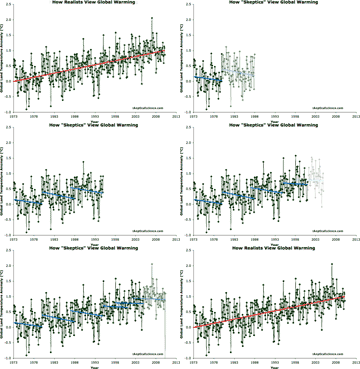
(free to republish)



















 English (US) ·
 French (CA) ·