

 2 days ago
17
PROTECT YOUR DNA WITH QUANTUM TECHNOLOGY
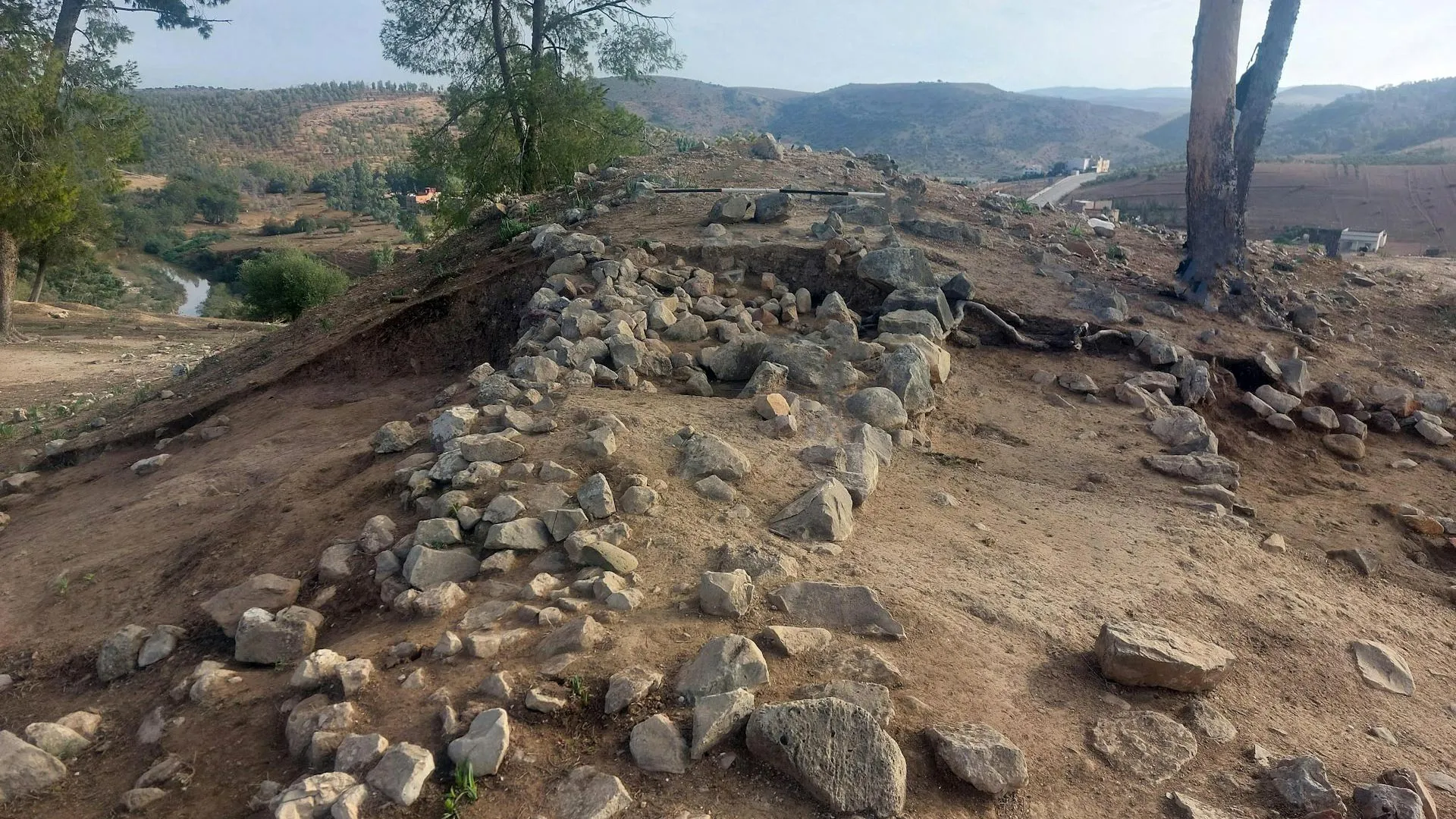
Orgo-Life the new way to the future Advertising by AdpathwayEarly humans were living along an ancient lake in the Jordan Valley at least 1.9 million years ago, according to a study that combined three dating methods at the archaeological site of 'Ubeidiya, about 3 kilometers (2 miles) south of the Sea of Galilee. The result makes the site roughly as old as Dmanisi in the country of Georgia, placing both among the oldest known evidence of humans outside Africa.
Earlier estimates had put 'Ubeidiya at 1.2 million to 1.6 million years old, but those ages came from comparing its fossils and tools with other sites rather than from direct measurement. The new work was led by Ari Matmon of the Hebrew University of Jerusalem, Omry Barzilai of the University of Haifa and Miriam Belmaker of the University of Tulsa in Oklahoma, and was published this year in Quaternary Science Reviews. It drew renewed attention this week after a Hebrew University summary circulated on Oct. 26.
The finding matters because it changes the picture of who left Africa and when. 'Ubeidiya preserves Acheulean hand axes, while Dmanisi is known for simpler Oldowan tools. If both sites are about the same age, different groups carrying different toolmaking traditions may have been moving into Eurasia during overlapping windows.
Three Clocks Read From the Same Rocks
The first method, cosmogenic isotope burial dating, measures rare isotopes that form when cosmic rays strike rocks at Earth's surface. Once rocks are buried, those isotopes decay at known rates, so what remains reveals how long the material has been underground. The second method read ancient magnetic field directions locked into lake sediments as they settled.
Those sediments recorded a reversed magnetic field, placing them within the Matuyama Chron, a long interval of reversed polarity that began more than 2 million years ago. The third method used uranium-lead dating on fossil shells of Melanopsis, a freshwater snail buried in the same layers, to set a minimum age for the deposits holding the stone tools, according to the Hebrew University's Institute of Earth Sciences.
No single method settled the question alone. Together, they converged on a conservative headline age of at least 1.9 million years.
Each method has its own weakness, which is why the team used all three. Magnetic signals can match more than one period in Earth's history, shell dates provide only a floor, and cosmogenic ages can be thrown off when sediment has an unusual history. The overlap between them is what gives the new age its strength, since an error in one method is unlikely to push the others the same way.
A 3-Million-Year Reading That Did Not Fit
The cosmogenic data produced an early surprise. A straightforward reading gave burial ages between about 2.87 million and 3.49 million years, with an average near 3.16 million, according to a detailed account by The Brighter Side of News. That clashed with the magnetic, fossil, geological and archaeological evidence.
The team traced the mismatch to the restless geology of the Dead Sea rift. Sediments had been deposited, buried, exposed and moved repeatedly before settling at the ancient shoreline, so some grains carried a much older burial history than the archaeological layer itself. The authors wrote that their model "implies recycling of sediments previously deposited and buried in the rift valley."
Once that recycling was modeled, results consistent with the reversed magnetic signal clustered around 2.05 million years. The researchers chose the more cautious figure of 1.9 million years as their stated minimum.
A Corridor Shaped by a Rift Valley
The Jordan Valley sits on the land bridge between Africa and Eurasia, which makes it a natural route for animals and early humans moving north. 'Ubeidiya's fossils include species of both African and Asian origin, along with finds such as a hippopotamus ivory tusk recovered at the site. That mix points to a well-watered lakeside setting that could support large mammals and the people who hunted or scavenged them.
The site's setting also shows how geology and climate shaped early migration. Lakes and wetlands that formed along the rift offered water and food, which may have given early humans reliable places to stop as they moved north. That same tectonic activity, which constantly reworked sediments, is what made the site so hard to date in the first place.
The new age strengthens the view that this corridor was in use very early. It also supports earlier work by Belmaker and Barzilai suggesting that more than one kind of early human may have left Africa in separate waves, each with its own way of making stone tools.
Questions the New Dates Leave Open
The study dates the sediments, not human bones directly, and the 1.9 million-year figure is a minimum supported by modeling of complex geological histories. Other researchers will likely scrutinize the sediment-recycling model, since it is central to rejecting the older cosmogenic readings. It is also not yet clear exactly which human species made the 'Ubeidiya tools.
The Acheulean question is especially open. A 1.9 million-year age would put this hand-axe tradition in the Levant earlier than many researchers expected, and confirming that will require more dated sites — ideally with tools and fossils found in the same layers. Until then, the safest reading is that 'Ubeidiya and Dmanisi now sit side by side in time.
For American readers, the study offers a lesson in how geologists date the deep past using everyday materials such as snail shells and sand grains. It carries no practical risk or guidance. The bottom line is that a site long thought to be younger now ranks with the oldest evidence of humans outside Africa, and the next debate will center on who made its tools and how they got there — questions new excavations and dating at other Levantine sites can help answer.
What Readers Want to Know
Where is 'Ubeidiya?
It lies in the Jordan Valley about 3 kilometers (2 miles) south of the Sea of Galilee, along the shoreline of an ancient lake.
How old is the site now thought to be?
At least 1.9 million years, compared with earlier estimates of 1.2 million to 1.6 million years.
How did scientists date it?
They combined cosmogenic isotope burial dating, ancient magnetic signals in lake sediments, and uranium-lead dating of fossil snail shells.
Why did one method first suggest about 3 million years?
Some sediment had been buried and moved repeatedly in the Dead Sea rift before reaching the site, so it carried an older burial history than the archaeological layer.
Does this change when humans first left Africa?
It does not push the first departure earlier than Dmanisi, but it shows two very different tool traditions outside Africa at roughly the same time.
What remains uncertain?
Which human species made the tools, and whether the sediment-recycling model holds up to independent review.
© 2026 NatureWorldNews.com All rights reserved. Do not reproduce without permission.


















 English (US) ·
 French (CA) ·