

PROTECT YOUR DNA WITH QUANTUM TECHNOLOGY
Orgo-Life the new way to the future Advertising by AdpathwayArticle navigation

INSIDE JEB| 02 July 2026
Online ISSN: 1477-9145
Print ISSN: 0022-0949
© 2026. Published by The Company of Biologists
2026
J Exp Biol (2026) 229 (13): jeb252949.

Recently hatched striped marsh frog (Limnodynastes peronii) tadpoles sprawling on a leaf. On the left is a three-week-old striped marsh frog tadpole. Photo credit: John Tann, Sydney, Australia, CC BY 2.0 via Wikimedia Commons.
Recently hatched striped marsh frog (Limnodynastes peronii) tadpoles sprawling on a leaf. On the left is a three-week-old striped marsh frog tadpole. Photo credit: John Tann, Sydney, Australia, CC BY 2.0 via Wikimedia Commons.
Close modal
Sunburn is no joke, especially in the Southern Hemisphere where depleted ozone provides less protection from UVB than in the north. Humans can seek shade and apply chemical sunscreens to exposed skin, but amphibians are particularly vulnerable and tadpoles even more so. ‘This is a time of rapid cell division and significant developmental milestones, making them particularly sensitive to UVB-induced DNA damage’, says Niclas Lunsdgaard, of The University of Queensland (UQ), Australia. The consensus was that the seriousness of sunburn is directly linked to the degree of exposure, so a long weak dose of UVB would yield the same DNA damage as a short intense dose that resulted in the same overall exposure. But Lundsgaard, Craig Franklin and Rebecca Cramp (also from UQ), weren't so sure. ‘A short intense UVB exposure can be three times more lethal for striped marsh frog tadpoles than an equal dose of long weak UVB exposure’, says Lundsgaard. Knowing that UVB damages amphibian DNA in a very specific way, Lundsgaard and his colleagues decided to find out how badly the DNA of developing striped marsh frog (Limnodynastes peronii) tadpoles was affected by short strong versus long weak doses of UVB that added up to the same total exposure.
Collecting recently laid frogspawn from a creek in Brisbane, Lundsgaard returned to the UV-free lab where the tadpoles hatched and developed for 5 weeks. Then, he turned on the UVB, making sure that different tadpoles got the same total exposure of UVB, no matter how strong the dose, by adjusting how long the UV lights were on for. Some tadpoles received one intense (80 μW cm−2) dose of UVB – simulating the light levels in a clear pond – for 1 hour, while others received a second strong hour-long dose a day later. Meanwhile, he turned down the sun lamps for other tadpoles, so the UVB was less intense (40 μW cm−2), but kept the lamps on for 2 h so the tadpoles received the same overall exposure, with a fourth group of tadpoles receiving a second weak dose of UVB a day later. Then, Lundsgaard checked for evidence of DNA damage. Would the stronger UVB doses be more damaging for the developing tadpoles?
Alarmingly, the strength of UVB that the developing tadpoles experienced had a dramatic impact. The tadpoles that experienced the most intense doses of UVB accumulated damage almost three times faster, resulting in 47% more DNA damage than the tadpoles exposed to mild sunburn. Lundsgaard then checked the tadpoles that were exposed to UVB on consecutive days, and the tadpoles that had experienced the strongest sunburn were in worse shape than the tadpoles that had only received mild UVB doses. The intensely sunburned tadpoles carried over twice as much DNA damage into the second day, and the tadpoles that experienced 2 days of sunburn had 20% more DNA damage than the tadpoles that only experienced sunburn on a single day. Surprisingly, Lundsgaard noticed that the smallest tadpoles seemed to suffer the most DNA damage, experiencing 50% more than their larger siblings, thanks possibly to their larger surface area relative to their mass.
Even though the striped marsh frog tadpoles had experienced the same amount of UVB, the strength of the sunburn made an enormous difference. The tadpoles exposed to the high UVB dose accumulated more dangerous DNA damage than those that had received the same total UVB exposure over longer periods, leaving them at greater risk of mortality. Lundsgaard also warns that fish and corals could be in similar danger from the sun's rays. ‘The larvae of other aquatic animals might struggle with more frequent exposure to short, intense UVB’, he says.
Lundsgaard N. U. Franklin C. E. Cramp R. L.
2026
).
When repair mechanisms fail to keep up: high UVB irradiance causes disproportionate accumulation of DNA lesions
.
J. Exp. Biol.
229
,
jeb252227
.
© 2026. Published by The Company of Biologists
2026
Join the JEB Editors at ICBF 2026
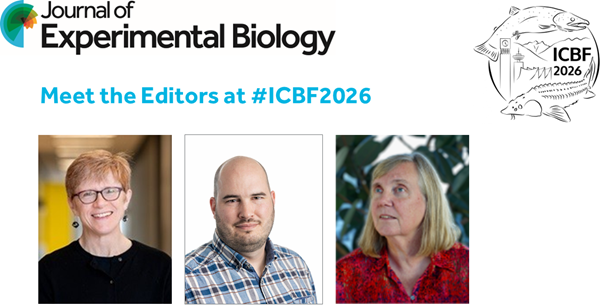
JEB is proud to be sponsoring the 16th International Congress on the Biology of Fish from 12-16 July in Vancouver, Canada. Call by the JEB table at the poster session at 3.30-5.30 pm on Mon 13 July to meet Editors Katie Gilmour, Trish Schulte and Jarren Kay and find out more about the journal, how we support the community and take home some JEB goodies.
Workshop - Integrating Physiology and Behavior in Assessment of Ectotherm Heat Tolerance
If you are an early-career researcher, you can apply now for a funded place at our Workshop taking place 7-10 March 2027. Organised by Michael Ørsted and Johannes Overgaard, this Workshop will unite leading thermal-ecologists, physiologists, and modelers to advance knowledge of thermal stress biology in ectotherms and establish a unified framework for analysing consequences of high-temperature stress.
Field stations in experimental biology research
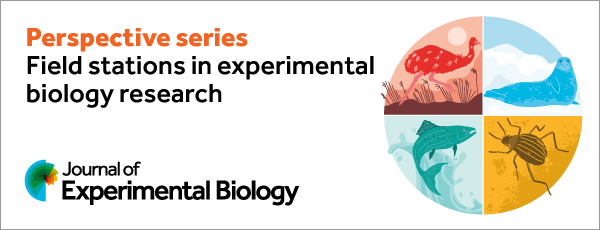
As part of our Perspective series, Hema Somanathan and colleagues use their Perspective to call for the establishment of a network of well-funded field stations across India, to facilitate important field research across the country’s diverse ecosystems.
Investigating epigenetic inheritance
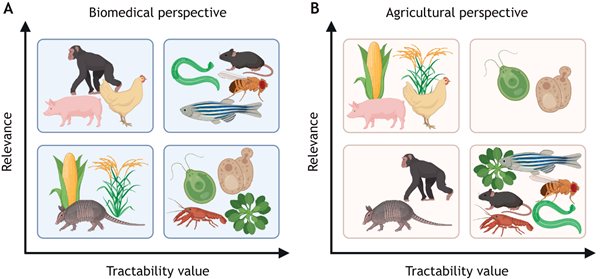
In their Commentary, Steadman, Vela and Burggren highlight the need to move away from traditional model animals in research on epigenetic inheritance, instead focussing on aligning model choice with the specific research question of interest.
Chimps’ wrists move the same as other apes’, despite different walking style
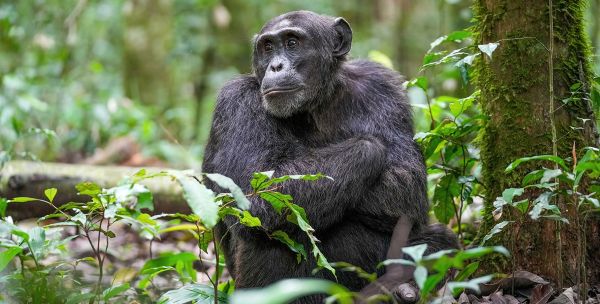
Walking on your knuckles is a weird way to get around, but it's normal for chimps and gorillas. Recently, Nathan Thompson and colleagues showed that although the hand posture is odd, the muscle contractions required are quite similar to a monkey's, which walk on their palms.















 English (US) ·
  French (CA) ·