

 1 month ago
80
1 month ago
80
PROTECT YOUR DNA WITH QUANTUM TECHNOLOGY
Orgo-Life the new way to the future Advertising by AdpathwayEconomists are warning that a “super” El Niño weather cycle this year could cause a severe shock to global food prices lasting into 2028.
As the Iran war pushes up world food prices to the highest level in three years, economists said supply chains faced “two shocks at once” stoked by extreme weather linked to global heating.
Scientists have said the 2026-27 El Niño – which forms when changes in wind patterns allow warmer water to spread across the central and eastern equatorial Pacific – has a historically unprecedented chance of developing into a “very strong” event fuelling heatwaves, flooding and stormier weather.
Informally described as a “super” or “Godzilla” El Niño, the US National Oceanic and Atmospheric Administration (NOAA) confirmed last month warming conditions were taking hold in the Pacific andthat there was a 63% chance of sea surface temperatures exceeding 2C above normal later this year.
At a time when households around the world are already feeling the pinch from soaring living costs, experts say an extreme El Niño could add further to the pressure. The prospect of a renewed inflation shock is also rattling central banks, adding to concern that interest rates could be kept at elevated levels.
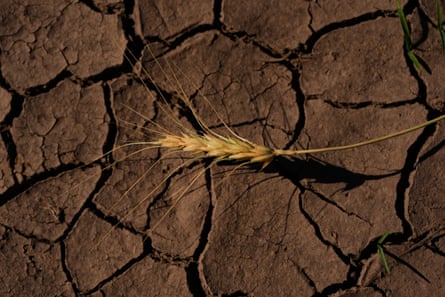
“El Niño puts ‘climateflation’ back on the agenda,” analysts at the Italian bank UniCredit wrote in a research note. “Europe’s recent heatwaves are a reminder that the climate baseline is already shifting. El Niño could add a new layer of pressure later this year, as it amplifies the effects of global warming.”
The naturally occurring phenomenon has a history of affecting harvests and the food supply network. More than a century ago, an El Niño that would probably have been the most severe on record prompted catastrophic droughts across China, southern Africa, Brazil, Egypt and India. Causing famine conditions in a situation worsened by colonial rule, millions were killed, including more than 6 million people in India in 1876-78.
El Niño events in 1981-82, 1996-97, 2015-16 and 2023-24 have been some of the strongest on record. However, NOAA projections indicate the 2026-27 cycle could be even more severe – elevating the risk of droughts and flooding hitting harvests, and food supply worldwide.
According to analysts at Goldman Sachs, the strength of this El Niño could cause a 15.8% surge in global food commodity prices. That would have a knock-on effect worldwide, including for consumers in Europe, where it predicted food prices could rise by 1.3% across the eurozone.
However, the full effect will take time because of how the cost of climate impact percolates through global food supplies. As a result, Goldman Sachs said the consequences could take until the second half of 2028 to be “fully realised”.
Most of the delay is down to the timing of extreme weather hitting food production, given the differing planting, growing and harvesting cycles for different types of crops. Logistical challenges – including water levels in canals and rivers used for key shipments – will also have an impact.
“El Niño does not affect agriculture uniformly. It reshapes global rainfall and temperature patterns, creating regional winners and losers,” analysts at UBS said. Some regions could stand to benefit from warmer weather conditions.
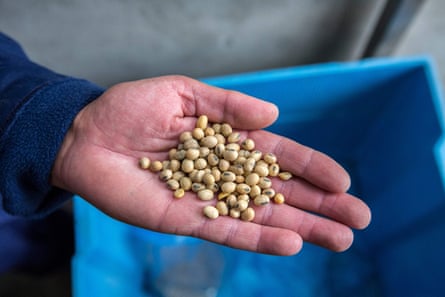
El Niño would compound disruption caused by the Iran war by adding food supply chain woes to already higher prices, and shortages of fertiliser and energy supplies, analysts say. “Even modest supply disruptions could trigger large price moves than historical patterns could imply,” the UBS analysts said.
Typically El Niños lead to elevated risks of drought in southern Africa and northern parts of South America, but flooding in southern Brazil, Argentina, Paraguay and Uruguay. Analysts say lower-income countries – already hit hardest by the Iran conflict – are likely to suffer most.
after newsletter promotion
“El Niño has already begun to affect crops, driving a drier monsoon season in India, with some regions only experiencing 25% of their usual rainfall, and parts of central India only receiving 50%, which could affect supply for wheat, rice, and sugar cane,” the Goldman Sachs analysts wrote.
The impact is likely to to be felt across the world .
Analysts say droughts in south-east Asia could affect palm oil supply – a significant ingredient in processed food – while harvests of coffee and cocoa could be affected. Warmer, wetter conditions could also exacerbate the spread of disease, hitting crop yields in future years.
In North America, the impact of El Niño is strongest in the winter, and while conditions in Europe can be influenced by the weather event, analysts say other factors – such as the effect on global food prices – will be where it is felt.
Three years ago, the European Central Bank estimated that a strong El Niño could drive up global food commodity prices by up to 9%, with soya beans, corn and rice seeing the biggest spikes.
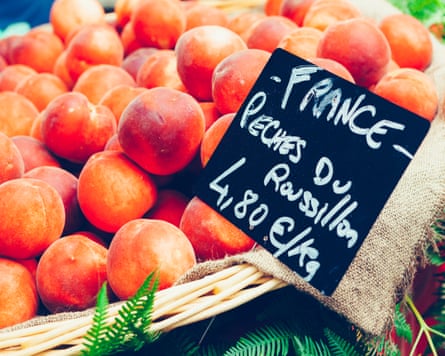
How prices reflect on shelves depends on mitigation strategies and domestic policies. Factors such as consumer demand and retail pricing also play a role.
According to UniCredit, the capacity for an extreme El Niño scenario does, however, remain high. This could lead to a 14.3% hit to global agricultural production – equivalent to $342bn (£254bn) in lost output, it said.
“Price shocks could reach 10% to 50% across core commodities, while the most exposed crops – including rice, palm oil, sugar and coffee – could rise by 50% to 100% or more,” the bank said. “The food system enters the second half of 2026 with buffers, but with little margin for error.”



















 English (US) ·
  French (CA) ·