

 1 hour ago
6
PROTECT YOUR DNA WITH QUANTUM TECHNOLOGY
Orgo-Life the new way to the future Advertising by AdpathwayDrying timber is one of the quiet giants of industrial energy use. Before a pine board can become a wall frame or a piece of furniture, it must be dried in a kiln, where combustion of fuel drives heated air through a chamber to strip moisture from the wood. In 2018, the wood manufacturing sector in the United States emitted 36.1 million metric tons of carbon dioxide, with 81 percent of its energy coming from combustion processes. A new review published in Results in Chemistry argues that a very different fluid, carbon dioxide compressed beyond its critical point, could take a meaningful share of that burden, and it maps the idea against the twelve principles of green chemistry to see how well it holds up.
Supercritical fluids occupy a strange middle ground between liquid and gas. When a gas is compressed above its critical pressure and heated above its critical temperature, the boundary between the two phases disappears, and the resulting fluid combines properties of both. Supercritical carbon dioxide, or scCO2, is the most widely investigated of these fluids. It has a tuneable solvating power, high diffusivity and low viscosity, all of which can be adjusted by changing pressure and temperature. Those properties have already found uses in aerogel preparation, food and pharmaceutical processing, solar cell manufacture, and the dewatering and resin extraction of wood, which is the focus of the new review by Anthony Dahdah and Subashani Maniam.
The wood industry’s interest centres on two jobs: removing water from timber and pulling resin out of it. Pine is the most prevalent construction wood in Australia, and its moisture content is a serious matter. Fresh pine can carry water equal to 100 to 200 percent of its own dry mass, and under the Australian and New Zealand standard AS/NZS 1080.1:2012 it must be dried to between 8 and 20 percent moisture content depending on its intended application. Water inside and outside the cell lumen affects how wood behaves under changing humidity, and improperly treated wood develops structural deformities when exposed to environmental fluctuations. Conventional drying also carries risks of its own, including checking, warping and drying stress, even as it improves strength, kills insects, fungi and bacteria, and reduces weight for machining and assembly.
Conventional kilns rely on combustion of a fuel source to heat the chamber, and the energy demands are substantial. Reported energy requirements for conventional wood drying range from approximately 600 to 1000 kilowatt-hours per cubic metre, depending on timber species, thickness and initial moisture content. Thermal energy is needed to heat the timber and the kiln environment, evaporate moisture, maintain drying temperatures and operate ventilation and air-circulation systems. Supercritical carbon dioxide drying works differently: moisture is removed through pressure cycling and physicochemical mechanisms rather than relying primarily on thermal evaporation of water. Research by Pearson and colleagues cited in the review suggests that scCO2 dewatering may be a less energy-intensive alternative precisely because the process does not require energy for moisture evaporation, and a review by Zhang and colleagues similarly identifies potential environmental and energy advantages over conventional drying.
The picture is not entirely one-sided, however. Supercritical systems require significant energy to compress, circulate and pressurise carbon dioxide to high pressures, which increases electrical power consumption. The review’s authors are explicit that although current research points towards scCO2 having the potential to reduce overall energy requirements compared with conventional kiln drying, further techno-economic analysis is required to accurately determine the total energy demand and associated operational costs at commercial scale. That caveat matters, because the technology’s green credentials rest heavily on the energy argument, and the review is careful to distinguish between what has been demonstrated in laboratory experiments and what remains to be proven at industrial scale.
Several research groups have put the idea to the test. Dawson and colleagues exposed pine wood blocks measuring 37 by 37 by 200 millimetres to scCO2 at a pressure of 20 megapascals and a temperature of 50 degrees Celsius. The treatment successfully dewatered the samples with an efficiency of 93 to 94 percent, lowering the moisture content to 30 to 40 percent, and no shrinkage or drying stresses were observed. Pearson and colleagues extended the work to both hardwood and softwood species and found that scCO2 could successfully dewater both, although the moisture content remaining in eucalyptus after treatment was significantly greater than in pine, because hardwoods have higher degrees of sealing due to extractives and tyloses that restrict water movement and reduce permeability. Notably, the work by Pearson and colleagues suggested that scCO2 dewatering achieved rapid water removal while reducing structural deformation, even though drying below the fibre saturation point generally leads to structural deformities.
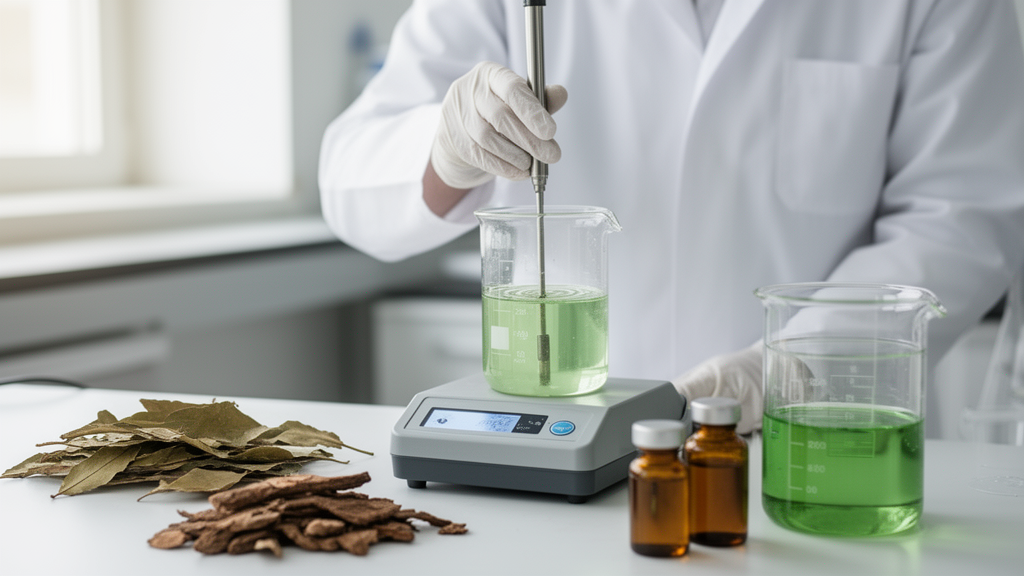
The resin extraction side of the process adds a commercial incentive. Wood extractives command high sale prices and find applications in cosmetics, agrifoods and pharmaceuticals, where they have shown antioxidant, anticancer and antimicrobial properties in laboratory studies; in cosmetics they contribute unique aromas used in fragrances, and in agrifoods they are applied for antifungal and anti-termite properties. Aggarwal and colleagues exposed wood chips to conditions of 27.5 megapascals and 60 degrees Celsius with a one-hour hold time, achieving an extraction efficiency of 4.1 percent by weight, with the free water fraction displaced by scCO2 and bound water removed by diffusion. Conde and colleagues, working with pine wood powder at 25 megapascals and 50 degrees Celsius, reported an extraction efficiency of 0.5 grams per 100 grams, successfully extracting both phenolic and lipophilic compounds, and adding ethanol as a co-solvent increased the yield to up to 7.6 percent total phenolics. Traditional resin extraction by Soxhlet extraction or steam distillation requires sample preparation, solvents, more time and cost, and delivers lower extraction efficiency.
Against the twelve principles of green chemistry, the review scores the scCO2 experiments favourably. The work by Dawson, Pearson and Aggarwal earned scores of 3 for atom economy, because the experiments use no excess reagents and form no by-products, and for principles covering safer chemicals, safer solvents, reduced derivatives, catalysis and real-time analysis, because the products are innocuous, no solvents or auxiliaries are used, and no derivatives or catalysts are involved. Scores of 2 were assigned for prevention, less hazardous synthesis, renewable feedstocks and accident prevention, because possible release of carbon dioxide poses a risk to the environment, the carbon dioxide itself is not renewable, and the pressurised system carries moderate accident risk. Scores of 1 went to energy efficiency and design for degradation, since the experiments are not conducted at room temperature and pressure and the carbon dioxide is not degradable. When ethanol was added as a co-solvent in the Conde experiments, the safer solvents score dropped from 3 to 2 because ethanol is flammable, though the authors judge its innocuous nature leaves the overall greenness largely intact.
The most important limitation is the moisture content itself. Current research indicates that scCO2 treatment can reduce the moisture content of wood to approximately 30 to 40 percent, while the target for commercially dried timber under Australian standards generally ranges between 8 and 20 percent depending on application. This suggests that scCO2 dewatering may currently be more suitable as a pre-treatment rather than a complete alternative to conventional kiln drying, and the review proposes a combined approach, with initial dewatering using scCO2 followed by conventional kiln drying, as a practical pathway to reducing the overall drying burden while still achieving the required final moisture content. Other bottlenecks stand between the laboratory and the factory floor: the high capital expenditure associated with specialised high-pressure equipment, poor dewatering efficiency in some hardwood species due to pit aspiration, the potential risk of cell wall damage, and potential energy and product losses during depressurisation for resin recovery.
Even with those caveats, the review’s conclusion is measured rather than promotional. Traditional kiln drying is associated with substantial energy consumption and environmental impacts due to the thermal energy required to evaporate moisture and maintain controlled drying conditions, and as the wood-processing industry moves towards more sustainable practices, alternative drying technologies warrant further investigation. Supercritical carbon dioxide dewatering and resin extraction demonstrate potential within the wood industry, particularly because they can remove substantial quantities of free water while simultaneously enabling the extraction of valuable compounds. Systems designed to recycle and reuse the carbon dioxide could make the setup environmentally friendly and cost-effective, with extracted water and resin collected for use in other industrial processes. But the authors are clear that further research, techno-economic assessment and optimisation are required before the technology can be commercially implemented, and that current experimental findings suggest scCO2 has the potential to complement or partially replace conventional drying processes rather than a proven replacement today.
Subject of Research: Using supercritical carbon dioxide for wood dewatering and resin extraction as a less energy-intensive alternative to kiln drying
Article Title: Understanding the green method of using supercritical carbon dioxide in wood processing
Article References: Dahdah, A., & Maniam, S. (2026). Understanding the green method of using supercritical carbon dioxide in wood processing. Results in Chemistry, 32, Article 104024. https://doi.org/10.1016/j.rechem.2026.104024
Image Credits: AI Generated
DOI: 10.1016/j.rechem.2026.104024
Keywords: supercritical carbon dioxide, wood drying, kiln drying, green chemistry, pine wood, resin extraction, dewatering, moisture content, energy efficiency, sustainable materials, Results in Chemistry, Understanding















 English (US) ·
 French (CA) ·