

When you are deciding on what to plant in a garden area, sunny spots often feel like the easy win. With shade, you have to select plants with intentionality to make the planting truly stand out. But that doesn’t mean you can’t find perfect shade plant combinations. If you are looking for shade plants to grow together, there are several unique pairings that bring out the best in each other and dazzle even in limited light.
A shady corner can provide a unique canvas for texture, depth, and sophisticated color palettes that sun-drenched beds can't replicate. Whether you are dealing with the deep, cool shadows of full shade or the shifting patterns of partial shade, there is a visual tension in certain shade loving plant combinations that brings to mind the classic fairy story of Beauty and the Beast. Matching dainty flowering beauties with rugged, hefty partners, it’s all about the interplay of opposites.
Pair up tough, architectural plants with delicate, airy flowers, and you create an unforgettable focal point. The contrast between a leathery leaf and a gossamer petal can bring even a quiet corner to life. These partnerships often prove highly resilient, as the lack of heat preserves delicate blooms and keeps foliage lush for longer. They can also offer seasonal succession and natural compatibility. Here are 7 perfect pairings and dynamic duos for stunning shade loving plants to grow together.
Choose the Best Shade Plant Partners
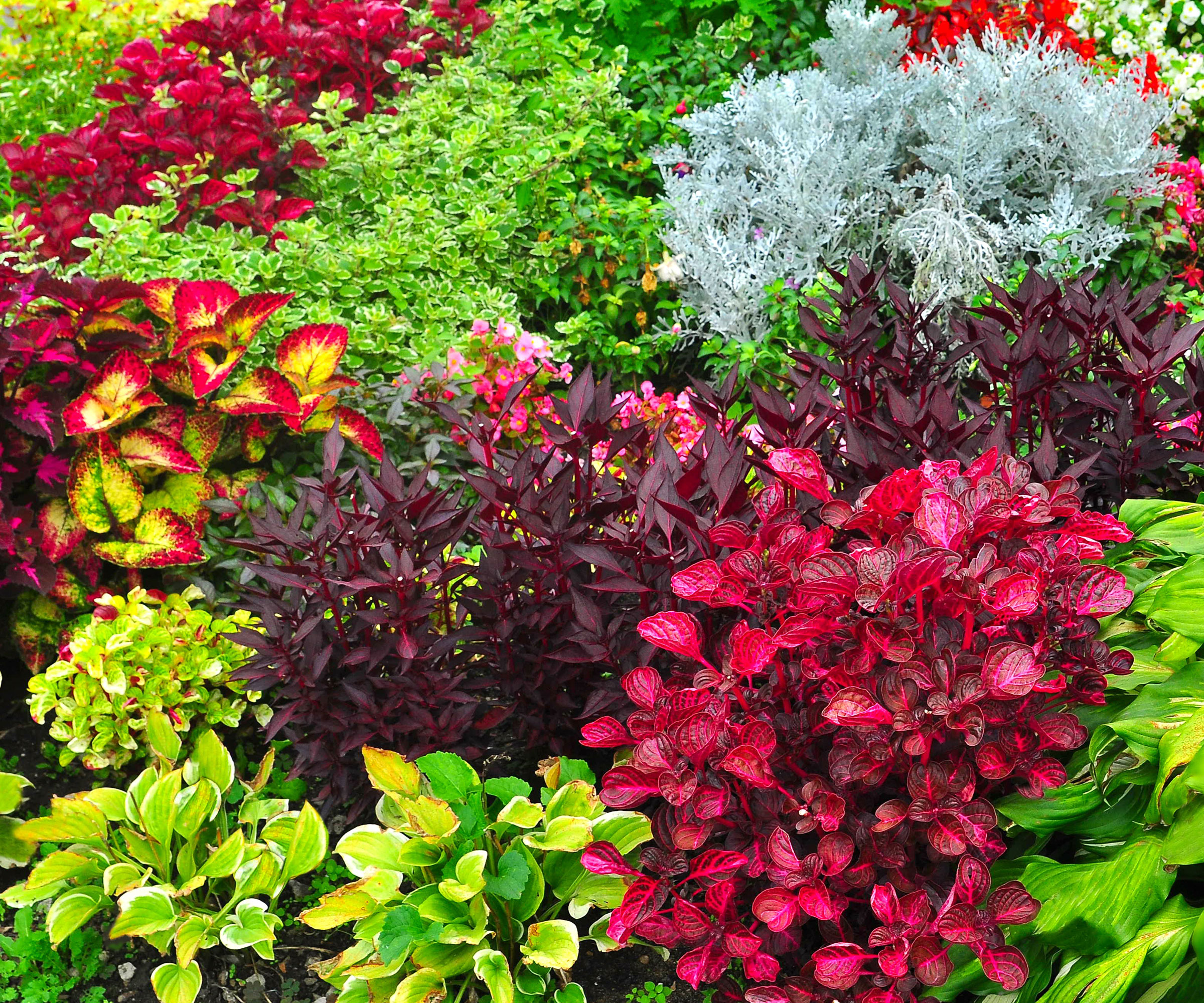
Before you start digging, assess the specific type of shade in your yard. Full shade (less than three hours of direct sun) is often found under dense evergreen canopies or on the north side of tall buildings. Partial shade (three to six hours of sun) usually means a burst of morning light followed by a cool afternoon. Knowing your USDA hardiness zone is key. Most of these 7 pairings thrive in zones 4-8, but double-check your local map before purchasing to ensure your beauties can survive the winter.
Soil condition is also important. Many shade-loving plants are woodland natives, meaning they crave soil rich in organic matter. If your soil is heavy clay or sandy, incorporate a high-quality amendment before planting. April is the perfect time to prep these beds, as the soil is waking up. Test your soil before adding these combinations to your shady spots. A soil test kit like the Luster Leaf Rapitest Soil Test Kit from Amazon can help you determine if you need to adjust your pH.
(Image credit: Bukharina Anna / Shutterstock)
Shade under a large tree is often dry shade, because the tree canopy acts as an umbrella and its roots act as a sponge. Conversely, shade against a house can stay damp and heavy. Matching plant pairs to these niches (with moisture-loving ferns in damp spots, and resilient bergenia in drier areas) will save you time later, meaning less maintenance in the long run. Let’s get to our dynamic shade garden plants to grow together, to help you find your perfect garden match for shade.
1. Fairy Foliage + Cabbage Leaves
(Image credit: Sundance_Cat / Shutterstock)
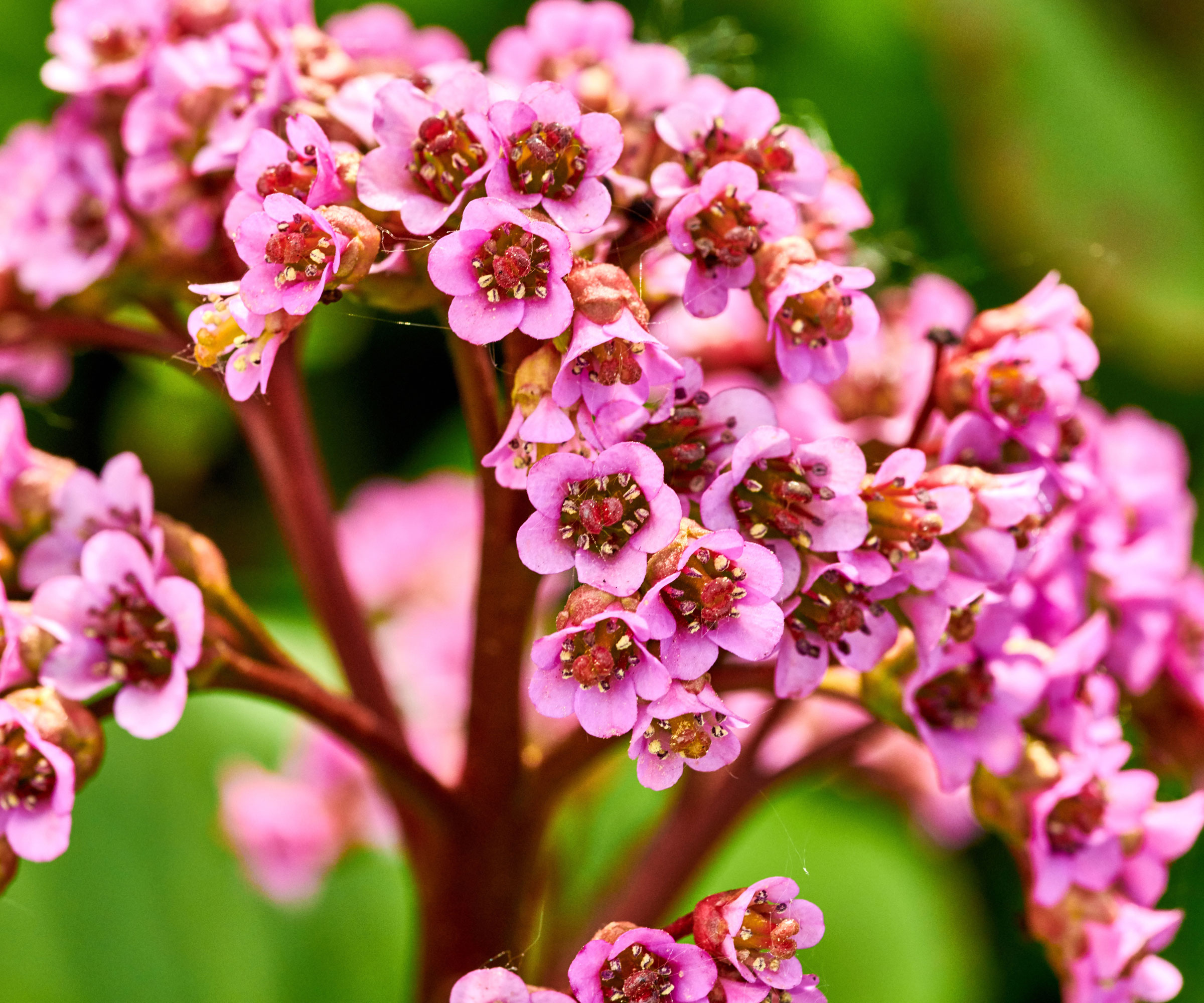
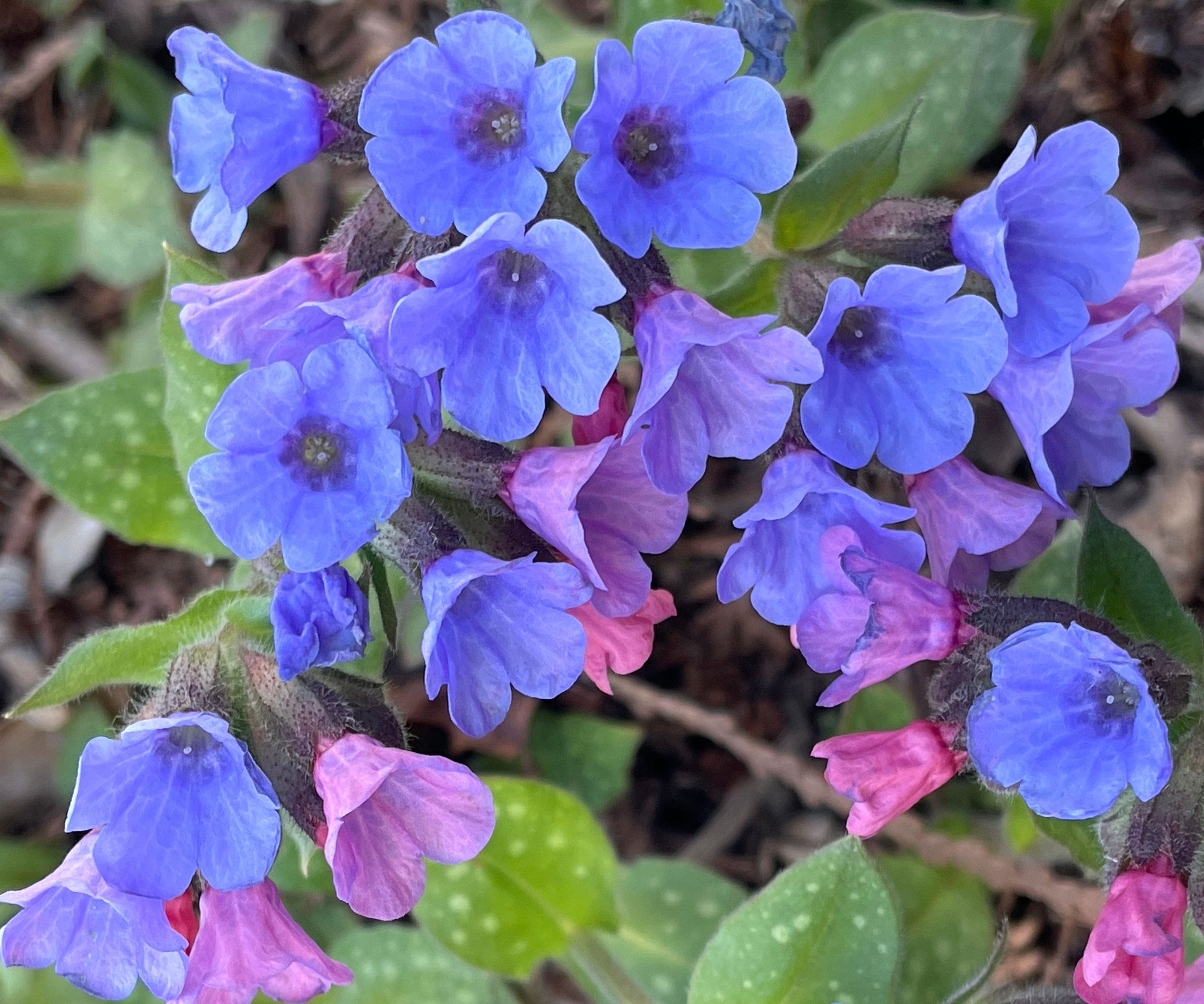
If you combine lungwort (Pulmonaria spp.) and bergenia (Bergenia crassifolia) in a shade planting, the contrast between the foliage is compelling. Lungwort leaves have a touch of fairy magic, soft and delicate with silvery spots that look like they’ve been dusted by moonlight. Cultivars like 'Silver Bouquet' even offer brilliant blue or pink flowers in April. This is a prime time to plant, as lungwort thrives in the cool, damp spring air. You can buy ‘High Contrast’ Lungwort from Nature Hills.
Bergenia’s foliage is undeniably rugged. Known as pigsqueak for the sound the leaves make when rubbed together, this plant features massive, thick, leathery leaves that resemble oversized cabbage. Where the lungwort has an ethereal feel, bergenia is grounded and structural. In winter, bergenia leaves turn burgundy, providing year-round interest. Try 'Miss Piggy' or ‘Early Brilliance’ Magenta Bergenia, available from Nature Hills, for the bonus of bright pink blooms in partial shade. Both thrive in USDA zones 3-8.
(Image credit: Bonnie Watton / Shutterstock)
2. Teardrop Flowers + Dinner-Plate Leaves
(Image credit: Nnattalli / Shutterstock)
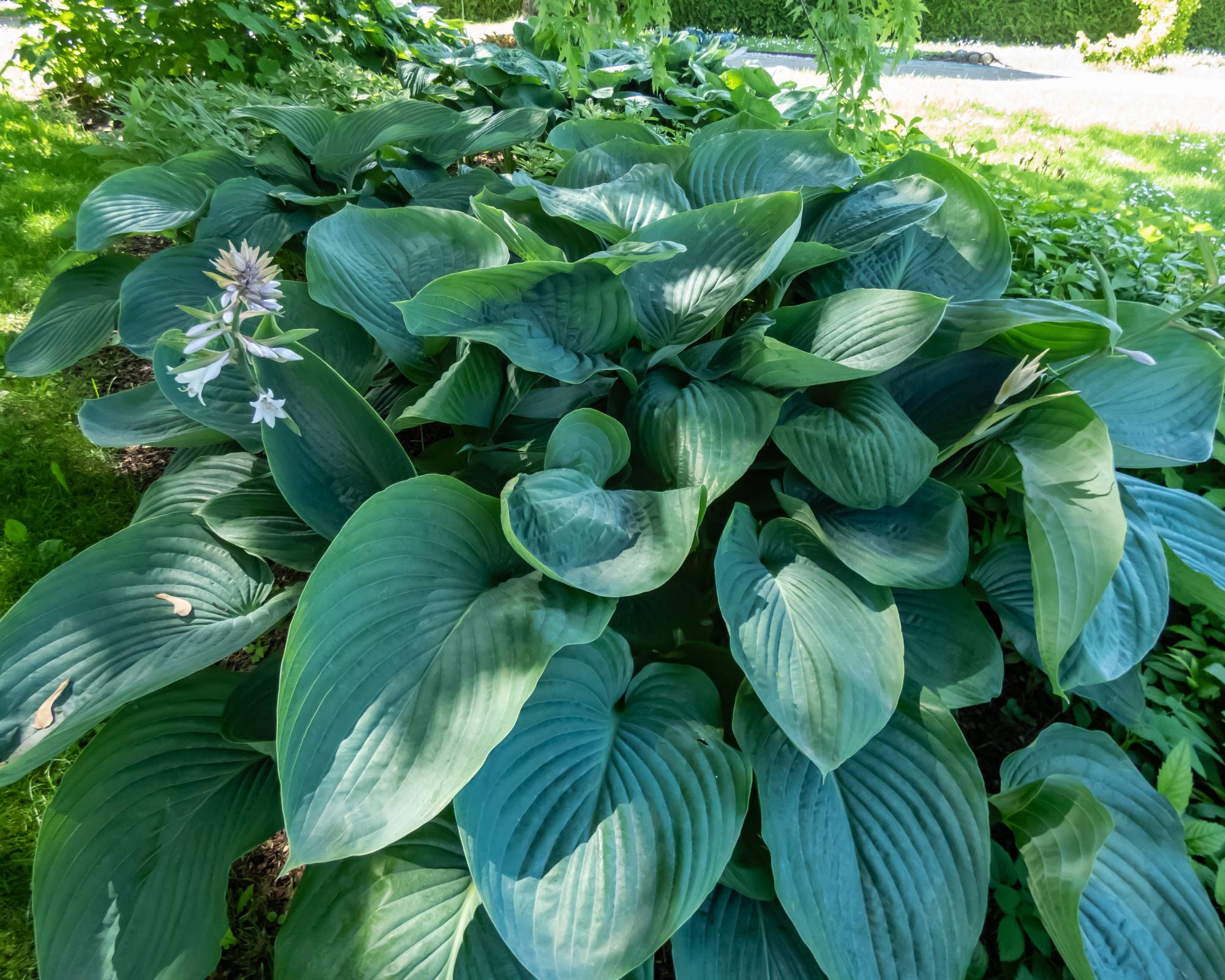
Hosta ‘Empress Wu’ is an oversized, shade-loving monster hosta. Each leaf can reach two feet (60cm) across, with a spread of six feet (1.8m). The foliage is waxy blue-green, deeply veined and shaped like giant fans. It’s perfect for filling a large void in a dark corner. You can buy 'Empress Wu' Hostas from Amazon. Planting them in April allows them to establish their massive root systems before the summer growth spurt.
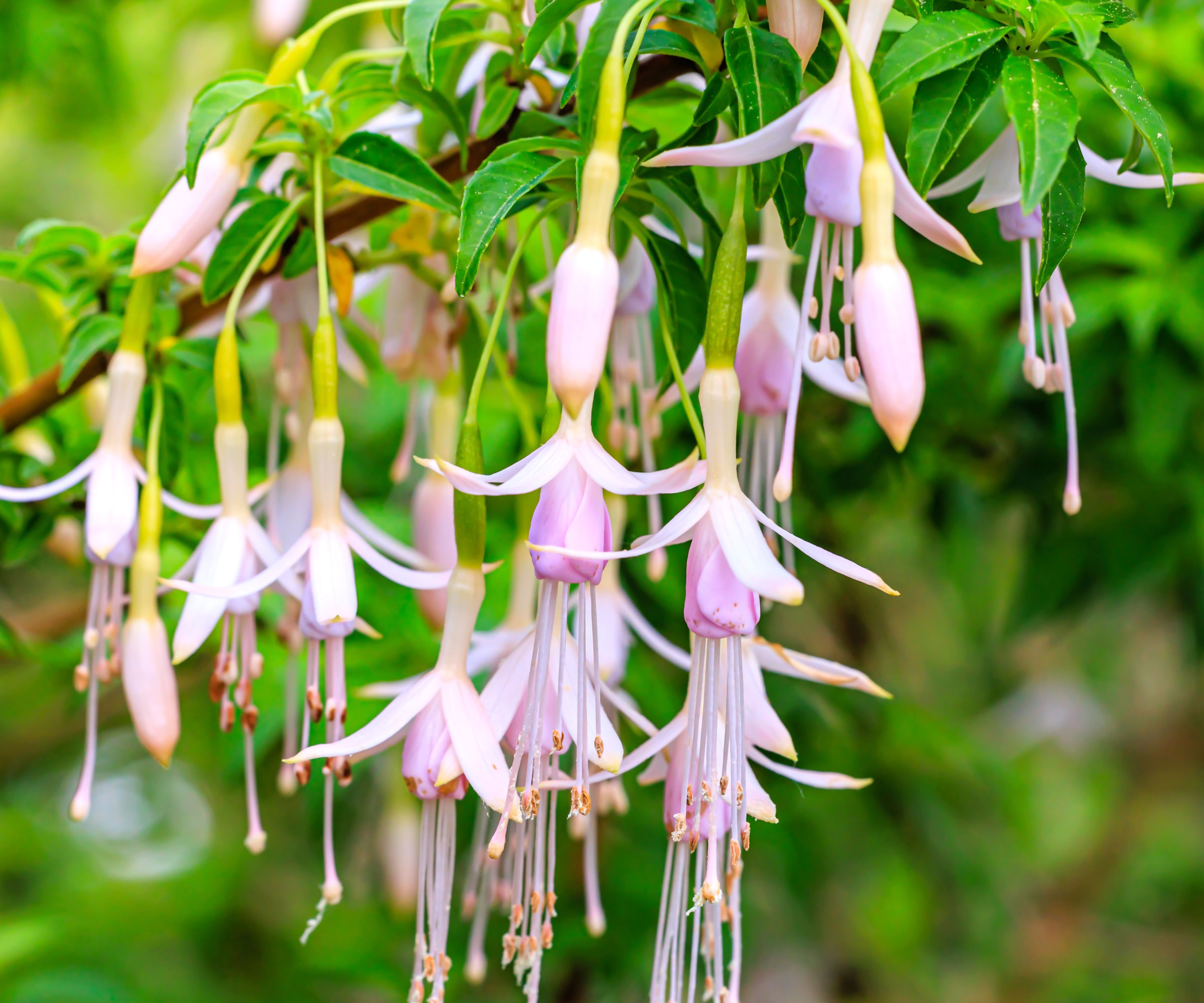
Because it is so dominant, it needs a companion that offers fine-textured contrast. The perfect companion is the hardy fuchsia. While the hosta is all about broad, horizontal weight, fuchsias provides vertical grace with delicate, teardrop-shaped flowers. This pairing works best in partial shade, where the fuchsia can get a bit of morning light to fuel its prolific blooming. You can buy Hardy Fuchsia Seeds from Amazon. Ensure the soil remains moist, but well-drained. In northern US zones, hardy fuchsias need a bit of protection or a sheltered spot to act as a perennial.
(Image credit: Kristine Radkovska / Getty Images)
3. Carefree Blossoms + Shaped Evergreens
(Image credit: S.O.E / Shutterstock)
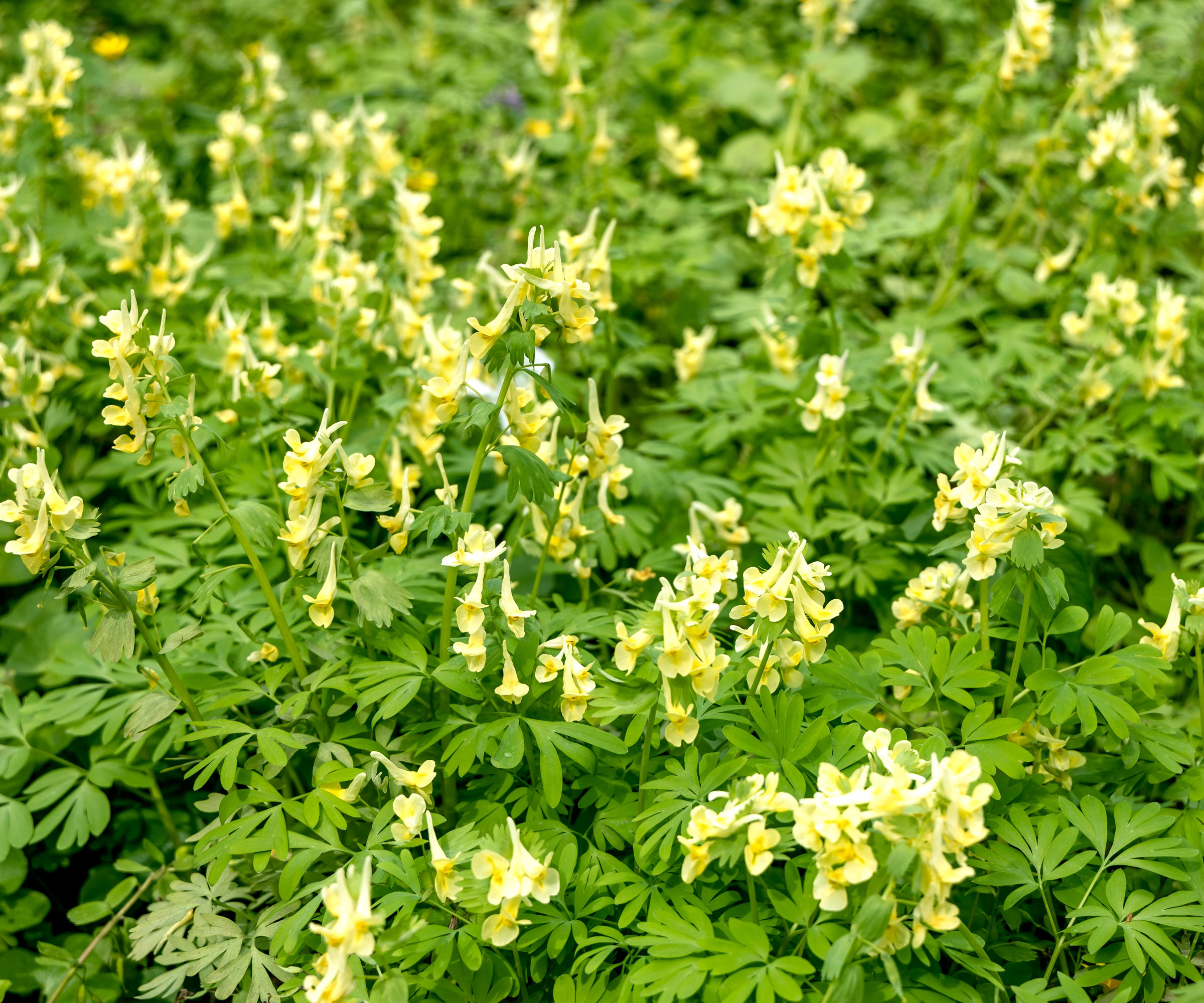
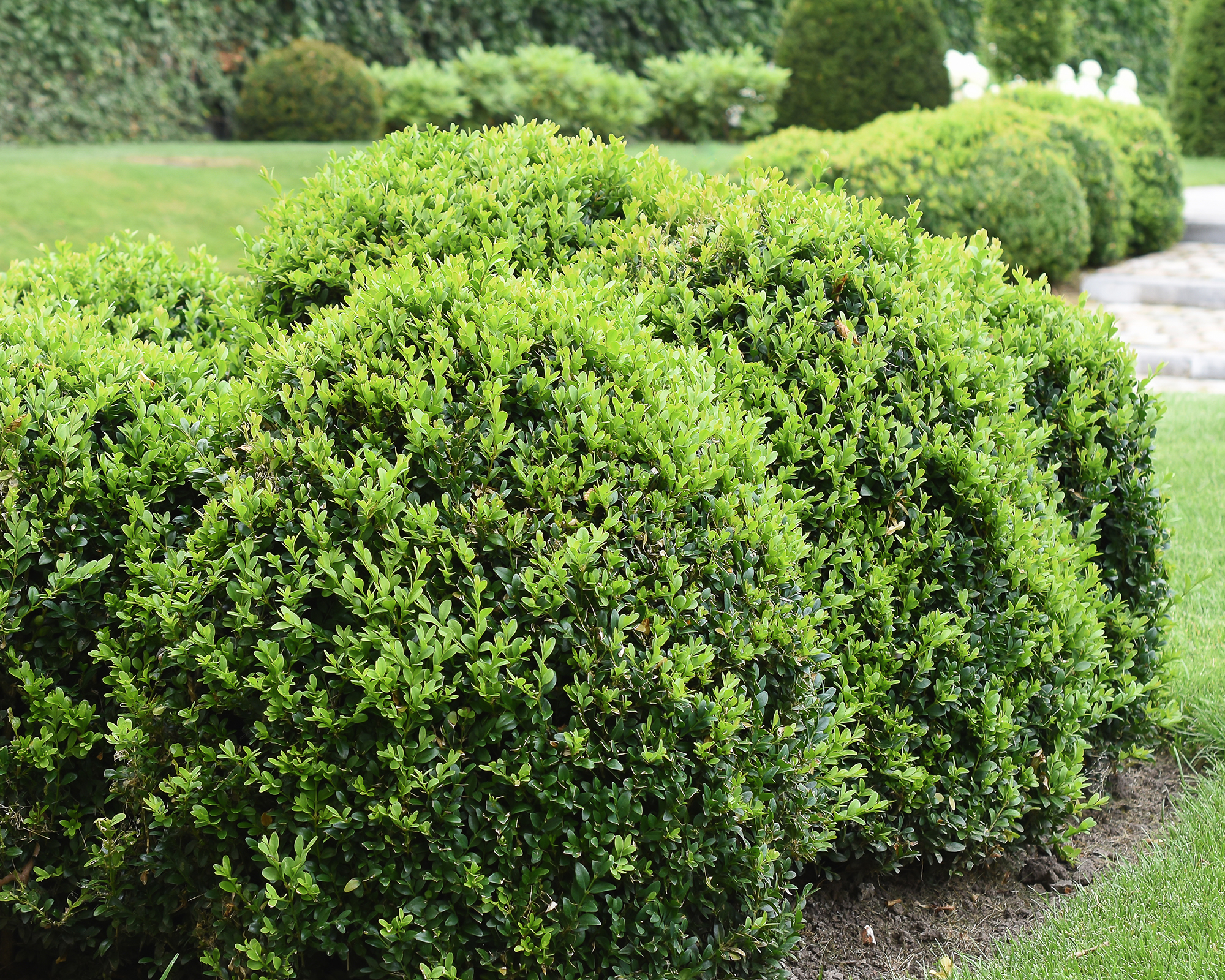
Dainty yellow tube-shaped flowers add unquestionable beauty to a shade planting, and the blossoms of corydalis (C. lutea) light up a shady corner from late spring through the first frost. You can buy ‘Canary Feathers’ Corydalis from Nature Hills. It has a wild, rebellious habit, often seeding into cracks in stone walls. To ground this airy beauty, you need the structural contours of a manicured boxwood. The rigid, evergreen spheres of a 'Winter Gem' Boxwood, available from Lowe’s, provide a formal anchor that makes carefree corydalis look intentional rather than overgrown.
April is a fantastic time to plant boxwoods, giving them time to recover from the stress of transplanting before summer arrives. While boxwood stays green and stoic, corydalis provides a soft, golden glow all summer – so this pairing really does gleam in the gloom. This is one of the brightest plant combinations for shade and it is particularly effective along shaded walkways. Corydalis doesn't like to be moved once established, though, so pick your spot carefully! Add a slow-release fertilizer like Osmocote Smart Food Plant Food Plus from Amazon to keep your boxwood’s green tones deep and lush.
(Image credit: Getty Images)
4. Waxy Roses + Leathery Groundcover
(Image credit: Alex Manders / Shutterstock)
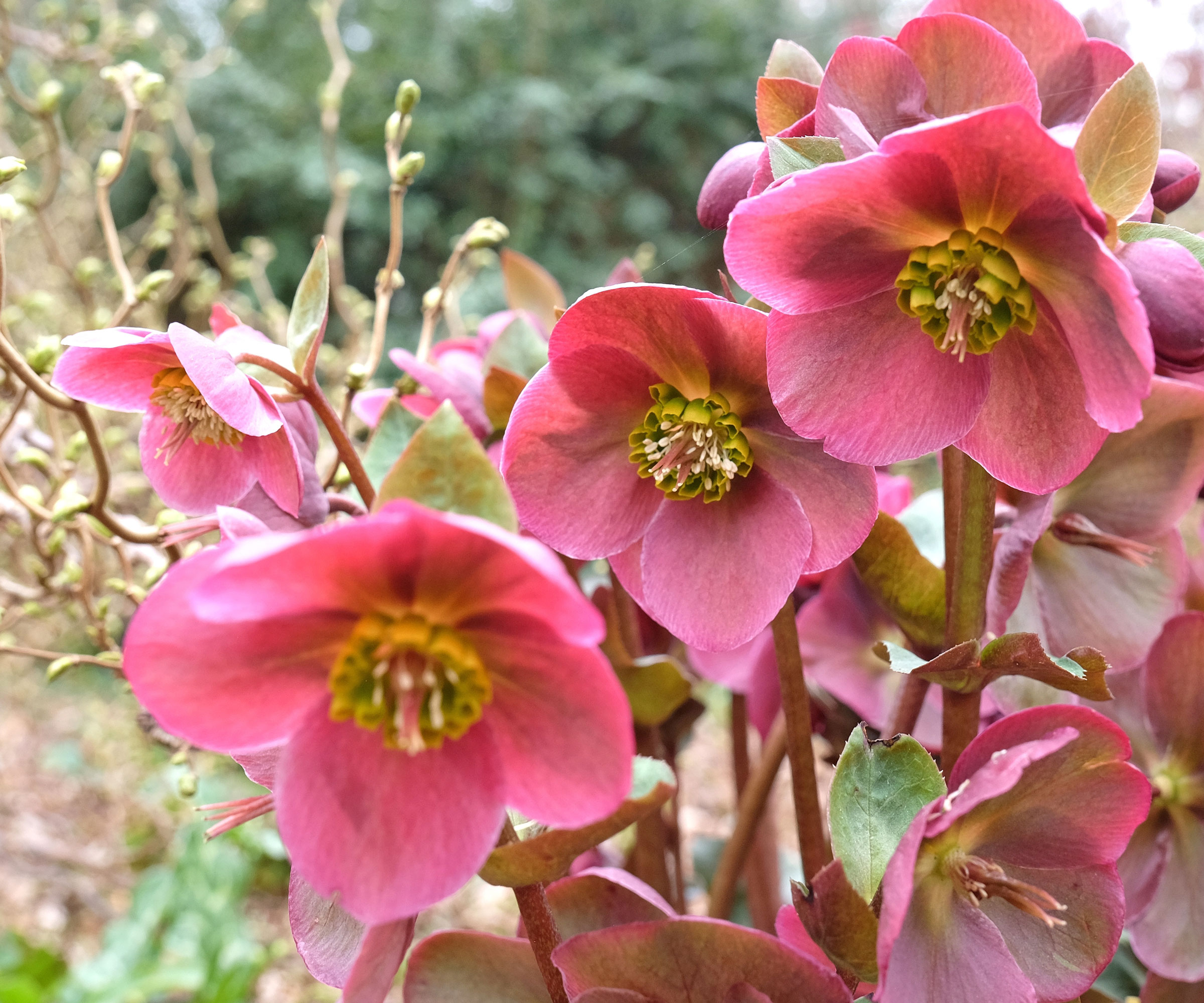
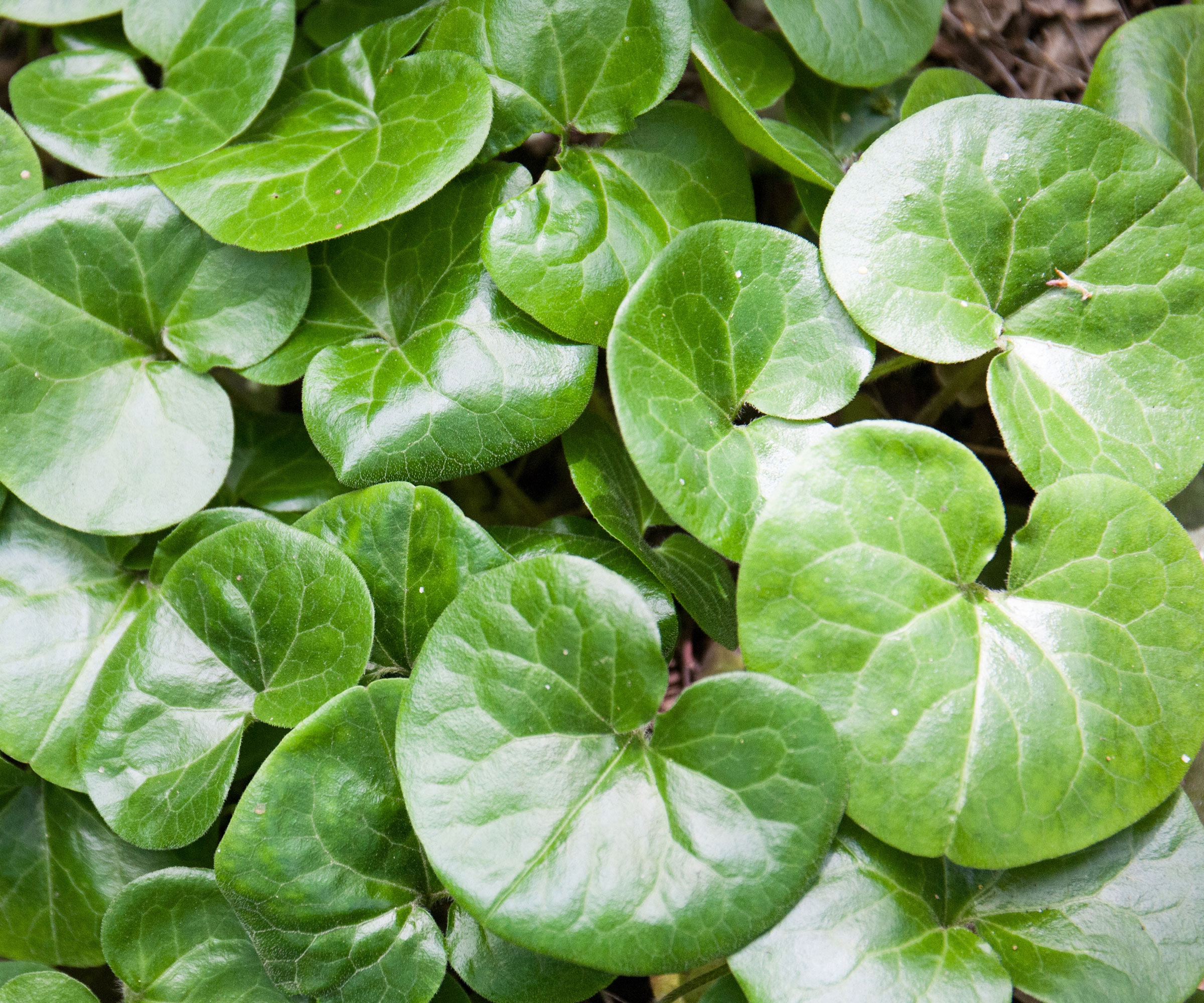
The Lenten rose or hellebore (Helleborus × hybridus) resembles a wild rose, with five petal-like sepals surrounding its true flowers. These petals are waxy and resilient, hence why the flowers can remain on the plant for months. There are some lovely hellebore options available at Burpee, including green-tinted ‘Ivory Prince’ and rose-and-apple ‘Phoenix’ hellebore varieties. To complement their refined and sophisticated flowering displays, try some wild ginger (Asarum europaeum) nearby.
Wild ginger’s ground cover features dark, shiny leaves that are thick and leathery, creating a carpet of deep green that highlights the hellebore's upright stems.Wild ginger is an excellent choice for stabilizing soil in shady areas (plus, the spicy scent of its roots keeps most burrowing pests at bay). You can buy Wild Ginger Bare Roots from Amazon. April is the ideal time for planting. Just be careful not to bury the hellebore crowns too deep, as this can prevent blooming. As plants that grow in shade together so well, they create a woodland vibe that feels ancient and curated.
(Image credit: Gardenfairy / Shutterstock)
5. Coiled Blooms + Scattered Fronds
(Image credit: Martin Hibberd / Shutterstock)
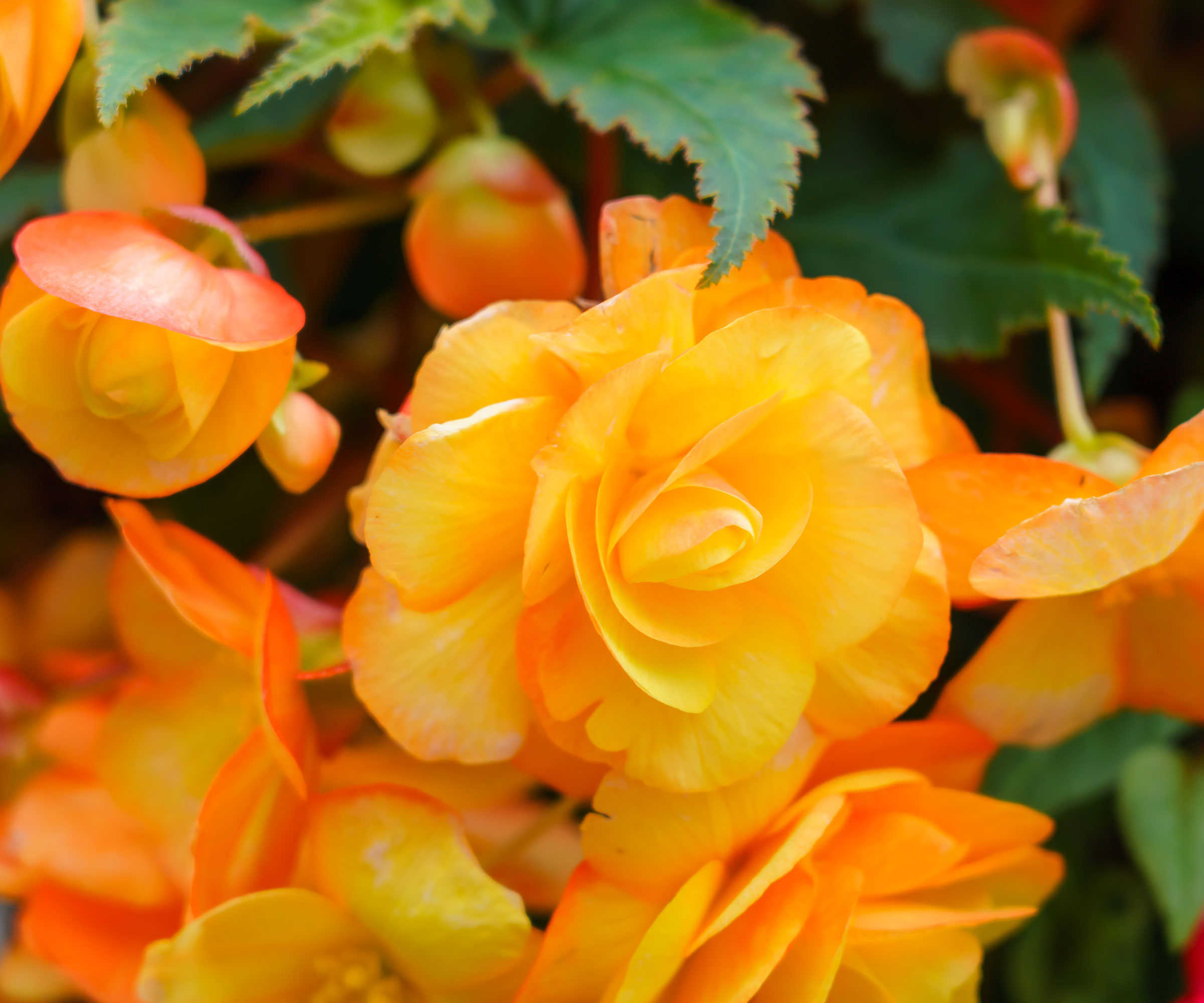
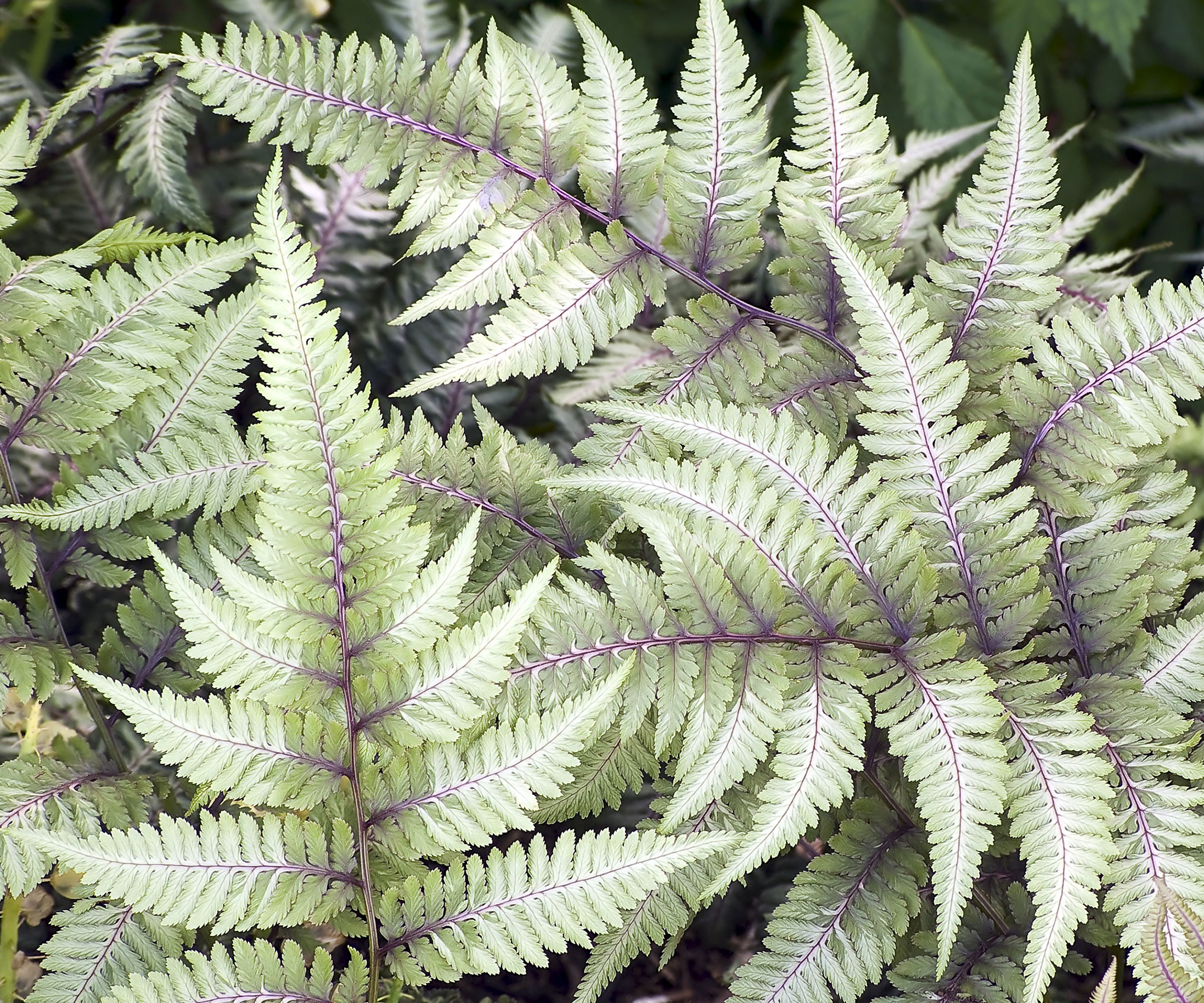
One might argue that shade-loving tuberous begonias don’t need a partner to make a splash, since their flowers are like lush, coiled roses in all manner of superstar shades. However, their tight ornamental shapes do benefit from a structural contrast. Enter the Japanese painted fern, with its arching, dramatic, silver-tinted fronds. These fern varieties give the appearance of shattered glass – a stunning backdrop for the begonia’s concentric blooms. Choose 'Ghost' or ‘Godzilla’ Japanese Painted Fern, available from Nature Hills, for a high-contrast, silver-and-red display.
April is the time to start tuberous begonia varieties indoors, or buy established plants for outdoors in warmer zones. Buy 'Fragrant Falls Peach' Begonia Plants from Burpee for vibrant rich tones to dramatically contrast with those cool fern silvers. Both these plants love moisture and humidity, making them perfect for a shaded patio or a north-facing porch. Note that tuberous begonias are tender, so if you're in a cold zone, you'll need to lift the tubers in the fall. Also, the Japanese painted fern is one of the few ferns that is both deer and rabbit-resistant, providing a protective shield around tempting begonias.
(Image credit: Kenneth Keifer / Shutterstock)
6. Whimsical Blooms + Tough Giant Ferns
(Image credit: Sodel Vladyslav / Shutterstock)
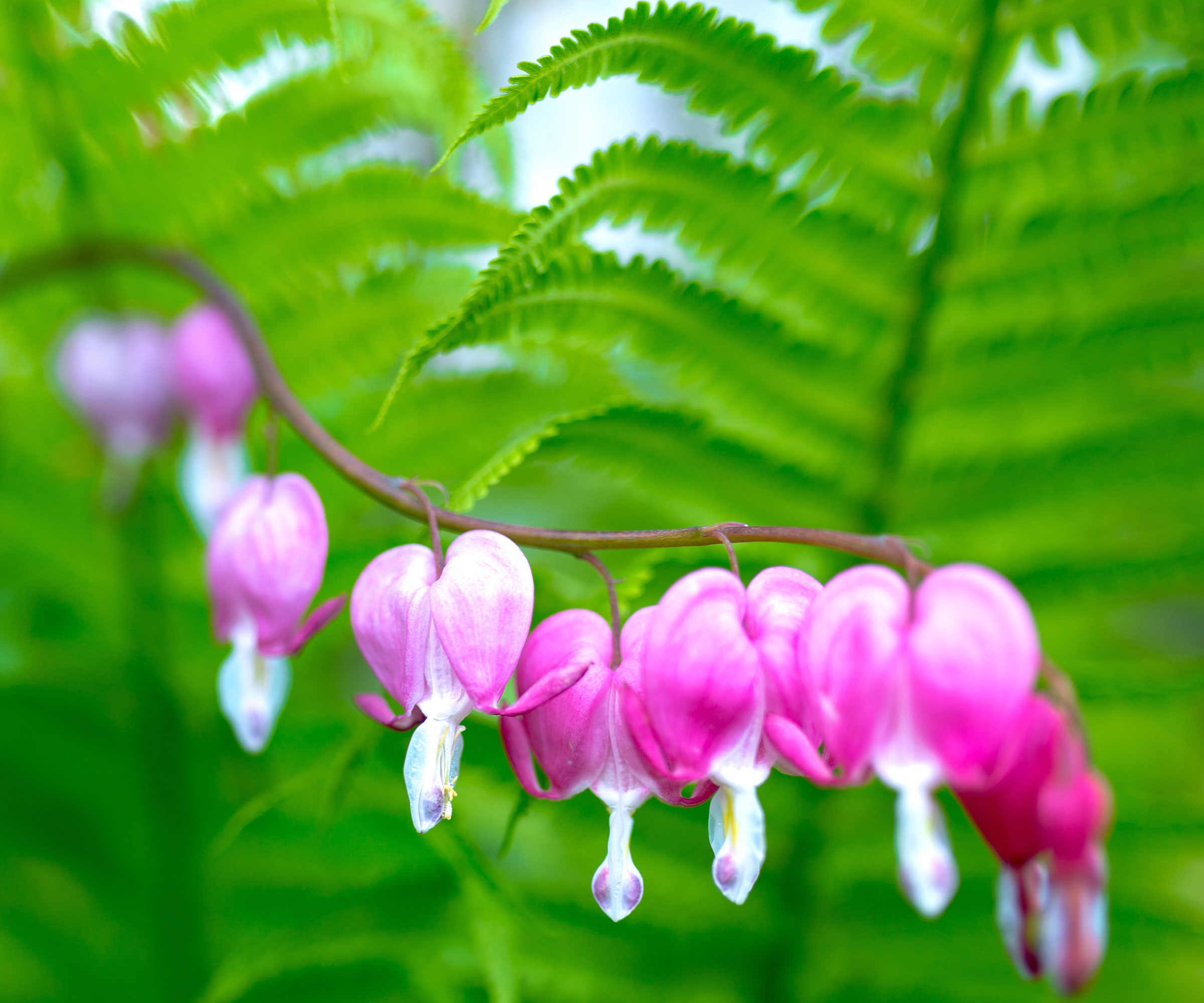
Bleeding heart plants (Lamprocapnos spectabilis) are a nostalgia-fueled shade garden favorite. Their puffy, heart-shaped flowers hang like charms from graceful arching stems. They have a whimsical quality that can seem dreamlike and ethereal, which is why they pair so beautifully with ostrich ferns (Matteuccia struthiopteris). The ostrich fern is an architectural giant, with fronds reaching four feet tall (1.3m). As the bleeding heart delicately fades in June, those fountain-like fronds expand further to fill the gaps seamlessly. You can buy Ostrich Ferns from Nature Hills.
Planting in April is highly recommended. You can buy Garden State Bulb Bleeding Heart from Amazon as bare roots, or why not try 'Old Fashioned Pink', available from Nature Hills, for that classic pink flower? The ferns produce edible fiddleheads in early spring, adding a culinary edge to this coupling. They also provide flamboyant definition and structure, while the bleeding heart provides fleeting spring romance. These shade perennials both thrive in rich, moist soil, so add plenty of compost to the planting hole.
7. Bright Flowing Sedge + Moody Coleus
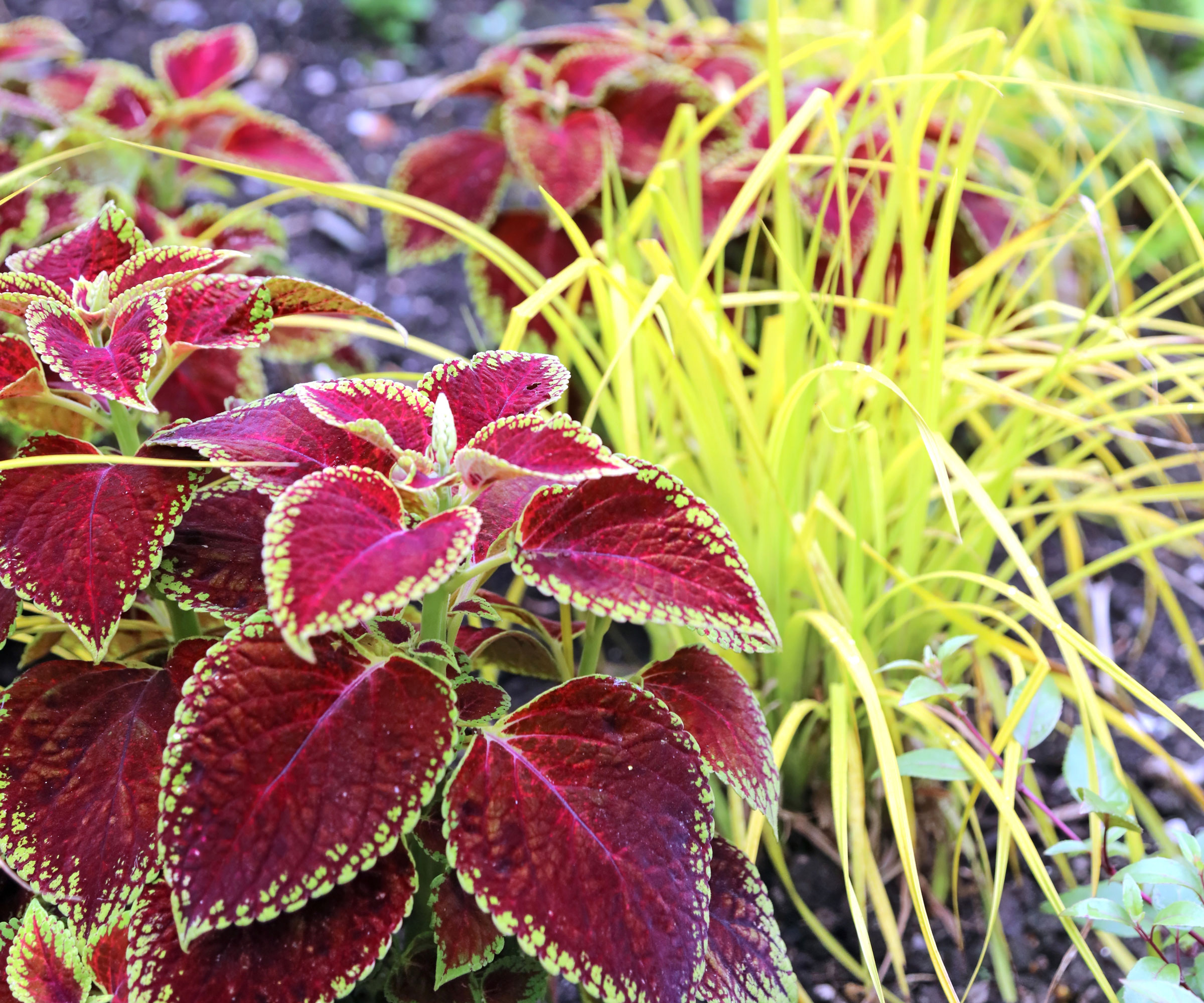
(Image credit: Judith Andrews / Shutterstock)
Sedge (Carex oshimensis) is a resilient, grass-like plant that adds a flowing fountain effect. EverColor® ‘Everillo’ sedge presents as a burst of chartreuse that matures to gold, a brilliant beauty that illuminates the shadows. To ground this bright spark, pair it with the sultry depth of the ColorBlaze® Wicked Witch™ coleus (Solenostemon). This coleus is a moody stunner with chocolate leaves, trimmed by ruffled lime edges. This intense contrast sets off the rich tones of both. For moody alternatives, try Coleus ColorBlaze ‘Torchlight’ Coleus, available from Walmart.
While coleus is an annual in most US zones, it grows fast and provides instant gratification. You can buy 'Everillo' Sedge Grass from Nature Hills for a hardy perennial that will stay gold year-round in many climates. Both plants thrive in filtered shade and consistent moisture. This low-maintenance duo looks like a professional designer put it together. If you want plants for shade to grow together that depict depth and light, this combo is perfect for containers or the front of a border.
Shop Shade Plant Heroes
They may not be your first thought for dynamic plant partners, but these gorgeous shade plants are stunning additions that work hard and pair up beautifully with similar-shade hero flowering plants. Plant these sculptural, impactful and flowering shade-lovers for easy beauty in shadier spaces.
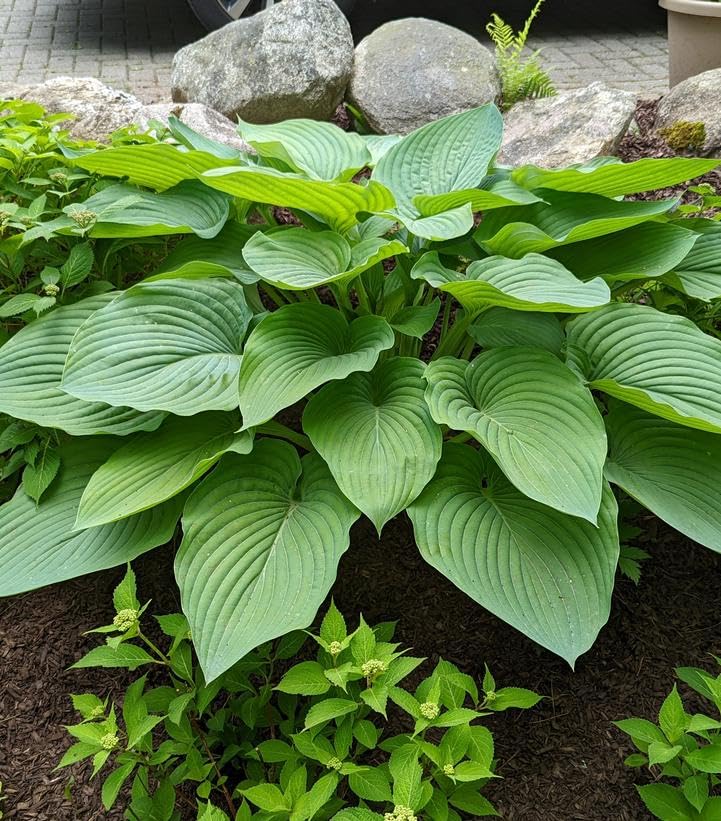 Giant Anchor
Green Promise Farms
Proven Winners Hosta 'Empress Wu'
For the ultimate architectural statement, this massive hosta provides a sturdy backdrop for delicate flowers.
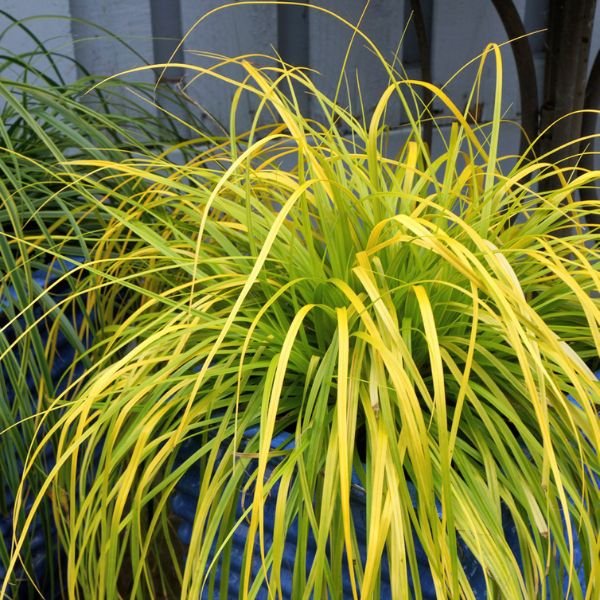 Golden Fountain
Nature Hills Nursery
Evercolor® Everillo Sedge Grass
Bring a sun-like glow to the shadows with this chartreuse sedge. This flowing charmer is incredibly hardy and provides year-round color that never fades.
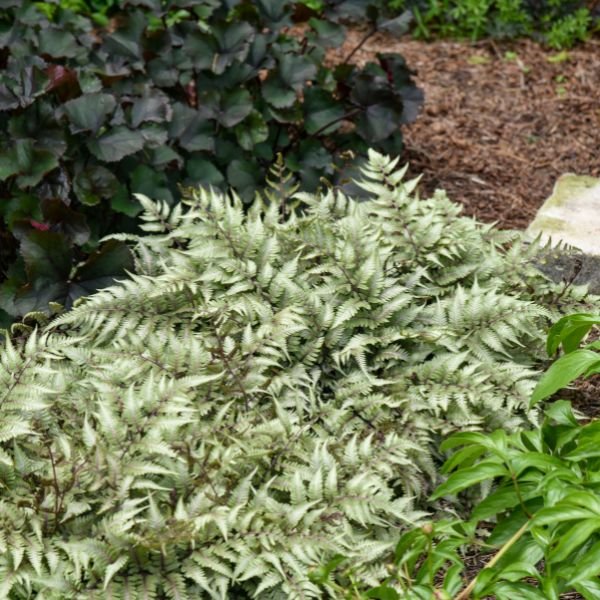 Silver Splendor
Nature Hills Nursery
'Godzilla' Japanese Painted Fern
With its metallic silver and purple fronds, this sweeping fern adds a sophisticated, cool-toned texture and silvery gleam to any damp, shady border.
Need more ideas for timely gardening jobs and seasonal expert advice delivered straight to your inbox? Sign up for the free Gardening Know How Newsletter!


















 English (US) ·
  French (CA) ·