

 1 month ago
84
1 month ago
84
If there’s one thing I’ve learned from years of traveling, it’s that booking a flight is rarely as simple as finding the lowest fare and clicking “Book Now.”
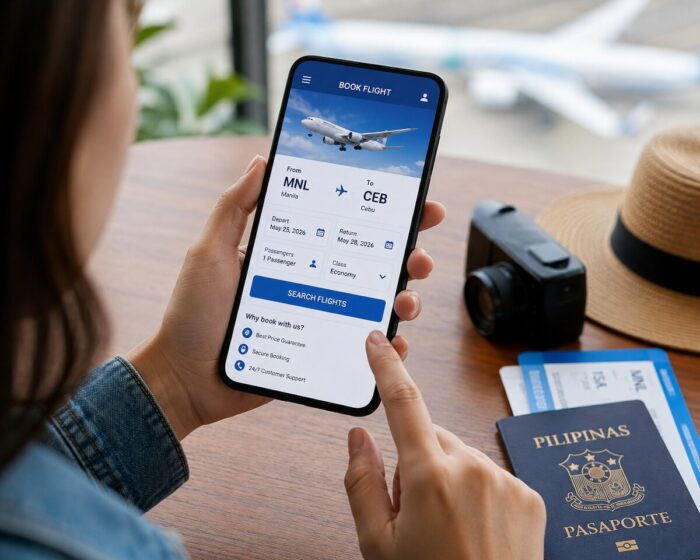
Flight Booking Hacks for Filipino Travelers
Airfares can change quickly. A ticket that costs PHP 5,000 today might be PHP 7,000 tomorrow—or, sometimes, even cheaper a few hours later. Then there are baggage fees, seat selection fees, airport transfers, inconvenient flight schedules, and all the other small expenses that can turn a supposedly cheap ticket into a surprisingly expensive trip.
For Filipino travelers, finding a good airfare often comes down to patience, flexibility, and knowing what to look for.
I’ve booked enough flights over the years to know that there isn’t one magical trick that will always get you the cheapest ticket. Instead, it’s about combining several smart strategies and knowing when you’ve found a genuinely good deal.
Here are my top 10 flight booking hacks for Filipino travelers that can help you save money without making your trip unnecessarily complicated.
1. Start Looking Early—Even If You’re Not Ready to Book
One thing I always recommend is to start your flight search early.
That doesn’t necessarily mean you should book months and months ahead without thinking. Instead, start looking early so you can get a feel for the prices.
For example, if I’m planning a trip to Japan, I might start checking Manila-to-Tokyo or Manila-to-Osaka fares well before I actually book. After looking at the prices for a while, I began to understand what’s normal.
If I keep seeing round-trip fares around PHP 15,000 to PHP 20,000 and suddenly find one for PHP 11,000, I know I should take a closer look.
Without that research, it’s difficult to tell whether you’re looking at a genuine bargain or simply a fare that looks cheap because you haven’t compared enough options.
This is particularly important if you’re traveling during popular periods such as Christmas, Holy Week, summer holidays, cherry blossom season in Japan, or long weekends.
My tip
Don’t think of your first few searches as shopping. Think of them as price research.
Once you know the usual fare, you’ll have a much easier time recognizing a good deal when it comes along.
2. Be Flexible With Your Travel Dates
If you’re serious about saving on airfare, flexibility can be your best friend.
I’ve often found that moving a trip by just a day or two can make a surprising difference in price.
For example, instead of automatically booking a Friday departure and Sunday return, check what happens if you fly Tuesday and return Saturday. You might find a considerably cheaper combination.
This is especially helpful for travelers with flexible work arrangements, such as those who are self-employed, work remotely, or can take an extra day off.
I usually compare several combinations before deciding.
For example:
- Tuesday to Saturday
- Wednesday to Sunday
- Thursday to Monday
- Friday to Tuesday
Don’t assume that one particular day is always the cheapest. Airline pricing changes constantly, so it’s better to compare actual fares than rely on the popular advice that “Tuesday is always the cheapest day to fly.”
Look beyond the ticket price
There is one important catch.
A cheaper flight isn’t necessarily a better deal if it creates other expenses.
If a Tuesday flight saves you PHP 2,000 but requires you to take an unpaid day off work, that may not be much of a saving.
The same goes for flights at awkward hours. A very cheap midnight arrival might mean paying for an expensive airport transfer or an additional hotel night.
For me, the goal isn’t simply finding the cheapest flight. It’s finding the best-value flight.
3. Set Fare Alerts and Let the Internet Do Some of the Work
I don’t have the patience to check the same flight every day just to see whether the price has dropped.
That’s where fare alerts come in.
Platforms such as Google Flights and Skyscanner can monitor routes and notify you when prices change. Instead of constantly searching, you can simply keep an eye on the alerts and decide when the fare looks attractive.
This works particularly well when I know where I want to go but haven’t completely settled on my dates.
For example, if I’m thinking about a Japan trip, I might monitor:
- Manila to Tokyo
- Manila to Osaka
- Manila to Nagoya
Sometimes the difference between the routes can be significant.
The same approach works for Southeast Asia. You could monitor flights from Manila to Bangkok, Singapore, Kuala Lumpur, Hanoi, Ho Chi Minh City, or Bali, then decide which destination offers the best combination of airfare and travel experience.
Don’t obsess over tiny price changes
I don’t usually get excited over a PHP 100 or PHP 200 reduction.
But if a fare drops substantially compared with what I’ve been seeing for weeks, that’s when I start paying attention.
The goal isn’t to catch the absolute lowest airfare in history. That’s almost impossible.
The goal is to recognize a good fare when you see one.
4. Never Judge a Flight by Its Advertised Fare
This is probably one of the biggest lessons I’ve learned about budget flying.
That PHP 999 fare looks fantastic on the airline’s homepage.
But what happens when you actually book it?
Suddenly, you’re adding baggage. Then there’s a seat-selection fee. Maybe you want a meal. Perhaps there are other charges at checkout.
By the time you’re finished, that PHP 999 ticket doesn’t look quite so cheap anymore.
That’s why I always look at the final price.
Before booking, I ask myself:
- How much baggage do I need?
- Is cabin baggage enough?
- Do I need to check a bag?
- Do I really need to choose my seat?
- Is a meal necessary?
- Are there additional fees?
- How much will transportation to the airport cost?
This is especially important for longer trips.
If you’re going to Japan for a week or two, for example, traveling with only a small carry-on may not be realistic unless you’re very good at packing light.
Sometimes the more expensive ticket is cheaper
Imagine this:
Budget airline: PHP 5,500 + baggage + seat + meal
Full-service airline: PHP 7,000 including baggage and meals
The second ticket may actually be the better deal.
That’s why I never compare airfare based solely on the number displayed in the first search result.
5. Don’t Automatically Assume NAIA Is Your Only Option
For many Filipinos, NAIA is the obvious choice. It’s convenient if you live in Metro Manila and have the largest selection of flights.
But I always check Clark International Airport when I’m planning an international trip.
Depending on the destination and your location, Clark can sometimes offer a significantly better fare.
Let’s say you find:
Manila: PHP 12,000 round trip
Clark: PHP 8,500 round trip
That’s a PHP 3,500 difference.
Sounds great, right?
But before getting too excited, I calculate how much it will cost me to reach Clark. If transportation costs PHP 1,500 more, my actual savings are only PHP 2,000.
That’s still a saving, but now I can make an informed decision.
The same principle applies to domestic travel. Depending on where you live, it may be worth comparing flights from Manila, Clark, Cebu, Davao, Iloilo, and other regional airports.
Think about the entire journey
I always look at the trip from my front door to the hotel—not just from one airport to another.
A cheap ticket isn’t much of a bargain if getting to the airport is expensive, stressful, or takes half a day.
6. Search for One-Way Tickets Separately
I used to automatically search for round-trip flights.
Now I almost always check one-way fares separately, especially when traveling internationally.
Sometimes buying a round-trip ticket from one airline makes perfect sense.
Other times, mixing airlines can save money.
For example:
Manila to Tokyo: Airline A
Tokyo to Manila: Airline B
You might find that the combined price is lower than the round-trip fare offered by either airline.
This can also work beautifully for multi-city trips.
Instead of flying:
Manila to Tokyo to Manila
You could consider:
Manila to Tokyo to Osaka to Manila
This allows you to visit multiple destinations without unnecessary backtracking.
Just be careful with separate tickets
There’s an important downside.
If you book two completely separate tickets and the first flight is delayed, the airline operating your second flight generally isn’t responsible for the missed connection.
If you’re doing this, leave plenty of time between flights.
For complicated itineraries, I would rather pay a little more for a more reliable connection than spend the entire trip worrying that a delay will ruin everything.
7. Watch for Seat Sales—but Don’t Let the Hype Make You Book Something You Don’t Need
Filipinos love airline seat sales, and honestly, who doesn’t?
There’s something exciting about seeing a ridiculously low fare and imagining all the places you could go.
But I’ve learned not to get carried away by the excitement.
A cheap ticket is only useful if you can actually use it.
Before booking a promotional fare, check:
- Travel dates
- Blackout dates
- Baggage allowance
- Flight schedule
- Departure airport
- Arrival airport
- Rebooking conditions
- Cancellation rules
- Taxes and additional charges
This is particularly important around holidays.
A promotional fare might be fantastic for an off-peak trip but completely irrelevant if your only available vacation is during Christmas or Holy Week.
Have a destination wish list
One trick I like is keeping a list of destinations I genuinely want to visit.
If a good sale comes along for one of those destinations, I can make a decision quickly.
But I don’t buy a ticket simply because it’s cheap.
There’s no point in getting a PHP 1,500 ticket to somewhere you don’t actually want to visit, only to spend PHP 30,000 on the rest of the trip.
8. Consider Traveling During Shoulder Season
If your schedule allows it, traveling just before or after the peak season can make a huge difference.
This is something I particularly enjoy because you can often get a better experience and a better price.
Take Japan, for example.
Cherry blossom season is incredibly popular, and for good reason. But it can also mean expensive flights, packed trains, busy attractions, and higher hotel rates.
If you travel slightly before or after the peak period, you may still enjoy beautiful weather and seasonal scenery while avoiding some of the crowds.
The same idea works in Europe and other popular destinations.
Shoulder-season travel can mean:
- Lower airfares
- Cheaper hotels
- Fewer tourists
- Better restaurant availability
- Easier sightseeing
- More relaxed travel days
Of course, always check the weather before booking.
A low airfare isn’t much consolation if you’re spending the entire vacation hiding from heavy rain.
9. Don’t Let Your Miles and Points Go to Waste
If you travel regularly, joining airline loyalty programs is a no-brainer.
You don’t have to be a business traveler flying every week to benefit.
Even occasional trips can add up over time.
Depending on the program, your miles or points may eventually help with flights, upgrades, or other travel rewards.
For Filipino travelers, Philippine Airlines’ Mabuhay Miles is one program worth knowing if you frequently fly with the airline.
Credit-card travel rewards can also be useful, particularly if you put regular household or travel expenses on a card and pay the balance responsibly.
But don’t chase miles blindly
This is another trap I’ve learned to avoid.
If one airline’s flight costs PHP 5,000 and another costs PHP 9,000, I won’t automatically choose the more expensive flight just because I’ll earn more points.
The PHP 4,000 difference may be worth much more than the additional miles.
I see loyalty points as a bonus, not a reason to overpay.
10. When You Find a Good Fare, Don’t Overthink It
This is probably the hardest lesson for anyone who loves hunting for bargains.
You find a flight for PHP 10,000 and think:
“Maybe I should wait. It might drop to PHP 8,000.”
You wait.
Then it’s PHP 12,000.
You wait again.
Suddenly, it’s PHP 16,000.
I’ve learned that there comes a point when you simply have to make a decision.
There is no magic number that guarantees you’ve found the lowest possible airfare. Prices can rise or fall depending on demand, availability, timing, and other factors.
Instead, I ask myself:
Is this a price I’m comfortable paying?
If I’ve already compared the dates, airlines, airports, baggage requirements, and schedules—and the fare looks good—I book it.
I would rather enjoy the certainty of having my ticket than spend weeks trying to save another PHP 500.
Bonus Hack: Don’t Waste Too Much Time Worrying About Incognito Mode
You’ve probably heard the advice to search for flights in an incognito browser because airlines supposedly increase prices when they notice you repeatedly searching for the same flight.
This is one of those travel tips that has been repeated so often that it has become almost universal travel wisdom.
But I wouldn’t spend too much time worrying about it.
Airline prices are influenced by many factors, including demand, seat availability, fare classes, travel dates, and market conditions.
Using a private browser window is perfectly fine, but I wouldn’t expect it to magically reveal a secret PHP 2,000 fare.
Your time is better spent comparing dates, checking different airports, monitoring fares, and looking at the final price.
My Simple Flight Booking Routine
Whenever I’m planning a trip, I usually follow a simple routine.
First, I decide how flexible I am.
Can I move the trip by one or two days?
Then I compare airlines.
I don’t immediately assume that my favorite airline will have the best fare.
I check different airports.
For international trips, I’ll look at both NAIA and Clark when practical.
I check the baggage allowance.
This is particularly important for longer trips.
I calculate the actual cost.
I add baggage, seat selection, meals, airport transfers, and anything else I know I’ll need.
I check the schedule.
A cheap flight that leaves at an inconvenient hour might not be worth it.
I look at the arrival airport.
This can make a huge difference, especially in large cities.
I read the fare conditions.
I want to know what happens if my plans change.
Finally, I check my passenger details.
One wrong letter in a name can create a headache that nobody wants before a vacation.
Then I make a decision.
If the price is good and the itinerary works, I book.
The Best Flight Booking Hack? Be Flexible
After years of traveling, I’ve realized that flexibility is probably the closest thing to a secret weapon for finding affordable flights.
Be flexible with your dates.
Be flexible with your departure airport.
Be flexible about which airline you fly.
Be flexible about the destination if you’re still deciding where to go.
And, whenever possible, be flexible about the season.
Sometimes changing your plans by just one day can save enough money to pay for a nice dinner at your destination.
And sometimes choosing a slightly less popular airport can save enough for another night in a hotel.
That’s why I don’t focus solely on finding the cheapest flight.
I look for the flight that offers the best overall value.
Final Thoughts
Finding affordable flights from the Philippines doesn’t require a secret formula. It requires a little patience, some research, and the willingness to look beyond the first fare that appears on your screen.
Start tracking prices early. Compare different travel dates. Check both NAIA and Clark when practical. Look at one-way and multi-city options. Watch airline seat sales. Use fare alerts. Consider traveling during shoulder season. And always calculate the actual cost of your ticket after baggage, seats, meals, transportation, and other expenses.
Most importantly, don’t become so obsessed with finding the absolute cheapest fare that you forget to enjoy the planning process.
A PHP 500 saving isn’t worth hours of frustration.
And a PHP 1,000 more expensive ticket can sometimes be worth every peso if it gives you a better schedule, a convenient airport, included baggage, and a much less stressful journey.
For me, that’s what a good airfare is all about—not simply paying the lowest possible price, but getting the right flight at the right price for the way I actually travel.
Follow and subscribe to OutofTownBlog.com on Facebook, Twitter, Instagram, Pinterest, and YouTube for more Travel-related updates.
Read:
- 15 Smart Travel Hacks for an Affordable Siargao Vacation
- 15 Smart Luxury Travel Hacks Every Jetsetter Should Know
- 15 Agoda Booking Hacks That Can Save You Hundreds
- 10 Effective Ways to Save Money on Flights: Expert Tips and Tricks
- Hong Kong Disneyland Hacks: Save Money, Skip Lines & Ride More Like a Pro


















 English (US) ·
  French (CA) ·