

 2 months ago
103
2 months ago
103
PROTECT YOUR DNA WITH QUANTUM TECHNOLOGY
Orgo-Life the new way to the future Advertising by AdpathwayParts of UK brace for another heatwave as government convenes emergency Cobra meeting
Parts of the UK will face the fifth heatwave of the summer this week with temperatures forecast to reach highs of 38C, prompting the Met Office to issue an amber weather warning for extreme heat.
The record-shattering heatwave has caused wildfires and drought in many parts of the country, with this summer on course to be the UK’s hottest since records began, according to the Met Office. The National Fire Chiefs Council (NFCC) said firefighters have responded to 966 wildfires across England and Wales this year, including 185 in the first 10 days of August alone. The Fire Brigades Union (FBU) general secretary, Steve Wright, told Times Radio the country faces a national emergency “right now”, with wildfires seen “all across” the UK.
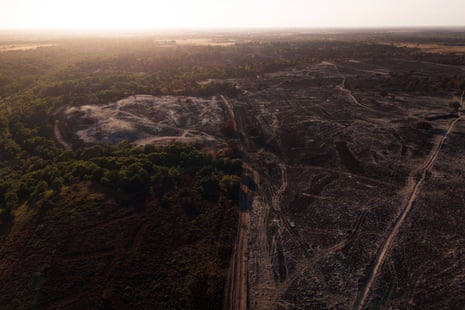
Nearly three-quarters of England and the whole of Wales are in drought, creating tinderbox conditions that have fuelled the rapid spread of wildfires. Southern Water has applied for a rare drought order that would restrict businesses in Hampshire and the Isle of Wight from using water for non-essential activities, including cleaning cars and filling swimming pools, citing exceptionally low rainfall and concerns over supplies. If approved, it would be the first such ban since May 2006, with the decision resting with the environment secretary, Angela Eagle.
The extreme heat has prompted the government to convene an emergency Cobra meeting – the second this year in response to a heatwave. You can read more on that here:
“We know how challenging this summer is proving, particularly for firefighters tackling wildfires, farmers working in drought conditions, and NHS staff in busy A&E units,” a Downing Street spokesperson said ahead of the meeting this afternoon, which will be chaired by the prime minister, Andy Burnham.
“We will continue to take the action needed to keep communities safe, protect water supplies, support farming communities and safeguard the environment.”
Temperatures could reach 33C today and up to 38C tomorrow, the Met Office said, as it issued an amber heat warning for large parts of England, covering areas including London, St Albans, Cambridge, Oxford, Milton Keynes, Peterborough, Leicester, Birmingham, Nottingham, Lincoln and Sheffield. It will be in place from 9am tomorrow to midnight.
Allow content provided by a third party?
This article includes content hosted on platform.x.com. We ask for your permission before anything is loaded, as the provider may be using cookies and other technologies. To view this content, click 'Allow and continue'.
The Met Office warned that the ‘“extreme heat” warning will likely cause “adverse” health effects to people vulnerable to extreme heat, adding that there could be delays to travel and that some “heat sensitive systems and equipment may fail”, leading to potential power cuts at some homes and businesses.
“While the peak heat will be more short-lived than recent heatwaves, temperatures widely into the mid-30s Celsius on Thursday brings the potential for impacts for some, which is why a Met Office warning has been issued,” said chief forecaster Chris Bulmer.
Earlier, the Met Office said another record-breaking summer was increasingly likely, after the UK recorded its second-warmest June and July on record, with temperatures reaching 38C in June and 35C in July. It said the repeated heatwaves were a stark reminder of the changes taking place in the UK’s climate.
As my colleague Damian Carrington wrote yesterday, the climate crisis, caused by the pollution from fossil fuel burning, makes every heatwave more likely and intense. The heatwave at the end of June was the most severe ever recorded in Europe and would not have been possible without human-caused global heating.
Key events
UK heatwaves may have cost economy £4.4bn in lost output so far this year, analysis finds

Heather Stewart
Repeated debilitating heatwaves this summer are likely to have cost the UK economy more than £4bn in lost economic output by the end of July, new analysis shows.
Green thinktank Verdant had suggested June’s unseasonally hot weather had an economic cost of £2.36bn. Updating its assessment to include last month’s high temperatures, it finds a £4.4bn hit to output.

As temperatures soar once again this week, Verdant’s director, James Meadway, said: “The economic costs of climate change are already with us, and set to worsen in future years. Action by the government to protect workers and businesses from the severe effects of extreme heat is well overdue.”
Direct economic costs arise because workers across many industries become less productive in heatwaves, while infrastructure and equipment overheats and has to be shut down.
Verdant is calling for the government to implement a maximum working temperature; and be ready to step in to compensate workers when they are forced to cut their hours because of extreme heat.
Read more:
The Guardian’s environment editor Damian Carrington has put together this explainer on why Europe is warming about twice as fast as the global average, with shifting weather patterns, Arctic warming, declining snow cover and reduced air pollution all contributing alongside greenhouse gas emissions:
Lib Dems and Greens welcome Cobra meeting but call for more urgent action
We have some comments from the Liberal Democrats and Green party on the Cobra emergency meeting scheduled for later today.
While welcoming the government’s announcement, the Lib Dem environment spokesperson Pippa Heylings said emergency meetings were not enough to put out fires or protect our communities, saying “we urgently need a national strategy to make the UK climate-ready”.
She added: “Extreme weather warnings, widespread water shortages and wildfires raging across our countryside are a stark reminder that the climate crisis is gripping the country, yet the government is moving at a snail’s pace, waiting until the fifth heatwave this summer to act.”
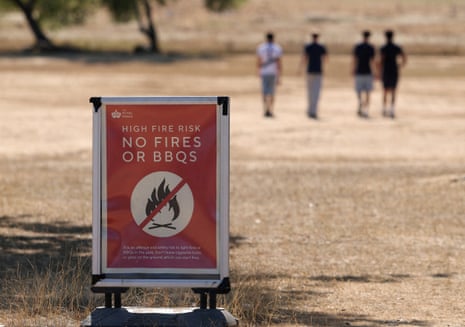
Similarly, Green party leader Zack Polanski said the Cobra meeting was “only a first step”, adding: “This is a climate emergency which is leading to hundreds of deaths and stretching our firefighters, health staff and farmers to the limit. What we urgently need is concrete action.
“That must include taxing fossil fuel giants to pay for firefighting helicopters, a cool space in every community, and a maximum working temperature.
“The prime minister must also commit to no new oil and gas extraction in the North Sea. We cannot negotiate with the science.”
Parts of UK brace for another heatwave as government convenes emergency Cobra meeting
Parts of the UK will face the fifth heatwave of the summer this week with temperatures forecast to reach highs of 38C, prompting the Met Office to issue an amber weather warning for extreme heat.
The record-shattering heatwave has caused wildfires and drought in many parts of the country, with this summer on course to be the UK’s hottest since records began, according to the Met Office. The National Fire Chiefs Council (NFCC) said firefighters have responded to 966 wildfires across England and Wales this year, including 185 in the first 10 days of August alone. The Fire Brigades Union (FBU) general secretary, Steve Wright, told Times Radio the country faces a national emergency “right now”, with wildfires seen “all across” the UK.
Nearly three-quarters of England and the whole of Wales are in drought, creating tinderbox conditions that have fuelled the rapid spread of wildfires. Southern Water has applied for a rare drought order that would restrict businesses in Hampshire and the Isle of Wight from using water for non-essential activities, including cleaning cars and filling swimming pools, citing exceptionally low rainfall and concerns over supplies. If approved, it would be the first such ban since May 2006, with the decision resting with the environment secretary, Angela Eagle.
The extreme heat has prompted the government to convene an emergency Cobra meeting – the second this year in response to a heatwave. You can read more on that here:
“We know how challenging this summer is proving, particularly for firefighters tackling wildfires, farmers working in drought conditions, and NHS staff in busy A&E units,” a Downing Street spokesperson said ahead of the meeting this afternoon, which will be chaired by the prime minister, Andy Burnham.
“We will continue to take the action needed to keep communities safe, protect water supplies, support farming communities and safeguard the environment.”
Temperatures could reach 33C today and up to 38C tomorrow, the Met Office said, as it issued an amber heat warning for large parts of England, covering areas including London, St Albans, Cambridge, Oxford, Milton Keynes, Peterborough, Leicester, Birmingham, Nottingham, Lincoln and Sheffield. It will be in place from 9am tomorrow to midnight.
Allow content provided by a third party?
This article includes content hosted on platform.x.com. We ask for your permission before anything is loaded, as the provider may be using cookies and other technologies. To view this content, click 'Allow and continue'.
The Met Office warned that the ‘“extreme heat” warning will likely cause “adverse” health effects to people vulnerable to extreme heat, adding that there could be delays to travel and that some “heat sensitive systems and equipment may fail”, leading to potential power cuts at some homes and businesses.
“While the peak heat will be more short-lived than recent heatwaves, temperatures widely into the mid-30s Celsius on Thursday brings the potential for impacts for some, which is why a Met Office warning has been issued,” said chief forecaster Chris Bulmer.
Earlier, the Met Office said another record-breaking summer was increasingly likely, after the UK recorded its second-warmest June and July on record, with temperatures reaching 38C in June and 35C in July. It said the repeated heatwaves were a stark reminder of the changes taking place in the UK’s climate.
As my colleague Damian Carrington wrote yesterday, the climate crisis, caused by the pollution from fossil fuel burning, makes every heatwave more likely and intense. The heatwave at the end of June was the most severe ever recorded in Europe and would not have been possible without human-caused global heating.



















 English (US) ·
  French (CA) ·