

 3 weeks ago
21
3 weeks ago
21
PROTECT YOUR DNA WITH QUANTUM TECHNOLOGY
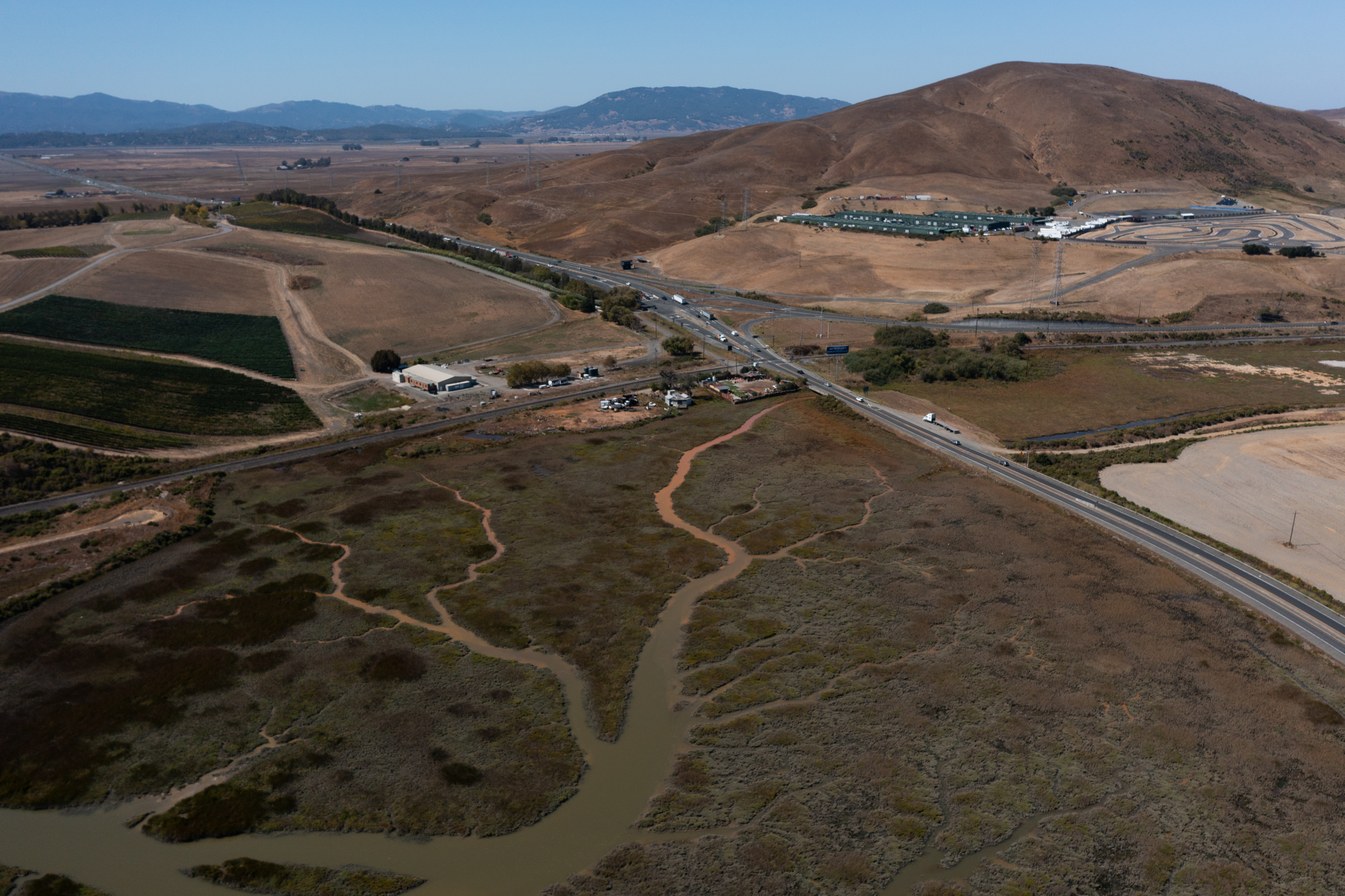
Orgo-Life the new way to the future Advertising by AdpathwayBefore a rover reaches Mars or an astronaut walks on the Moon, the mission is rehearsed on Earth, on ground chosen because it resembles the destination. Cinder fields stand in for regolith. Impact craters stand in for impact craters. Lava tubes and desert basins fill in for landscapes nobody has touched.
The U.S. Geological Survey is now formally asking whether that infrastructure is holding up. In a notice published in the Federal Register, the agency proposed renewing its Terrestrial Analogs Survey with revisions, submitted the collection to the Office of Management and Budget for review, and opened a comment period that closes on October 8.
The document is a paperwork filing, which is exactly why it tends to go unnoticed. What it describes is more substantive: a structured audit of whether the field sites, data archives, and sample collections that underpin American planetary exploration training are meeting the needs of the scientists who use them.
Ground on Earth That Stands In for Another World
USGS defines terrestrial analogs as locations on Earth with one or more geological, biological, or environmental conditions similar to those found on other planets, either past or present. Analog studies typically investigate a geologic process here and extrapolate it to another body. Beyond research, the sites are used for training, technology demonstrations, traverse planning, and full field simulations.
The agency's Astrogeology Science Center in Flagstaff, Arizona runs a program built around this idea, called Terrestrial Analogs for Research and Geologic Exploration Training, or TARGET. Its stated premise is that Earth is a fundamental training ground for human and robotic planetary exploration, and that the center's position in northern Arizona offers unusual access to the relevant terrain. The center describes its vision as leading the planetary science community in training, research, data archiving, and sample curation involving analog field sites.
The physical holdings are specific. The center curates three terrestrial analog sample collections: the Meteor Crater Sample Collection, the Flynn Creek Crater Sample Collection, and the Shoemaker Sample Collection. Meteor Crater, an hour east of Flagstaff along Interstate 40, is the best known of them and has served as a geology training ground for astronauts for decades. These are ordinary landscapes doing quiet federal work, largely unremarked.
Findings the First Round Produced
The original survey was not a token exercise. The web-based questionnaire ran 33 questions across four sections covering respondent details, field analog use, data portal use, and geologic materials collection use, with comment boxes attached to 12 of the questions. It was designed to take under 10 minutes.
It drew 248 responses from the planetary science community, a group the notice describes as including scientists at universities, institutions, and government agencies along with undergraduate and graduate students. From those responses, USGS identified 21 notable findings, each matched with one or more recommendations to be addressed by the community.
The notice does not enumerate the findings or the recommendations, and that is a real limitation for anyone trying to judge the program from the filing alone. What the document does state is the purpose of the revision: to assess current analog needs and to evaluate how well the community perceives the earlier findings, the recommendations, and the changes implemented in response, in order to determine whether those changes have been effective or whether more are needed.
That is a self-assessment loop, and it is a reasonable thing for an agency to build. It also means the useful information sits in the underlying survey materials rather than in the two pages published in the Federal Register.
A Sixty-Day Window That Drew Nothing
One line in the notice deserves attention. A prior Federal Register notice opening a 60-day comment period on this same collection was published on July 2. According to the current filing, no comments were received.
Two months of open public comment on the adequacy of federal planetary analog infrastructure produced zero responses. That is not evidence of wrongdoing, and it is a common outcome for Paperwork Reduction Act notices, which are written in a register that discourages general readership. It is worth naming anyway, because the current window is shorter and because the agency is explicitly asking whether the collection has practical utility, whether its burden estimate is accurate, and how the quality and clarity of the information could be improved.
The revised collection estimates 223 annual respondents and 112 total annual burden hours, with an average completion time of 12.5 minutes. The first ten questions, covering demographic and background information, were mandatory in the original instrument; the three substantive sections were voluntary. The collection carries OMB control number 1028-0140 and is formally titled Assessing Community Needs for Terrestrial Analog Studies.
Filing Before the October Deadline
Comments are due on or before October 8. They can be submitted through the federal rulemaking portal at regulations.gov under Docket No. USGS-2026-0331 or mailed to the USGS Information Collections Clearance Officer in Reston, Virginia. The notice lists Amber Gullikson as the contact for additional information about the request, and it was signed by Chris Okubo, the Astrogeology Science Center's director for the Southwest Region. The information collection request itself can also be viewed through the OMB paperwork portal.
Anyone submitting should know that comments become part of the public record. The agency warns that a submission, including any personally identifiable information it contains, may be made publicly available at any time, and that while a commenter can ask for that information to be withheld, USGS cannot guarantee it will be able to do so.
The people with the most useful things to say here are a narrow group: researchers who have actually run fieldwork at analog sites, students who have tried to use the data portal, and anyone who has requested samples from the geologic materials collection. Their assessment of whether access, archiving, and site availability have improved is precisely what the revision is designed to capture, and 248 responses is a modest base for conclusions about a national research community.
For general readers, the takeaway is narrower but not trivial. Public land in northern Arizona and comparable terrain elsewhere serves a function that rarely appears in budget debates about space exploration, and the maintenance of that function depends on ordinary administrative machinery. If a comment window closes with nothing in it twice running, the record will show that the community had the opportunity to weigh in and did not, which is a weaker foundation for future funding arguments than a full docket would be.
OMB review follows the close of the comment period. The notice does not state when a decision is expected, and it does not say whether the survey results, once collected, will be published.
What Readers Want to Know
What is a terrestrial analog? USGS defines it as a location on Earth with geological, biological, or environmental conditions similar to those found on another planet, past or present. The sites are used for research, mission training, technology testing, and traverse planning.
What is the agency actually proposing? A renewal with revisions of an existing survey of the planetary science community, submitted to the Office of Management and Budget for review and approval. The survey asks whether analog field sites, data archives, and sample collections meet researcher needs.
When is the comment deadline? October 8. Comments may be filed through the federal rulemaking portal under Docket No. USGS-2026-0331 or mailed to the USGS Information Collections Clearance Officer in Reston, Virginia.
Which sites are involved? The notice does not list specific field sites. The USGS Astrogeology Science Center's analog program is centered in northern Arizona, and the center curates three sample collections drawn from Meteor Crater, Flynn Creek Crater, and the Shoemaker collection.
Did the first survey find problems? It produced 21 notable findings paired with recommendations, based on 248 responses. The notice does not describe what those findings were, which limits what can be concluded from the filing alone.
Does this affect access to public land? Nothing in the notice changes public access, closes any area, or establishes any restriction. It concerns a survey instrument and the information collection approval behind it.
Will comments be public? Yes. The agency states that a comment, including any personal information in it, may be made publicly available at any time, and that a request to withhold that information cannot be guaranteed.
© 2026 NatureWorldNews.com All rights reserved. Do not reproduce without permission.



















 English (US) ·
  French (CA) ·