

PROTECT YOUR DNA WITH QUANTUM TECHNOLOGY
Orgo-Life the new way to the future Advertising by AdpathwayWe live in Montgomery, which puts the Alabama Gulf Coast about three and a half hours down the road from our front door. Gulf Shores and Orange Beach are our closest real beaches, we’ve stayed down there several times, and we were back again this August.
In this guide I’m going to cover what those visits have taught us, including which of the three bases suits which kind of trip, which beach accesses have the parking and facilities, and which restaurant fits which evening. I’m also going to tell you how easy (or not!) it is to visit without a car.
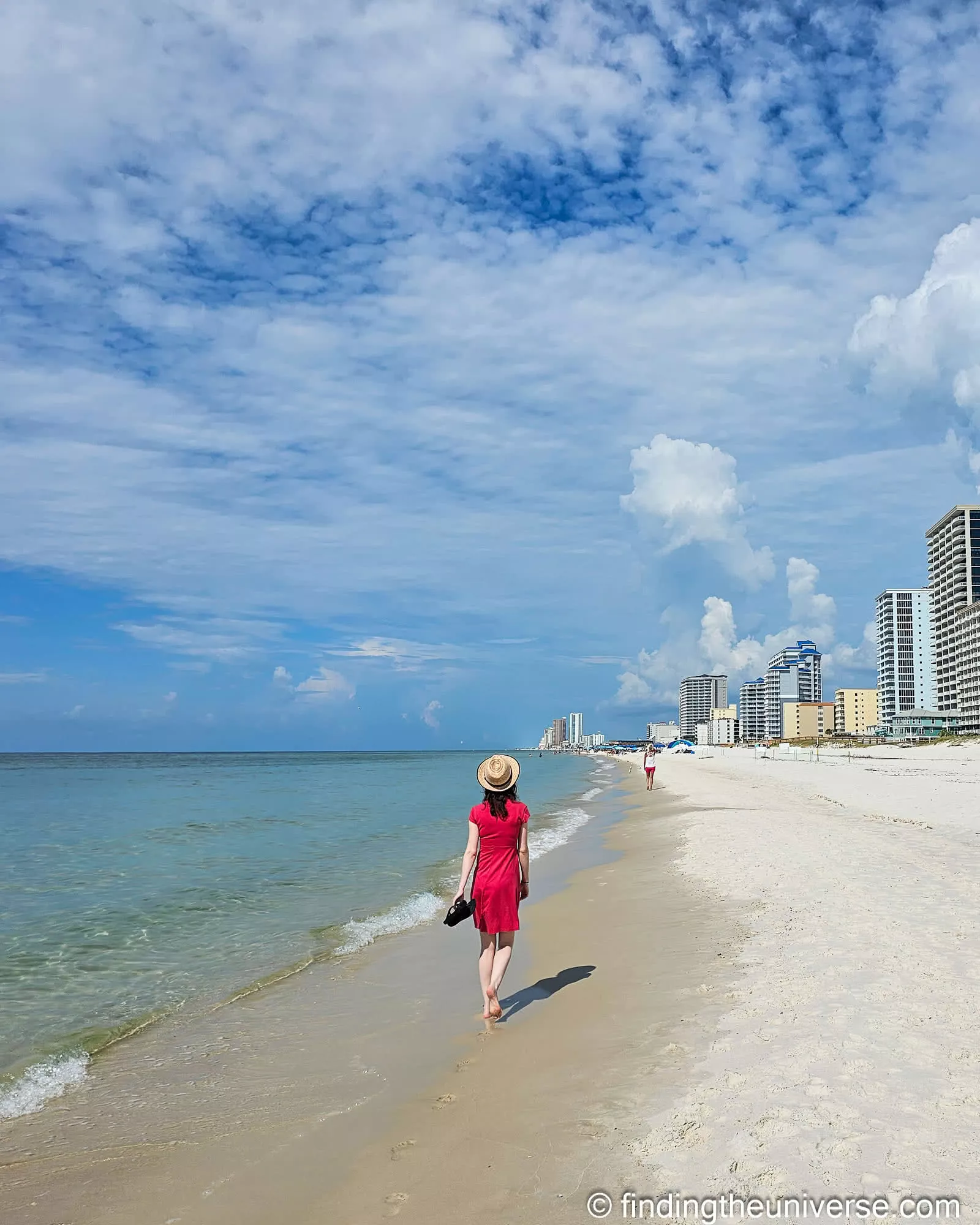
One note before we start. Most of what’s written about this stretch of coast is aimed squarely at families with young kids. The zoo, the go-karts, the water parks. This is a wonderful family destination for sure.
However, we don’t have kids, so while we do enjoy a round of mini-golf or time at the arcades, we tend to visit slightly outside the main family season which rewards us with lower prices and quieter beaches. But this guide will work for everyone, from families through to couples, photographers, and anyone whose ideal beach day involves a quiet stretch of sand, a good meal, and maybe a 19th century fort.
Gulf Shores and Orange Beach: The Quick Take
Short on time? Here’s our quick overview of a visit.
Base yourself in Gulf Shores if you want to occasionally walk to things, in Orange Beach if you want newer condos and the marina scene, and out on the Fort Morgan peninsula if your priority is quiet sand. A car is essential wherever you stay. Three to four nights covers the beaches, Fort Morgan, and a morning on the water; a week (or more!) is for switching off entirely.
Our main decision was picking a base for what we could walk to at dinner time. This actually ended up mattering less than we expected: the driving here is short and easy. If walking does matter to you, Gulf Shores has the sidewalks and Orange Beach (mostly) doesn’t.
In terms of when to visit, May and early June are the sweet spot for weather and quiet, September trades a bit of hurricane-watching for warm water and thin crowds, and July and August bring the heat, the crowds and the highest prices.
If you’re coming in summer, book your accommodation months ahead. We stayed at Best Western Premier The Tides on our recent late August trip, and I’ll explain exactly why we picked it in the where to stay section.
Getting to Gulf Shores and Orange Beach
Most visitors drive, and the road trip can be part of the appeal. But Gulf Shores has its own commercial airport now, which changes the maths for a lot of people, so the airport picture deserves a closer look.
Driving In
From Montgomery (where we live) it’s about three and a half hours, which is why this is our default beach. Birmingham is around four and a half hours, Atlanta roughly five and a half to six, Nashville about seven, and New Orleans about three.
If you’re coming from the west, it combines nicely with a stop in the Big Easy, and we have a full guide to things to do in New Orleans if you’re tempted. The whole area also slots neatly into a longer Deep South road trip, which is how a lot of people first find it.
The main route in is Highway 59, which funnels almost everyone into Gulf Shores. On summer Saturdays, the big condo changeover day, it backs up badly. Locals use the Foley Beach Express toll bridge to skip the worst of it, and arriving early morning or in the evening helps a lot. Once you cross the Intracoastal Waterway bridge and see the water ahead, you’re there.
Flying In: Which Airport to Use
The one that’s changed things is Gulf Shores International Airport (GUF, also coded JKA), three miles from the sand. Commercial service arrived in 2025 and Allegiant has been adding routes since, with a $15 million terminal expansion underway. For a small regional airport, that’s a serious step up.
Allegiant is the only airline here, and the route map moves with the calendar. Some cities have year-round service, others run through the summer only, and a few come and go around the shoulder seasons.
So the question isn’t whether the airport is open, because it is, but whether your city is on the map for your dates. The tourist board keeps a current list of nonstop routes that marks which are year-round and which are seasonal, and it’s the fastest way to find out.
| Gulf Shores (GUF) | About 10 minutes | Allegiant only, route map varies by season | The shortest transfer, if your city is on the map |
| Pensacola (PNS) | About 1 hour | American, Delta, United, Southwest, Allegiant | Most visitors, year-round |
| Mobile (MOB) | About 1 hour 20 minutes | American, Delta, United | Approaching from the west |
| Destin-Fort Walton (VPS) | 1.5 to 2 hours | American, Delta, United, Southwest, Allegiant | Fare shopping, Delta hubs |
Our pick if Gulf Shores doesn’t work for you is Pensacola: an hour away, served by all the major carriers, and it’ll have a flight whatever your dates. But check GUF first, because if Allegiant flies from your city when you’re going, landing ten minutes from the beach is hard to argue with.
Getting Around Once You’re There
You need a car. There’s no meaningful public transport, the towns stretch along miles of beach road (often with no sidewalks), and almost nothing is within strolling distance of anything else. Even if you’re staying in a condo and planning on cooking all your own meals, you’re going to need a way to get groceries. As soon as you decide you want to go out for a meal, visit an attraction or try a different stretch of sand, you’re going to need a car.
If you’re flying in, book a rental for the whole stay. We use Discover Cars to compare rental prices across providers, which is especially worth doing for Pensacola pickups in summer.
Where to Base Yourself
This is the decision that matters most. The coast here is really three places wearing one tourism brand.
| Feel | Older, more classic beach town with high rises | Newer, higher-rise, marina-led | Quiet peninsula, no town |
| Walkability | Some, around Gulf Place | Very little | None, by design |
| Stay in | Hotels and mid-rise condos | Big condo towers and hotels | Rental houses |
| Best for | First visits, families | Boaters, condo lovers | Peace, dogs, sunsets |
The thing to understand is that this whole coastline was designed around driving to a hotel and spending your time on the beach in front of it. That’s what most people do, and it works. The problem comes at dinner time, when you fancy walking somewhere instead of driving, and discover that Orange Beach in particular has very few sidewalks. It was built for people in cars, and it shows.
Gulf Shores does better. The blocks around Gulf Place, the main public beach, have an actual walkable core with restaurants and shops, and on an earlier trip that’s where we stayed. This time we picked an Orange Beach hotel with two restaurants inside a few minutes’ walk, which worked out well. We walked to dinner across the road one evening and the car stayed in the hotel lot. That said, this area is so small that nearly everything is within a 10 minute drive, so it’s not a huge effort to drive.
Fort Morgan is the third answer, and the right one if your idea of a beach trip is a house, a wide empty shore, and a sky full of stars. It’s a 20 mile dead-end peninsula west of Gulf Shores with no town to speak of. Just be sure to stock up on supplies before you get out here as there are fewer shopping options.
The Beaches
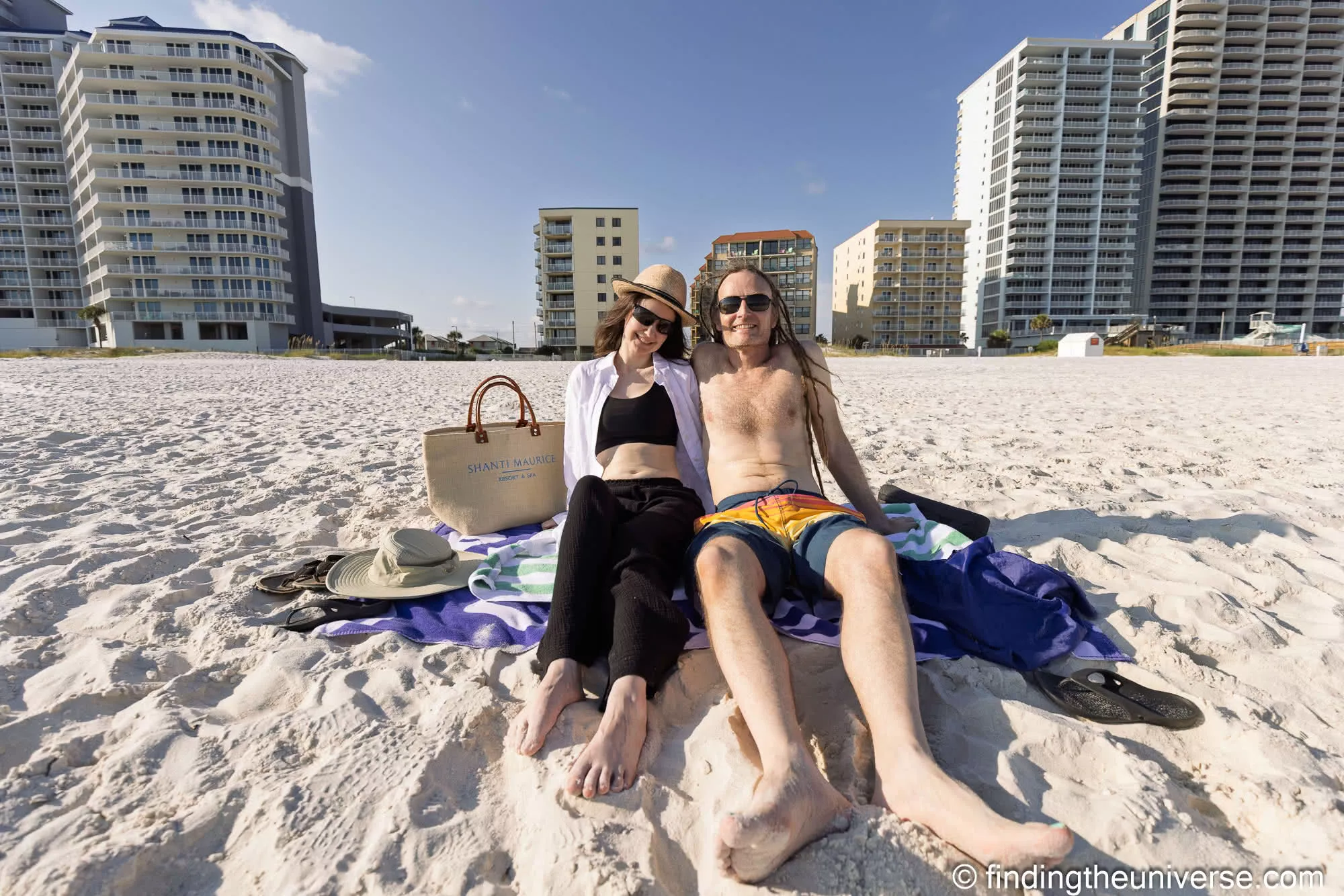
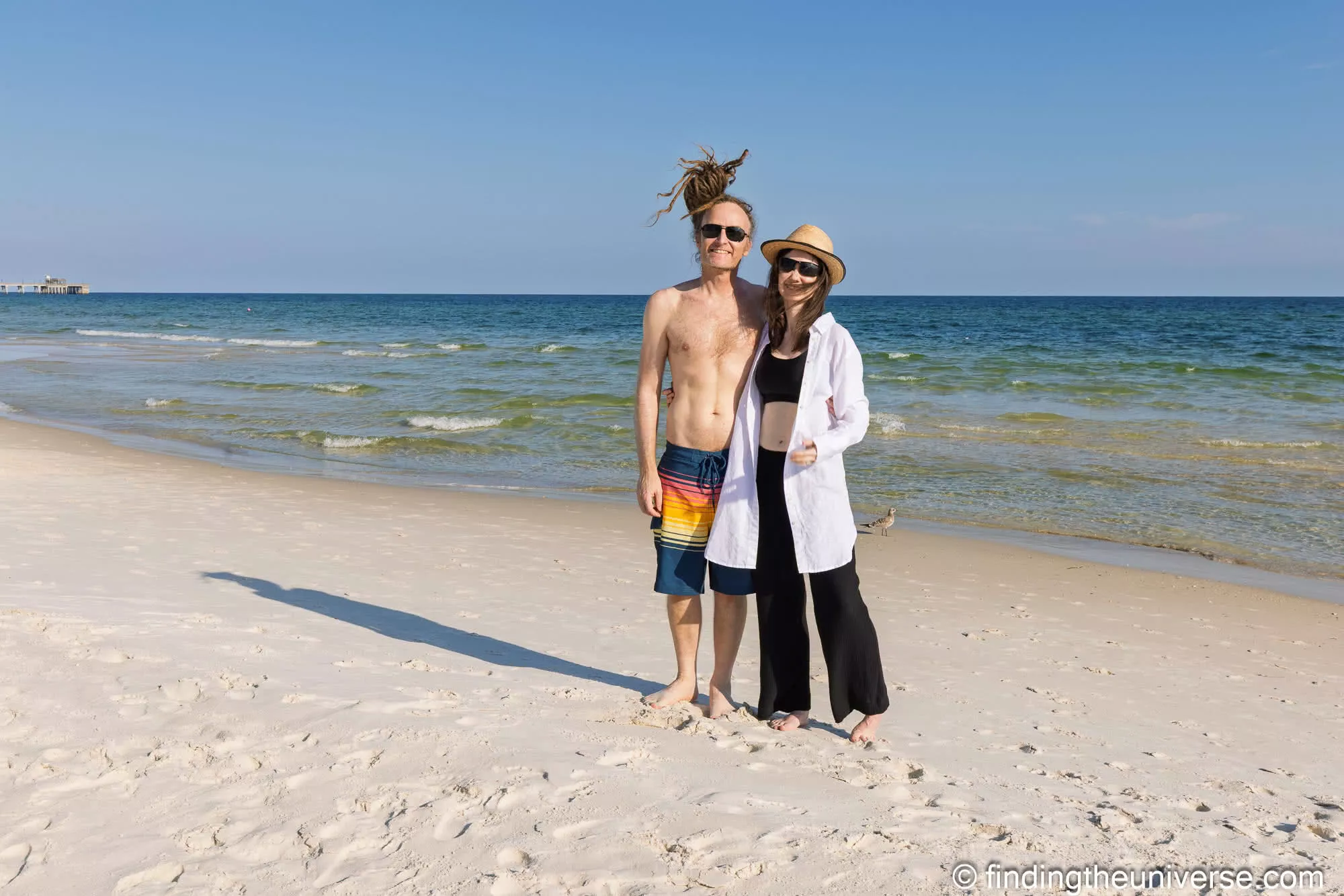
The sand here is the main attraction. It’s fine, white and squeaky underfoot, facing a Gulf that does warm and calm rather than dramatic surf. When we send family our pictures of us on the beach, they wonder which Caribbean island we’ve escaped to, and seem most surprised that we’re in Alabama still.
The tourism board counts 32 miles of beach across the three areas. What actually matters day to day is which access point you pick, because they vary a lot in parking, facilities, and crowds.
One seasonal note: sea turtles nest here from 1 May to 31 October. You’ll see marked-off nests and Share the Beach volunteer patrols, and beachfront properties keep lights low at night during the season. Give the nests room, and fill in any holes you dig; hatchlings fall into them.
Gulf Shores Main Public Beach (Gulf Place)
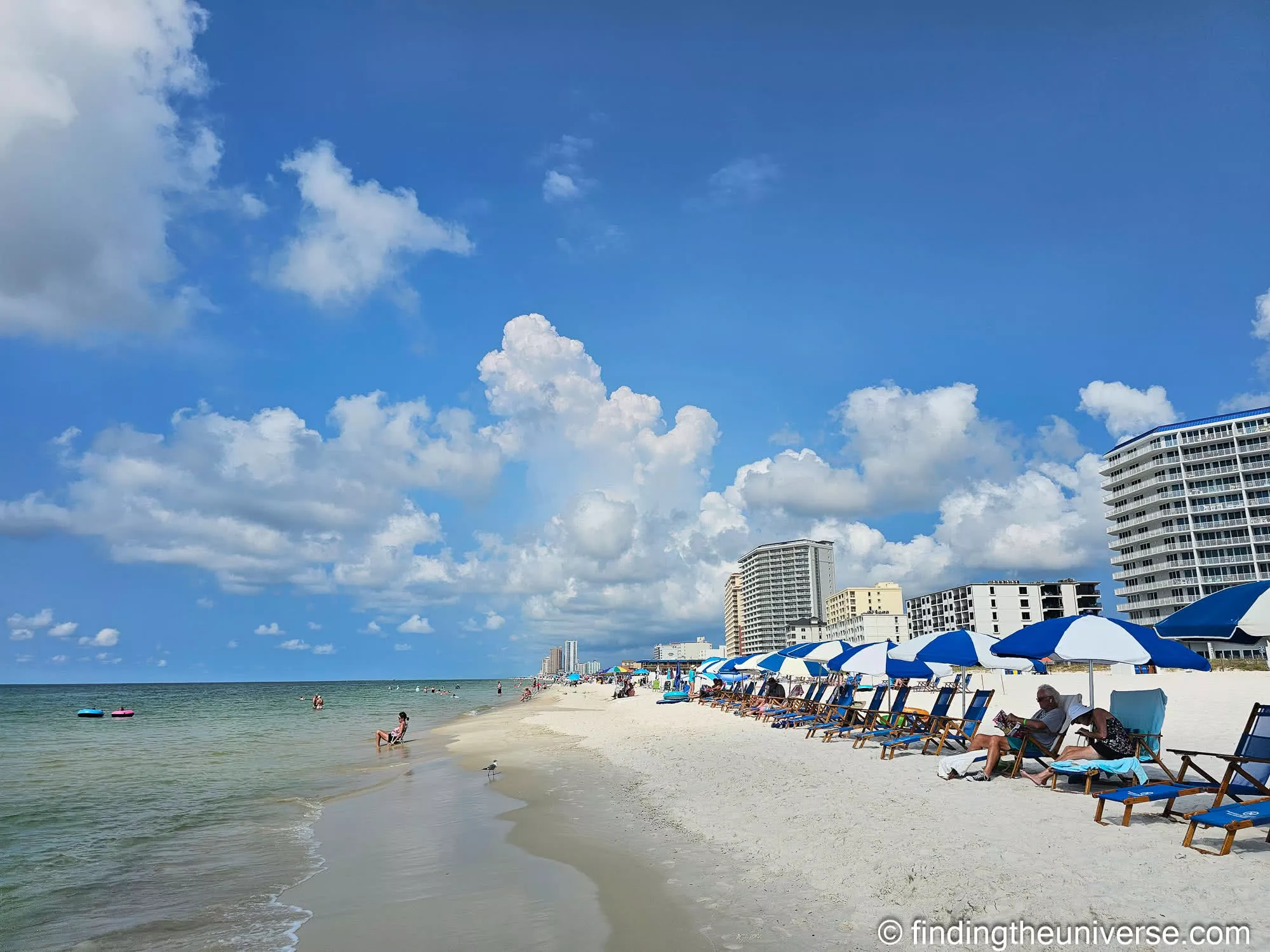
This is the classic scene. The big public beach sits at the foot of Highway 59, with lifeguards, restrooms, rinse showers, pavilions, volleyball courts, and The Hangout right on the sand.
Parking is seasonal paid via the ParkMobile app, at around $5 for four hours up to about $15 for the day. It’s busy, it’s happy chaos, and with kids it’s the easy choice. Come at 8am and you’ll have it nearly to yourself; by 11am on a July day, you won’t.
Gulf State Park and the Pier
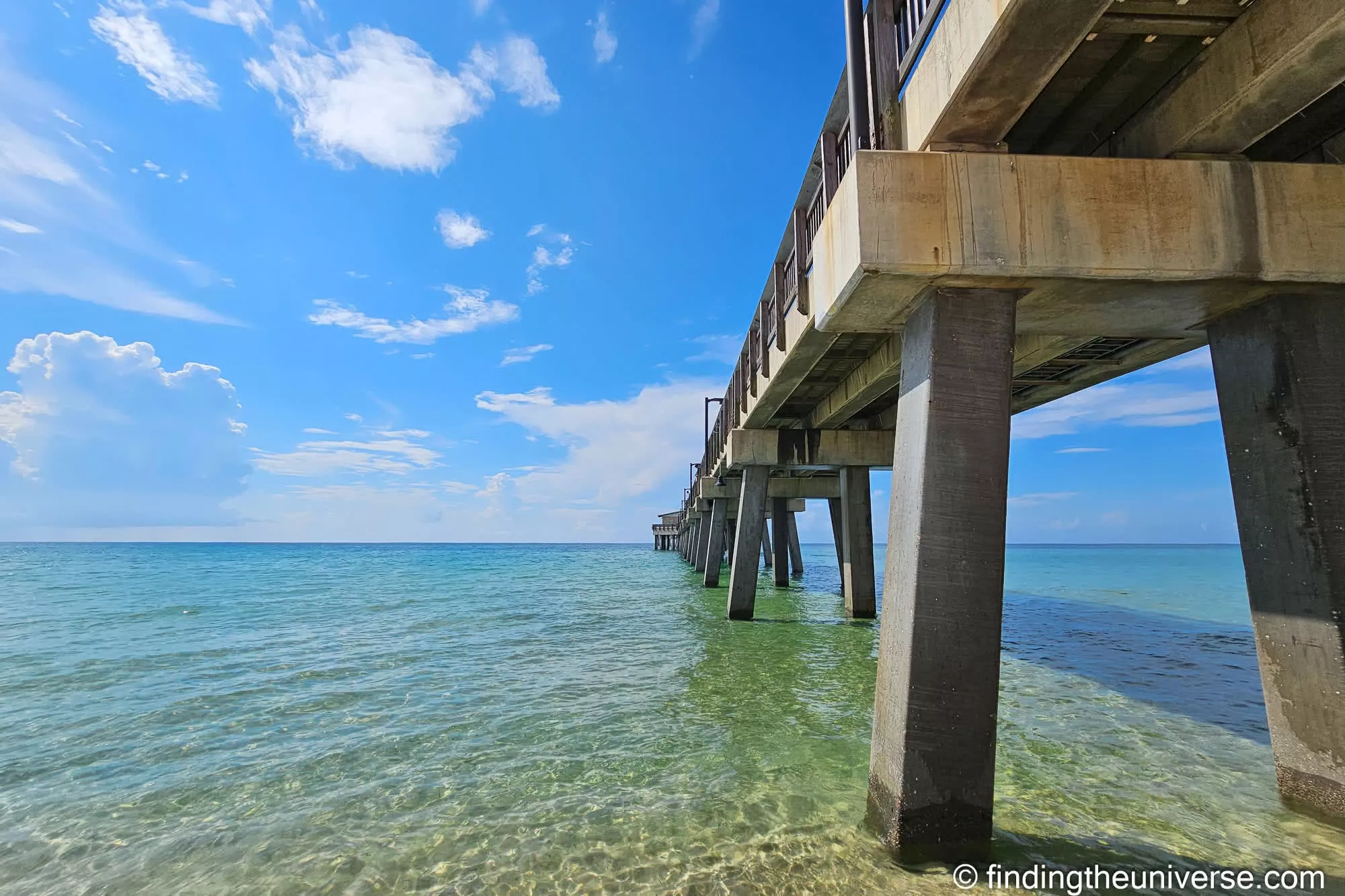
Between the two towns sits Gulf State Park, which holds a couple of miles of beach that feel noticeably calmer than the town accesses either side. The park’s fishing and education pier is the landmark. It’s open 24 hours, $3 to walk it, $10 for a daily fishing permit.
We’ve walked it before, and it’s the best three dollars you’ll spend on this coast! You get pelicans at eye level, anglers hauling up whatever’s running, and pretty much the only elevated view of the shoreline for miles.
Orange Beach Accesses: Cotton Bayou and Florida Point
Orange Beach’s two main public accesses, Cotton Bayou and Florida Point, are technically Gulf State Park sites, so you pay at the park’s kiosks, not at city meters, and a state park pass covers it. That saves you hunting for a second payment app.
Both have restrooms and outdoor showers, and Cotton Bayou has a beach mat running from the east boardwalk ramp toward the water, so a wheelchair can get past the soft sand. Florida Point, across Perdido Pass, tends to be the quieter of the two.
Fort Morgan: The Quiet End
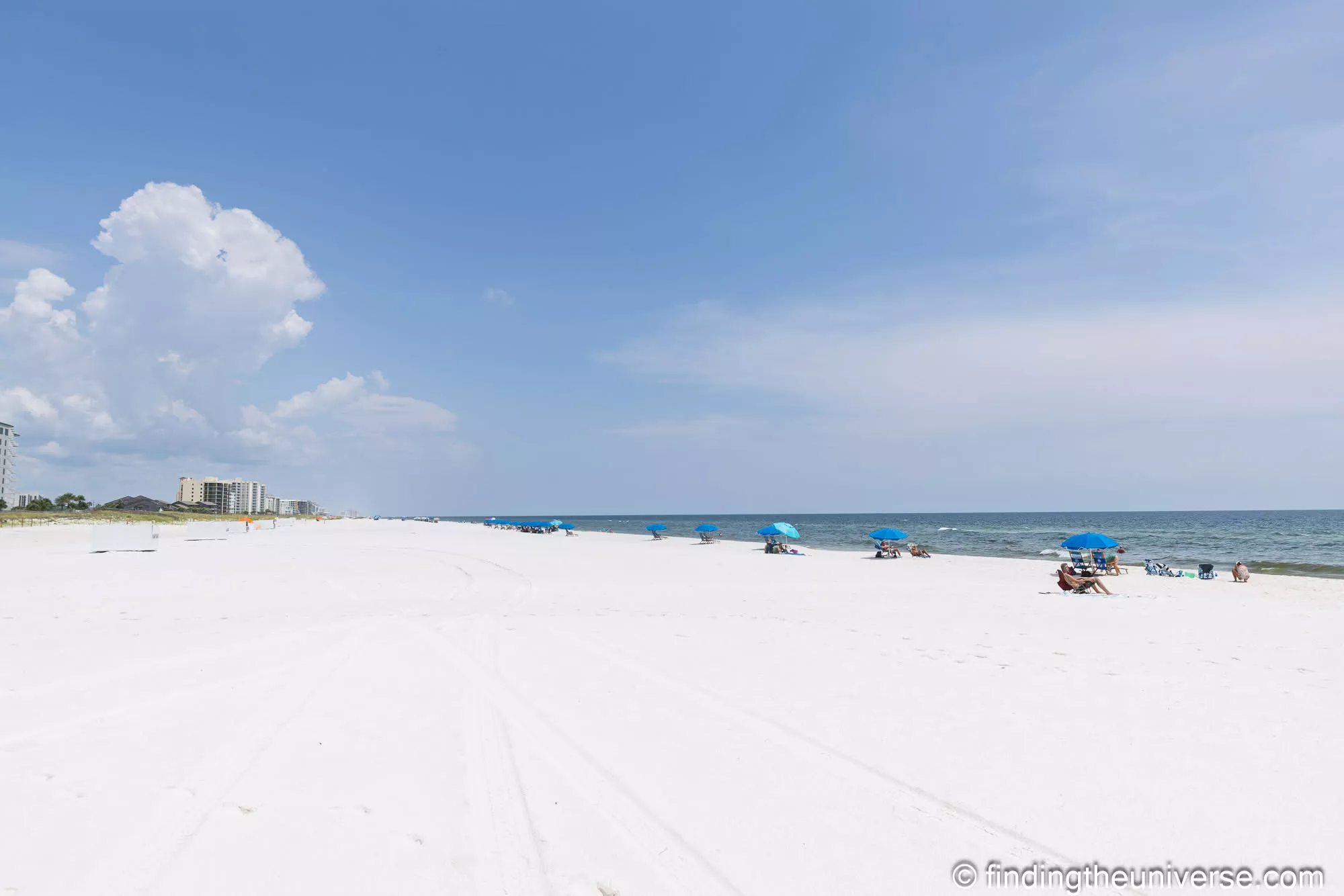
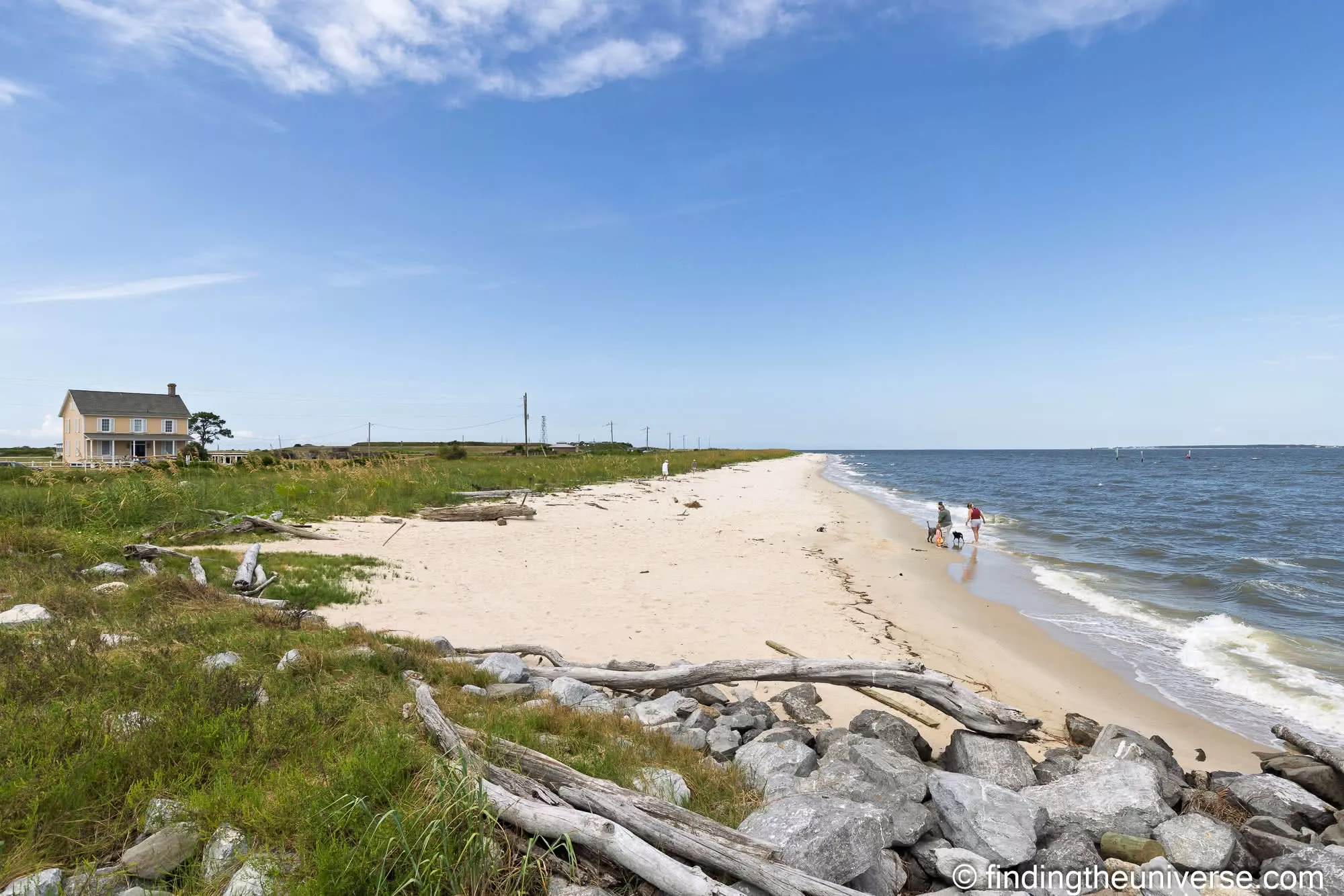
Drive west out of Gulf Shores and the condo towers thin out, then stop entirely. The beaches along the Fort Morgan peninsula are wide, largely empty, and backed by dunes, with nothing built behind them.
This is also the dog-friendly end of the coast, with an important caveat: dogs are banned outright on the Gulf Shores and Orange Beach city beaches, and on Fort Morgan they’re allowed leashed on the bayside stretch between the Quarantine Wharf and the Fort Morgan fishing pier, not on every beach, and never in the wildlife refuge sections.
If a beach walk with your dog is part of the plan, this is where you’re going.
Renting a Chair and Umbrella
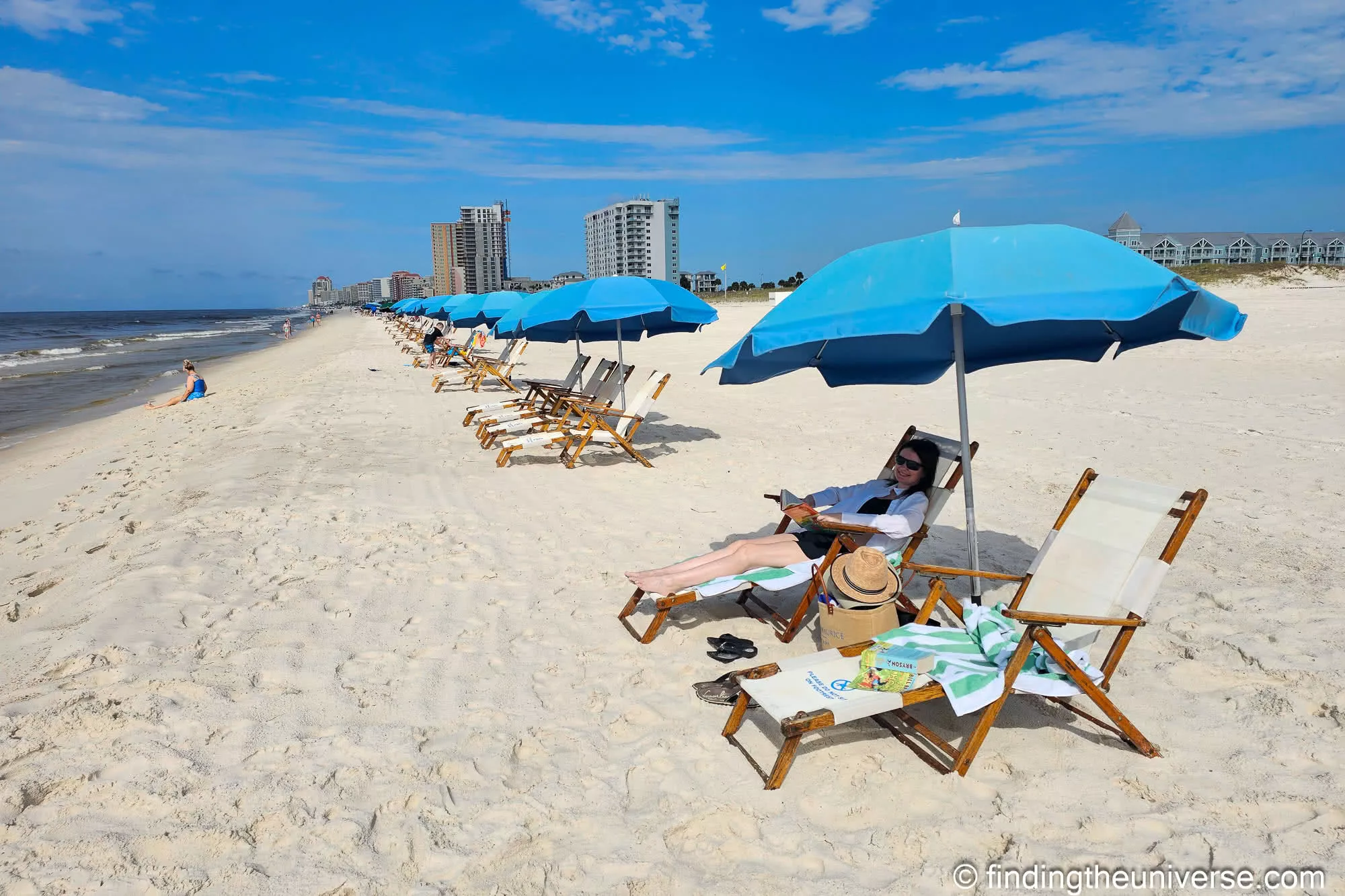
There’s a rental concession on the sand outside most of the beachfront hotels and at the main public accesses, and on this trip we finally used one. $45 got us two chairs and an umbrella for the whole day, walk up, no booking needed.
We took it first thing, went off for lunch in the middle of the day, and came back in the afternoon to find the same two chairs waiting with our name on them.
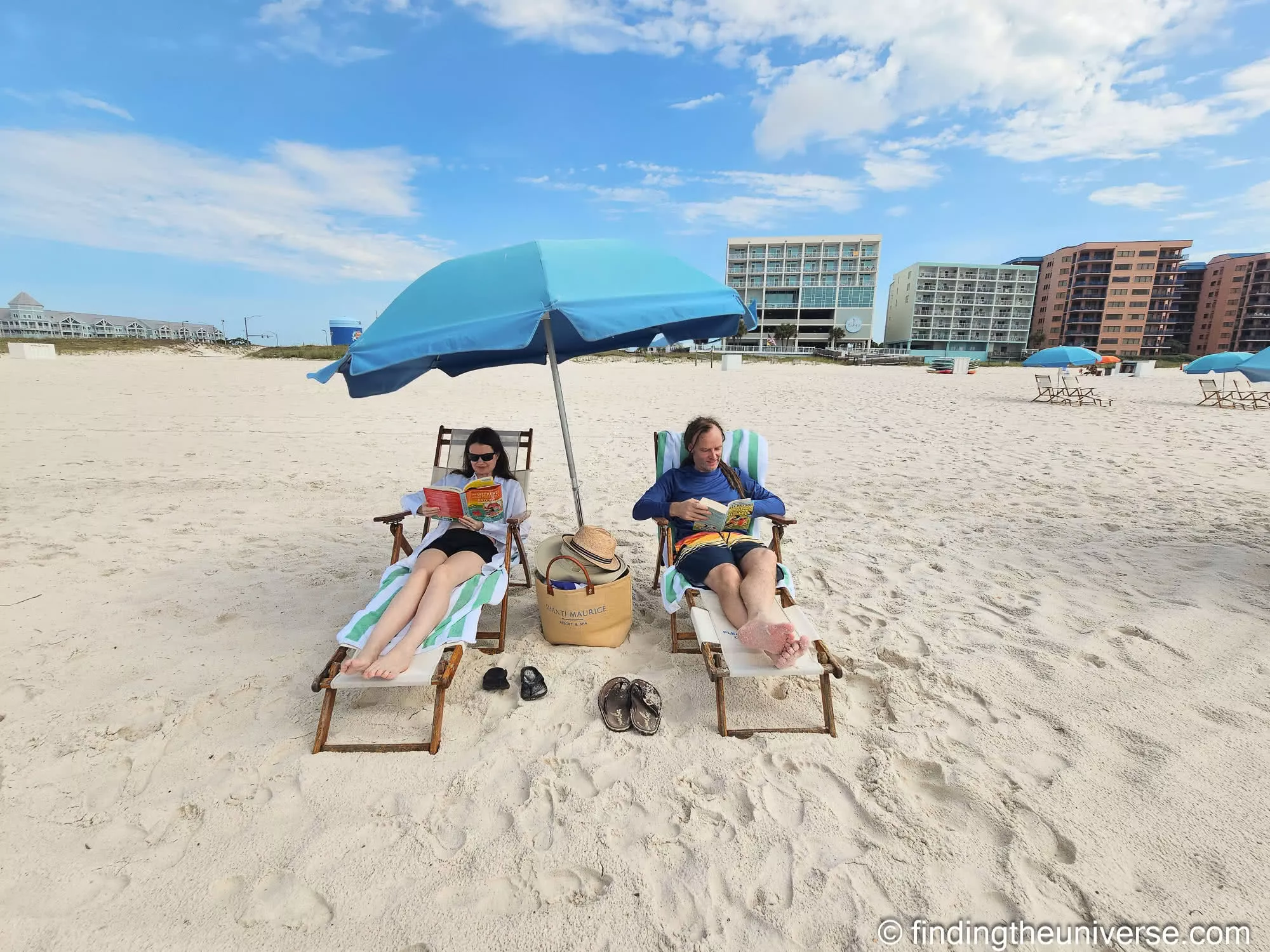
On a previous trip we’d done the towel-on-the-sand version with no shade, and we lasted about half as long. By late morning the sun here stops being pleasant and starts being a problem, so it’s the umbrella doing the work, not the chairs. For a short trip, we think it’s a very worthwhile investment.
For a longer stay the sums change, because a week of daily rentals costs more than buying your own kit outright and you’d still have it for the next trip.
If you’re driving down and want to buy, the thing that matters in an umbrella is a screw-in sand anchor, because the same breeze that makes the afternoon bearable will send an unanchored one down the beach at speed. This AMMSUN 8ft beach umbrella has an anchor built in, and for seats the backpack-strap folding kind like this Tommy Bahama beach chair saves you a second trip back to the car.
Beyond the Beach
You can of course build a very good trip here without ever leaving the sand. But the non-beach material is better than the family-attraction billboards suggest. If you like a mix of beach time and sightseeing, as we do, you’re in luck.
Fort Morgan State Historic Site
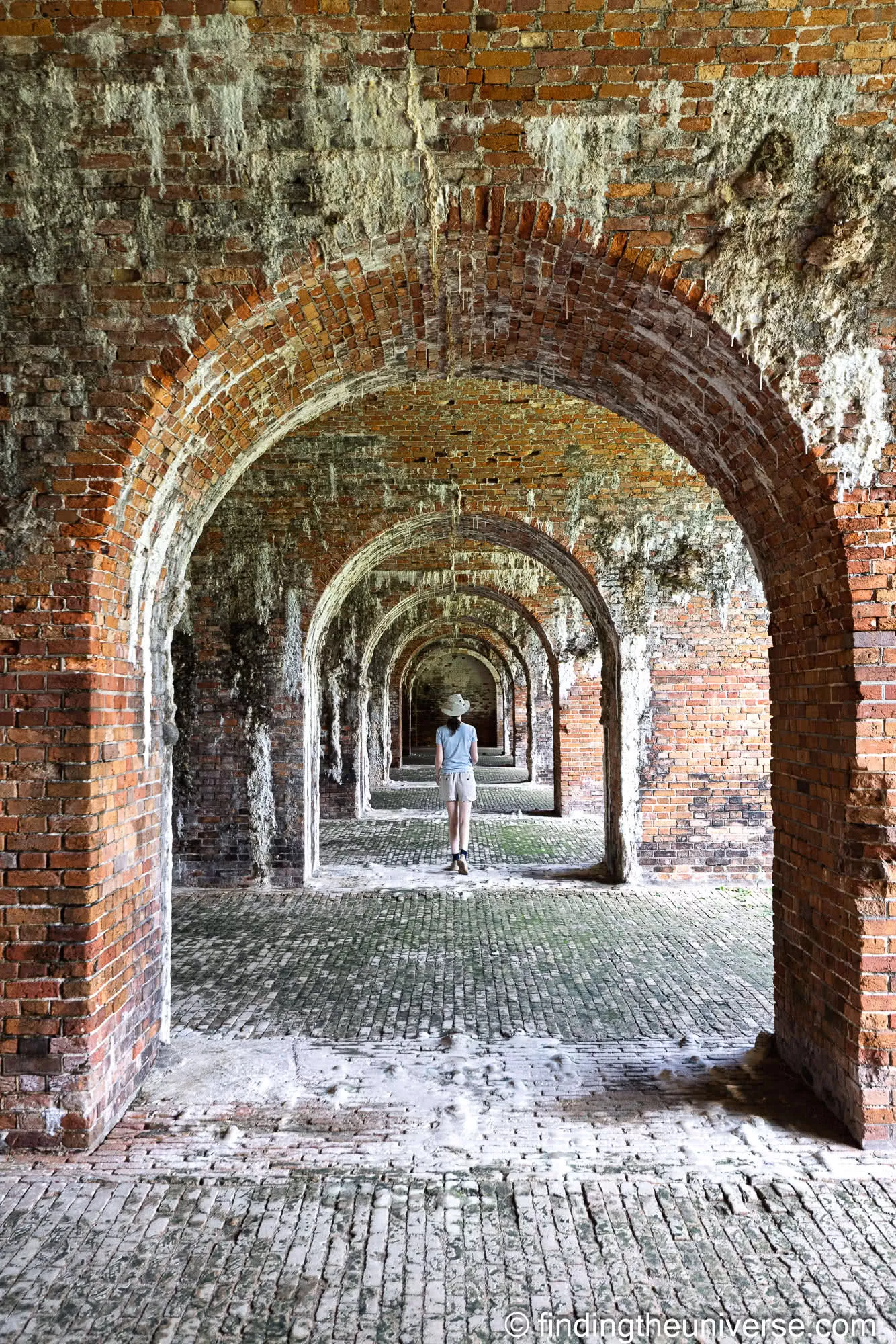
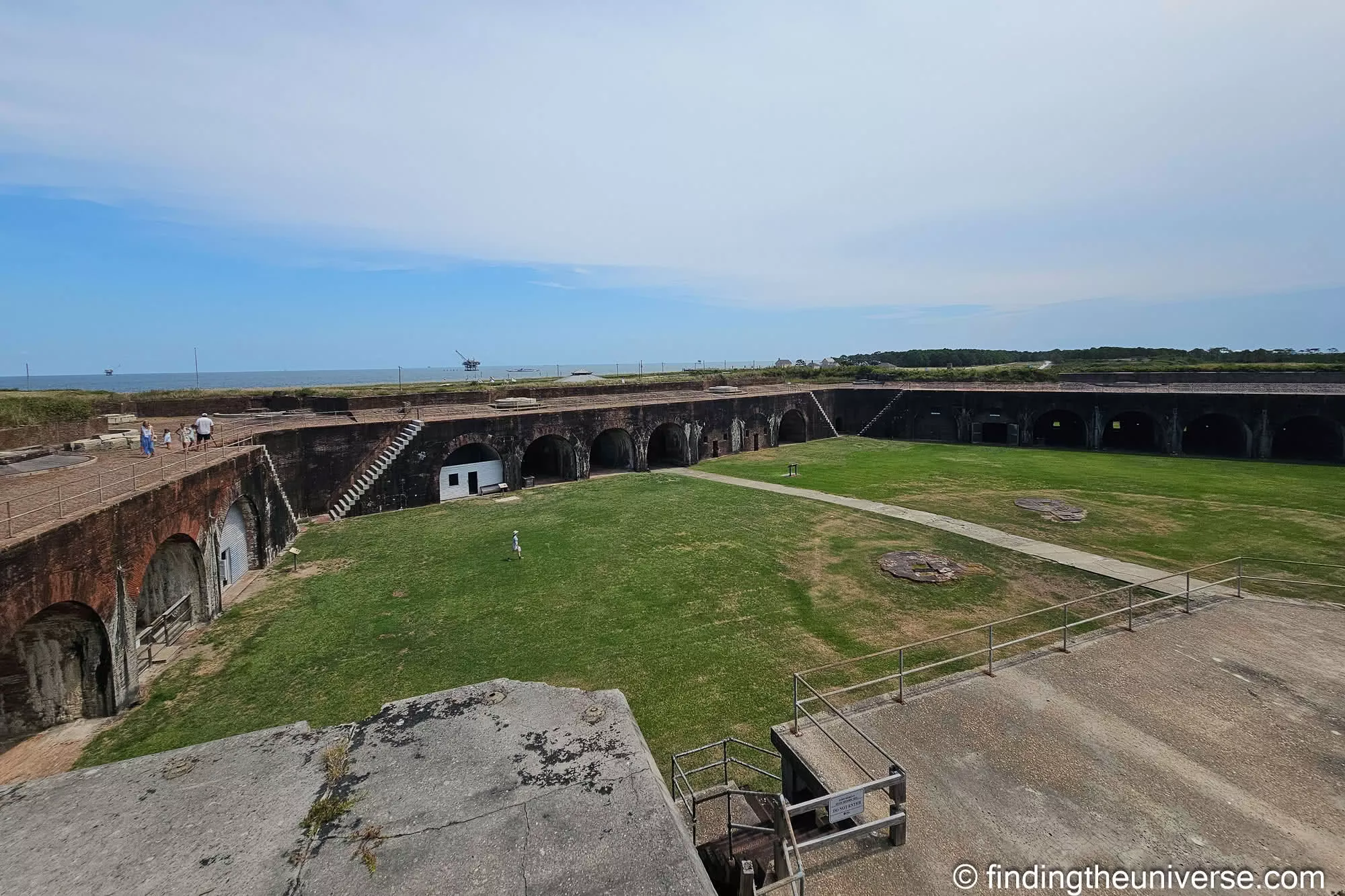
At the very tip of the peninsula stands Fort Morgan, a star-shaped brick fort from 1834 that guarded the mouth of Mobile Bay and took centre stage in the Civil War’s Battle of Mobile Bay. The brick arcades and tunnels are a joy to wander and even better to photograph, and the ramparts give you water on three sides.
The grounds are open 8am to 5pm daily and the museum 9am to 4pm, with adult admission $8 at the gate. Come in the morning, it will be cooler and you’re less likely to get showered on by an afternoon thunderstorm.
We had this pencilled in as a late-afternoon visit for the light, which is a lovely idea on paper and doesn’t survive the opening hours, because the gate closes at 5pm and you’re 30 to 45 minutes from dinner in either town. You get moved along right as the sun starts doing something worth photographing. The casemates are the reason to come anyway, and they’re interior spaces, lit through the gun openings rather than by the hour.
The Mobile Bay Ferry
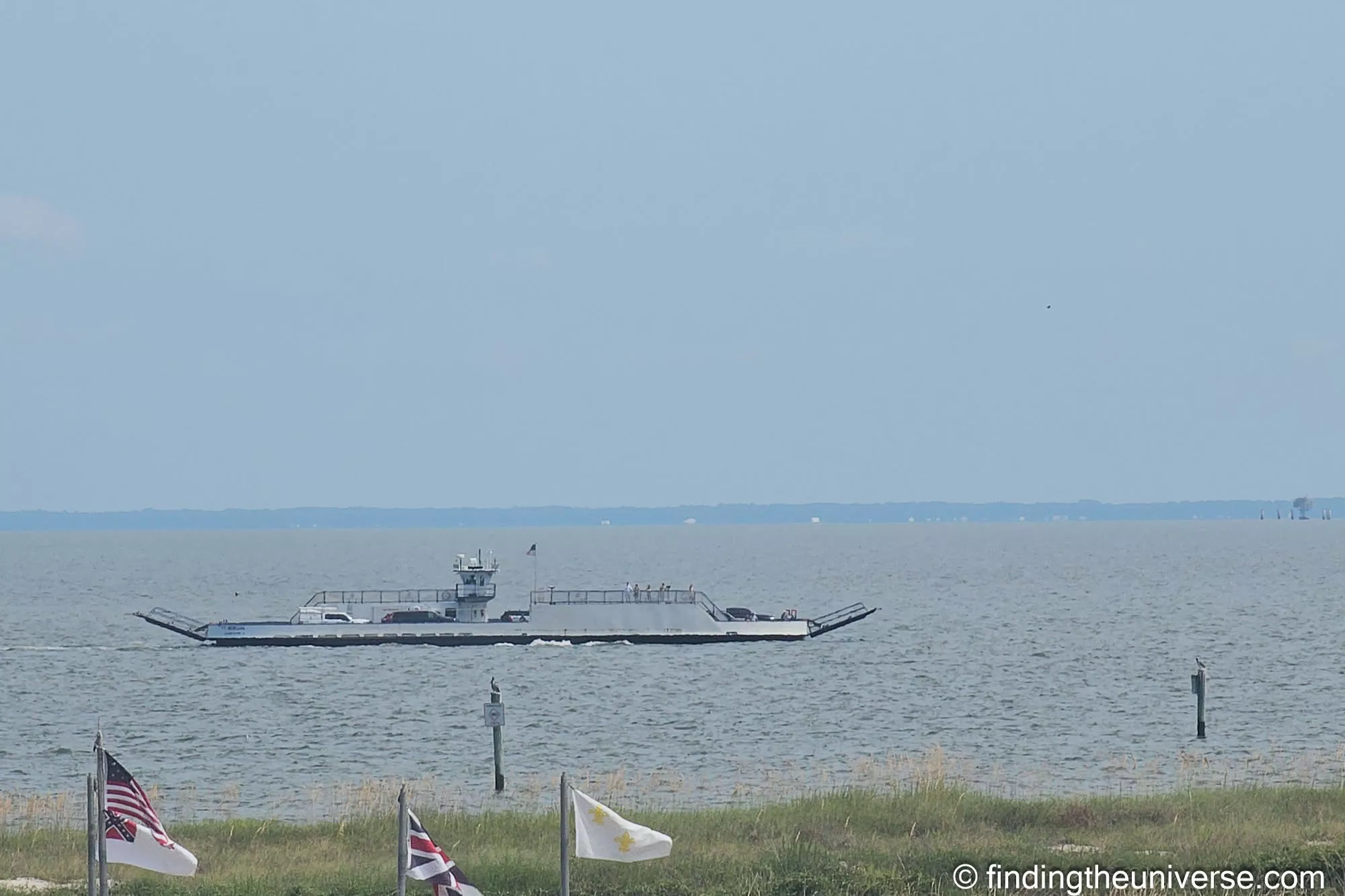
From the landing beside the fort, a car ferry crosses the mouth of Mobile Bay to Dauphin Island. It runs seven days a week year-round, closing only for Thanksgiving, Christmas Day and New Year’s Day, with two vessels giving roughly 45 minute frequency through the summer season.
Weather and maintenance can move the timetable, and at some states of the tide there are clearance problems for low vehicles, campers and trailers. Tickets are bought at the landing, first come first served, so check the current fare and sailing times before you plan a day around it.
Dauphin Island is well worth visiting, especially if you’re a bird watcher. It’s a barrier island sitting right on the trans-Gulf migration route, which makes it first landfall in spring for songbirds that have just flown non-stop across the water, and their last refuelling stop in autumn before they head back.
The Audubon Bird Sanctuary at the eastern end has trails and a boardwalk running through maritime forest, marsh and dune, and in the peak spring weeks it fills up with birders. Pair it with Bon Secour, below, and you have the makings of a serious birding trip on a coast better known for beaches and go-karts.
Bon Secour National Wildlife Refuge
Partway along the Fort Morgan road, Bon Secour protects around 7,000 acres of dunes, maritime forest, and lagoon across the peninsula. The trails are open sunrise to sunset, they’re free, and they’re foot traffic only. No bikes, which surprises people who’ve just done the Backcountry Trail.
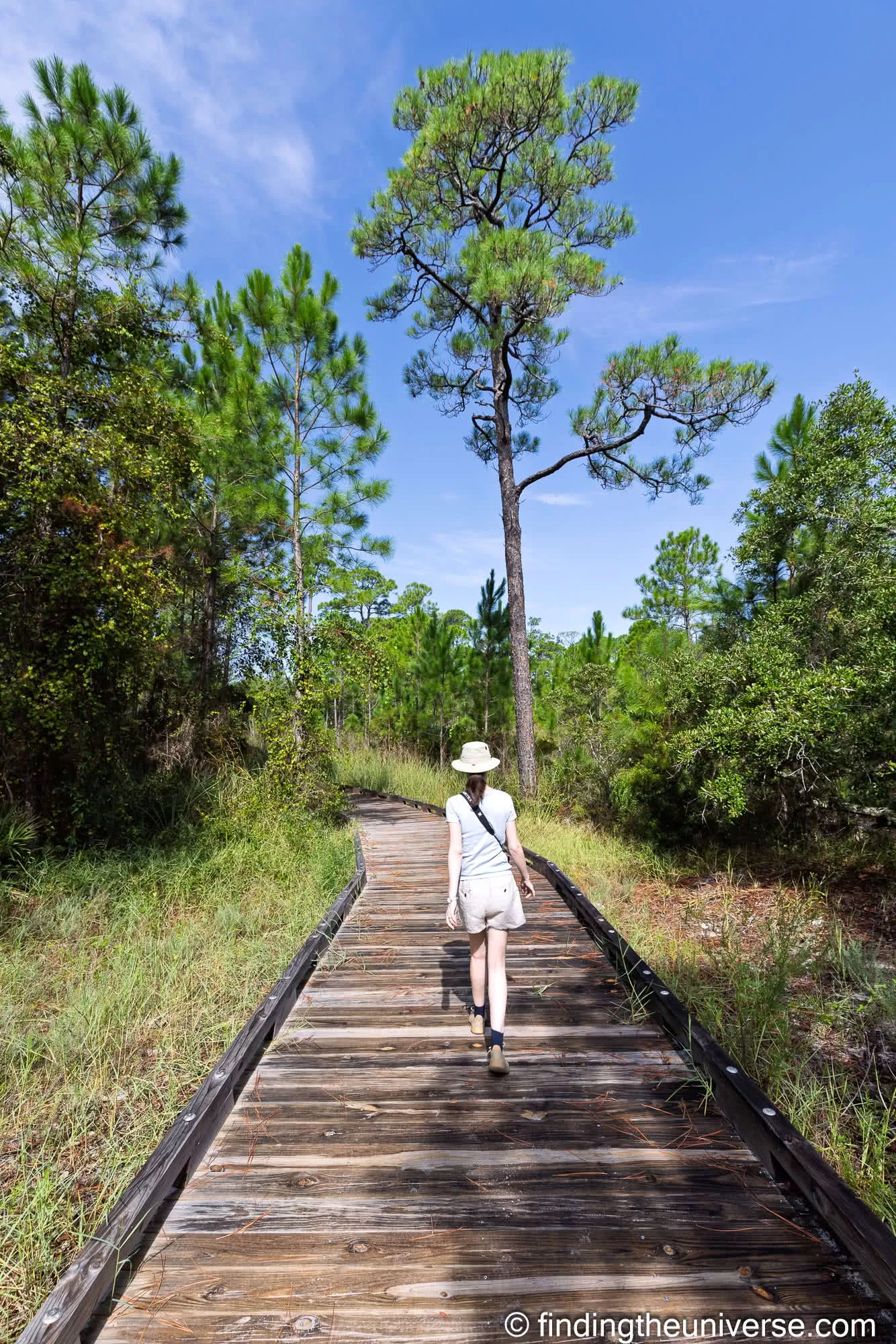
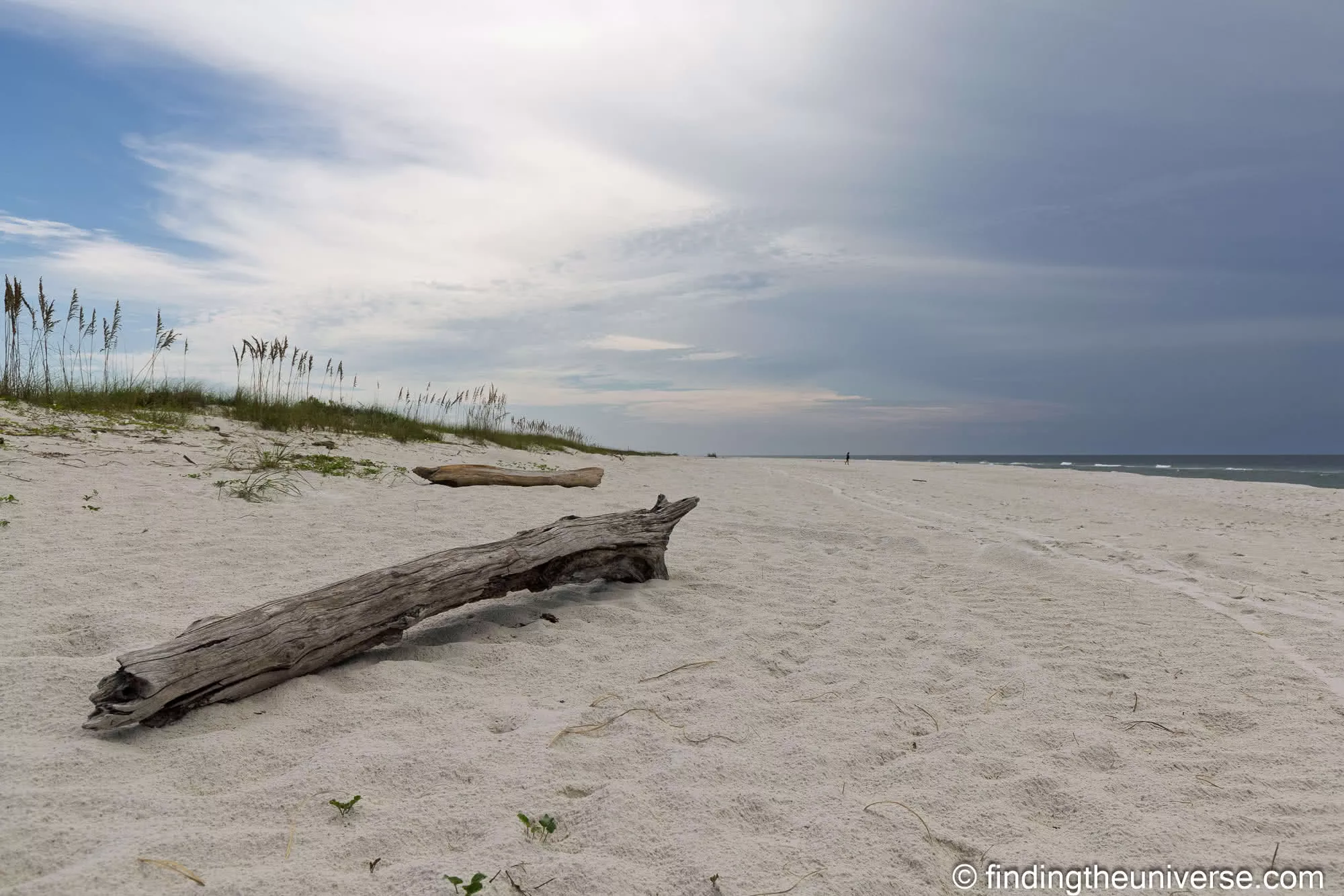
It’s the landscape this whole coast looked like before the condos, and it’s at its best first thing. We walked the sand paths through pine and saw palmetto on an August morning and had them almost to ourselves. There was a great blue heron standing in the dune grass a few feet off the trail, the alligator warnings are not decoration, and the path ends at a beach with nobody on it at all.
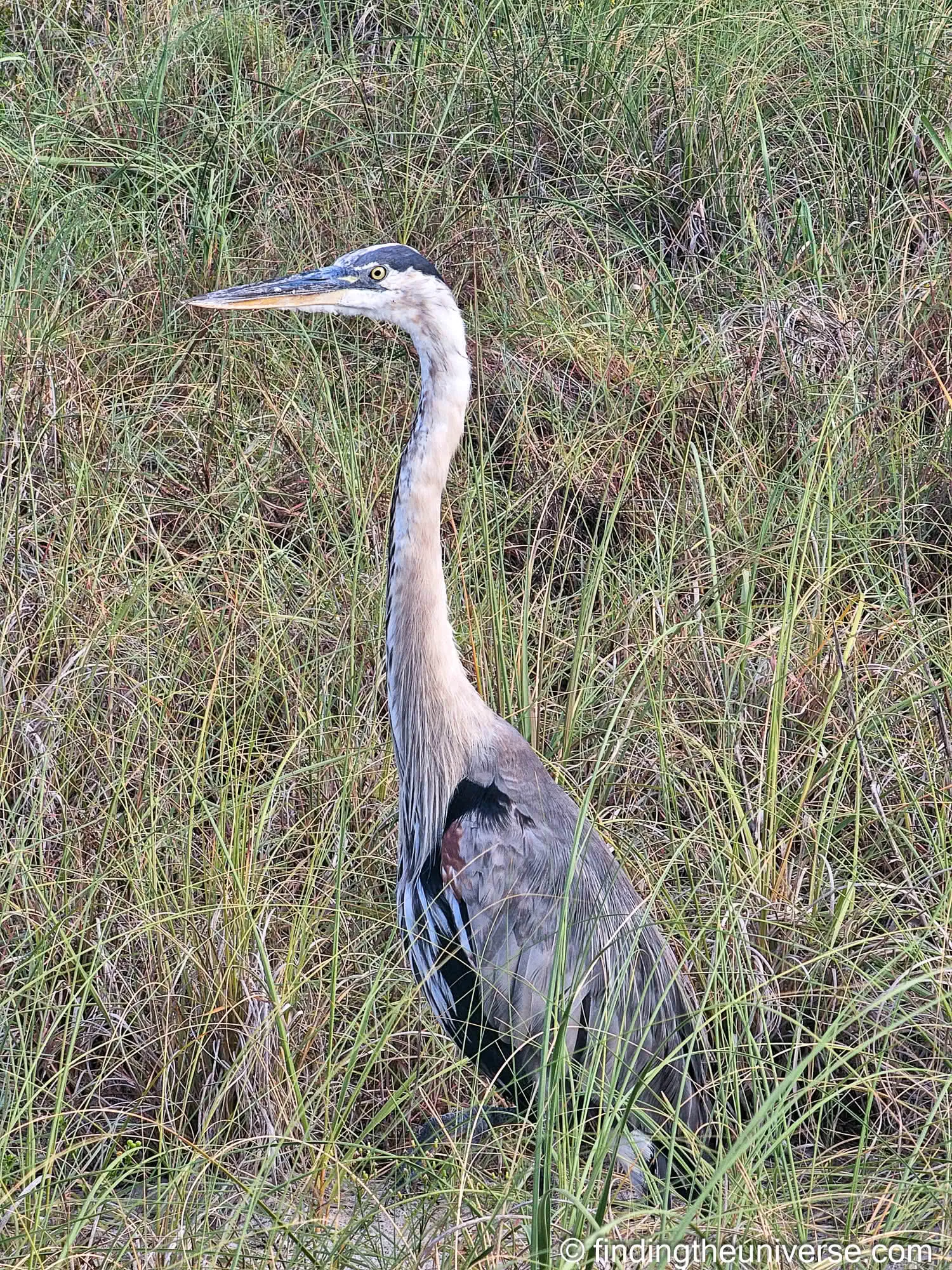
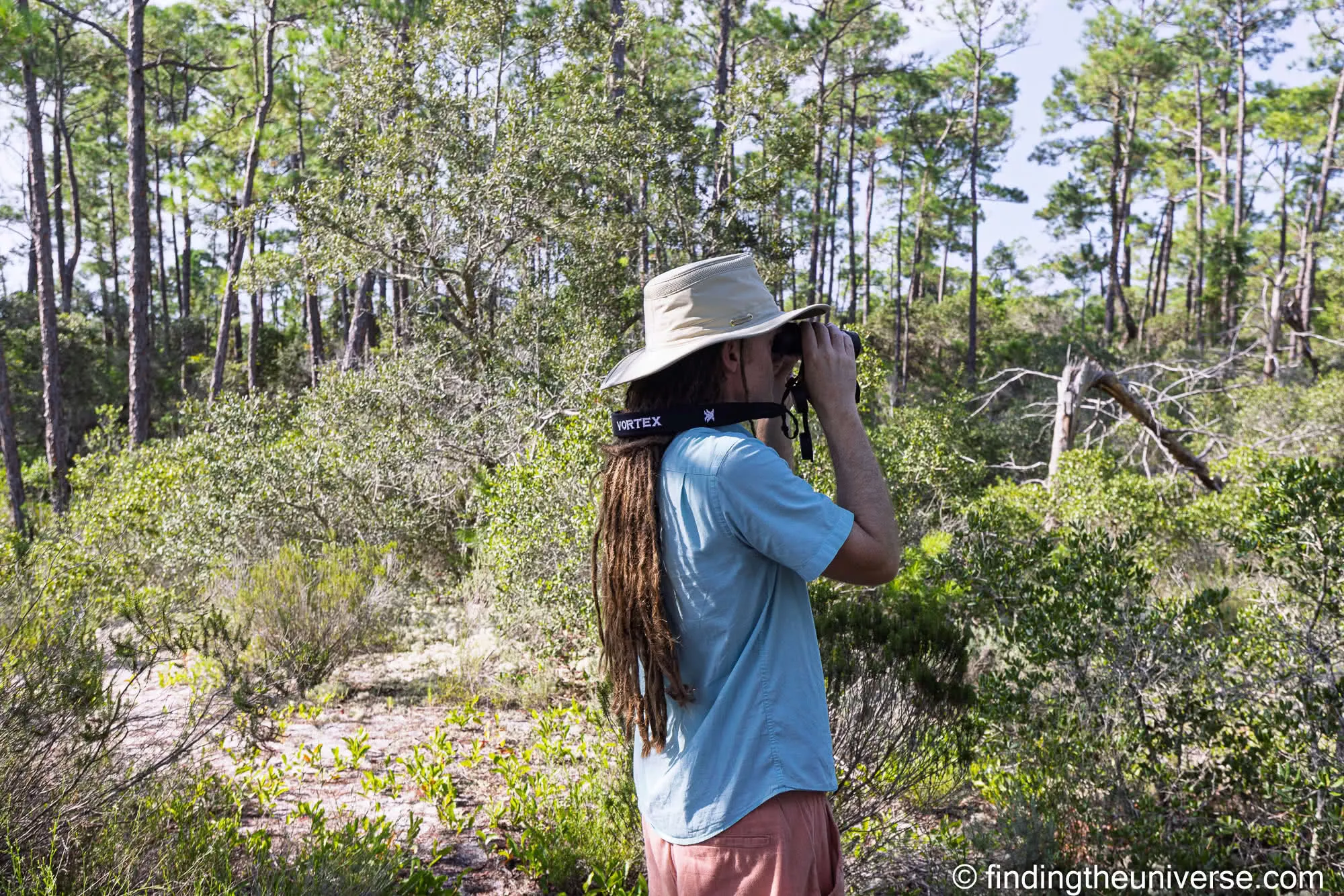
Bring binoculars. Congress created this refuge in 1980 to protect neotropical migratory songbird habitat, and that is still the job it does. Birds crossing the Gulf use this strip of coast to rest and put on fat before the next leg, in spring and again in autumn, and the refuge runs guided bird walks and dune hikes through the year.
We were there in August, which is nobody’s idea of migration season, and still spent a good while standing in the pines scanning the treeline.
One heads-up as of August 2026. The Centennial Trail boardwalks are closed on safety grounds while the refuge repairs and replaces them, though you can still walk the Centennial Trail up to the boardwalk from either end, which is what we did.
Check the refuge trails page for the current state of things before you set your heart on a particular route.
The Hugh S. Branyon Backcountry Trail
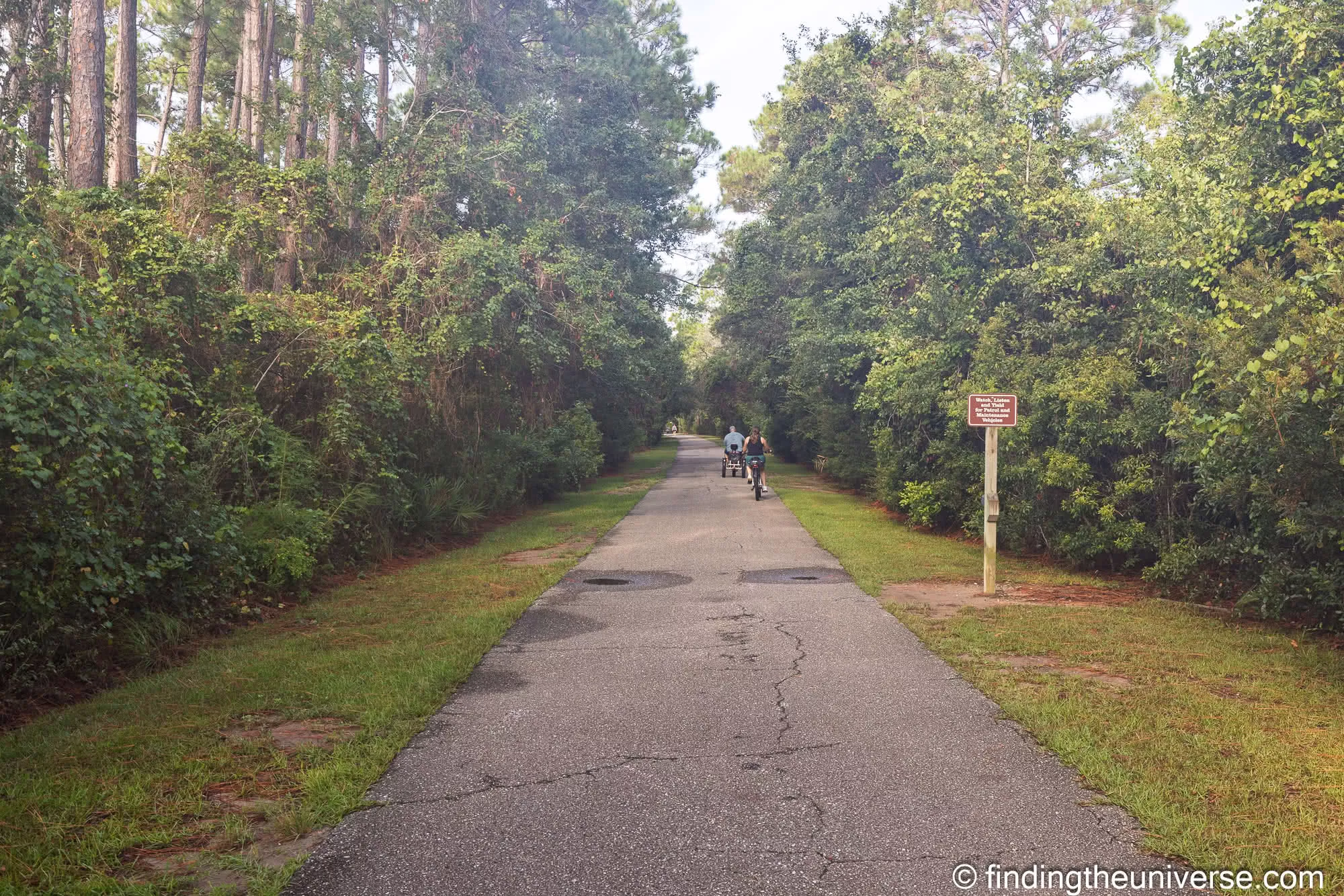
Threading between Gulf Shores and Orange Beach through Gulf State Park, this network packs more than 28 miles of paved trails through nine distinct ecosystems, including maritime forest, swamp and dune scrub. Hire a bike or bring your own, because on a bike you can cover the best of it in a morning before the heat arrives.
Walking a section works fine too. A couple of hours here and an early hour at Bon Secour make a comfortable morning if you’re driving out to Fort Morgan afterwards, which is roughly how we’d plan that day again. It’s also the practical answer to “what do we do on the one cloudy day”.
The Wharf and Perdido Pass
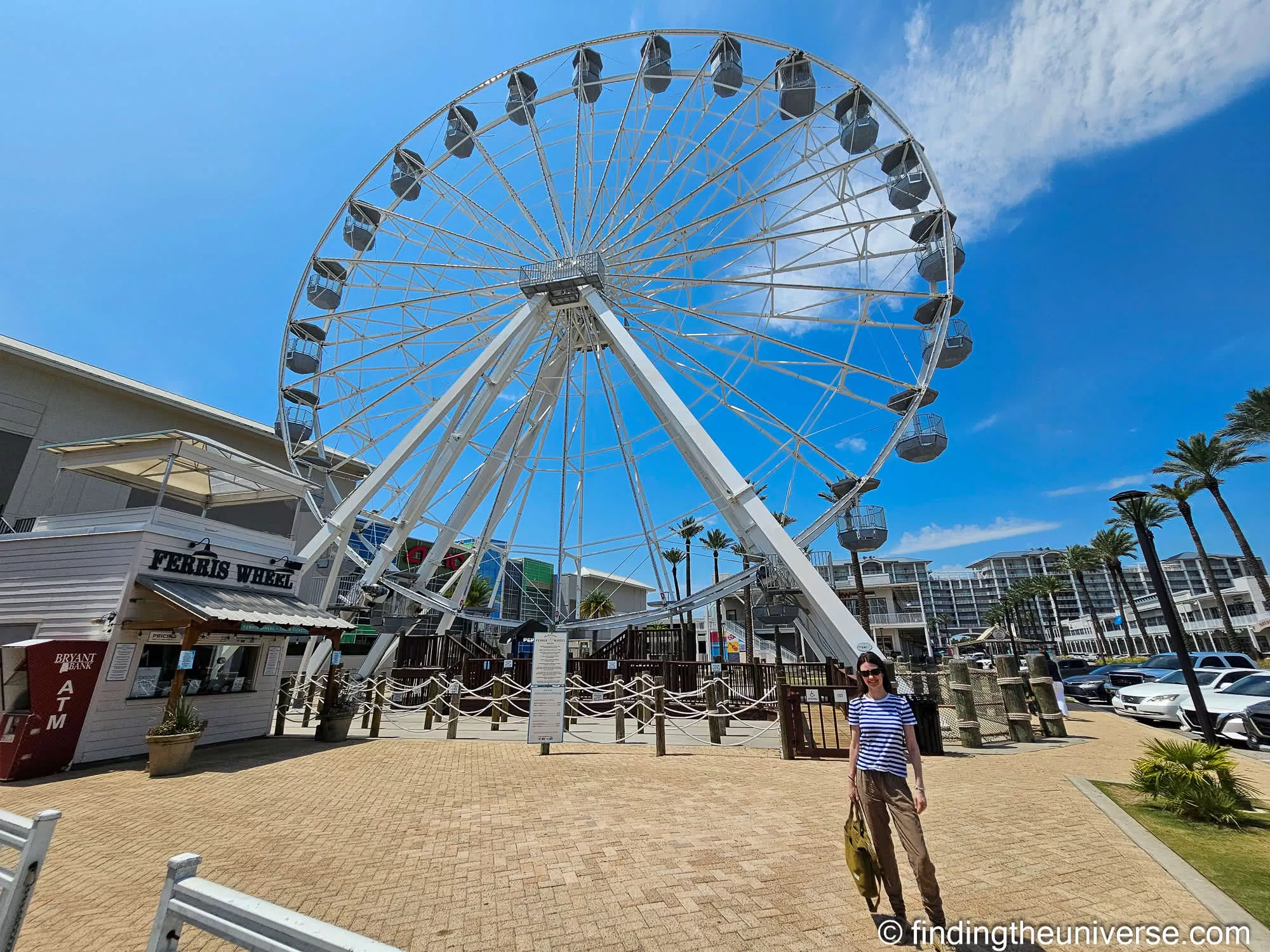
The Wharf, on the Intracoastal side of Orange Beach, is the area’s entertainment district, with a marina, restaurants, shops, an amphitheatre that pulls big-name acts, and a large Ferris wheel lit up over the marina each night. It’s pleasant in the evening without being essential, and blue hour is when to photograph it.
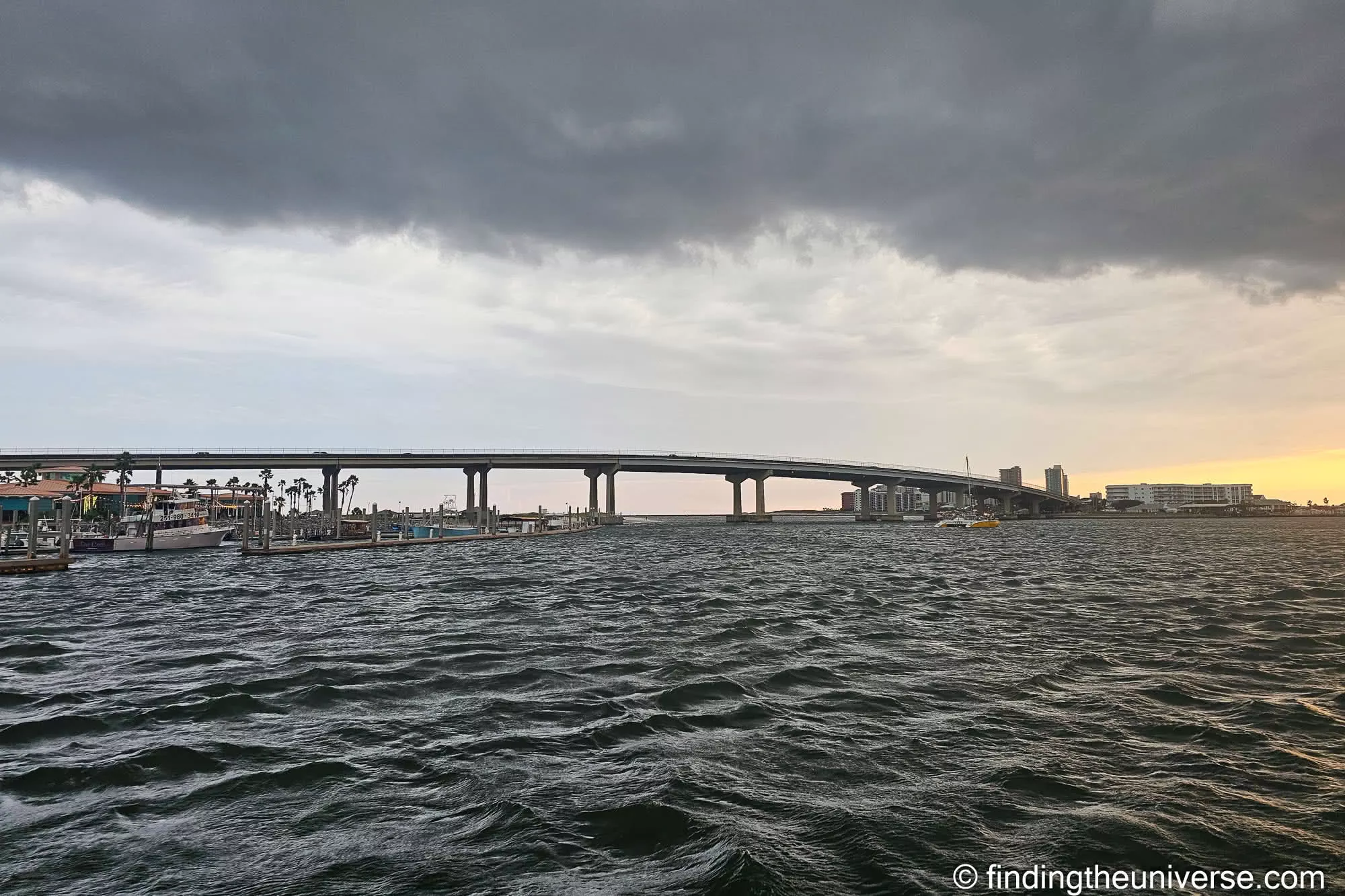
Perdido Pass nearby is where the boat traffic funnels between the Gulf and the back bays; the jetties and bridge make a good sunset perch with your feet off the sand for once.
On the Water: Dolphins and Fishing
Orange Beach calls itself a fishing town before a beach town, and the marina charter fleet backs that up, with half-day inshore trips and multi-day offshore runs. If fishing isn’t your thing, a dolphin cruise is the easy win. The back bays hold resident bottlenose dolphins, sightings are close to guaranteed, and a couple of hours on the water resets everyone’s mood.
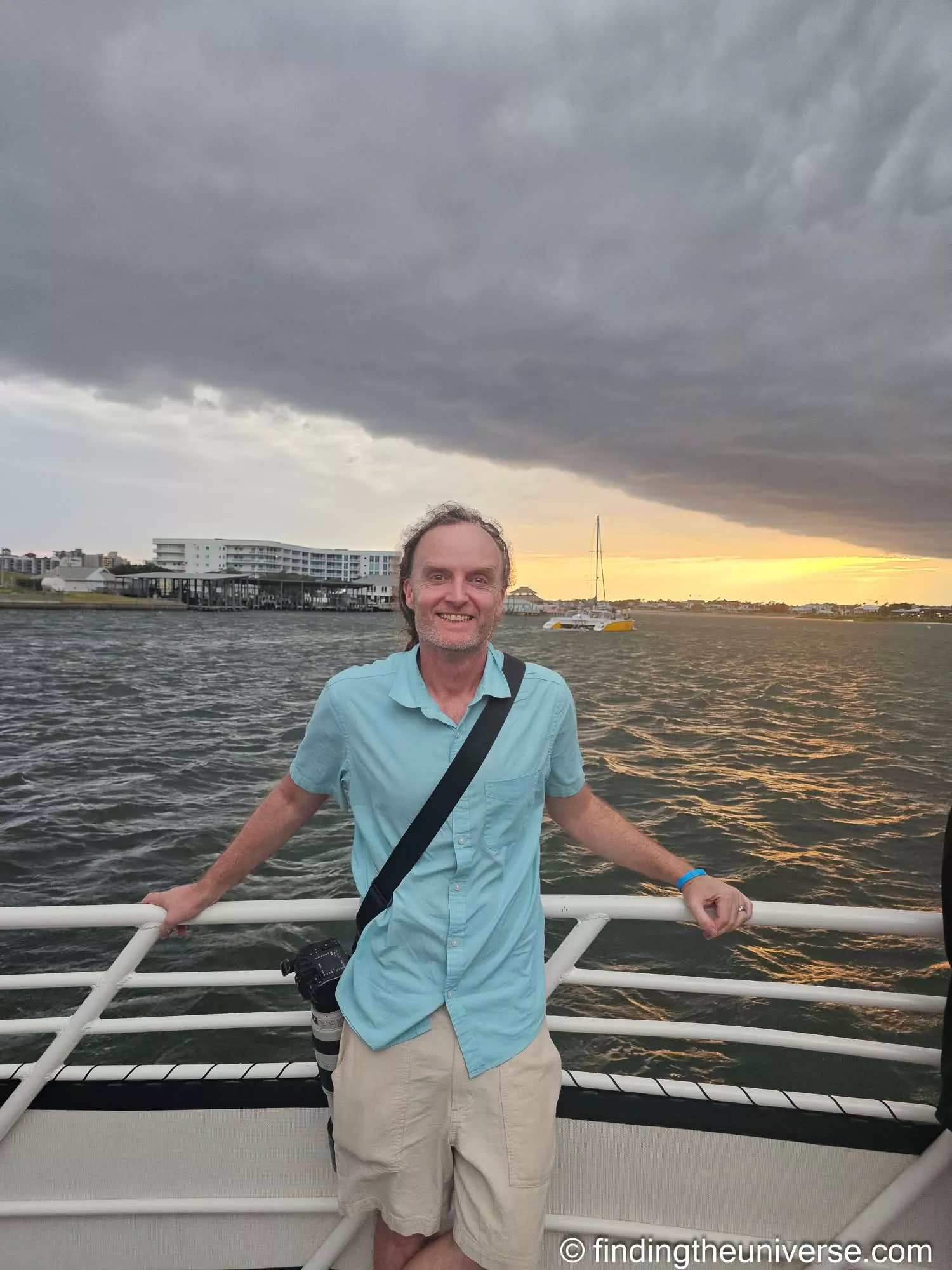
We took the sunset sailing, booked through Viator as the Alabama Gulf Coast Dolphin Cruise and run by a local operator called Cruise Orange Beach. It was well organised, we saw plenty of dolphins, and the back bays at that hour are worth the ticket on their own. At one point a pair came up and ran alongside the boat for a good while. We’d do it again without thinking about it.
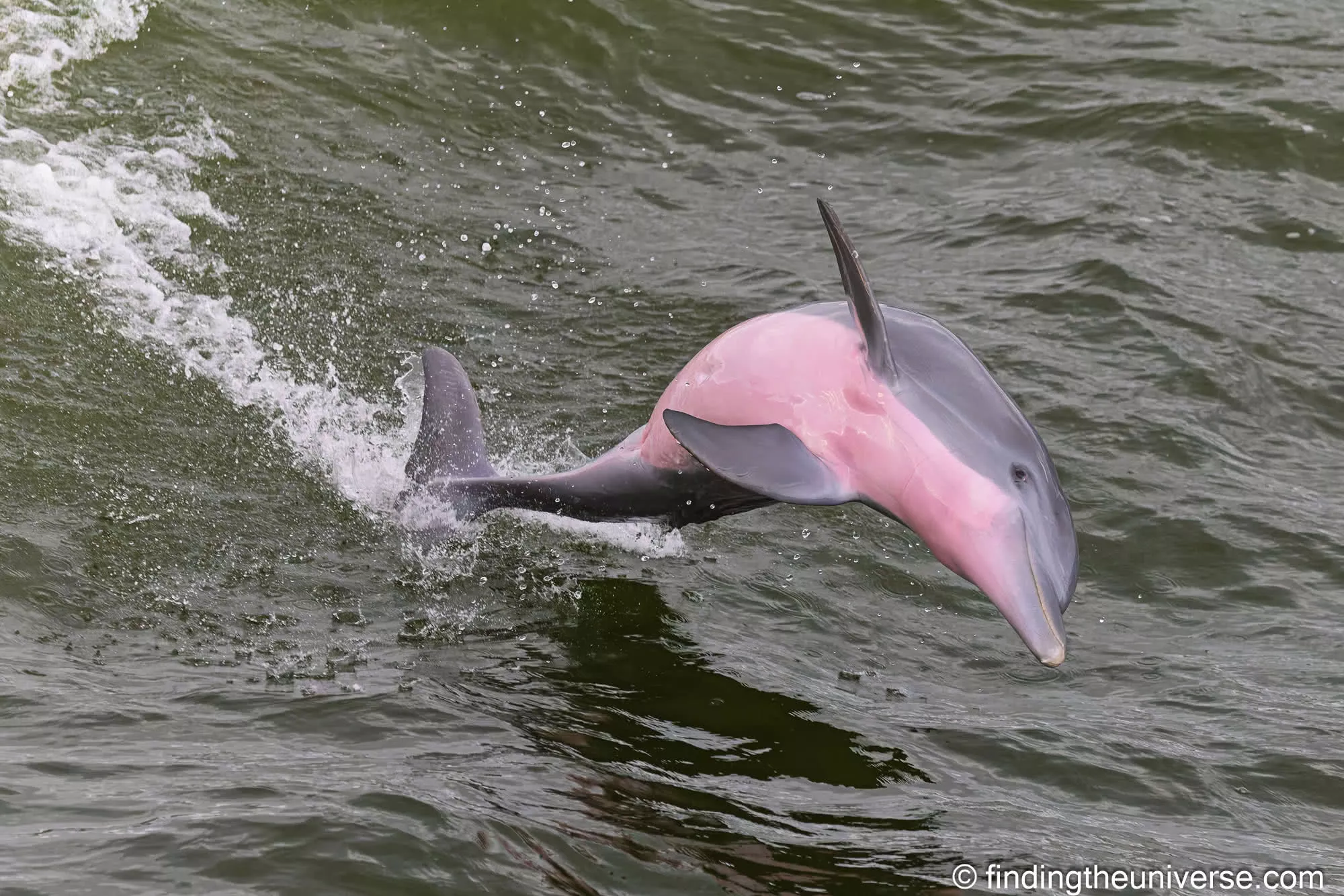
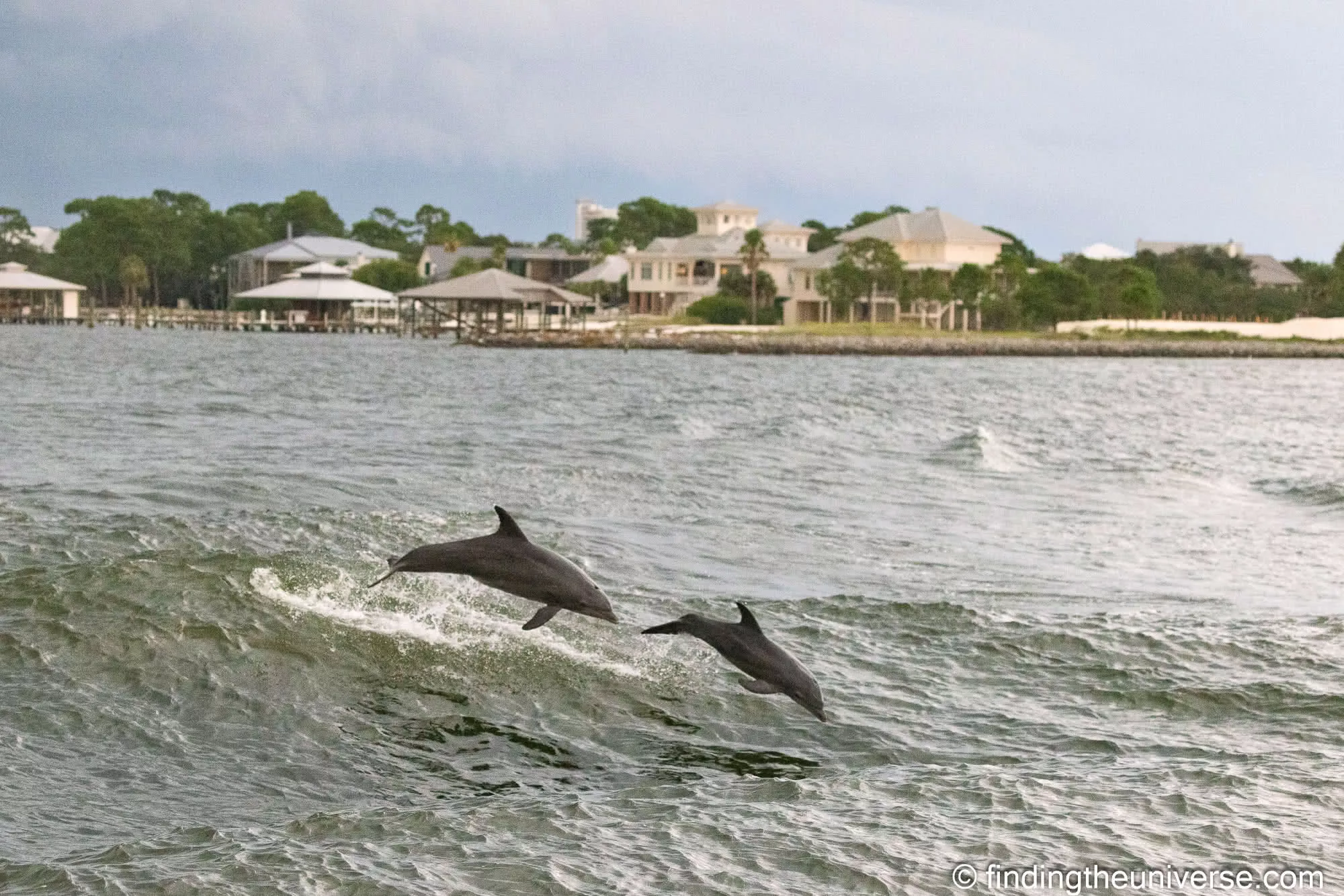
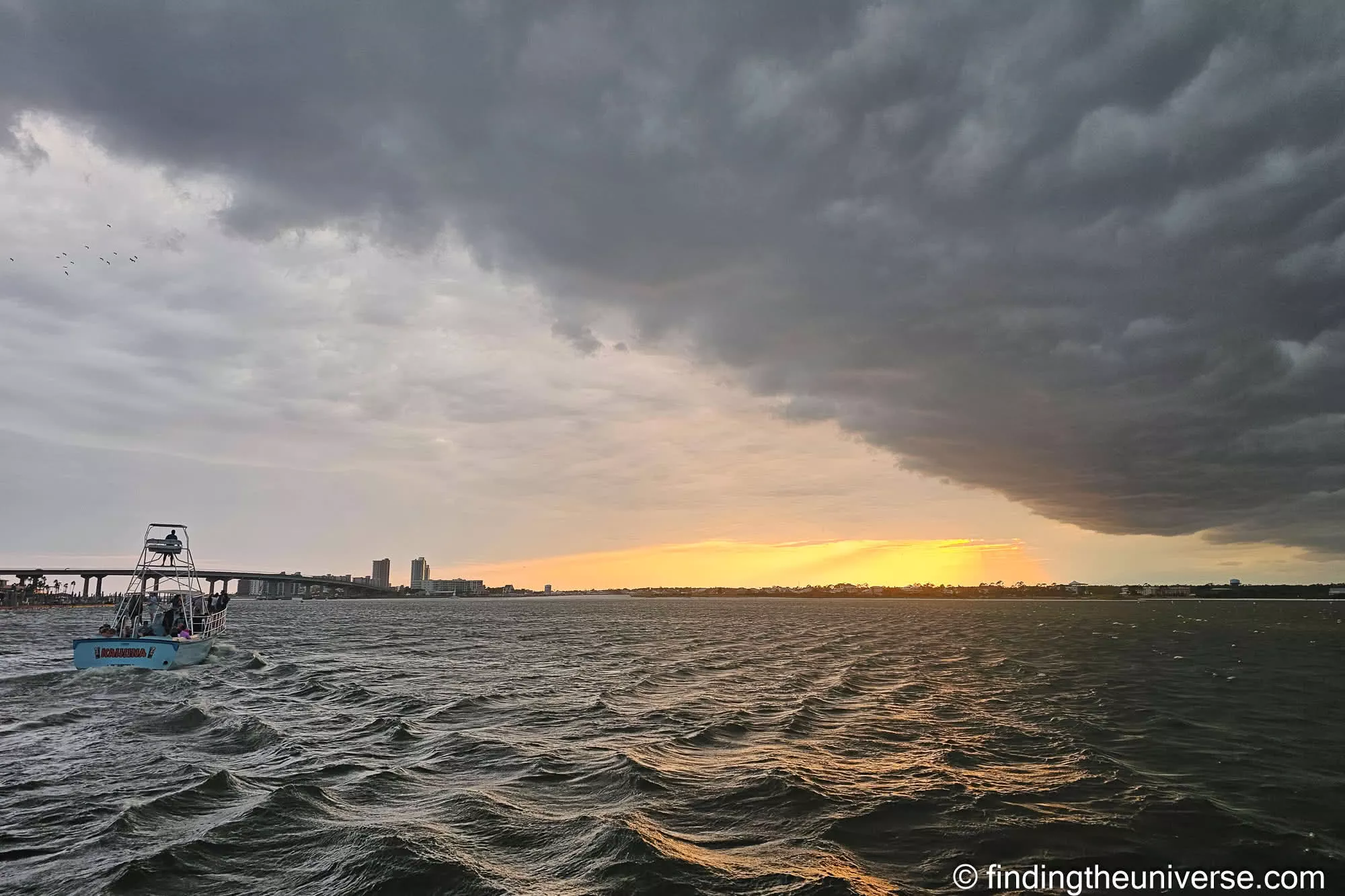
If you’re taking a camera, get up on the top deck and put a longer lens on before you leave the dock. A surfacing dolphin gives you a moment and not much more, and you won’t have time to change anything once it starts.
The Small Local Museums
There are three of these, they’re all pretty small, and between them they’ll take you a couple of hours. Save them for a hot afternoon. Don’t spend a good beach morning on them.
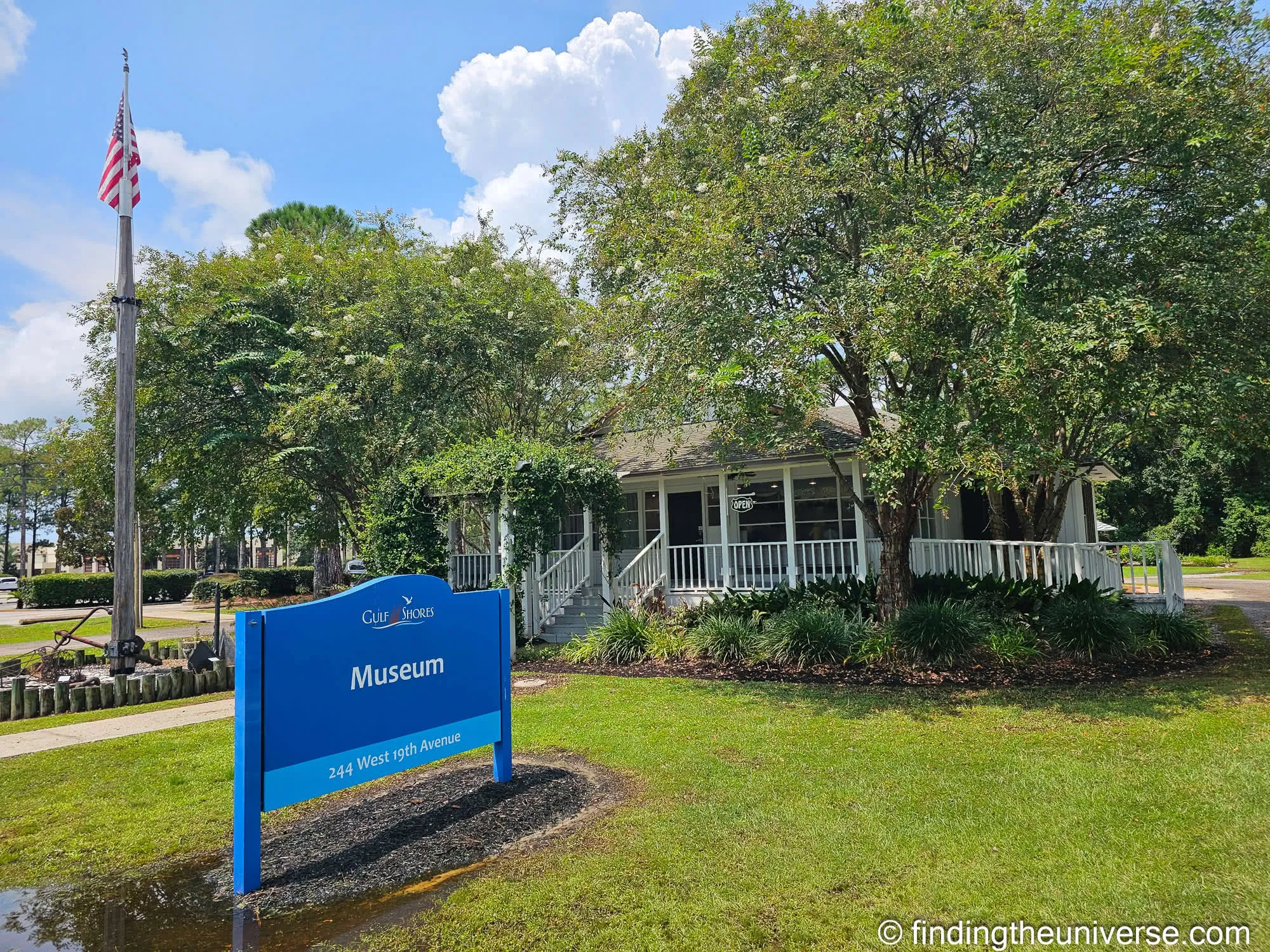
The Gulf Shores Museum on West 19th Avenue is free, and the building is half the reason to go. It’s a beach cottage from before the war that used to stand out on West Beach, donated to the city after Hurricane Frederic came through in 1979, and it now holds the town’s own history. Open Tuesday to Friday, plus Saturday mornings.
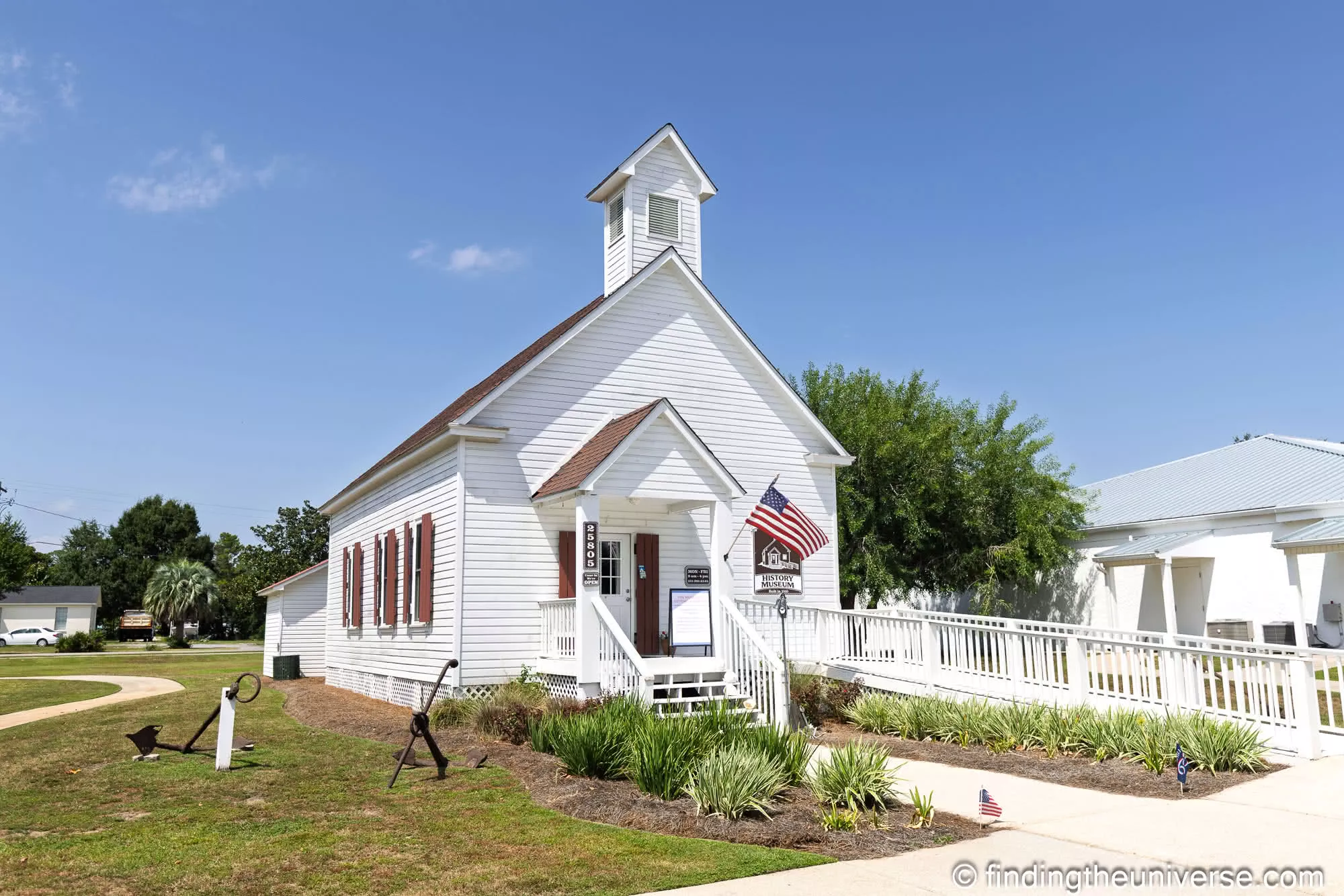
The Orange Beach History Museum does the same job for the other side of the line, in a 1910 schoolhouse, and leans harder into the fishing families and the boats. We’ve been into both and enjoyed both. They won’t take a huge amount of your day.
The Coastal Arts Center of Orange Beach is the third, out on Wolf Bay, with a clay studio and a hot glass shop where you can book a session and make your own piece. You can walk into the gallery, but the studios need an appointment.
The Family Attraction Tier
Gulf Shores has a full suite of family attractions along Highway 59: the Alabama Gulf Coast Zoo (rebuilt on an all-new inland site in 2020, adult admission $23.95), Waterville USA’s slides and wave pool, and The Track’s go-karts. Orange Beach has Adventure Island out on Perdido Beach Boulevard, with mini golf, go-karts, bumper boats and a large arcade.
Despite not having kids of our own, Jess and I love a round of mini-golf or a game of Skee-Ball, and this passed a cloudy afternoon well!
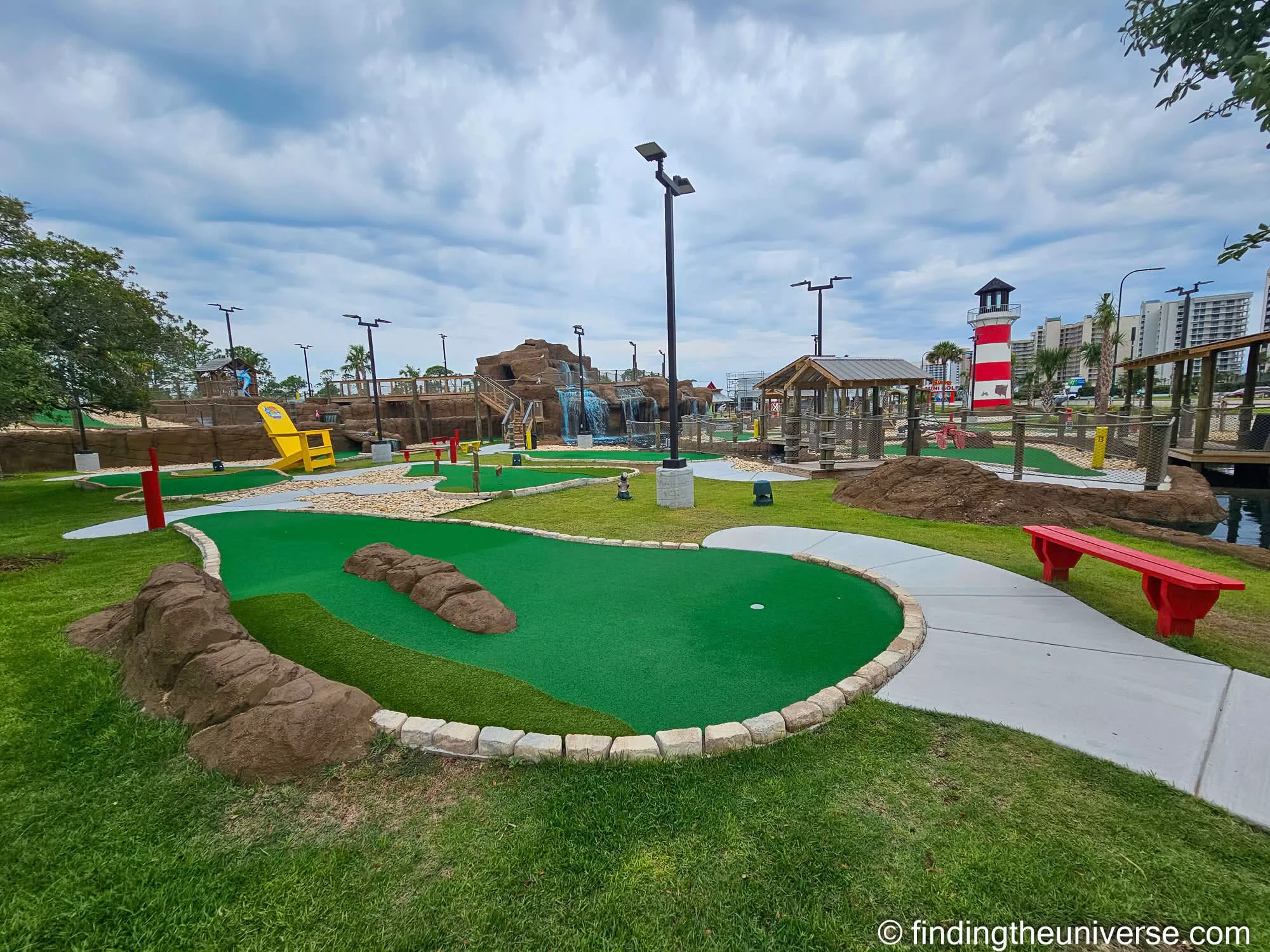
They’re aimed squarely at families, of course, and they know it, but they’re also the ready-made answer to an afternoon of thunderstorms, which August will hand you sooner or later. You don’t have to bring children along to justify one.

Where to Buy Souvenirs
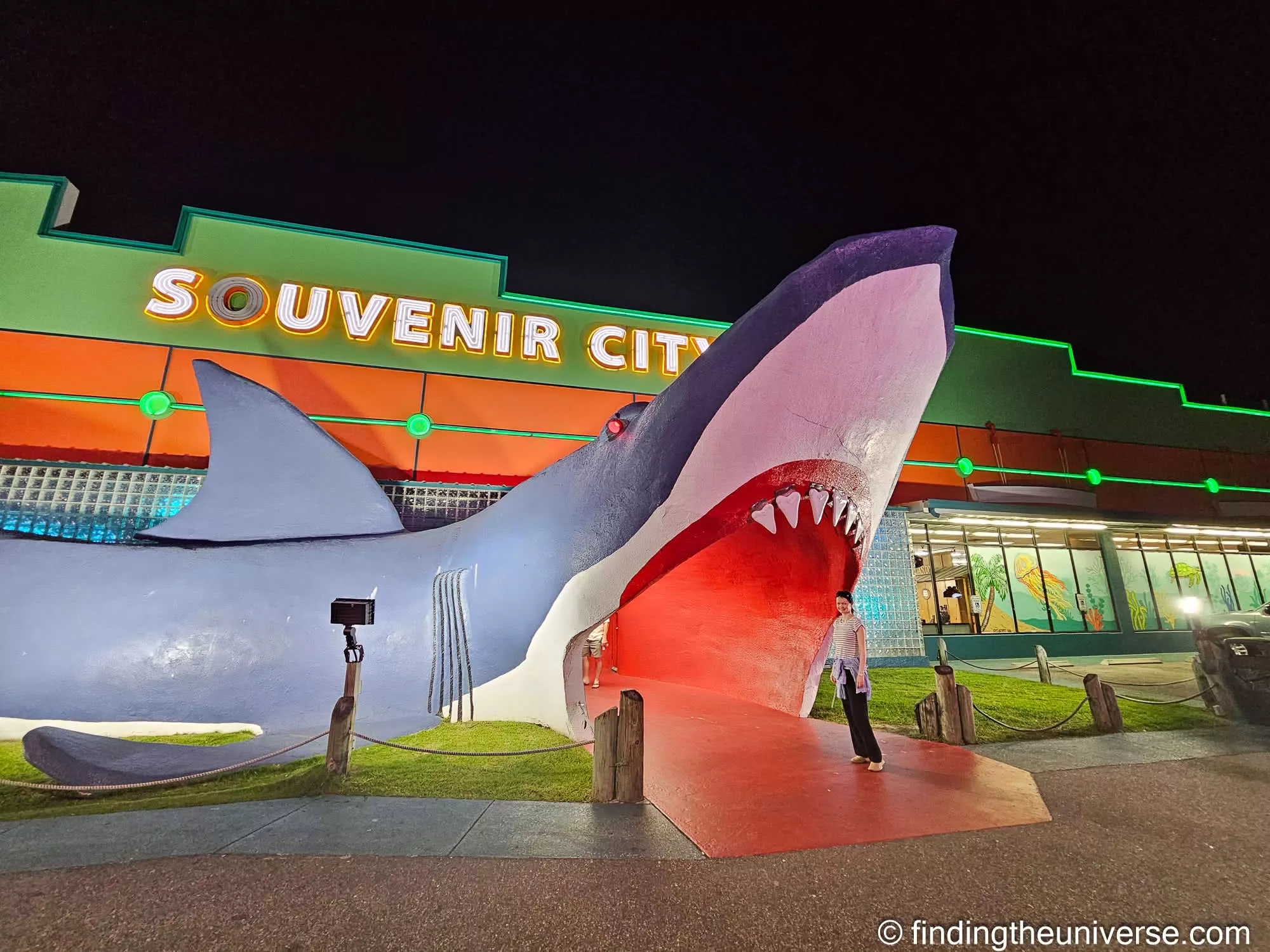
There are a number of locations to buy souvenirs along the Gulf Coast, but our favourite is Souvenir City on Highway 59. The entrance is a shark’s mouth about 20 feet tall, with a red ramp running down its throat to the doors, and it’s floodlit and neon-edged after dark. There’s been a gift shop on the spot since 1956. This particular shark went up when the store was rebuilt after a fire in 1996.
Inside is the full beach inventory: towels, shell ornaments, airbrushed t-shirts, fudge, and a tank of hermit crabs. We went one evening after dinner, mostly for the photograph, and left with more than we’d walked in for.
Fairhope and Point Clear, Up the Bay
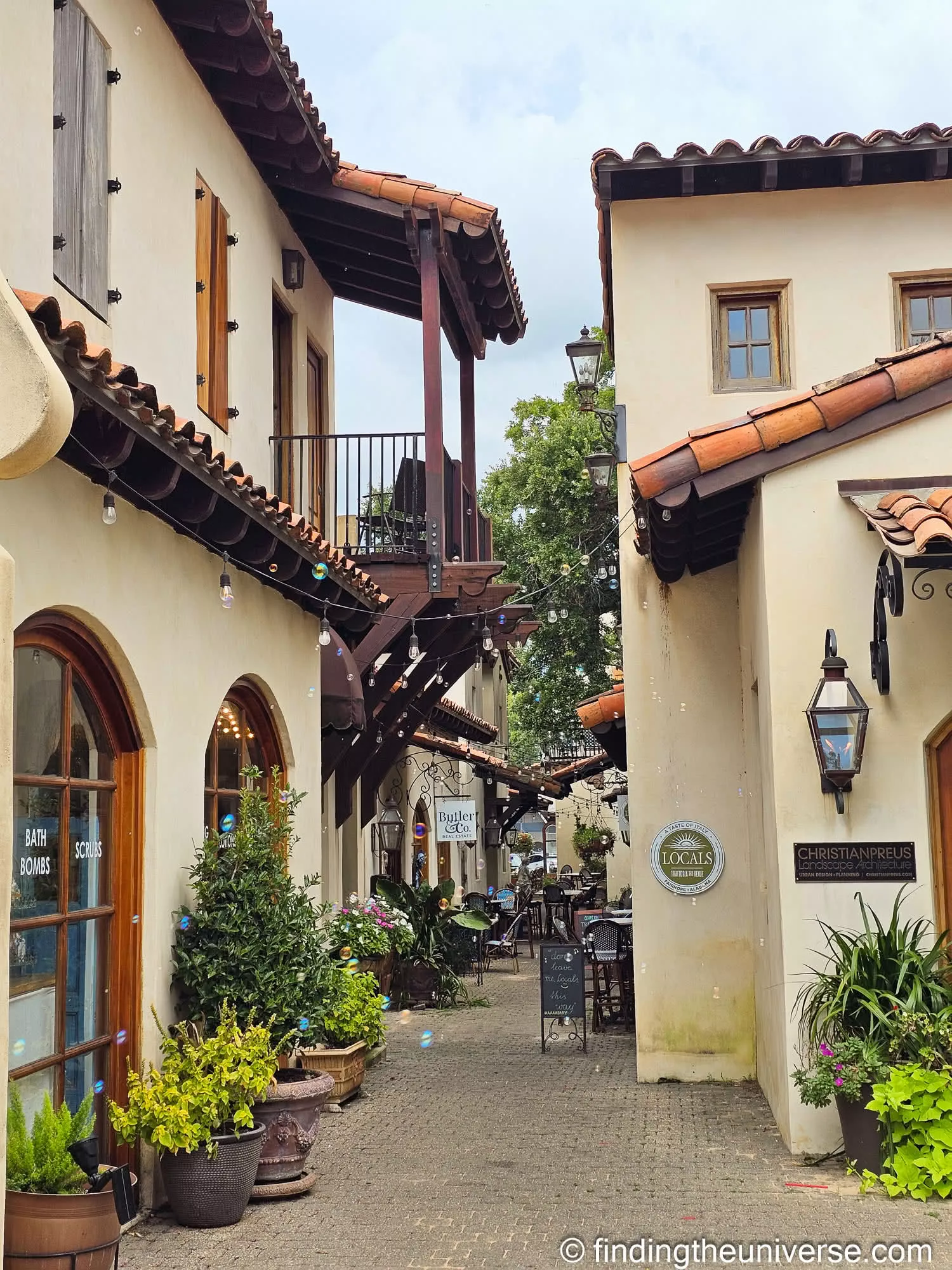
This one is a drive, and it’s worth the afternoon it takes. About 45 minutes north of Gulf Shores, on the eastern shore of Mobile Bay, Fairhope is a small town with an actual walkable downtown. Independent shops along a couple of walkable streets, a fountain courtyard to sit in, and the Fairhope Museum of History in the old city hall, a Spanish Mission building from 1928. The museum is free and open Tuesday to Saturday.
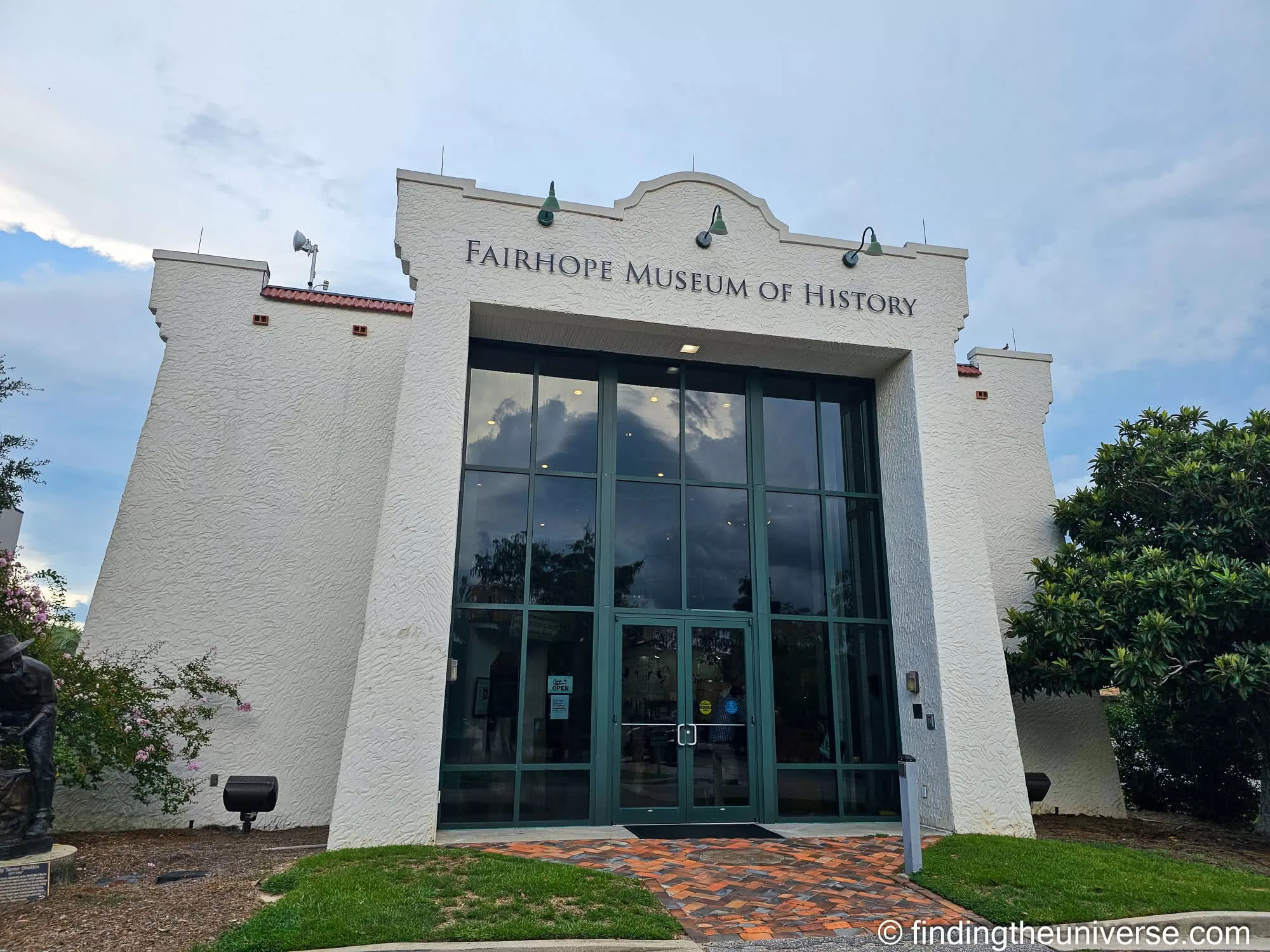
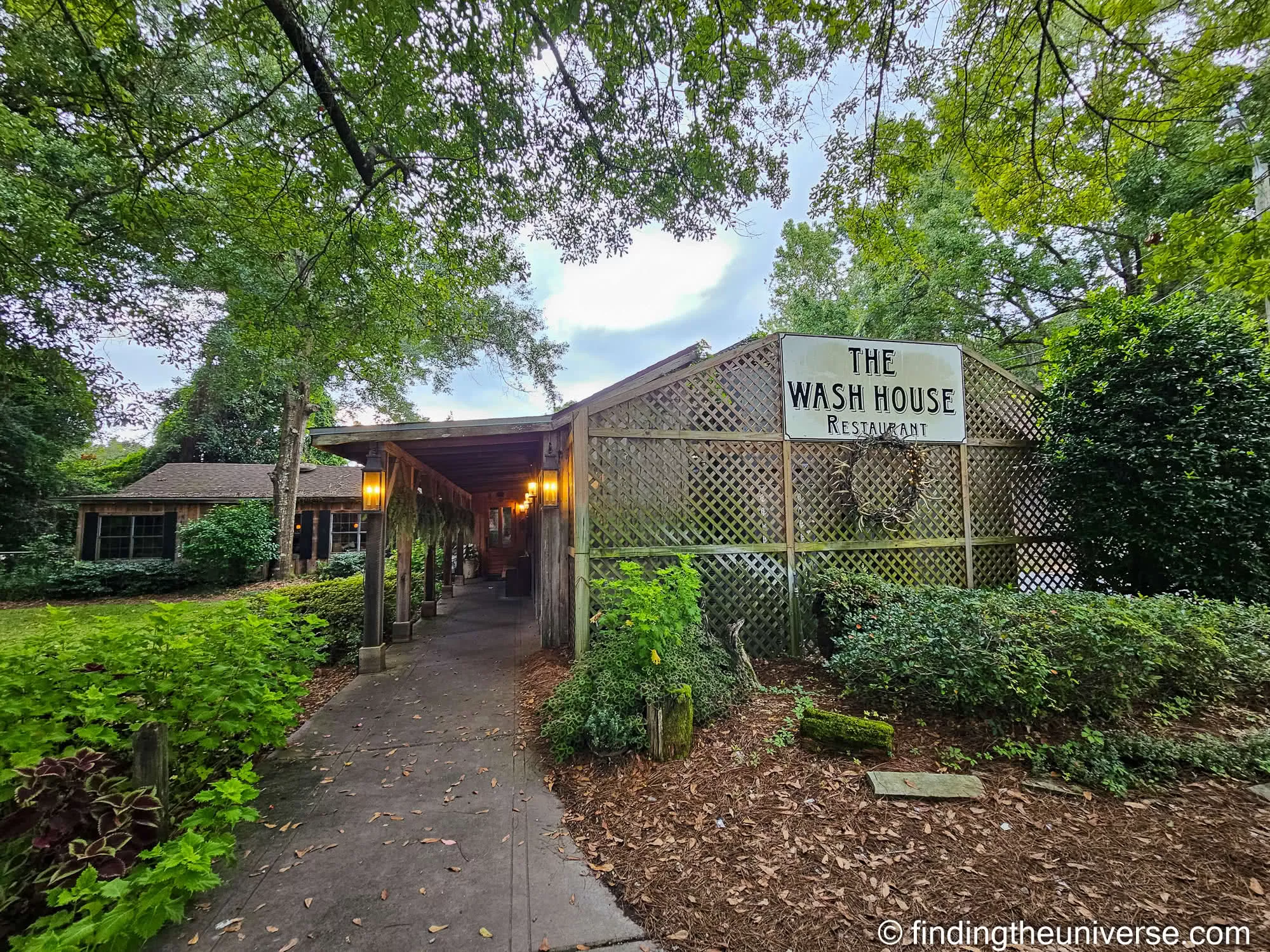
Point Clear is a few miles further down the shore, and it’s where the Grand Hotel and the Wash House are. Do the two as one outing rather than two separate drives up from the beach. Fairhope for the afternoon, then down to Point Clear so dinner lands with the sun going over the bay. The drive back is a lot easier to justify that way.
What to Eat on the Alabama Gulf Coast
Most of what’s on the menus here was landed a few miles away, and after a few trips we’ve worked through a decent amount of it. This is what to order.
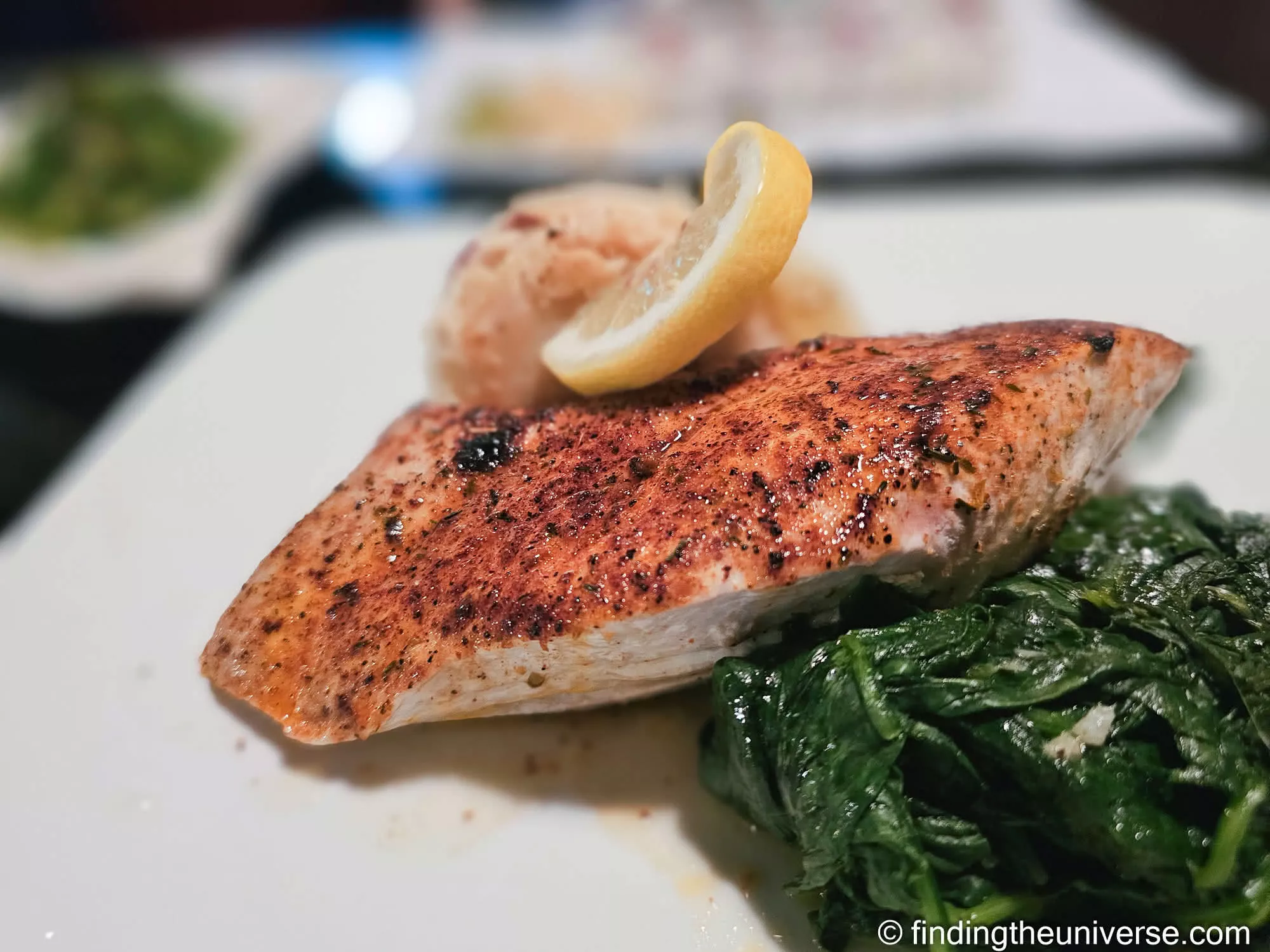
Shrimp first, because it’s on every menu and it’s the thing to get. Gulf shrimp are sweeter and firmer than the farmed sort, and they turn up grilled, blackened, fried, in po’boys and piled on grits. We had them grilled at Cotton’s and that’s the version I’d point you at, because frying hides what you came for.
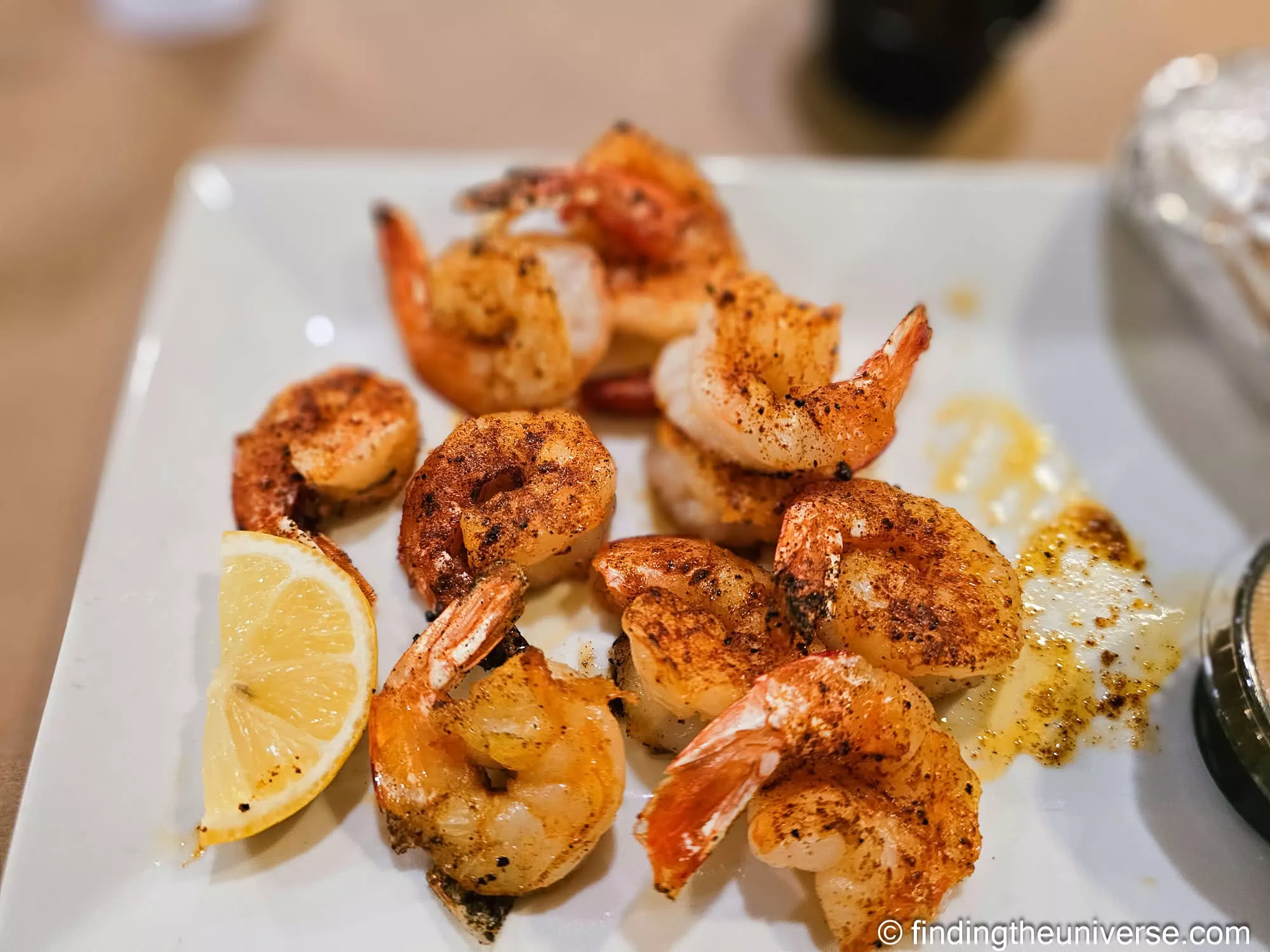
If you see Royal Reds on a board, order those instead. They’re a deepwater shrimp that eats more like lobster, and they only come in when the boats go far enough out to find them.
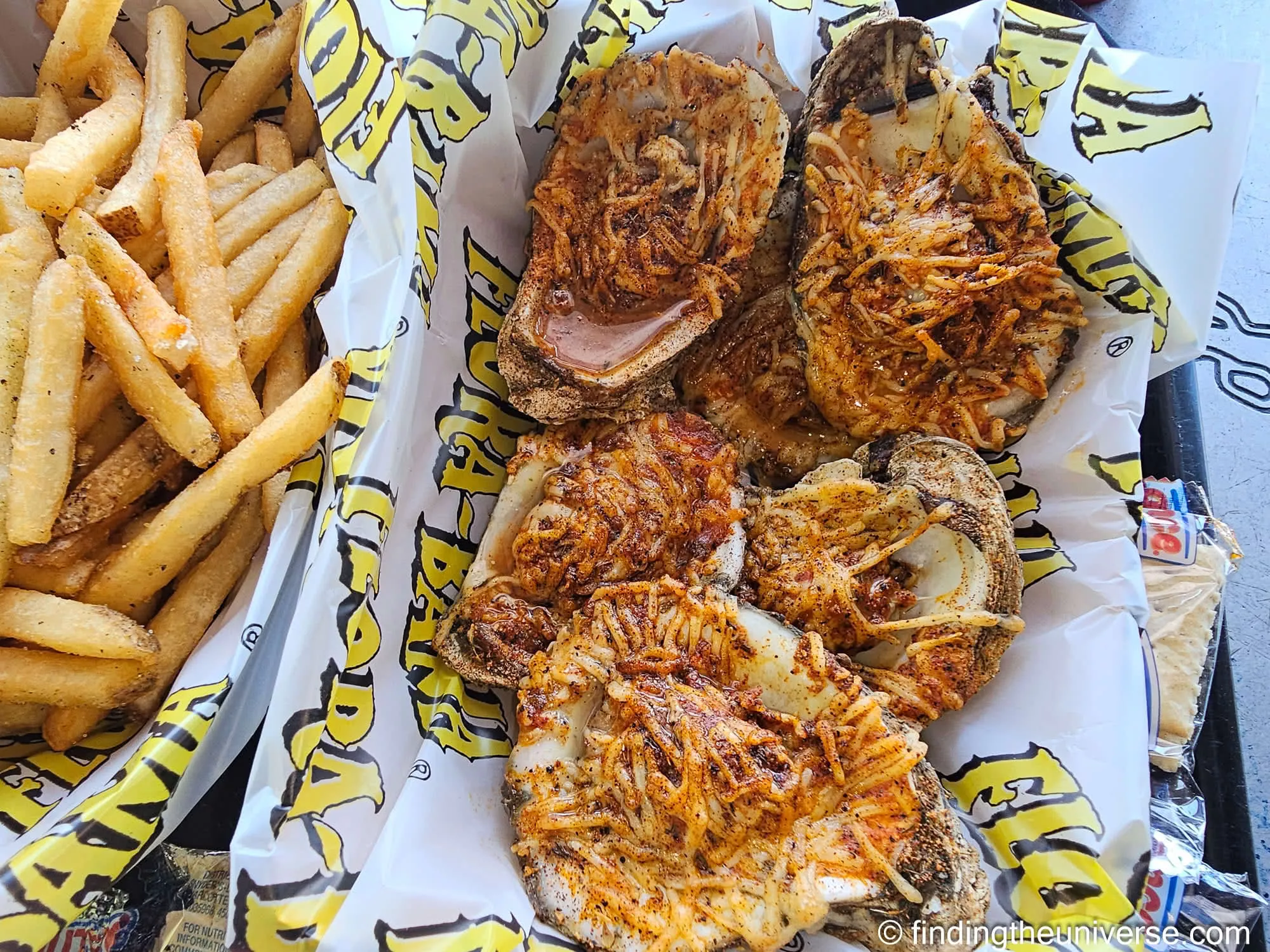
Chargrilled oysters are the other thing to get, and they’re a very different proposition to raw ones if raw isn’t your thing. They go on the grill in the shell, and normally come with a choice of toppings. I like them with butter, garlic and parmesan, but you go your own way.
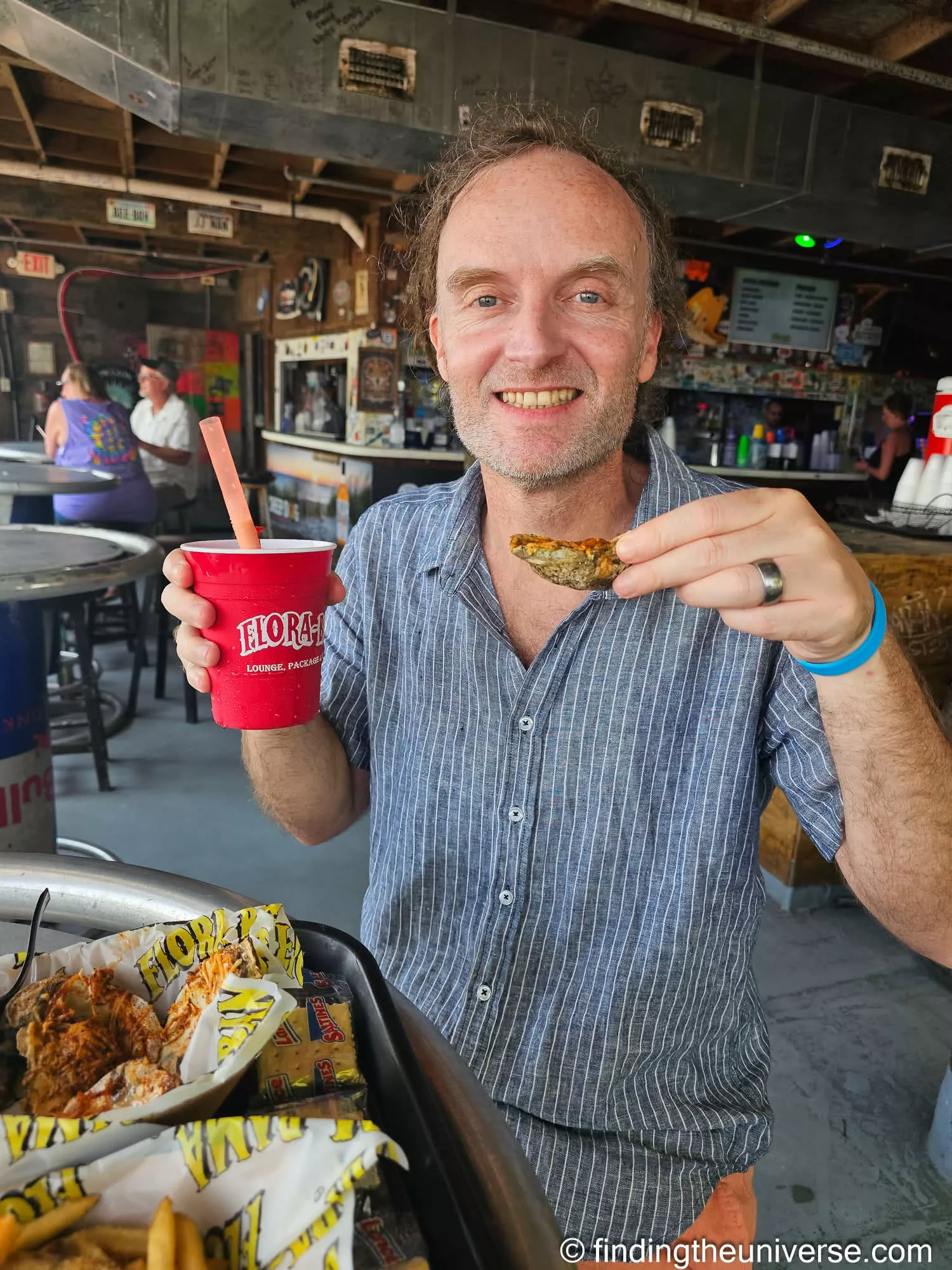
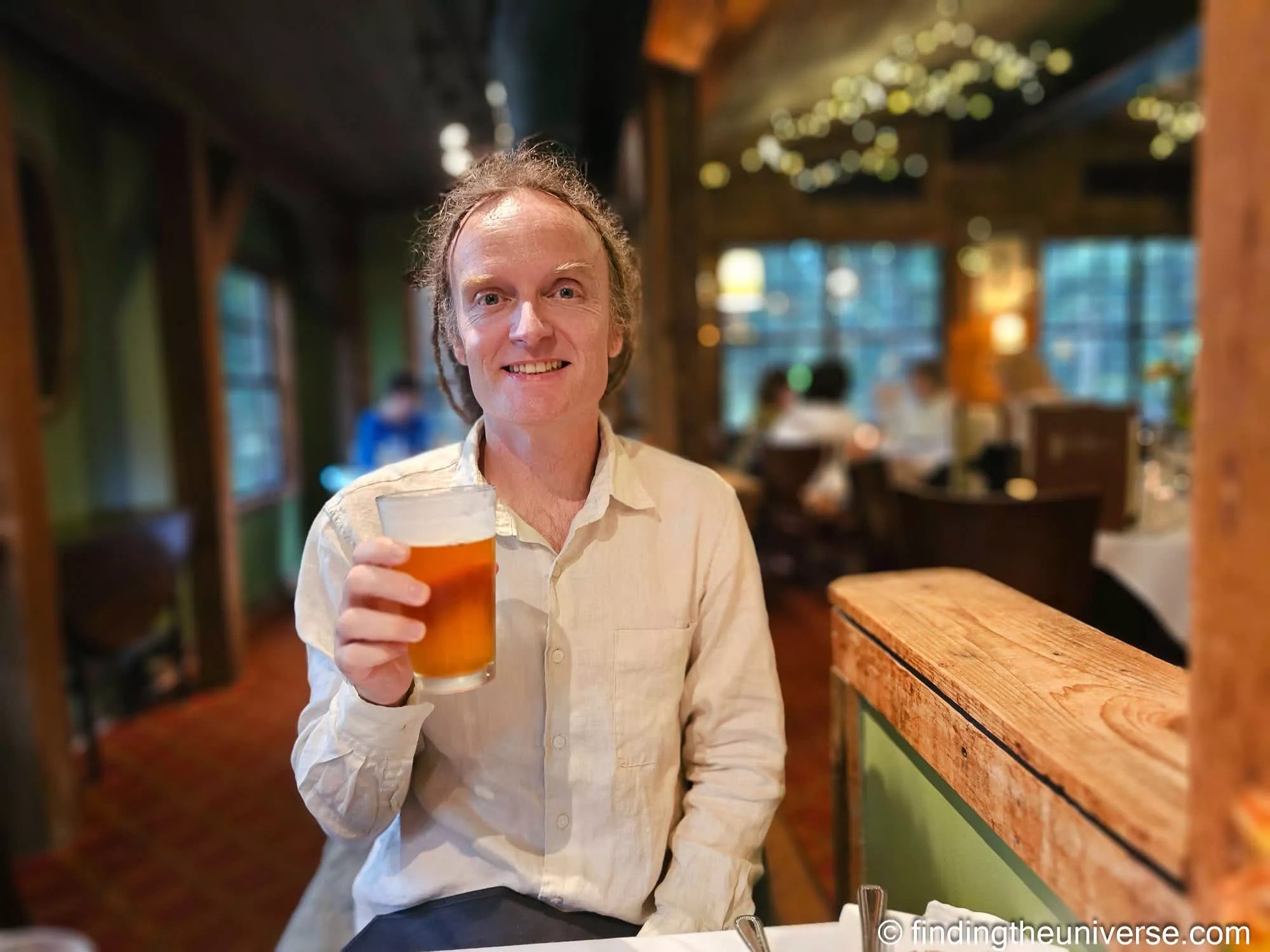
The drink in that photo deserves its own note. A Bushwacker is a frozen cocktail somewhere between a milkshake and a piña colada, built on rum, coffee liqueur and coconut, and it’s the drink of this stretch of coast. It’s also a good deal stronger than it tastes.
For fish, red snapper and grouper are the two names worth looking for, and blackened is the local default: a heavy spice crust, a very hot pan, and not much else done to it. Our favourite preparation though is bronzed, which is on the way to blackened but with less, well, blackening.
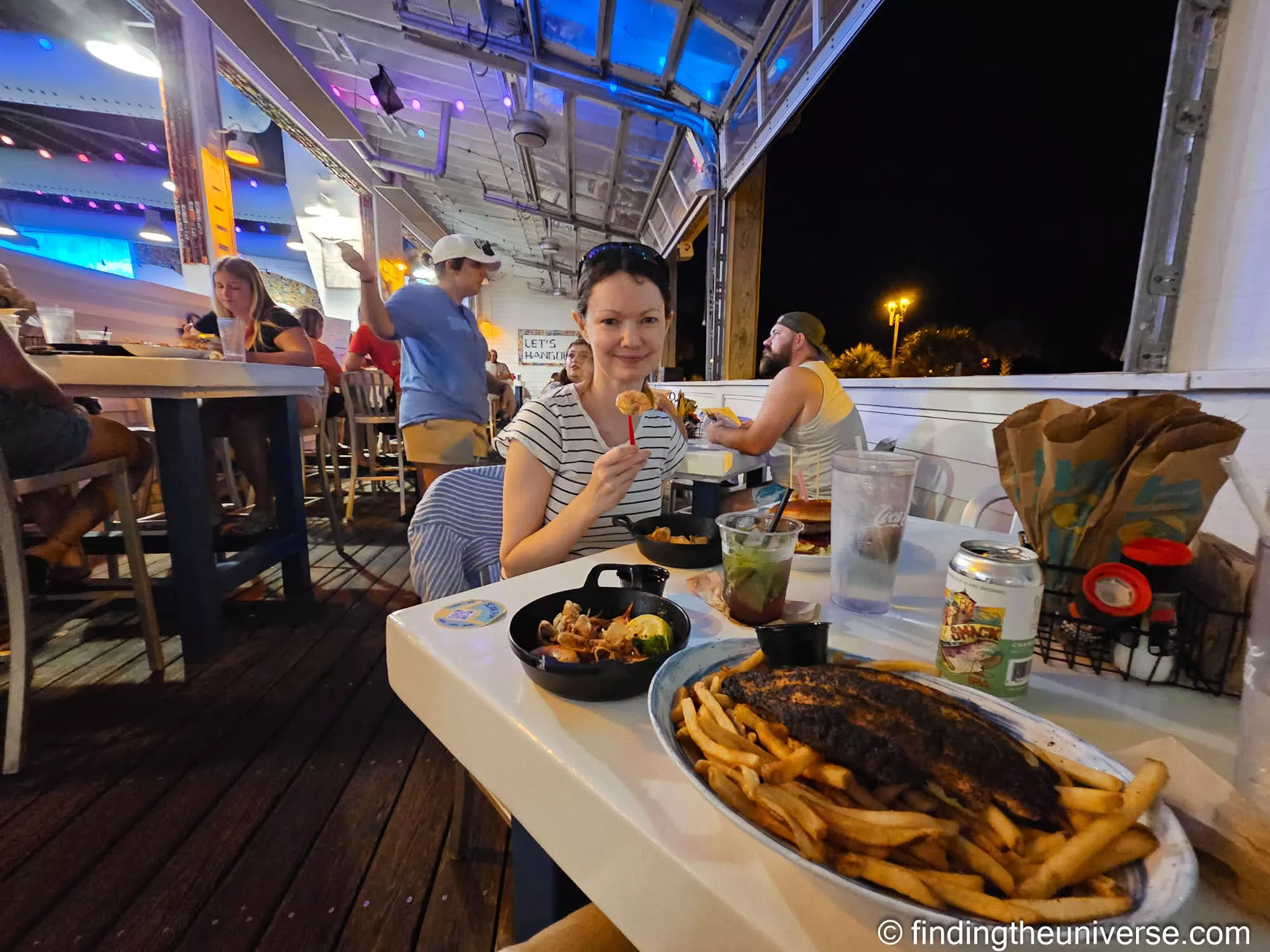
Blue crab shows up two ways. Fried crab claws are the bar-snack version and they’re on almost every menu as a starter. The crab cake at Big Fish was one of the best we’ve had (and Jess is quite a crab cake expert), with a lot of crab and none of the filler.

The one dish here that isn’t from anywhere else is West Indies salad, and it’s worth going out of your way for. Lump crab meat marinated in oil, cider vinegar, raw onion and iced water, served cold, with no mayonnaise anywhere near it.
Bill Bayley put it on the menu at his restaurant on Dauphin Island Parkway in Mobile in 1947 and it barely left the area, which is why most visitors walk straight past it. We had ours up in Mobile itself, and if you see it on a menu down at the coast, get it.
Where to Eat
The restaurant scene here is quite a bit bigger than it looks from the beach road. These eight cover some of our most recommended options.
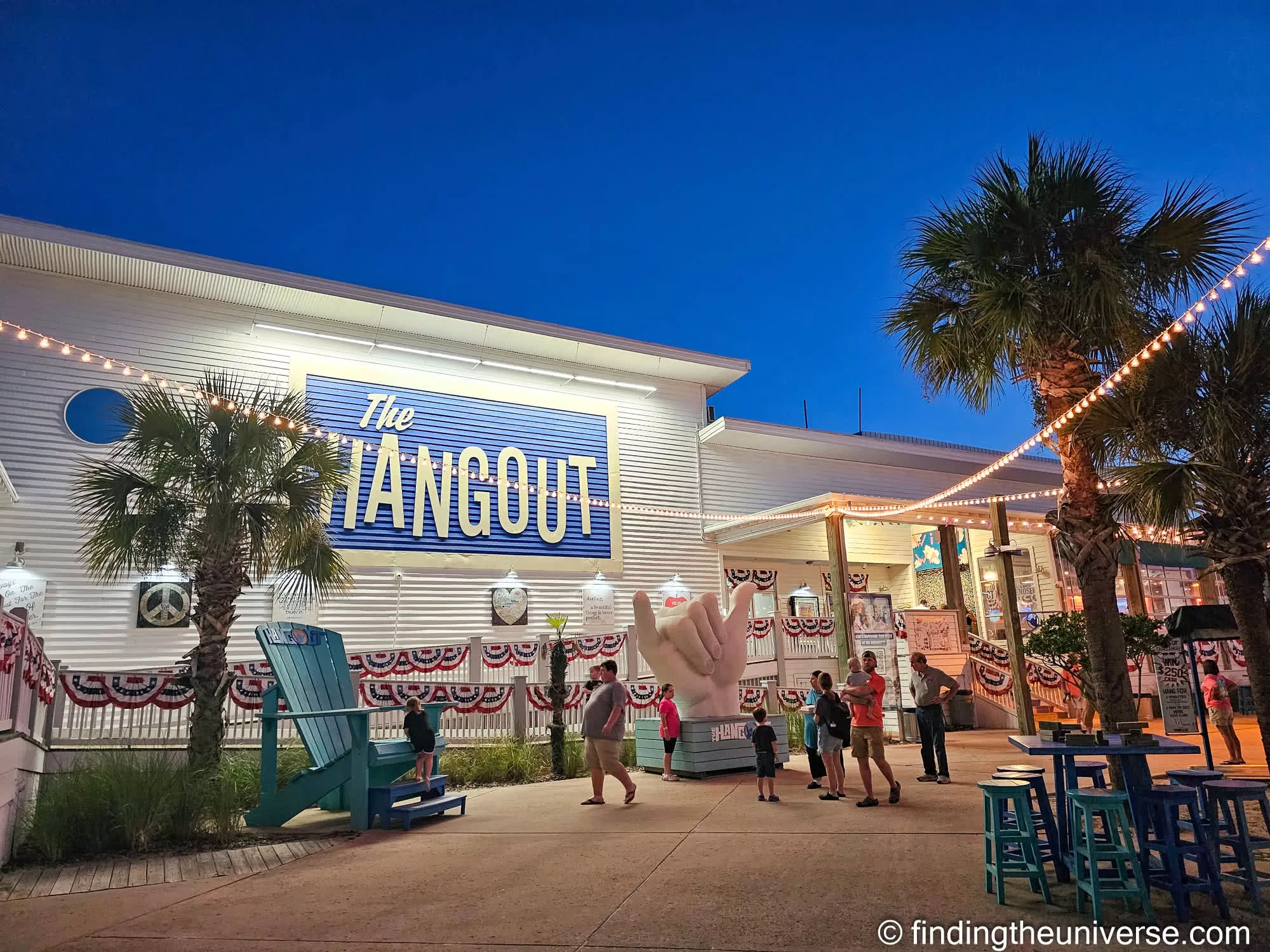
The Hangout (Gulf Shores) is right on the sand at Gulf Place, loud, good-natured, and better than a tourist landmark needs to be. Go for lunch with sandy feet, because the queue is the evening problem.
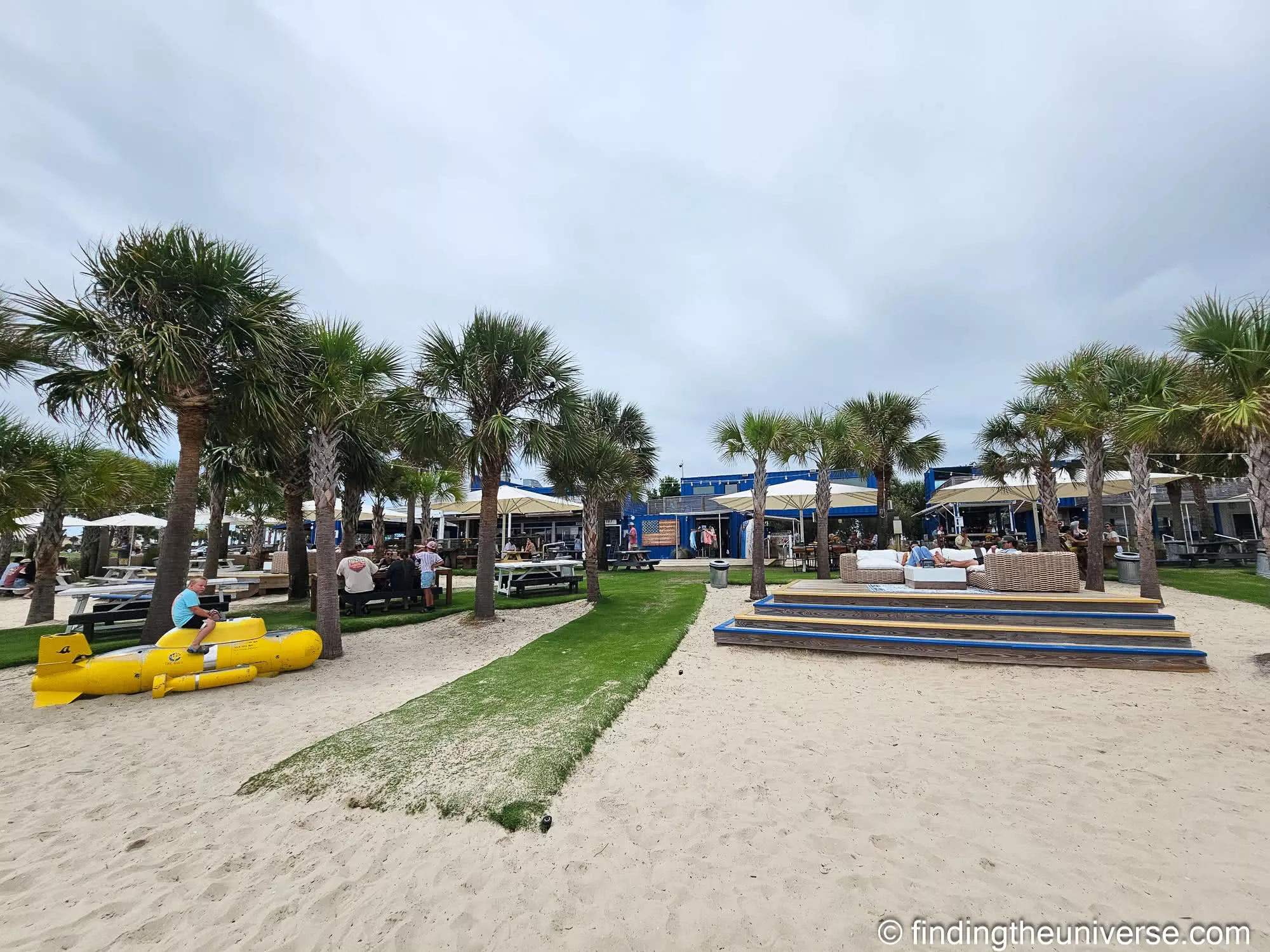
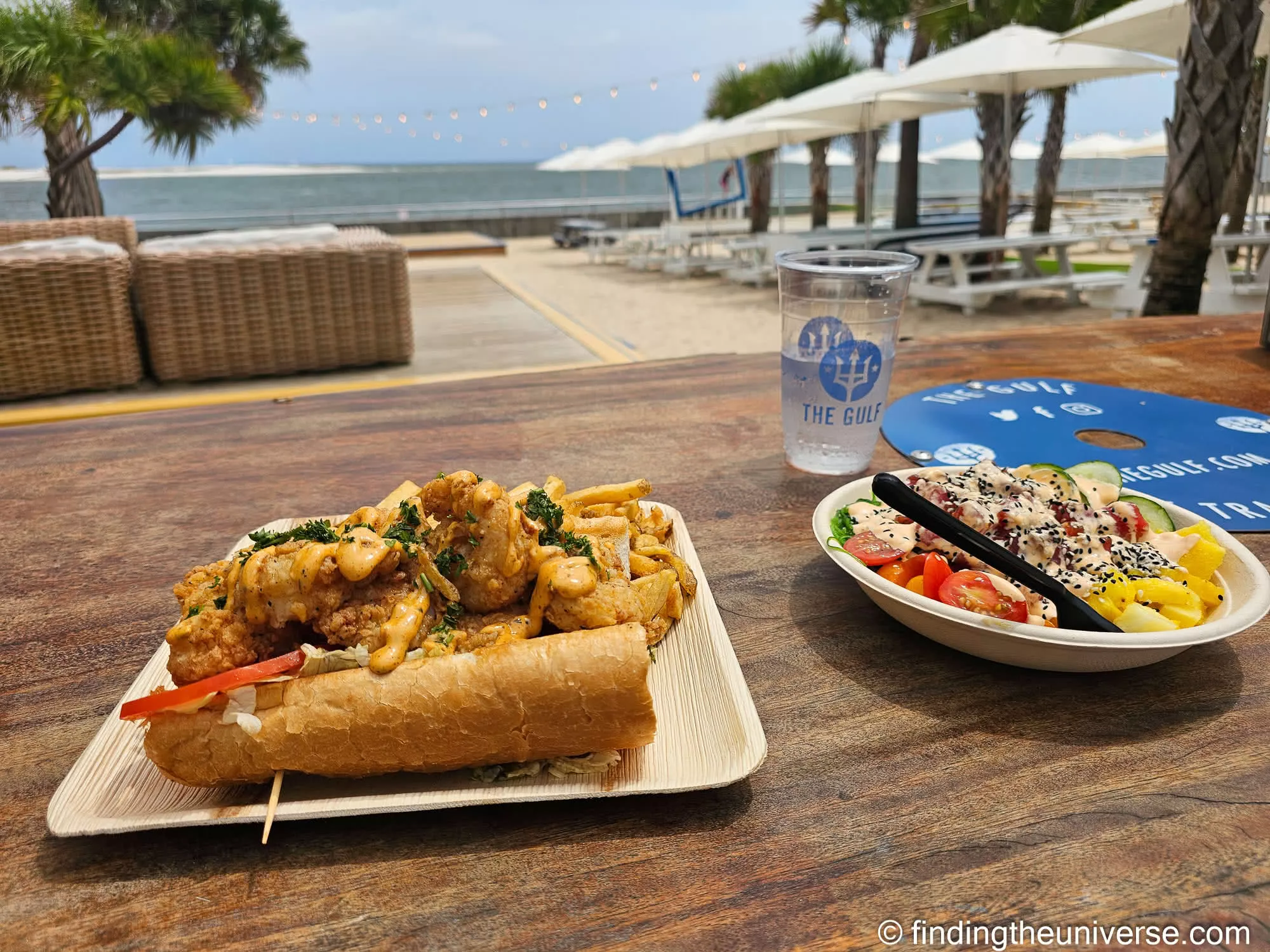
The Gulf (Orange Beach) works out of a stack of shipping containers beside Perdido Pass. You order at the counter and eat at long tables over the water. We had lunch there under flat grey cloud, a po’boy and a poke bowl, and it was very good.
Sunset is obviously the hour you want, but the whole place is outdoors, so in summer it’s the forecast that picks your slot rather than the light. We had thunderstorms coming and took the early afternoon instead.
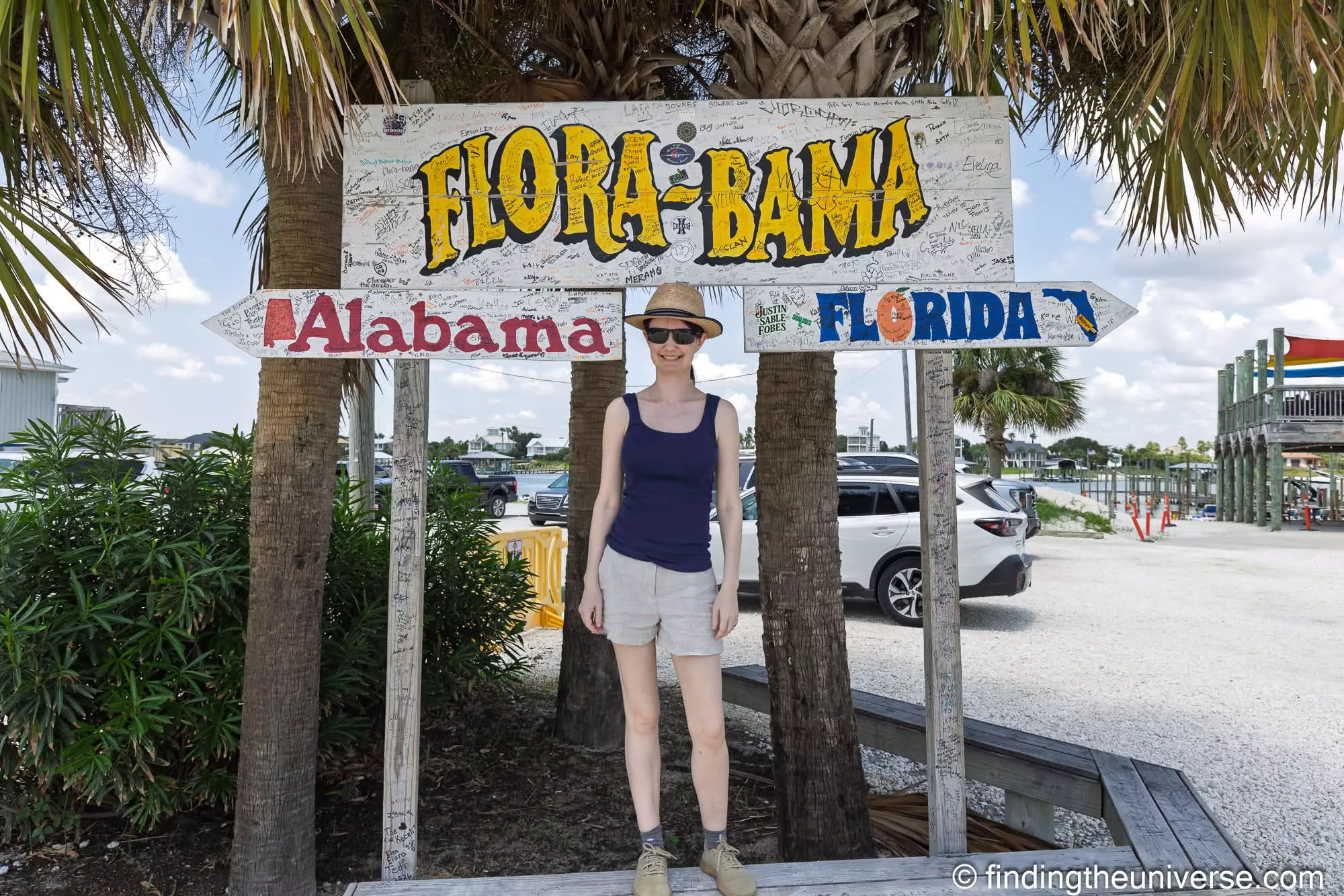
Flora-Bama sits right on the Alabama-Florida state line, and has been the Gulf Coast’s favourite roadhouse since 1964, with live music 365 days a year. There’s free bingo on some afternoons, a room decorated with hanging bras, direct access to the beach, and a wide variety of drinks and dining options to choose from.
It’s also home of the Interstate Mullet Toss, in which competitors throw a dead fish from Florida into Alabama. I have no further questions. Go for the late-afternoon-into-evening scene, and don’t come expecting a quiet meal.
Lulu’s (Gulf Shores) is Lucy Buffett’s waterfront operation on the Intracoastal, and the strongest all-ages pick, with play areas, boat traffic to watch, and a rigorous allergy menu that earns it a lot of loyalty.
Big Fish (Orange Beach) handles date night. Seafood and sushi, proper cocktails, indoors and air-conditioned, which by August you will have come to value.
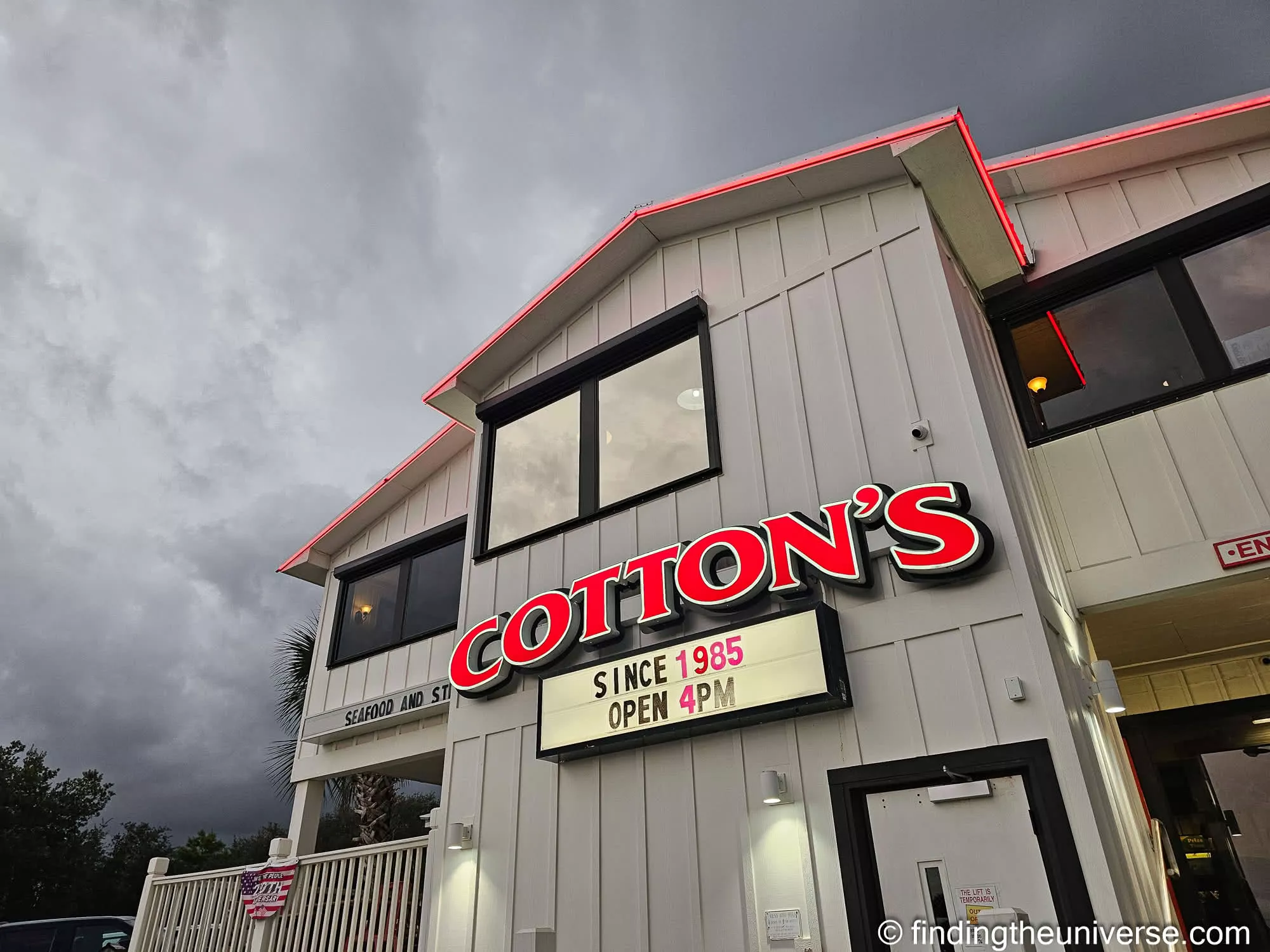
Cotton’s (Orange Beach) was an easy pick for us on a recent trip, mostly because we could walk to it from our hotel. It’s been doing steaks and local seafood since 1985. It opens at 4pm and it’s closed on Sundays.
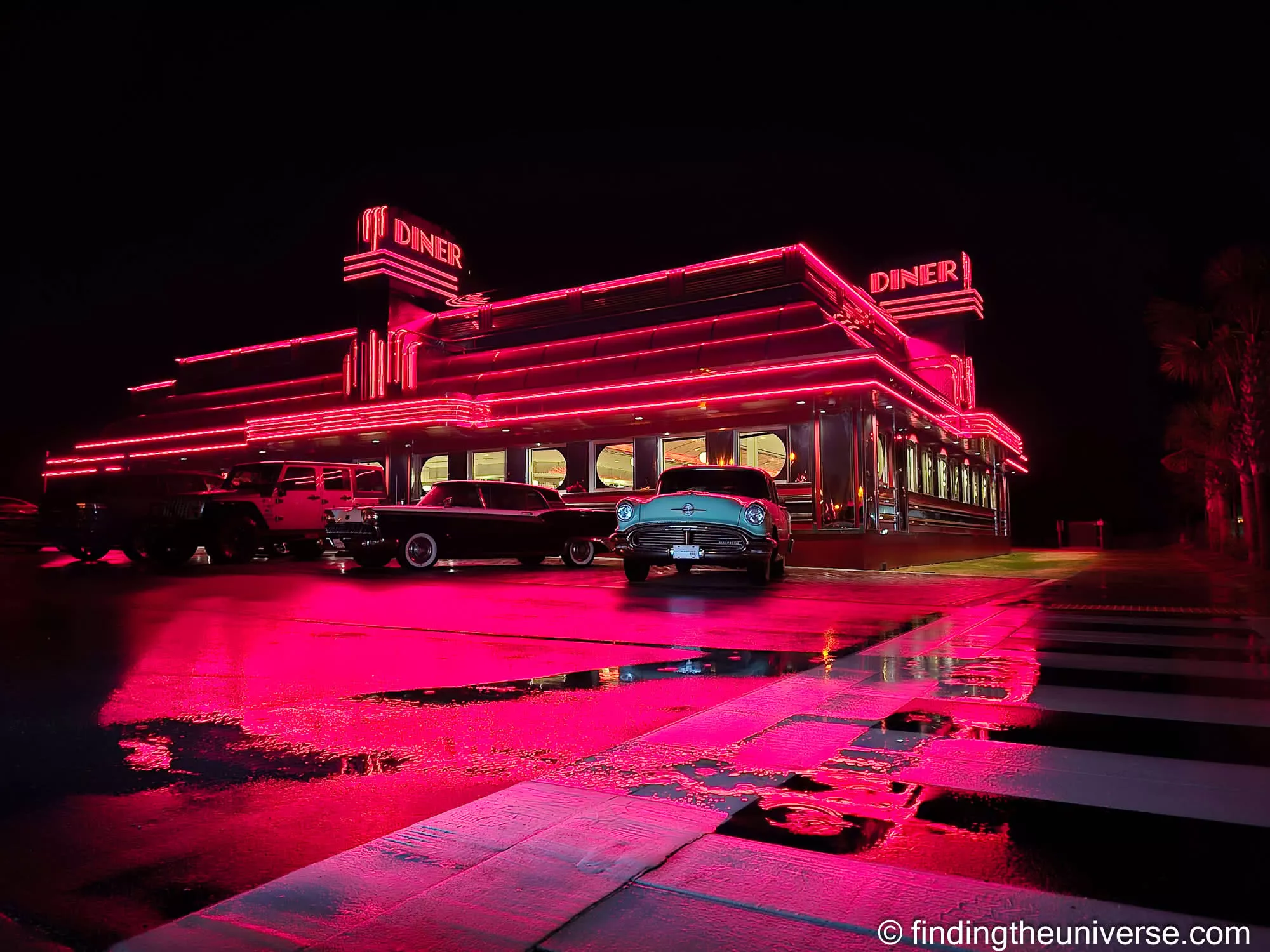
The Sunliner Diner (Orange Beach) does the fifties thing with real commitment, all booths built out of old cars, chrome and neon and handmade milkshakes.
It’s a few doors along the same road, opposite the Cotton Bayou beach access. Go for breakfast like we did, or go late after the rain when the neon is earning its money.
Wash House Restaurant is the drive-worthy one. It’s in Point Clear, about 45 minutes north up the bay near the Grand Hotel, doing fine Southern coastal cooking, dinner from 5pm.
We made the drive on a previous trip as our special night out and made an afternoon in Fairhope of it. The Key Lime Pie bread and butter pudding was worth the whole visit.
Where to Stay
The most useful thing to know about accommodation here is that the vast majority of beds are condos owned by individuals, not hotel rooms. Whole towers are rental units managed at arm’s length.
That means the booking-early rule bites harder than usual for summer, and it means VRBO’s Gulf Shores listings are effectively the area’s main hotel directory. For a week with a kitchen, a condo or a Fort Morgan house is the better value; for a short trip, a hotel spares you the checkout-cleaning routine.
On the hotel side, two we can speak to directly. On a previous trip we stayed at the Comfort Inn & Suites Gulf Shores East Beach, near Gulf State Park. It’s a solid budget pick two minutes’ walk from the public beach, with the pier close by. Not beachfront, and priced accordingly, which is exactly the trade a repeat visitor learns to make.
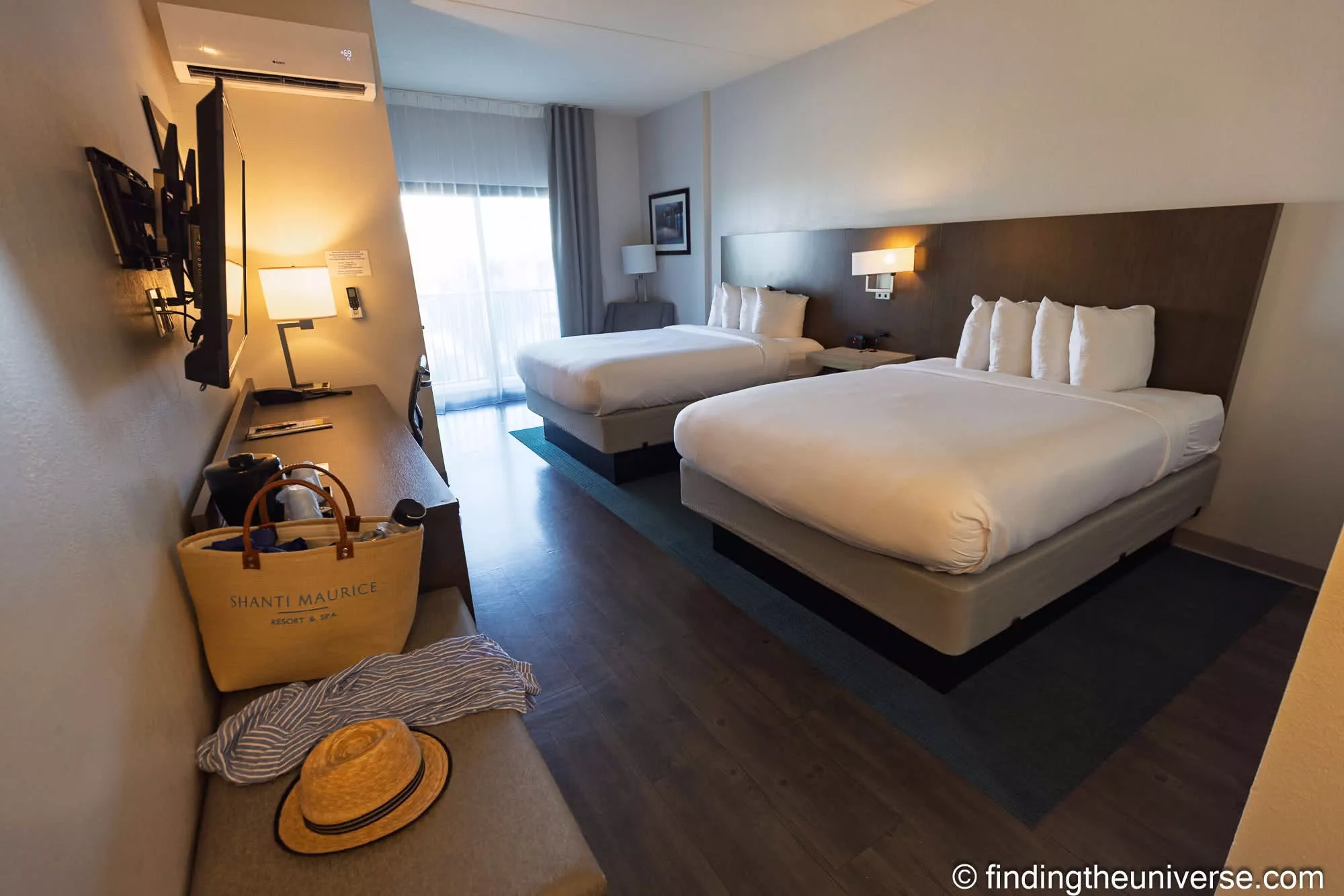
This August we stayed at Best Western Premier The Tides in Orange Beach, directly on the beach, with two bars and a deli on site. That isn’t a restaurant, and the difference matters more than it sounds. There’s pizza from the lobby bar, sandwiches and salads from the deli, and drinks by the pool, and plenty of people looked quite happy with exactly that. We wanted seafood most nights, so we barely touched it.
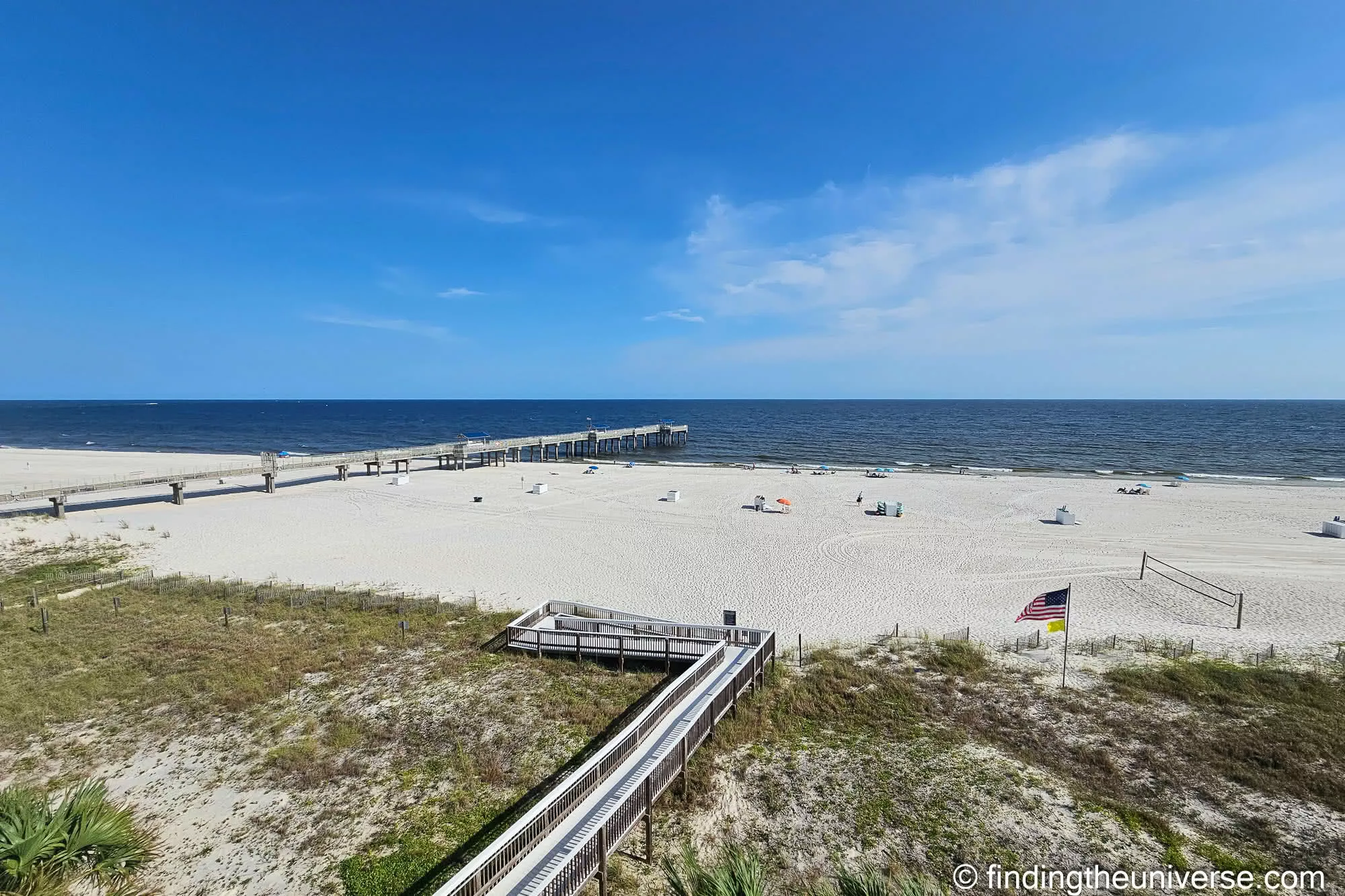
We booked it for where it sits. Cotton’s is a two minute walk from the door and the Sunliner Diner is not much further, and in the end we walked to dinner one evening and to breakfast one morning. Fewer than I’d expected. Everything else we wanted turned out to be a five or ten minute drive, and the driving here is easy enough that it stopped mattering.
It’s still worth a look before you book. Pull the map up around any hotel on your list and see what’s reachable on foot, because along most of Orange Beach the answer is nothing at all.
Those two are the ones we’ve actually slept in. Here’s the rest of the shortlist we worked through before booking, roughly cheapest first.
Fairfield Inn & Suites Orange Beach sits back from the water on Loop Road, about a block from the sand. Breakfast and parking are both included, and it’s the cheapest way we found to be that close to the beach without paying beachfront rates.
Sleep Inn on the Beach puts you straight out onto the sand, and it also includes breakfast and parking. That combination is unusual on the beachfront, and it’s the best value on this list if being on the sand is the priority.
Hotel Indigo Orange Beach is across the road from the beach instead of on it, with Gulf State Park and the Backcountry Trail behind it. The road crossing is the trade for a newer room and a quieter spot off the main strip.
Hilton Garden Inn Orange Beach is beachfront and every room has its own balcony over the sand, which is what kept it in the running for us.
The upmarket end of the list is The Lodge at Gulf State Park, the only one here that isn’t in Orange Beach. It sits inside the state park itself, on the sand, five minutes’ walk from the pier, and it lends out bikes for the Backcountry Trail. We didn’t book it, but if the budget stretches it’s the one I’d look at first.
One booking note that took us a couple of trips to spot. The cheaper places back from the water tend to throw in breakfast and parking; the beachfront ones tend to charge for parking on top of the rate. Add that to the nightly figure before you compare two rooms that look the same price.
We also looked at houses out at Fort Morgan and across on Dauphin Island before booking. Both work beautifully if seclusion is the goal; both mean a 30 to 45 minute drive every time you want a restaurant or a supermarket. Know which trip you’re planning.
When to Visit
The area has real seasons, and the month you pick decides your crowds, your prices, and whether the sea is for swimming or for looking at.
March and April bring spring break, so expect lively beaches and college crowds in March especially. May and early June are our pick. The water’s warm, everything’s open, and the summer crush hasn’t arrived.
July and August are peak season in every sense, with hot, humid days, afternoon thunderheads you can set your watch by, full car parks, and the highest prices. August is when half of Alabama has the same idea at once. We should know; this year we were part of the traffic.
September and October are the underrated shoulder, with a bathwater-warm Gulf, thinner crowds and lower rates. The trade-off is that this is also the heart of hurricane season, which runs 1 June to 30 November with its statistical peak around 10 September. Most late-summer trips pass without incident, but book refundable where you can, take travel insurance seriously, and watch the forecast in the week before you go.
November through February is quiet-season. It’s mild, occasionally T-shirt warm, and popular with long-stay snowbirds, though some venues trim their hours. Lovely for beach walks and fort visits, less so for swimming.
How We Plan a Gulf Shores Trip Now
A few things our earlier trips taught us, which double as advice we’d give anyone.
We booked the base around dinner first and the beach second. Every hotel here sells you the same sand. What I’d change is the weight we put on it: we walked to dinner once, drove the rest of the week, and the driving was never the problem we’d built it up to be.
We front-loaded the boat trip to early in the week, so an afternoon of thunderstorms couldn’t sink it. We also planned the beach days around mornings: on this coast in summer, 8am to noon is the good part of the day, and a beach chair at 2pm in August is a rotisserie setting. Fort Morgan is the one we planned wrong. It sat in the calendar as a late afternoon, for the light, until the 5pm closing time and the drive back argued us into a morning instead.
The other change is photographic. Last time I under-shot the quiet corners, assuming I’d be back, so this time the dunes at Bon Secour went into the plan from day one. The Mobile Bay ferry was on that list too and we cut it, because doing the crossing and Dauphin Island properly wanted a whole day we didn’t have, and half of one would have been worse than none. That’s the thing I’d change. If a place is worth returning to, it’s worth photographing well the first time.
Frequently Asked Questions
Is Gulf Shores or Orange Beach Better?
Gulf Shores for most first visits. It has the walkable core around Gulf Place, the main public beach, and the wider spread of restaurants and attractions. Orange Beach suits travellers who want newer condo towers, the marina and charter-boat scene, and slightly quieter beach accesses.
They’re 15 minutes apart, so you’ll use both either way. The real question is where you sleep and eat, and our answer is: wherever you can reach dinner without driving.
What Airport Do You Fly Into for Gulf Shores?
Pensacola (PNS) is the best answer for most trips, about an hour’s drive and served year-round by American, Delta, United, Southwest, and Allegiant. Mobile (MOB) is about 1 hour 20 minutes away, and Destin-Fort Walton (VPS) 1.5 to 2 hours.
Gulf Shores’ own airport (GUF) is worth checking first. Allegiant is the only carrier and its route map varies by season, with some cities served year-round and others in summer only, so whether it works comes down to where you’re flying from and when.
How Many Days Do You Need in Gulf Shores?
Three to four nights covers the essentials: real beach time, Fort Morgan, a dolphin cruise or fishing trip, and the best of the restaurants. Add a day if you want the Mobile Bay ferry and Dauphin Island, because that pairing needs a whole day, and we cut it from a four night trip for exactly that reason. A full week suits families settling into a condo, and is the point at which a kitchen starts paying for itself.
When Is the Best Time to Visit Gulf Shores and Orange Beach?
May and early June, then September and October. Late spring gets you warm water before the peak crowds and prices; early autumn gets you the warmest sea of the year and empty beaches, at the cost of watching the hurricane forecast. July and August work fine, but book far ahead and plan around midday heat.
Are Dogs Allowed on the Beach?
Not on the city beaches: Gulf Shores and Orange Beach both prohibit dogs on their Gulf-front sand entirely. The exception is the Fort Morgan peninsula, where leashed dogs are allowed on the bayside stretch between the Quarantine Wharf and the Fort Morgan fishing pier. Dogs aren’t permitted in the Bon Secour refuge sections at all, so check where you’re standing before unloading the pup.
Is Gulf Shores Walkable?
Only in patches. Gulf Shores has a walkable core around Gulf Place, with restaurants and shops within an easy walk. Orange Beach mostly isn’t walkable, with scarce sidewalks and long distances between things, so plan on driving to nearly everything.
There are exceptions and they’re worth hunting for. We stayed on Perdido Beach Boulevard in Orange Beach with two restaurants inside a few minutes’ walk, and used them for dinner one evening and breakfast one morning. We drove everywhere else, which was no hardship, because nearly everything in both towns is within a ten minute drive. Pull the map up around any hotel you’re considering and see what’s reachable on foot, then treat it as a bonus and not a plan.
Do You Need a Car in Gulf Shores?
Yes. There’s no meaningful public transport, and the area spreads along more than 20 miles of coast road. If you’re flying in, hire a car at the airport; comparing prices on Discover Cars before you travel usually beats the counter rate in summer.
Is September a Good Time Given Hurricane Season?
Yes, with open eyes. September sits at the statistical peak of the Atlantic hurricane season (1 June to 30 November, peaking around 10 September), so a storm disrupting your dates is possible but not likely. Book refundable accommodation, consider travel insurance, and check the forecast the week before. In exchange you get the warmest water of the year, thin crowds, and lower prices.
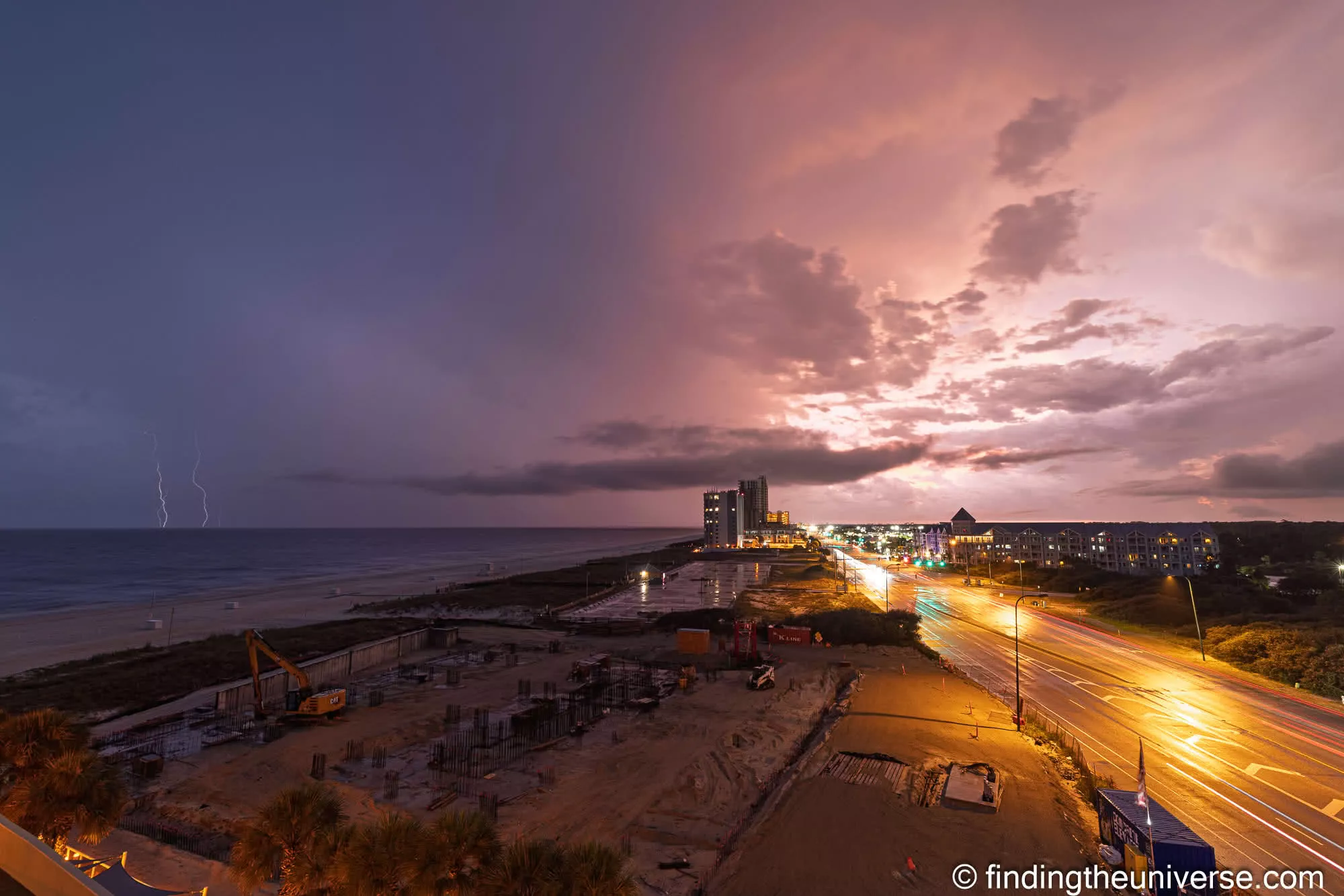
The everyday summer thunderstorm is a different thing, and in July and August you should just plan on getting one. We watched lightning working away over the Gulf at dusk on our August trip, and a bad enough forecast moved one waterfront dinner to lunchtime. Put outdoor meals and boat trips in the first half of the day, keep an indoor option in your back pocket, and the storms cost you very little.
Further Reading
Planning a bigger trip around the Gulf Coast or the wider South? These will help:
- Our full Deep South road trip itinerary, which strings this coast together with the region’s best cities
- Things to do in New Orleans and our 3 day New Orleans itinerary, three hours west
- A weekend in Charleston and things to do in Savannah, if you’re routing east
- Elsewhere in Alabama: the US Space & Rocket Center in Huntsville and the gloriously odd Unclaimed Baggage store
- Our beach photography tips, for making the most of all that white sand light
- On paper, the Lonely Planet American South guide covers this coast alongside the rest of the region
If you’ve got questions we haven’t covered, ask away in the comments; we read and answer all of them.















 English (US) ·
  French (CA) ·