

 5 hours ago
6
5 hours ago
6
PROTECT YOUR DNA WITH QUANTUM TECHNOLOGY
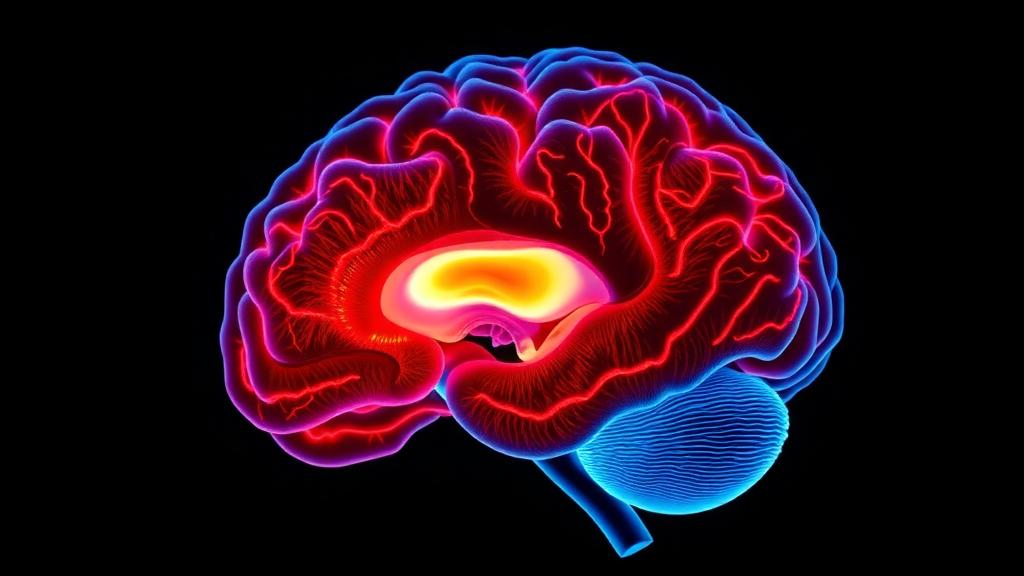
Orgo-Life the new way to the future Advertising by AdpathwayA single intravenous dose of vitamin C, delivered at concentrations far beyond anything diet could achieve, appears to rejuvenate a key aspect of the brain’s blood supply in middle-aged and older adults. In a randomized, double-blind, placebo-controlled crossover trial published in Physiological Reports, researchers at the University of Delaware found that a supraphysiological infusion of ascorbic acid improved two distinct measures of cerebrovascular reactivity in participants aged 55 to 79, while leaving the same measures essentially unchanged in young adults. The findings point to oxidative stress as a plausible, and potentially modifiable, driver of the vascular aging that quietly raises dementia risk with each passing decade.
The rationale for the study rests on a well-documented but poorly understood phenomenon. As people age, total cerebral blood flow and the brain vessels’ ability to respond to metabolic demands both decline, and these declines independently predict higher dementia risk even after accounting for other cardiovascular factors. At the same time, aging vasculature accumulates oxidative stress, an imbalance between reactive oxygen species and the body’s antioxidant defenses. Excess reactive oxygen species degrade nitric oxide, the signaling molecule that blood vessel linings use to relax and widen. If oxidative stress is indeed strangling the aging brain’s arteries, then flooding the system with a potent antioxidant should, in principle, loosen the grip.
To test that idea, the team recruited generally healthy young adults aged 18 to 29 and middle-aged and older adults aged 55 to 79 from the Newark, Delaware area, excluding smokers, pregnant or breastfeeding women, and anyone with cardiovascular, neurological, autoimmune, or major psychiatric conditions. Each participant completed two laboratory visits separated by at least four days, receiving an intravenous ascorbic acid infusion on one occasion and a saline placebo on the other, in a randomly assigned order. The dosing protocol, adapted from earlier vascular aging studies, delivered a priming bolus of 0.06 grams of vitamin C per kilogram of fat-free mass over 20 minutes, followed by a continuous drip of 0.02 grams per kilogram maintained until all post-infusion measurements were complete. In a small subset where blood samples survived analysis, serum vitamin C levels rose roughly sevenfold, from about 1.2 to 8.6 milligrams per deciliter, confirming the infusion pushed concentrations well above physiological norms.
The study’s centerpiece was a clever probe of cerebrovascular endothelial function. When carbon dioxide in the blood rises abruptly, vessels downstream of the internal carotid artery dilate, increasing turbulent flow and shear stress along the carotid wall. That shear stress triggers the endothelium to release nitric oxide, which widens the artery further. By using a dynamically controlled gas delivery system to raise participants’ end-tidal carbon dioxide by 9 millimeters of mercury for just 30 seconds, and imaging the internal carotid artery with high-resolution duplex ultrasound, the researchers could quantify how well the extracranial vessel lining responded to a nitric oxide–dependent stimulus. Before infusion, this response was significantly blunted in the older group: relative internal carotid artery reactivity averaged about 3.4 percent in young adults versus roughly 3.0 percent or lower in the middle-aged and older group, with the deficit most pronounced in the vitamin C visit’s baseline measurements.
After the vitamin C infusion, the picture changed markedly for the older participants. Their relative internal carotid artery reactivity rose significantly, and the absolute diameter change climbed from a mean of about 0.056 millimeters to 0.32 millimeters, effectively erasing the age gap with the young group. In striking contrast, the same participants showed no such improvement after saline, and the young adults’ responses were essentially flat regardless of which infusion they received. This pattern, improvement only where function was impaired, is exactly what the pharmaco-dissection approach predicts if oxidative stress is suppressing nitric oxide–mediated dilation in aged vessels. Notably, the carbon dioxide stimulus itself was matched across conditions, with end-tidal changes of roughly 8 to 9 millimeters of mercury in every group and time point, so the differences could not be attributed to unequal challenges.
The researchers also examined the middle cerebral artery, an intracranial vessel whose response to sustained, three-minute hypercapnia is far less dependent on nitric oxide. Using transcranial Doppler ultrasound, they measured blood velocity and, by normalizing to beat-by-beat mean arterial pressure, calculated cerebrovascular conductance. At baseline, older adults showed significantly lower conductance-based reactivity than young adults. Vitamin C infusion again improved middle cerebral artery reactivity in the older group, whether expressed as velocity change or conductance change, while saline did not. The authors suggest this intracranial effect likely operates through different pathways than the carotid response, potentially involving pH regulation, red blood cell ATP release, potassium and calcium channels, prostaglandins, or reactive oxygen species acting directly as vasodilators. The precise mechanism, they caution, remains unresolved.
Not every measurement cooperated with the tidy narrative. Total cerebral blood flow, estimated from internal carotid and vertebral artery flows, was unexpectedly higher in the older group than the young group before infusion, contradicting the large body of literature showing age-related declines. The authors note that women in their sample, who tend to have higher cerebral blood flow, made up 71 percent of the older subgroup with usable data versus 44 percent of the young subgroup, and that global flow estimates cannot capture regional perfusion differences. Vitamin C did not significantly alter total cerebral blood flow in either age group. Meanwhile, brachial artery flow-mediated dilation, the standard test of peripheral endothelial function, was lower in older adults at baseline but showed only a non-significant trend toward improvement after vitamin C. In a small subset with paired data, peripheral and cerebral endothelial responses were uncorrelated, suggesting the two beds reflect distinct endothelial physiology and should not be treated as interchangeable windows on vascular health.
The study’s limitations are considerable and the authors are candid about them. Sample sizes were small and varied across outcomes, with complete internal carotid data available for only 10 to 11 participants per infusion visit and middle cerebral artery data for 17 to 20. A freezer malfunction destroyed most serum samples, preventing direct measurement of oxidative stress markers or nitric oxide metabolites in the full cohort, which means the proposed mechanism remains inferential. The transcranial Doppler technique assumes the middle cerebral artery does not itself dilate during hypercapnia, an assumption challenged by MRI studies. No comparable vasodilatory control condition was included, so the effect cannot be definitively pinned to nitric oxide–dependent pathways. And the analysis relied on pre-specified contrasts without multiple-testing correction, appropriate for hypothesis-driven designs but demanding cautious interpretation.
Even with those caveats, the central result stands out for its clarity: antioxidant-responsive mechanisms appear to be implicated in age-related impairments of both extracranial and intracranial cerebrovascular reactivity. The authors are careful to stress that this was a mechanistic experiment, not a therapy trial, and that nothing in the data supports self-treatment with high-dose vitamin C. Oral supplementation cannot reproduce the serum concentrations achieved intravenously, and whether repeated infusions would produce lasting benefit, or whether improved reactivity translates into preserved cognition, are questions for future studies with larger and more diverse cohorts. What the trial does establish is a model: a safe, reversible intervention that selectively restores cerebrovascular function in older adults, giving researchers a tool to dissect the redox pathways that may one day be targeted to keep aging brains well perfused.
Subject of Research: Effects of intravenous ascorbic acid infusion on age-related cerebrovascular dysfunction in adults
Article Title: Supraphysiological ascorbic acid infusion attenuates cerebrovascular dysfunction in middle‐aged and older adults
Article References: DeConne, T. M., Sanjana, F., Habash, E. M., Decker, K. P., Nichols, W., Hobson, J. C., Rizzi, N. A., & Martens, C. R. (2026). Supraphysiological ascorbic acid infusion attenuates cerebrovascular dysfunction in middle‐aged and older adults. Physiological Reports, 14(19), Article e71120. https://doi.org/10.14814/phy2.71120
Image Credits: AI Generated
DOI: 10.14814/phy2.71120
Keywords: ascorbic acid, cerebrovascular reactivity, vascular aging, oxidative stress, nitric oxide, cerebral blood flow, internal carotid artery, middle cerebral artery, hypercapnia, endothelial function, dementia risk, randomized crossover trial















 English (US) ·
  French (CA) ·