

 3 hours ago
6
PROTECT YOUR DNA WITH QUANTUM TECHNOLOGY
Orgo-Life the new way to the future Advertising by AdpathwayIndustrial manufacturing discharges substantial volumes of synthetic organic colorants into aquatic environments, where stable dye molecules block sunlight, inhibit aquatic photosynthesis, consume dissolved oxygen, and resist standard biological degradation pathways. Addressing the environmental damage caused by commercial effluent, researchers at Sharda University have synthesized a multifunctional nanocomposite designated as CFA/DA/NBP@Ag that couples physical surface adsorption with silver-mediated catalytic reduction to clean contaminated water. The material integrates industrial coal fly ash, self-polymerizing dopamine, and activated neem bark powder harvested from Azadirachta indica trees to produce and stabilize nanoscale metallic silver particles without relying on toxic synthetic reducing agents. Laboratory evaluations demonstrated that this hybrid platform achieved an 89 percent removal efficiency of methylene blue dye from aqueous solutions within 210 minutes under sunlight exposure when paired with sodium borohydride. By repurposing abundant combustion byproducts and local forestry biomass into functional water purification media, the study presents an accessible, low-cost remediation strategy designed to treat recalcitrant dye effluents originating from commercial textile, plastic, and pharmaceutical operations.
Synthetic dyes represent a severe worldwide pollutant class, with industrial reports recording an annual production of approximately 700,000 tons distributed across an average of 10,000 distinct commercial colorants. The textile sector serves as a principal contributor to this wastewater burden, releasing effluents that induce severe eutrophication and introduce persistent, potentially carcinogenic and mutagenic chemical agents into natural river networks and groundwater reservoirs. Conventional remediation practices, including microbiological degradation, chemical ozonation, ion exchange, and advanced Fenton oxidation processes, frequently present steep financial barriers, generate hazardous secondary sludges, demand dangerous processing chemicals, or fail to eradicate toxic compounds completely. While solid adsorbents provide an established alternative, raw coal fly ash generated from industrial coal combustion exhibits very restricted baseline adsorption capacities due to its rigid crystalline composition and comparatively low specific surface area. To convert this abundant solid industrial waste into an effective environmental remediation tool, chemical functionalization is necessary to introduce reactive surface sites capable of capturing and degrading recalcitrant organic contaminants from wastewater streams.
To overcome these structural limitations, the research team developed a multi-step surface modification strategy utilizing bio-inspired chemistry and natural botanical extracts to functionalize raw coal fly ash sourced directly from a cement manufacturing facility in Jhajjar. The synthetic protocol relied on dopamine hydrochloride, a biomolecule possessing catechol and amine functional groups that readily undergoes self-polymerization under mild alkaline conditions to form a cohesive polydopamine-type surface coating. In parallel, raw bark collected from Azadirachta indica trees on the university campus was processed to isolate plant biomolecules, specifically limonoids, flavonoids, tannins, saponins, triterpenoids, and related polyphenols. When integrated into the fly ash matrix, these plant-derived functional groups act as green reducing and capping agents that convert ionic silver into metallic nanoparticles without introducing hazardous industrial reductants. The resulting hybrid composite capitalizes on coal fly ash as an inexpensive porous support, polydopamine as an adhesive coordinating interlayer, and neem phytochemicals as both sustainable synthesis facilitators and secondary surface binding sites for waterborne pollutants.
Preparation of the activated neem bark precursor involved rigorous washing with distilled water to remove particulate matter, followed by complete shade-drying and mechanical grinding to produce a fine powder of uniform particle dimensions. To remove dark pigments and eliminate inorganic impurities while expanding accessible surface area, a 30-gram batch of the sieved bark powder was boiled in a beaker containing 10 milliliters of 5 normal hydrochloric acid. The resulting acid-treated powder was subsequently boiled four times in distilled water, filtered, and dried in an oven for 48 hours at 80 degrees Celsius to yield activated neem bark powder. Concurrently, the fly ash support was modified by combining 1 gram of coal fly ash with 1 gram of dopamine in 250 milliliters of 10 millimolar Tris buffer adjusted to pH 8.5. This reaction mixture was stirred continuously for 24 hours to induce dopamine polymerization across the ash particles, after which the solid residue was collected via filtration and dried under ambient room temperature conditions.
The final CFA/DA/NBP@Ag nanocomposite was assembled through wet chemical reduction in double-distilled water under modest thermal activation. A 0.5-gram quantity of the dried coal fly ash and dopamine composite was suspended in 250 milliliters of double-distilled water inside a 500-milliliter round-bottomed flask. A 0.01 molar silver nitrate solution was introduced into the stirred suspension, and the reaction vessel was heated to 70 degrees Celsius for 5 minutes. Subsequently, 30 milliliters of the prepared neem bark powder suspension was added to the mixture, and the reaction was maintained under continuous mechanical stirring at 500 to 700 revolutions per minute for 18 hours. During this period, the polyphenolic functional groups within the neem bark reduced silver cations into metallic silver nanoparticles that anchored directly across the functionalized support matrix. Following the 18-hour reaction, the solid product was collected by centrifugation for 20 minutes, washed repeatedly with water and acetone to eliminate residual precursors, and dried overnight in an oven.
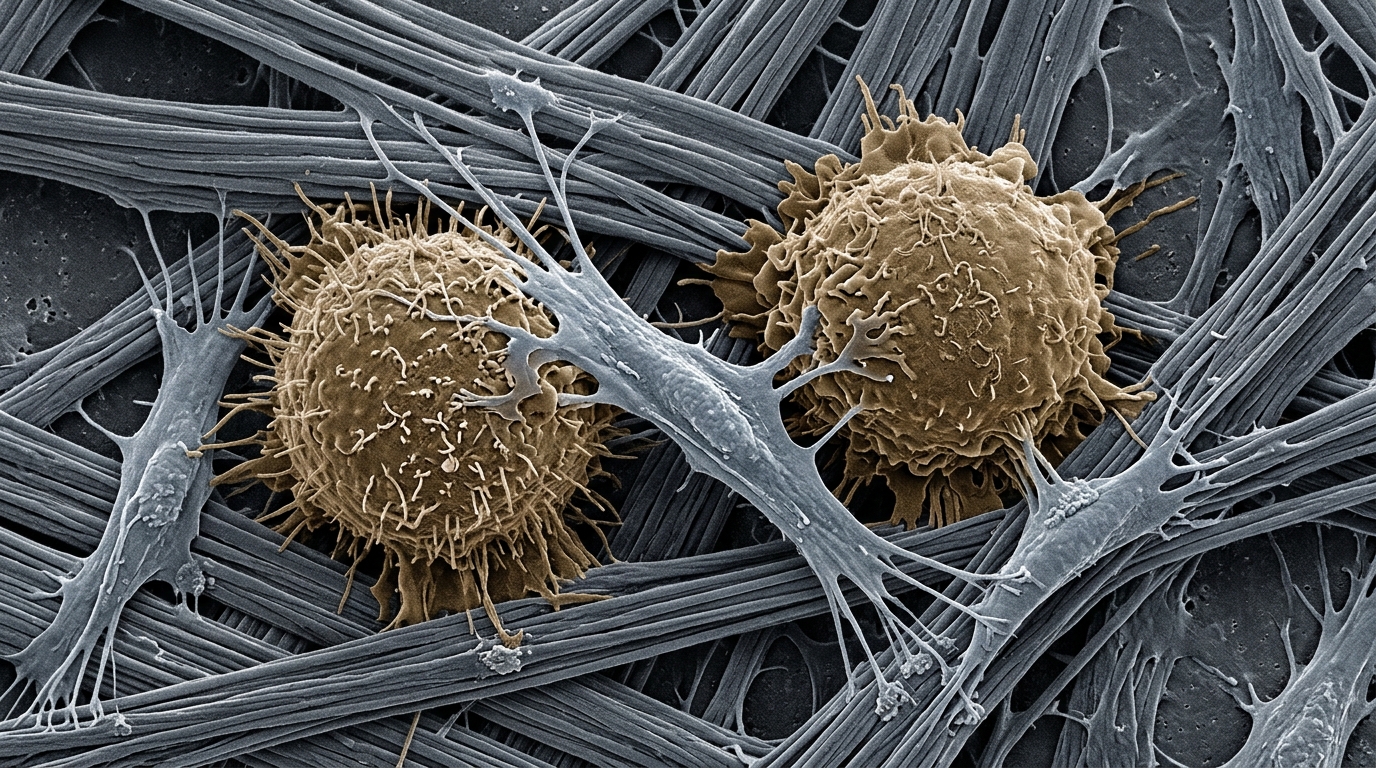
Comprehensive physical and chemical characterization confirmed the formation, morphology, and crystallographic architecture of the hybrid nanocomposite material. Scanning electron microscopy analysis of raw neem bark revealed an irregular, coarse, and highly porous matrix with asymmetric, non-spherical particles ranging between 10 and 100 micrometers in size, characteristic of natural lignocellulosic materials. Following composite synthesis, electron micrographs of the CFA/DA/NBP@Ag material displayed predominantly spherical nanoparticles with slightly irregular contours and dimensions ranging primarily between 20 and 50 nanometers. These silver nanoparticles formed moderate nanoscale clusters distributed across the porous, heterogeneous composite surface. Powder X-ray diffraction patterns revealed sharp reflection peaks at 2-theta angles of 38.1, 44.3, 64.5, and 77.4 degrees, corresponding precisely to the (111), (200), (220), and (311) crystallographic planes of face-centered cubic metallic silver. Broad reflections near 21, 26, and 36 degrees confirmed quartz silica and mullite components from the coal fly ash, while broad features between 10 and 25 degrees confirmed the presence of amorphous organic biomolecules from dopamine and neem bark.
Fourier-transform infrared spectroscopy tracked the chemical transformations across the synthesis steps, verifying successful conjugation between botanical phytochemicals, dopamine, and the inorganic substrate. The infrared spectrum of pristine neem bark exhibited prominent absorption features, including a broad hydroxyl stretching band at 3372 reciprocal centimeters, aliphatic carbon-hydrogen stretching peaks at 2926 and 2854 reciprocal centimeters, a carbonyl peak at 1721 reciprocal centimeters representing carboxylic acids and esters, and aromatic vibrations at 1622 reciprocal centimeters, alongside fingerprint peaks indicating cellulose, hemicellulose, and lignin. In the synthesized CFA/DA/NBP@Ag composite, new absorption bands emerged between 2666 and 2090 reciprocal centimeters, accompanied by broadened, shifted carbonyl and aromatic bands between 1875 and 1386 reciprocal centimeters. Furthermore, the substantial attenuation and shifting of hydroxyl and carbonyl peaks confirmed that these specific oxygen-containing functional groups actively participated in binding, reducing, and stabilizing the anchored metallic silver nanoparticles across the composite surface.
Systematic degradation trials evaluated the removal of methylene blue dye from aqueous solutions using ultraviolet-visible spectrophotometry monitored at the characteristic dye absorption maximum of 664 nanometers. Standard bench-scale experiments treated 50 milliliters of a 15 milligram per liter methylene blue solution with an adsorbent dosage of 8 milligrams per liter of CFA/DA/NBP@Ag at 25 degrees Celsius, supplemented with 100 microliters of 0.1 molar sodium borohydride. After 5 minutes of dark stirring to achieve adsorption-desorption equilibrium, the solution was exposed to natural sunlight. Over a 210-minute reaction period, the composite achieved 89 percent dye removal, whereas control solutions without nanocomposite particles exhibited only 18.4 percent degradation under identical sunlight exposure. Kinetic modeling established that the removal process adhered strictly to pseudo-first-order kinetics, displaying an observed reaction rate constant of 0.0089 reciprocal minutes. Batch trials exploring catalyst loading demonstrated that increasing nanocomposite concentrations from 2 to 10 parts per million elevated 60-minute dye removal efficiency progressively from 13 percent through 19, 34, 50, and 65 percent.
Solution pH exerted a pronounced influence on pollutant removal performance across acidic, neutral, and alkaline experimental regimes. Maintaining a fixed dye concentration of 15 milligrams per liter and a nanocomposite dose of 8 milligrams per liter, removal efficiencies measured after 180 minutes reached 68 percent at pH 4, 80 percent at pH 7, and 89 percent at pH 9. The overall dye elimination mechanism operates through coupled physical sorption and catalytic reduction. While the porous coal fly ash framework and polydopamine layer capture dye molecules through hydrogen bonding, pi-pi orbital stacking, and electrostatic forces, the anchored silver nanoparticles function as catalytic electron relays. Upon introduction of sodium borohydride, borohydride ions transfer electrons via the metallic silver cores directly to adsorbed dye chromophores, accelerating reductive decomposition into smaller, less hazardous degradation intermediates.
Economic and practical assessments emphasize the viability of the CFA/DA/NBP@Ag nanocomposite for industrial wastewater treatment due to its reliance on abundant solid waste and renewable bioresources. By deriving the bulk matrix from industrial coal fly ash and campus neem bark, the synthesis avoids expensive engineered supports while achieving methylene blue removal efficiencies comparable to synthetic platforms like agar-graphene oxide-zinc oxide (91 percent), bacterial cellulose-polydopamine-titania (80 percent), and silver-silica composites (85 percent). The wet chemical preparation operates without high-temperature calcination, requiring only mild aqueous heating at 70 degrees Celsius and room-temperature dopamine polymerization. The resulting solid powder can be readily isolated by conventional filtration or centrifugation, enabling straightforward deployment within standard industrial batch reactors, packed-bed filtration columns, or cartridge assemblies commonly found in commercial textile treatment facilities. Nevertheless, the authors note that industrial scalability requires further investigation to evaluate performance across complex real-world multi-pollutant effluents and address operational dependence on external chemical reducing agents such as sodium borohydride.
Subject of Research: Waste-derived silver nanocomposite for adsorption and catalytic degradation of methylene blue dye in wastewater
Article Title: Silver-decorated CFA/DA/Neem bark nanocomposites as an efficient adsorbent for methylene blue removal from water
Article References: Singh, P., Suleiman, S. S., & Sharma, S. (2026). Silver-decorated CFA/DA/Neem bark nanocomposites as an efficient adsorbent for methylene blue removal from water. Advances in Industrial and Engineering Chemistry, 2(1), Article 21. https://doi.org/10.1007/s44405-026-00061-0
Image Credits: AI Generated
DOI: 10.1007/s44405-026-00061-0
Keywords: coal fly ash, neem bark powder, silver nanoparticles, methylene blue, water remediation, dopamine functionalization, green nanotechnology, adsorption kinetics, dye degradation, textile wastewater, catalytic reduction, sodium borohydride, polydopamine, Azadirachta indica, sustainable nanomaterials, industrial effluent treatment, powder X-ray diffraction, scanning electron microscopy



















 English (US) ·
 French (CA) ·