

 7 hours ago
3
7 hours ago
3
PROTECT YOUR DNA WITH QUANTUM TECHNOLOGY
Orgo-Life the new way to the future Advertising by AdpathwayThey dart across playgrounds on dainty paws, sneak into back yard coops to eat suburban chickens and kill more than a million native animals every day.
The European red fox – a wily invasive species – is “one of the most impactful threats” for native mammals, says Sarah Legge, a professor at Charles Darwin University and author of a new draft plan to curb their predation.
“Australia has the worst record of mammal extinctions of any country in the world – around 40 species – and the overwhelming cause for those extinctions has been predation by foxes and cats,” Legge says.
If the federal environment department moves ahead with the plan, Australia would have its first updated national effort to halt the impact of foxes on native wildlife in nearly two decades.
Legge says there have been dramatic advancements in understanding how to combat foxes since the last plan was released in 2008. Populations are hard to gauge, but estimates put the number about 1.7 million spread across the country, from central Queensland down through New South Wales to Victoria and South Australia. Populations are also thriving in Western Australia.
All those foxes are hungry, with studies estimating foxes kill upwards of 367 million native mammals, 111 million birds, 88 million reptiles and “countless” invertebrates and frogs each year.
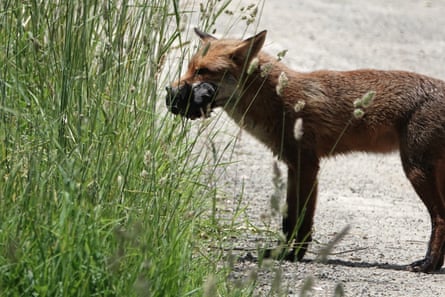
The draft plan acknowledges that foxes are far too numerous to eradicate but steps can be taken to protect the species most at risk. These include increased funding for safe havens such as fox-free islands and fenced, predator-proof zones. The plan also calls for collaboration and “legislative harmony” between states and the federal government.
“I’m not pretending that we can get rid of foxes from across the continent any time soon,” Legge says. “But we can definitely stop native wildlife population loss and extinction.”
Rob Brewster, the rewilding manager at the Invasive Species Council, says ecologists have spent the past 18 years learning everything they can about foxes and the species they hunt.
Sign up to get climate and environment editor Adam Morton’s Clear Air column as a free newsletter
A dozen key species have been identified as extremely susceptible to fox predation, including the critically endangered Gilbert’s potoroo; the endangered eastern quoll; endangered eastern barred and western barred bandicoots; and species of bettongs, hare-wallabies and the Tasmanian pademelon. Seven species of freshwater turtles are on the list, too.
Researchers have said for nearly a decade that without urgent action, all face the threat of extinction.
“It’s not climate change, it’s not habitat loss, those things are all bad … but the key driver of these extinctions is foxes and cats,” Brewster says. “And unfortunately the trajectory for a lot of our native mammals is still downward.”
The Invasive Species Council is impressed with the long-term plan, which would roll out over the next three decades. But Brewster says it would need to build heavily on what, until this point, has been a scattershot approach more akin to “hurling baits out of car windows” than a nationally coordinated campaign.
And that takes money.
“We really like the bold, 30-year goal, which is a mission that is aimed at guaranteeing the long-term survival of all native species threatened by foxes,” he says. “But if there’s no dedicated funding streams … then this plan will not work.”
The environment department estimates the total cost, if all actions are fully implemented, will be about $175m over the first five years, or about $35m annually. The spend on fox abatement now is only $5m to $7m.
after newsletter promotion
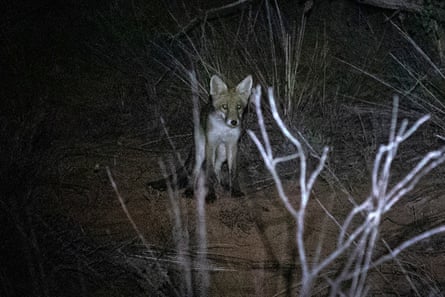
But, the plan notes, foxes are thought to cause about $190m in damage to Australian biodiversity every year, meaning the expense will more than pay for itself in environmental benefits.
The department cites the 30-year nature of the plan as an essential timeline when asked about government support for such funding, saying the threat of invasive species requires “sustained action over many years to achieve measurable and lasting improvements in wildlife populations”.
“Threat abatement plans play an important role in coordinating research, management and other actions necessary to reverse the decline of native species and prevent further extinctions,” a spokesperson says.
Bronwyn Hradsky, a senior research fellow and ecologist at the University of Melbourne, agrees tackling invasive species requires comprehensive and lasting support.
“If you’ve started fox control you’re basically committed to continuing it, and you’re looking at really substantial, long-term funding,” she says. “I think in parts of Australia we’ve got some of our amazing native species only because of our fox and cat control to date.
“A plan like this that pulls it all together, and aims higher and further, is really valuable.”
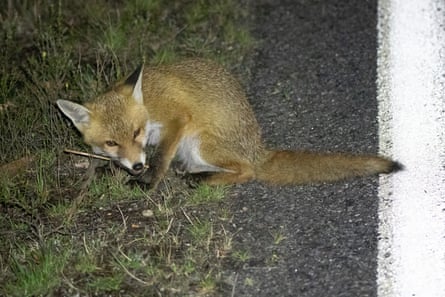
Matthew Rees, a research scientist at the CSIRO, says it’s not feasible to completely eradicate foxes on the mainland, but it is possible to reduce their negative impact on the ecosystem.
“Threatened species can persist under fox predation and recent research has made strong progress in uncovering the factors which promote this,” he says.
“Fox management has traditionally focused on lethal control usually through poison baiting, which continues to be important. But the draft plan broadens focus by also considering indirect control methods, which can be more feasible and cost-effective.”
Brewster acknowledges that while foxes may be cute, researchers and the government need to retain the social licence to take the action needed to rein them in, for the benefit of wildlife populations that have been here long before they arrived.
“It’s really scary because people are falling in love with the only thing they’re seeing, and they’re forgetting about native wildlife,” he says. “And if you don’t see your native wildlife because it’s all been eaten by foxes, then you’ll probably end up loving what killed them.
“If we’re going to save our wildlife, we cannot have people out there who accept foxes as part of our landscape.”


















 English (US) ·
  French (CA) ·