

 10 months ago
302
10 months ago
302
PROTECT YOUR DNA WITH QUANTUM TECHNOLOGY
Orgo-Life the new way to the future Advertising by AdpathwayFlorida’s warm climate and long growing season make it a hotbed for butterfly diversity. Because many parts of the state allow year-round breeding, there are endless opportunities for observing these beautiful pollinators. That is, if you have the right plants to attract them.
So, what type of plants do you need to construct a thriving and active Florida butterfly garden? There are two specific functions that you’ll need to focus on if you want to do it right.
The first is food, which comes in the form of nectar. Flowers that are easy to access and hold plenty of nectar will draw them in. If they know they can rely on a food source, they are more likely to return.
However, it’s the host plants that will keep them around, to stay in your Florida butterfly garden. The host plants are larval food sources. This is where butterflies lay their eggs, so that their young have something to eat as soon as they emerge.
If you provide these two things, butterflies won’t just stop by for a sip of nectar. They are far more likely to stick around and reproduce, leaving you with another generation to call your garden home. Let’s take a look at some great host and nectar plants that feed Florida native butterflies.
Milkweed/Butterfly Flower

Milkweed/Butterfly Flower Seeds
California Giants Blend Zinnia

California Giants Blend Zinnia Seeds
Incredible! Swirl Coreopsis

Incredible! Swirl Coreopsis Seeds
Swamp Milkweed
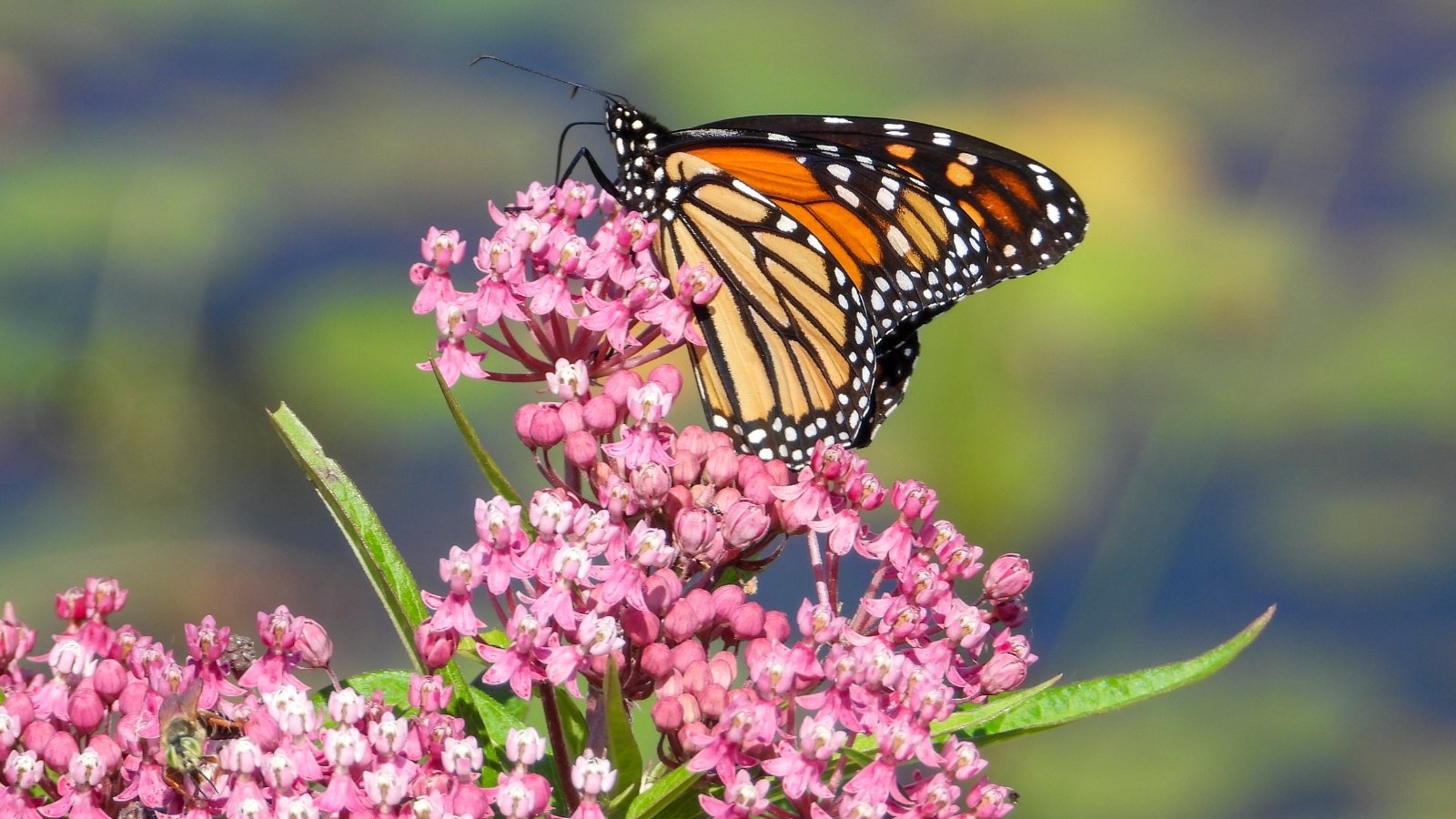 Local varieties give migrating monarchs dependable, nourishing support.
Milkweed is an absolute must for every Florida butterfly garden. Milkweeds are the sole larval food of the monarch butterfly, so if you want these around, this is how to do it.
Because monarchs are migratory, they rely on different types of milkweed at different times. What their larvae eat influences the generational differences, which aid them in their migration and overwintering.
Sadly, many nurseries sell tropical milkweed (A. curassavica), the wrong kind, because it is easy to grow in our climate. It’s better to plant a native species like A. incarnata or A. tuberosa. These are the perfect food for monarchs while they are here in your space.
Maypop Passionvine
 Vibrant blossoms invite winged visitors with effortless charm.
Maypop passionvine is one of the best host plants you can add to your Florida butterfly garden! This stunning plant is incredibly valuable as a host plant. It acts as larval food to Florida’s state butterfly, the zebra longwing! Not only that, it’s also a host to the Gulf and variegated fritillary butterflies.
In addition to being a butterfly host, maypop passionvine also produces incredibly beautiful flowers. They are large and ornate, and attractive to tons of pollinators. Large, egg-shaped fruits follow the flowers. They are edible with a sweet and tangy pulp, and pop when you step on them.

Bahama Cassia
 Shrubs with sunny flowers create a welcoming backdrop.
Bahama cassia is also known as Bahama senna. It’s one of the most valuable native butterfly host plants you can grow in your Florida butterfly garden. It’s both a nectar plant and a host for several species of butterfly, including cloudless sulphur, sleepy orange, and orange-barred sulphur.
This is a relatively large, shrubby plant, so it makes an excellent foundational piece. Planting this anchors the garden visually, as well as functionally. It blooms profusely and nearly year-round in frost-free areas. The attractive foliage and pretty yellow flowers make this a wonderful ornamental.
Spicebush
 Spring flowers bloom, filling the air with gentle spice.
If you’re a North Florida butterfly gardener, spicebush is a must-have to anchor the garden. It’s a large shrub that makes an excellent foundational piece. It prefers a spot with dappled sun, so under the live oak canopy is perfect.
Spicebush provides beautiful yellow flowers in the spring, red berries in the summer, and stunning golden fall foliage. Its foliage and flowers have a pleasant, spicy fragrance when crushed. It’s also the primary host plant for the spicebush swallowtail and sometimes, the eastern tiger swallowtail.
Woolly Dutchman’s Pipevine
 Pipevine hosts swallowtails, drawing wings through shaded spaces.
Another North Florida native that belongs in your butterfly garden, woolly dutchman’s pipevine is a great selection. It plays host to one of Florida’s most beautiful butterflies, the pipevine swallowtail. While it’s not a major nectar source, it is necessary for attracting these butterflies.
This vining plant doesn’t mind partial sun, but it needs something to climb. It also needs moist soil, so keep that in mind when choosing a location for it. It produces unique and interesting flowers and has large, attractive foliage, making it a nice ornamental as well.
Coontie
 Shady spots become lively with small fluttering visitors.
Coontie is an important Florida native and absolutely belongs in any Florida butterfly garden. It’s our only native cycad, which makes it a fun novelty. It’s also the sole larval host of the atala butterfly. This striking species was once endangered, but made a remarkable comeback thanks to native gardeners.
Coontie doesn’t provide nectar, but it’s vital to the atala’s lifecycle. It also adds a wonderful textural element to contrast with softer leaves and vines. It’s a slow grower, but extremely tough and long-lived. It tolerates sun or partial shade, and is virtually pest-free.
Lantana
 Nectar-rich flowers keep pollinators fluttering happily nearby.
Lantana is great for your Florida butterfly garden, but make sure you plant the right species. L. camara is invasive, so look for L. depressa or L. involucrata instead. These are a wonderful nectar source for nearly every Florida native butterfly species.
Lantana is a great little plant. It’s drought and heat-tolerant, and in warmer regions, it blooms just about year-round. The clusters of small tubular flowers are nectar-rich and feed all kinds of pollinators. They might even bring a hummingbird or two to the yard!
Zinnia
 Bright blooms offer a small landing pad naturally.
Speaking of excellent nectar plants, zinnias are one of the best. Zinnias aren’t native to Florida, but they’re non-invasive, so you don’t have to worry about them taking over or crowding out natives. These cheerful flowers make a splash in the garden, and butterflies adore them.
I find zinnias to be one of the easiest annuals to grow. They don’t mind Florida’s hot summers, and they are drought-tolerant, too. Plant single-petaled varieties in your space, as these are the perfect shape. They provide a comfortable landing pad. They bloom for a long period, and if you’re lucky, they will self-sow and come back next year!

Blanket Flower
 Vibrant blooms thrive under full sun without complaint.
Every Florida butterfly garden should feature some blanket flowers. These natives are incredible nectar plants. Not to mention, they are tough as nails and truly beautiful. They provide tons of food for pollinators for a long portion of the year.
Blanket flower is also tough as nails. It thrives in sandy soil, heat, and full sun. It doesn’t mind coastal areas, and in fact, seems to prefer them. Its name comes from the plant’s habit of spreading, forming a colorful blanket.
Pentas
 Containers of colorful blooms attract wings and cheerful movement.
Pentas are another non-native, but wonderful nectar plant, for your Florida butterfly garden. Their clusters of star-shaped flowers are just the right shape for butterflies to feed from. They’re reliable in our climate, thriving in heat and blooming nearly year-round.
The steady supply of nectar from these plants keeps thirsty pollinators refreshed during the summer months. They make good container plants and are perennials in zones 10-11. In zone 9, they behave as tender annuals, so you’ll want to re-plant in the spring.
Firebush
 Hardy shrubs brighten sunny spots with long-lasting flowers.
Firebush is a stellar shrub to add to your Florida butterfly garden. It’s native, long-blooming, hardy, and a wildlife powerhouse. This is a top-tier nectar source with tubular flowers that are ideal for butterflies and hummingbirds. In frost-free areas, it can bloom just about year-round.
In terms of wildlife value, it’s more than a nectar plant. Firebush also produces small, dark berries that songbirds adore. Expect this shrub to invite mockingbirds and catbirds, along with others, into the garden. Make sure to opt for the native type, not the non-native dwarf variety.
Coneflower
 Garden corners brighten as butterflies flit between flowers.
Coneflowers are a great addition to any butterfly garden. This classic strikes a beautiful and textural silhouette, and though not native, it grows well here. It has incredibly nectar-rich flowers and is a magnet for pollinators of all kinds.
You may have a tougher time with this one in South Florida, as the heat is a bit much for it. However, in Central and North Florida, it’s a reliable perennial. After flowering, the spiky seed heads often self-sow. However, they’re also quite appealing to goldfinches and other birds. It’s a win either way!
Cosmos
 Delicate greenery frames blooms swaying with passing wings.
Cosmos, like zinnias, are a perfect annual for the Florida butterfly garden. They’re popular for much the same reason. Not only are these visually appealing, but they’re also a great nectar source. They’re easy to grow from seeds and provide a steady food source for pollinators through the summer.
Because of their flower shape, cosmos are a prime choice for butterflies. They provide a stable landing pad that makes it easy to feed, even on breezy days. Their cheerful flowers and beautiful fernlike foliage make them a favorite as ornamentals, too.
Porterweed
 Slender flower spikes attract hummingbirds and bumblebees daily.
Porterweed is one of my favorite butterfly garden plants. Plant this one where you will see it often, because it’s a popular one! This is a large, herbaceous plant that becomes shrubby as it grows large, and it does grow large. The long, slender flower spikes open from top to bottom, over a long period.
I find this one to be particularly popular with skipper butterflies. It’s also a draw for bumblebees, and most famously, for hummingbirds. It’s beautiful and low-maintenance, and shockingly drought-tolerant despite its delicate looks. In zones 10 and 11, it’s evergreen, but in zones 8 and 9, it’s root hardy and returns in the spring.
Coreopsis
 Tough greenery holds strong where other plants might fade.
Finally, coreopsis is Florida’s state wildflower, and an absolute must for the butterfly garden. It’s dependable, drought-tolerant, and provides a steady nectar supply for a long portion of the year.
Not only is coreopsis a beautiful native wildflower, but it’s also evergreen. This tough plant stays green through winters in North Florida and can bloom nearly year-round farther south. It thrives on neglect and likes poor, sandy soil.
















 English (US) ·
  French (CA) ·