

 1 month ago
69
1 month ago
69
PROTECT YOUR DNA WITH QUANTUM TECHNOLOGY
Orgo-Life the new way to the future Advertising by AdpathwayHer debut book, in 1978, was titled The Dry Garden. Since then, the late Beth Chatto created a rich legacy with her expertise as a plantswoman and by setting up one of the oldest unwatered public gardens in England.
Once a car park but transformed in 1992 into an experiment to test what plants were drought-tolerant in Essex, the driest county in the UK, Chatto’s gravel gardens south of Clacton are being visibly tested this year.
Desiccated and brown foliage carpets are a sorry sight in parts of the gardens greeting visitors familiar with bursts of Mediterranean colour in rockeries and beds.
Dry, cracked soil, stunted growth and dead or dying plants are familiar to everyone in northern Europe this harsh summer, and particularly in southern England, where there has been zero or low rainfall since the middle of June.
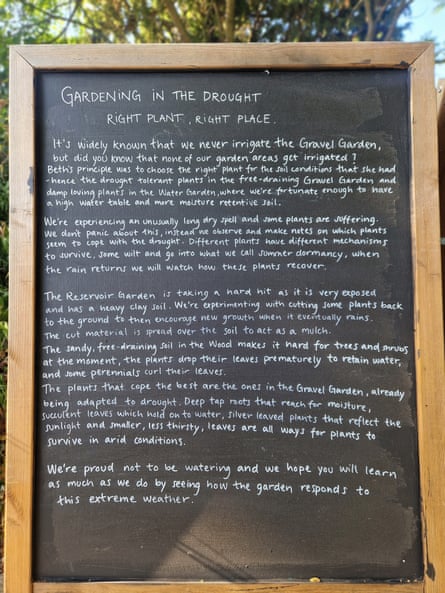
But what lessons are being learned that can help gardeners respond as the UK suffers worsening climate crisis-driven heatwaves each summer?
First, says the head gardener at Beth Chatto Gardens, Malin Andersson, observe what is going on. Stunted growth, lack of flowering, leaf drop and leaf curls do not necessarily mean a plant is dead. It might be using mechanisms to cope with the stress not just of the direct sun, but the unrelenting heat that increases transpiration from leaves and evaporation of watered soil.
“That stunted growth and the premature leaf drop on trees and shrubs or leaves curling up or just shrivelling is a sign of stress. They do it to protect themselves. They drop the leaves because they can’t supply them with water and then hopefully, when we eventually get water, they’ll recover,” she says.
Chatto pioneered the “right plant, right place” motto of all good gardening, and the tried and tested drought performers are here in abundance: euphorbia, Gaura lindheimeri (now renamed Oenothera lindheimeri), lavender, origanum and even roses, whose deep roots can reach lower water tables.

But switching to Mediterranean plants may not future-proof British gardens in climate breakdown. “We don’t know whether this is the new normal or not. It’s so unpredictable because we just had a really wet winter, so if everyone goes for the Mediterranean free-draining plants, or the ones that want free-draining conditions, then if you get a really wet winter, they might rot off,” she says.
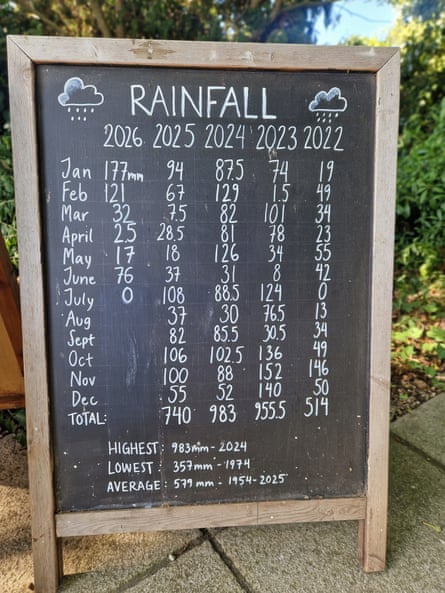
The last time the gardens endured zero rainfall in July was in 2022, but a blackboard charting rainfall at the entrance to the gardens underlines her point: this January the garden had 177mm of rain, compared with 19mm in 2022.
At Beth Chatto, the gardeners cut back the damaged areas on some plants after observing what worked, and kept others with their roots in shade. “We know that almost every year, we can give things a hard cut in the middle of summer and then expect it to maybe come back again or even flower again later in the summer,” Andersson says.
But this year, she says plants “haven’t really come back”. They won’t discard plants, however, because they are hoping the roots will survive into next year.
While many plants, including hydrangea, are not flowering in shade this year as they would normally, others are still going – albeit stunted in size.
So which plants have weathered this record drought at Beth Chatto?
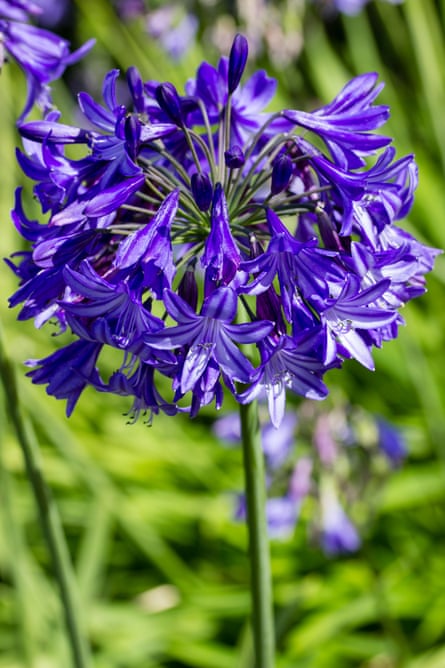
Lily of the Nile (agapanthus)
Flowers may be smaller but this South African adores the sun – six to eight hours a day, ideally – and their fleshy leaves and rhizome roots help retain moisture.
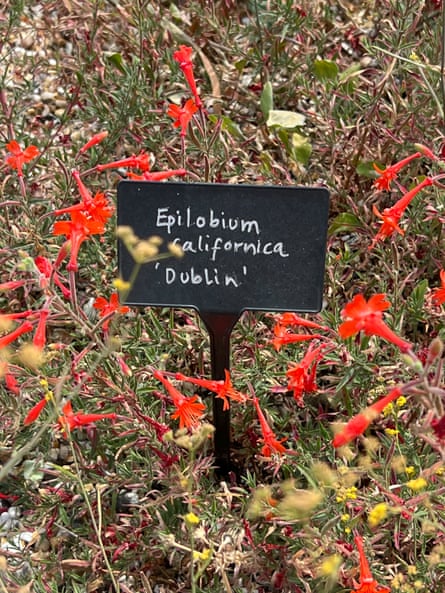
California fuchsia (Epilobium canum ‘Dublin’)
The tangerine trumpet-shaped flowers of California fuchsia are star performers at Beth Chatto, popping out from the browny foliage of plants less able to cope with the sun and heat.
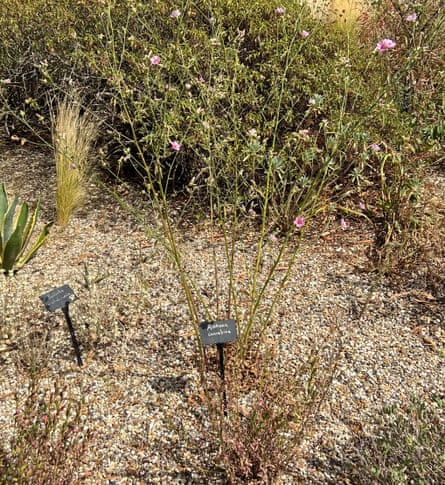
Palm-leaf marsh mallow (Althaea cannabina)
A tall upright plant related to hollyhock with simple pink flowers that last right through even the hottest summers.
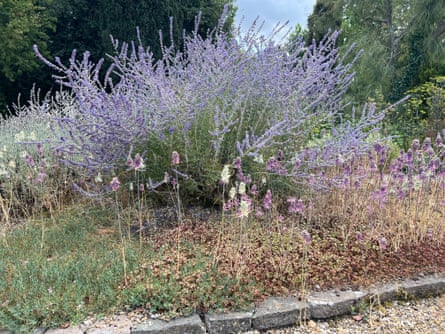
Russian sage (perovskia, renamed Salvia yangii)
One of the wonders of the heatwave, still producing its lavender-coloured spikes in municipal gardens throughout the country.
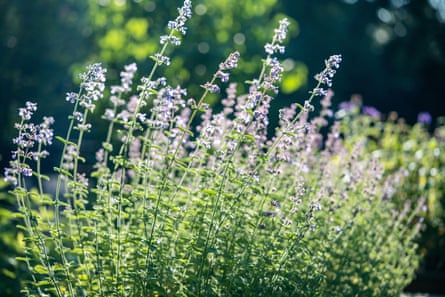
Catmint (nepeta)
This, too, is thriving at Beth Chatto. But cats also love to sit in it and nibble at it, so it might be an idea to plant one or two extra as sacrificial plants.
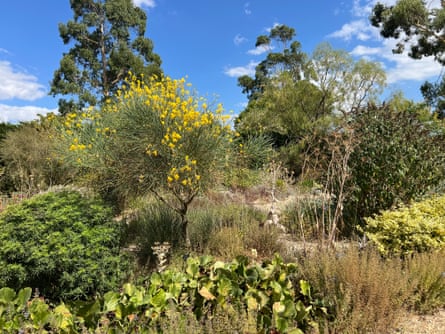
Spanish broom (Spartium junceum)
A tall shrub with dark stems and sheaths of yellow fragrant flowers reminiscent of gorse, it is native to the Mediterranean and is unsurprisingly towering majestically among its weaker brethren.
Grasses have become more prevalent in gardening in the last 10 years, partly down to the new perennial movement pioneered by the Dutch designers Piet Oudolf and Henk Gerritsen.
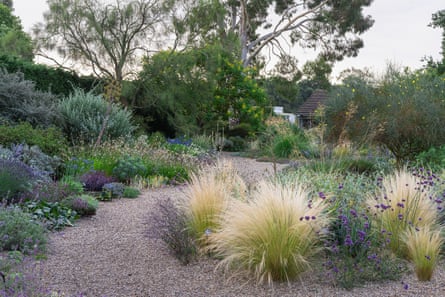
Mexican feather grass (Stipa tenuissima)
A short tufty sheaf of grass, greenish at the bottom and fading to golden, they encircle some of the borders.
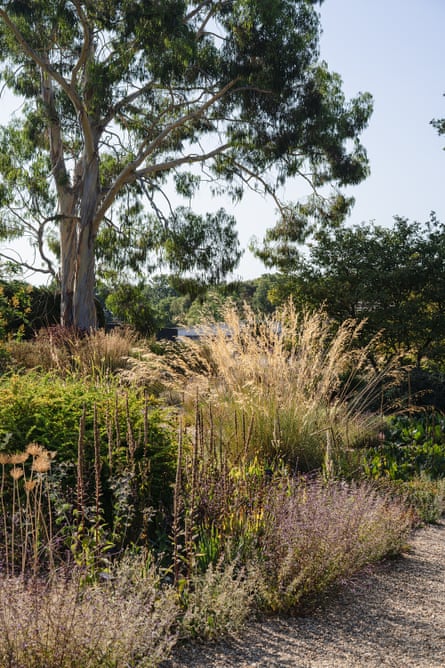
Giant feather grass (Stipa gigantea)
Its tall upright arches dancing in the breeze are also earning their keep towering over swathes of what look like scorched beds.
Calamagrostis grasses are also working hard, with the tall tufts offering movement with just as much interest as colour in a dry garden.
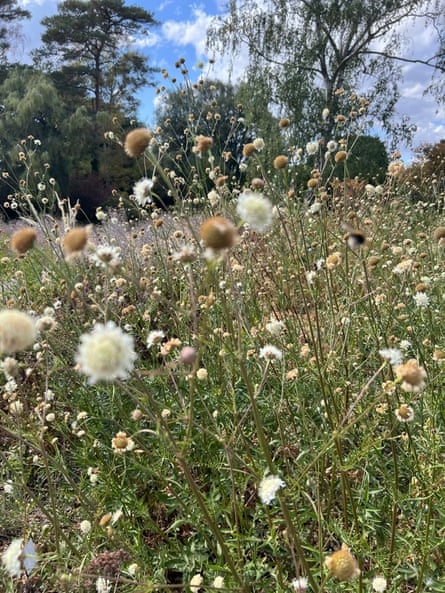
Giant scabious (Cephalaria gigantea)
Also paying their bills are these tall yellow upright flowers, cousins of the more common blue scabiosa found in the wild as well as in horticulture.
And the ones struggling?
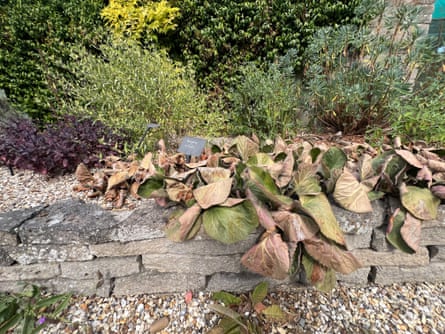
Drifts of elephant ears (bergenia) in the parts of the gravel garden most exposed to the harsh sun are struggling, browned or dying.
“I’ve never seen them do this before. They are usually good in drought because their waxy leaves tend to hold on to water. They are looking quite sad, but that’s not one we would cut, as we think that might come back,” says Andersson.
Watering

With hosepipe bans across much of the England, watering also becomes a challenge, with experts urging people to use grey water – water from showers, baths and dishwashing.
Some recommend bringing a plastic bowl to the shower to catch the water before it warms up.
The Royal Horticultural Society (RHS) says soil and potting composts are effective at filtering out the soap and detergent, but warns that to minimise bacterial growth you should only save grey water for 24 hours.
Nicholas Cryer, the senior water scientist at the RHS, said: “With prolonged drought becoming an ever more frequent feature of British summers, we must learn to manage water more efficiently. The estimated 60 litres of grey water produced per person within the home each day can be recycled in our gardens, reducing demand on mains water.
“Plants can be safely watered with shower, bath, kitchen and washing-machine water. While gardeners should avoid using water containing bleach, disinfectants, dishwasher salt or harsh cleaners, soil and potting composts are effective at filtering out small amounts of soap and detergent, and RHS research indicates that when used over short periods, these residues do not significantly affect the function of many common garden plants.”
Cryer added: “Grey water should not be used on edible salad crops, but it is a suitable choice for ornamental plants.”





















 English (US) ·
  French (CA) ·