

 4 months ago
225
4 months ago
225
PROTECT YOUR DNA WITH QUANTUM TECHNOLOGY
Orgo-Life the new way to the future Advertising by Adpathway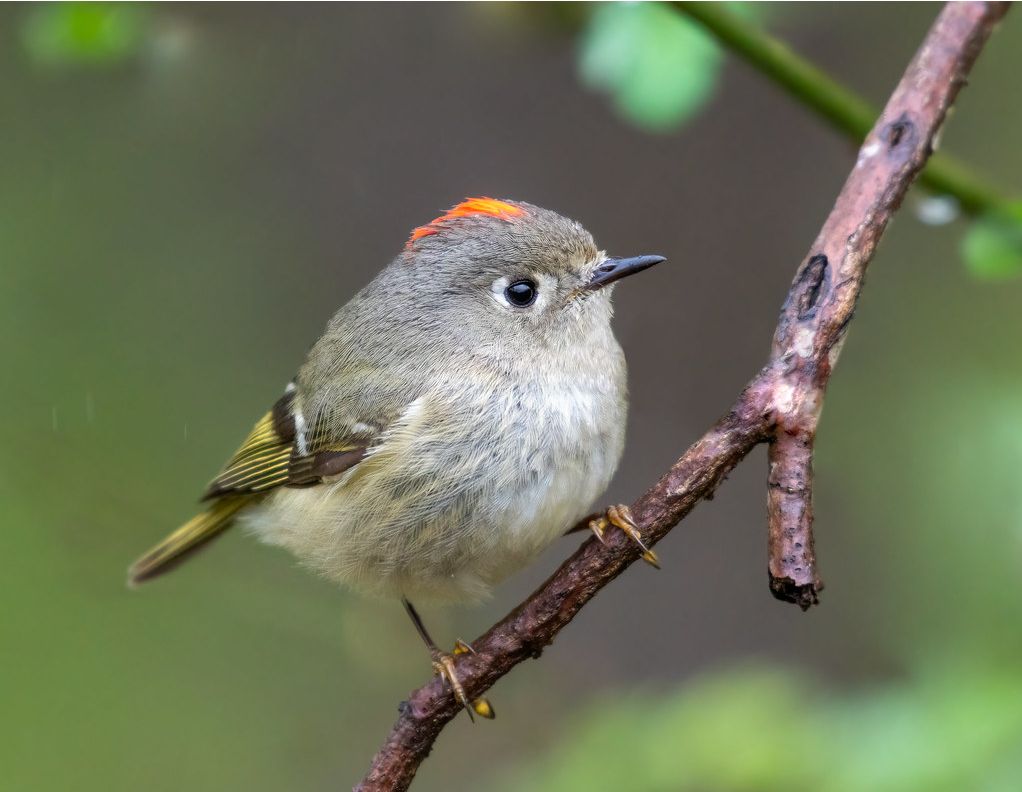 Ruby-crowned kinglet showing his ruby crown, April 2022 (photo by Christopher T)
16 April 2026
Who’s singing now? In mid April we hear the usual suspects — American robin, northern cardinal, house finch, song sparrow — but there are new additions to the soundscape.
Ruby-crowned kinglets (Corthylio calendula) are passing through for a couple of weeks on their way to their breeding grounds in Canada.
They’re almost hyper-active as they flit and flutter to glean insects, making “jit” contact calls and pausing to belt out their rolling song. Sometimes they sing when challenging another kinglet, in which case they both raise their ruby crowns (photo at top).
Did you know that ruby-crowns are not closely related to other the kinglets? In 2021 they were moved to a genus of their own.
Chipping sparrows (Spizella passerina) are back in town and singing their dry, rapid trill from prominent perches in the trees.
 Chipping sparrow, Ontario in spring (photo from Wikimedia)
When you hear the song, look for a sparrow with a rusty cap, eyeline and clear breast. He’s smaller than a song sparrow.
Eastern towhees (Pipilo erythrophthalmus) leave southwestern Pennsylvania for the winter so it’s a sure sign of spring when we hear “che-wink” and “Drink Your Teaeeeeee” coming from the thickets.
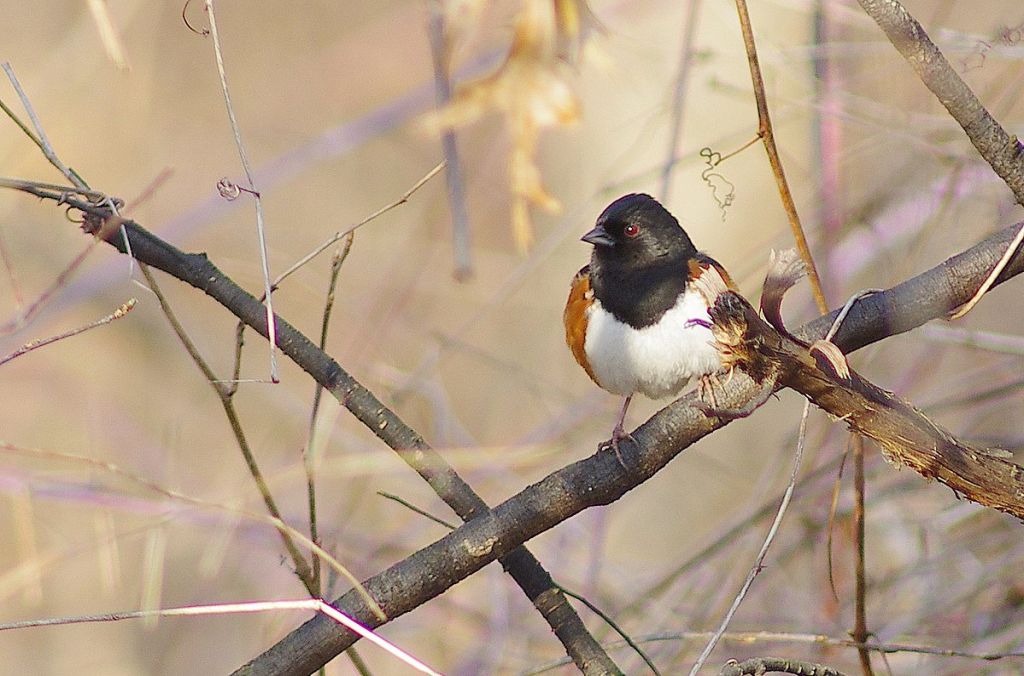 Eastern towhee in April (photo from Wikimedia Commons)
The male towhee perches prominently when he sings. The female tends to skulk.
Their songs may have regional accents. The recording by Aidan Place in 2020, below, is typical of the rapid condensed song we hear at Frick Park. It’s different from the one in Ontario above.
Some northern flickers (Colaptes auratus) are here year round but they’re not noticeable until spring when they hammer loudly and call like a “Jungle Bird.”
 Closeup of northern flicker, 2009 (photo by Cris Hamilton)
Loud is Good. Metal is the best.
video embedded from PacificNorthwestKateCA on YouTube
p.s. The flicker in the video looks different from ours because he’s the red-shafted subspecies found in western North America. (This one is in Vancouver, BC, Canada.) The top of the bird is similar to our yellow-shafted flicker except for face and red moustache. However the underside is red where ours are yellow. Click here to see.

















 English (US) ·
  French (CA) ·