

Brown edges on a hosta rarely trace back to a single cause. Scorch leaves a different signature than a foliar nematode does, and reading those signatures wrong usually means treating something that was never the problem.
Hostas put up with a lot, which is why they end up in corners nothing else wants. Then a hot spell rolls through and the margins go papery and tan. Hosta leaves turning brown is one of the most common complaints about a plant that otherwise asks little.
Not every brown leaf points to the same trouble. Some of it is nothing but weather. Some are the result of common hosta problems working quietly at the crown or inside the leaf tissue. What matters is where the brown sits, not how much of it there is.
Sun Scorch and Plain Thirst
(Image credit: Kazakov Maksim / Shutterstock)
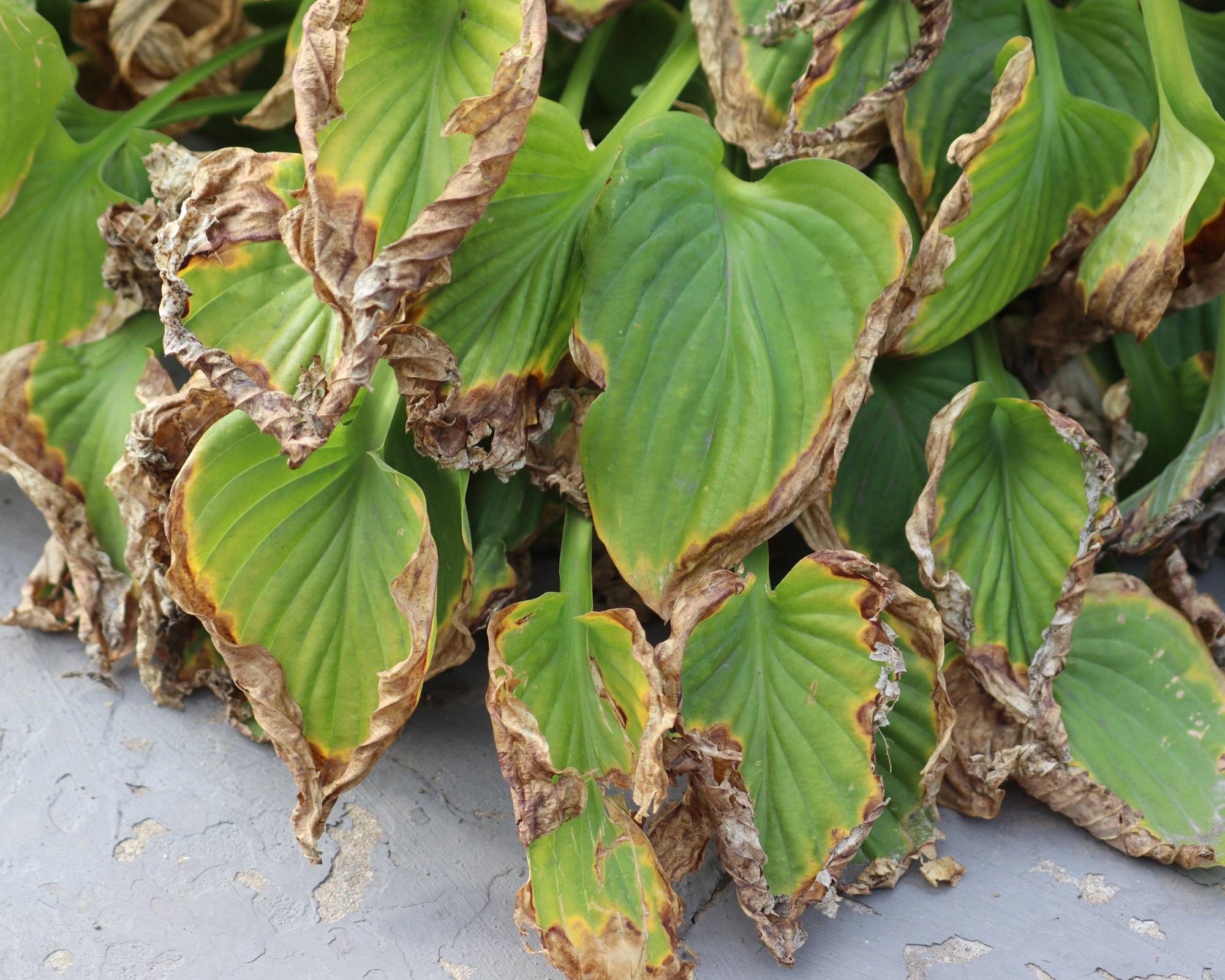
Afternoon sun is the usual suspect. Hosta foliage has a thin cuticle — built for filtered light, not full exposure. Bleached patches show up between the veins on the side facing the sun, then the margin crisps. Roots can't replace water as fast as the leaf loses it. Blue-leaved types have it worst, and that waxy bloom doesn't hold up in heat.
Thirst does something similar but more even, browning right around the rim instead of where light lands. Shaded beds dry out surprisingly fast, sometimes. Under mature trees the surface roots get there first. A hosta takes what's left. Deep watering once or twice a week beats a daily sprinkle, which rarely reaches past the top inch (2.5cm). A soaker hose from Home Depot laid along the bed puts water at the root zone, not on the foliage.
Salt and Fertilizer Burn
Uniform brown edging with no spotting and no banding between the veins usually means salts. Fertilizer applied too heavily is the common source. Dog urine does the same on a smaller scale. De-icing salt off a nearby walk can drift in all winter without anyone noticing. Container-grown hostas show fertilizer burn soonest, because the salts have nowhere to go.
Leaching the soil helps. Run plain water slowly through the root zone. Repeat a few times over a week or two and the salts move past the roots. Containers are easier — water until it runs out the holes, then dump the saucer. Half the labeled rate of a slow-release fertilizer covers what a hosta uses. They aren't heavy feeders.
Foliar Nematodes
Brown streaks running lengthwise between the veins, edges so sharp they look ruled in — that's foliar nematodes (Aphelenchoides fragariae). The roundworms feed inside the leaf. They can't cross a vein, so damage stays in narrow bands that widen as the season goes. Symptoms tend to surface in mid to late summer. A clump that looked fine in June can go ragged by August.
No spray reaches them once they are inside the tissue. Pull affected leaves, bag them, and put them in the trash, not the compost. Nematodes travel in films of water on the leaf surface, one more argument for low irrigation. A badly infested plant is worth digging out entirely, roots and all — the population overwinters in the crown and fallen debris. For a plant worth saving, a hot-water soak of dormant divisions gets them out, though the temperature window is unforgiving.
Anthracnose and Petiole Rot
Large tan spots ringed in dark brown, centers often dropping out to leave ragged holes, suggest anthracnose (Colletotrichum species). Warm, soggy stretches bring it on. The damage is cosmetic in a normal year, though a heavy one can strip a clump before winter. Thinning nearby growth to move air through the bed does about as much as anything sprayed.
Petiole rot is the serious one. Caused by Sclerotium rolfsii, reclassified as Agroathelia rolfsii in 2023, it yellows and browns leaves from the bottom up, with stems collapsing at soil level. Look for a white fuzzy mat at the base and tan pellets about the size of mustard seed. Infected plants come out along with a few inches (8cm) of surrounding soil.
Can Damage Be Reversed?
(Image credit: Yelena Rodriguez Mena / Getty Images)
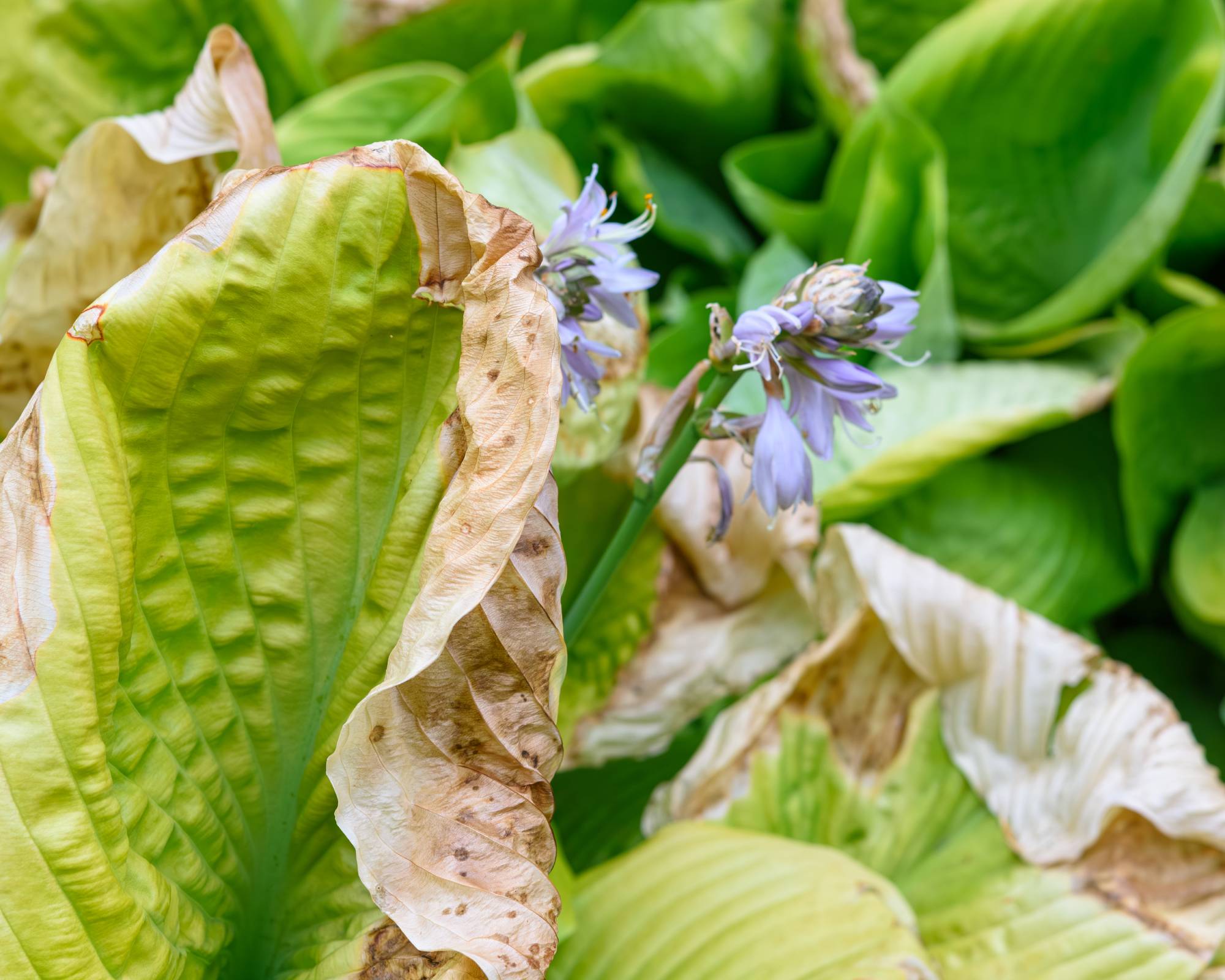
Brown tissue does not turn green again. Once a leaf has scorched, that damage is set for the season, and no amount of watering brings it back. What can change is everything the plant puts out afterward. Trimming the worst leaves at the base with a pair of bypass pruning shears from Amazon tidies things up, provided the blades get cleaned between plants.
Correct the underlying cause and new growth comes in clean — same season for water and salt, next spring if the crown was hit. Late-season browning deserves a second look before anyone panics, too. Hostas go dormant on their own schedule, and yellowing that works through the whole clump is usually just that.
Setting Up a Better Season
(Image credit: Getty Images)
Placement does more than any treatment can. Morning sun with afternoon shade works for most hostas, and anything past midday in a hot climate invites scorch. Early spring or early fall is easy transplanting weather, and these plants re-establish fast. Where moving isn't an option — a bed hemmed in by hardscape — a temporary screen through the worst weeks helps.
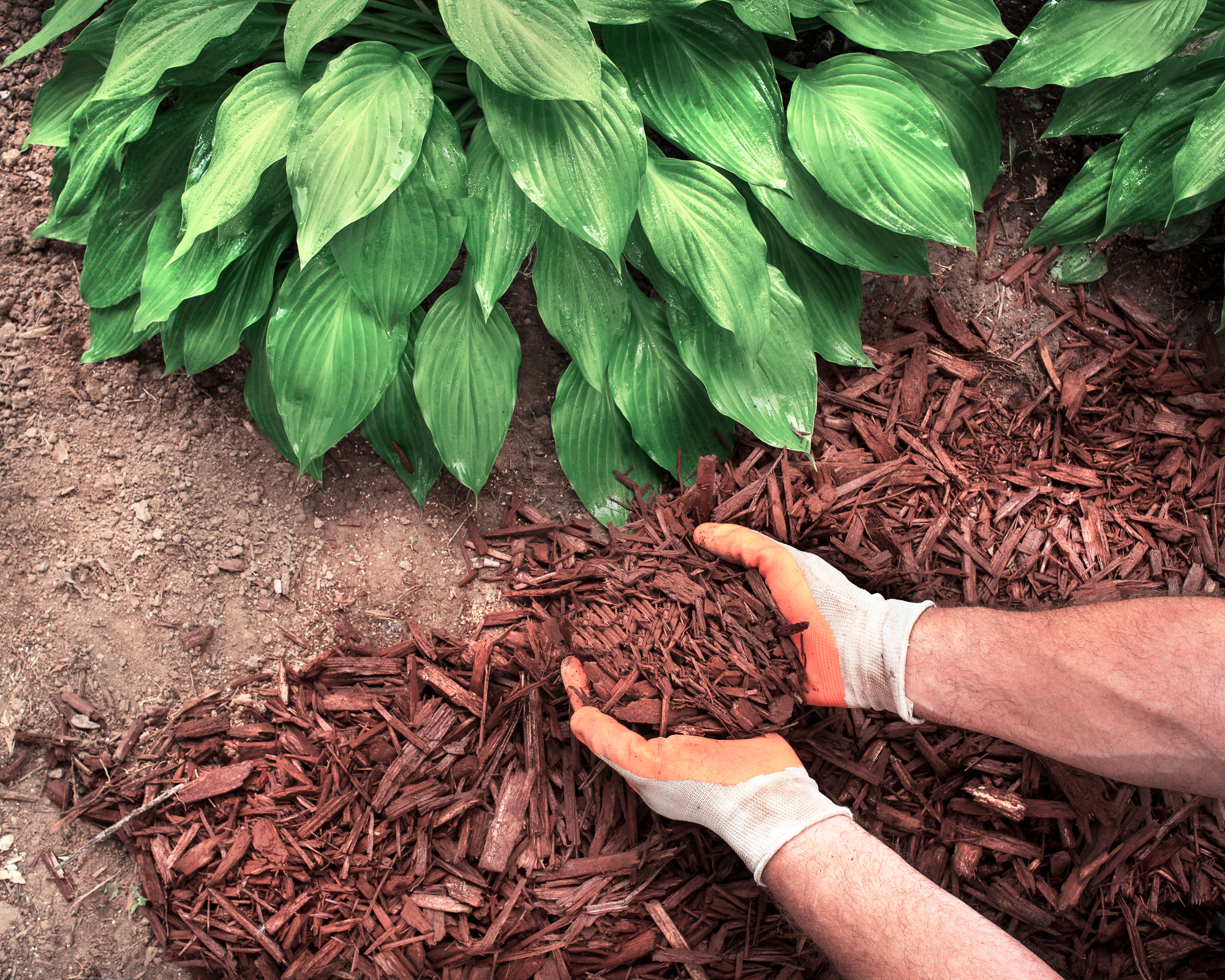
Mulch two to three inches (5-8cm) deep, pulled back a hand's width from the crown, steadies moisture and holds root-zone temperatures down. Clear old foliage out in fall instead of leaving it to sit. A fair amount of what causes trouble next year is overwintering in that debris right now. Slugs (Deroceras reticulatum and relatives) chew holes that brown at the edges, and that gets mistaken for disease.
Make a note the year a hosta browns badly. The fix almost always belongs to the following spring, before shoots are up and while the plant can still be lifted. Nothing useful gets done about it in September.
















 English (US) ·
  French (CA) ·