

PROTECT YOUR DNA WITH QUANTUM TECHNOLOGY
Orgo-Life the new way to the future Advertising by AdpathwayWind Turbine Foundation Market Trends Boosted by Renewable Energy Investments
Environmental impact assessments and sustainability considerations are becoming more critical in foundation design and construction, particularly in sensitive offshore environments.
According to a new report published by Allied Market Research, the Wind Turbine Foundation Market size was valued at $63.0 billion in 2022 and is projected to reach $107.9 billion by 2032, growing at a CAGR of 5.4% from 2023 to 2032. Increasing global investments in renewable energy infrastructure and the growing deployment of wind power projects are key factors driving the growth of the Wind Turbine Foundation Market worldwide.
Importance of Wind Turbine Foundations
Wind turbine foundations are essential structural components that provide stability and support to wind turbines. These foundations anchor the turbine firmly to the ground or seabed, ensuring that the structure remains stable even under strong wind conditions.
The foundation plays a critical role in enabling wind turbines to operate efficiently and safely while converting wind energy into electricity. Since wind turbines often reach significant heights and are exposed to strong environmental forces, robust foundation systems are required to ensure long-term stability.
Various types of foundations are used depending on site conditions, turbine size, wind loads, and soil characteristics. The demand for reliable foundation solutions is therefore contributing significantly to the growth of the Wind Turbine Foundation Market.
Asia-Pacific Leads Regional Growth
Regionally, the Wind Turbine Foundation Market is analyzed across North America, Europe, Asia-Pacific, and LAMEA (Latin America, the Middle East, and Africa). Asia-Pacific accounted for the largest market share in 2022 and is expected to maintain its dominance during the forecast period.
The strong growth of the wind energy sector in the region is a major factor driving market expansion. Countries such as China are investing heavily in renewable energy infrastructure to meet rising electricity demand while reducing carbon emissions.
China is currently the world's largest onshore wind energy market, and several types of foundations—including concrete slab foundations, mat foundations, and pile foundations—are widely used in its wind energy projects.
Engineering and Design Considerations
Designing wind turbine foundations requires careful analysis of site-specific factors. Engineers conduct extensive geotechnical testing to understand soil properties and structural requirements before selecting the appropriate foundation type.
Advanced computer simulations are also used to analyze wind loads, structural stress, and environmental conditions. These simulations help optimize the design and ensure that the foundation can withstand operational forces throughout the turbine's lifetime.
In many cases, specialized equipment is used to install piles deep into the ground to provide strong structural support. For gravity-based structures, additional weight is added using ballast materials such as water or concrete to increase stability.
For offshore installations, foundation components are often fabricated onshore and then transported to the installation site. These processes require careful logistical planning and precise engineering to ensure successful deployment.
Role in Renewable Energy Expansion
Wind turbine foundations play a crucial role in both onshore and offshore wind farms. These structures support turbines that generate clean electricity and contribute to the global transition toward renewable energy.
As countries seek to reduce carbon emissions and achieve climate goals, wind power is becoming an increasingly important energy source. The expansion of wind farms around the world is therefore driving the demand for durable and efficient foundation systems.
The stability provided by well-designed foundations allows wind turbines—including large multi-megawatt turbines—to operate effectively throughout their operational lifespan. This factor is significantly supporting the development of the Wind Turbine Foundation Market.
Challenges in Foundation Installation
Despite the growing demand for wind energy infrastructure, the installation of wind turbine foundations can present several challenges. The fabrication and transportation of large structural components require specialized equipment and skilled labor.
In offshore projects, logistical challenges are even greater due to harsh environmental conditions and deep-water installation requirements. Transporting heavy foundation structures across long distances and installing them accurately can be complex and costly.
However, ongoing technological advancements and improved engineering practices are helping reduce these challenges. As the renewable energy sector continues to expand, these innovations are expected to support the long-term growth of the Wind Turbine Foundation Market.
Monopile Foundations Dominate the Market
Based on foundation type, the monopile segment accounted for the largest share of the Wind Turbine Foundation Market in 2022 and is expected to maintain its leading position during the forecast period.
Monopile foundations are widely used in wind energy projects due to their simple design, cost efficiency, and ease of installation. These foundations consist of large steel piles driven deep into the seabed or ground to support the turbine structure.
Other foundation types used in wind energy projects include gravity-based structures, tripod foundations, jacket foundations, suction bucket foundations, and well foundations. Each design is selected based on project location, water depth, and environmental conditions.
Onshore Segment Leads the Market
In terms of application, the onshore segment dominated the Wind Turbine Foundation Market in 2022. Onshore wind farms are generally easier and less expensive to construct compared to offshore projects, making them a popular choice for renewable energy development.
However, the offshore segment is expected to witness significant growth during the forecast period. Offshore wind farms benefit from stronger and more consistent wind speeds, which allows turbines to generate higher electricity output.
As governments and energy companies continue to invest in offshore wind projects, the demand for specialized offshore foundation systems is expected to increase steadily.
Competitive Landscape
Key companies operating in the Wind Turbine Foundation Market include Dillinger, Ramboll Group, TAG Energy Solutions, Fugro, Suzlon Group, Bladt Industries A/S, and MT Højgaard.
These companies are focusing on collaborations, technological innovation, and strategic partnerships to strengthen their market presence and increase their share in the global industry.
Conclusion
The Wind Turbine Foundation Market is expected to witness steady growth as countries continue to expand their renewable energy capacity and invest in wind power infrastructure. Increasing environmental awareness, supportive government policies, and advancements in engineering technologies are likely to drive market development. As global energy systems shift toward sustainable sources, wind turbine foundations will remain a critical component supporting the growth of the wind energy industry.
Read More: https://www.alliedmarketresearch.com/wind-turbine-foundation-market
Featured Product
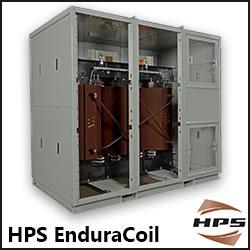
HPS EnduraCoilTM Cast Resin Medium Voltage Transformer
HPS EnduraCoil is a high-performance cast resin transformer designed for many demanding and diverse applications while minimizing both installation and maintenance costs. Coils are formed with mineral-filled epoxy, reinforced with fiberglass and cast to provide complete void-free resin impregnation throughout the entire insulation system. HPS EnduraCoil complies with the new NRCan 2019 and DOE 2016 efficiency regulations and is approved by both UL and CSA standards. It is also seismic qualified per IBC 2012/ASCE 7-10/CBC 2013. Cast resin transformers are self-extinguishing in the unlikely event of fire, environmentally friendly and offer greater resistance to short circuits. HPS also offers wide range of accessories for transformer protection and monitoring requirements.



















 English (US) ·
  French (CA) ·