

PROTECT YOUR DNA WITH QUANTUM TECHNOLOGY
Orgo-Life the new way to the future Advertising by AdpathwayBy Faisal Rehman
Faisal is a backyard bird-feeding enthusiast from Pakistan who writes practical bird-feeding guides at BirdFeedly.
When the winter migrants leave, my backyard does not go quiet. It changes. The long lines of visitors thin out, the mornings get slower, and the birds that were always here step forward again. The House Sparrows, the Laughing Doves, the bulbuls, the mynas. They do not get a farewell post. They just stay, through the cold mornings and the short days, and they still need to eat.
That is why winter feeding matters most for the birds that stay behind. A migrant can move on when food gets scarce in one place. A resident bird has to make it work where it already lives. If we feed well in winter, we are not just giving a treat. We are helping the same birds that kept our gardens lively all year get through the hardest weeks.
The first thing I changed about my own winter feeding was the timing. In summer, birds find food through a long day. In winter, the day is short, the nights are long and cold, and a small bird wakes up hungry. So I try to have seed out early in the morning, and I top it up again in the late afternoon, so birds can feed once more before they settle for the night. I do not put out a huge pile and leave it for days. A small amount, fresh, every day, works better. Old seed goes damp, and damp seed is ignored at best and harmful at worst.
The second thing is water. People think first about seed in winter, and that makes sense, but water is often the harder problem. On a cold morning, a shallow dish can freeze, and a bird that cannot drink cannot digest dry seed well either. I keep a shallow dish out, I check it in the morning, and I break any thin ice and refill it with fresh water. I do not add anything to the water to stop it freezing. Fresh water, checked often, is the simple answer, and it is the one I trust.
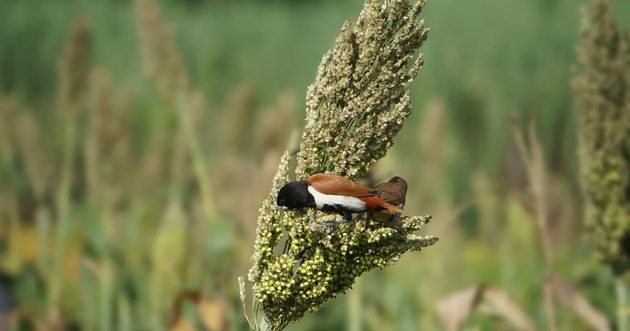
Then comes the food itself, and here I keep it simple. The birds that stay behind in my area are not fussy, but they do have clear favourites, and watching which seed disappears first tells you more than any list. Black oil sunflower seed is the one seed I would keep if I could keep only one. Sparrows, bulbuls and many other visitors take it readily, and it gives good energy for cold days. White proso millet, offered in small amounts on a low platform or on the ground, is the seed the ground feeders come for, especially sparrows and doves. Doves in particular are ground feeders by habit. They are not comfortable clinging to a small hanging feeder, so a low tray or a clean patch of ground suits them far better.
Suet and unsalted peanuts are the winter extras that make a real difference. When insects are scarce, a suet block gives the energy that seed alone does not always provide. I offer peanuts only unsalted, and only in small pieces or in a proper peanut feeder, never whole salted nuts from a snack packet. Salted food is not bird food, and that is a line I do not cross. Plain cooked rice in small amounts can be taken, but I never rely on scraps. Seed, suet, and peanuts, offered clean and fresh, cover what most resident birds need.
Keeping the feeder clean is the part people skip, and in winter it matters even more. Wet seed clumps, mould grows, and disease spreads faster when many birds share one feeder in cold weather. I clean my feeders regularly; I let them dry fully before refilling, and I move spilled seed off the ground so it does not rot under the tray. If a feeder looks damp or the seed smells stale, I empty it and start again. It takes a few minutes, and it is the difference between helping birds and accidentally harming them.
One more habit I learned the slow way is to leave the feeder where it is. Birds learn a route. They learn where food is, where the nearest cover is, and which branch they can sit on while they wait their turn. When we keep moving the feeder around the garden, we break that route, and shy birds take longer to come back. So I choose a spot near trees or shrubs, where birds can dart to cover if a cat or a hawk passes, and then I leave it there all winter. A feeder in the open, with nowhere to hide nearby, looks tidy to us but feels unsafe to a sparrow.
Window strikes deserve a mention here, because winter brings birds closer to our houses, and closer to our glass. I have learned to think about where the feeder sits in relation to windows. A feeder placed very close to a window, or well away from it, is safer than one placed at a middle distance where a bird can build up speed before it hits the glass. Keeping curtains or blinds partly drawn during the day, and keeping the glass from reflecting trees too clearly, also helps. If a bird does hit a window, I leave it quiet and undisturbed in a safe, dark place and let it recover on its own, and I look for help from a local wildlife centre if it does not recover quickly. I do not try to treat an injured bird myself beyond that basic care.
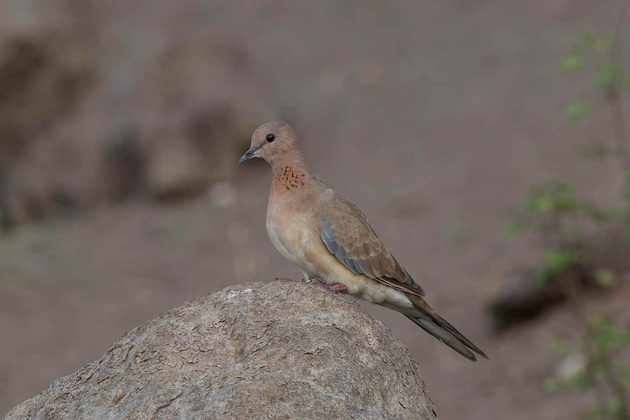
What about the birds themselves, the ones that stay? The House Sparrow is the bird I see first every winter morning, noisy, busy, and always in a small group. The Laughing Dove arrives later, calm and unhurried, walking the ground for millet and small seed. The Red-vented Bulbul comes for fruit and seed, and the Common Myna, bold as ever, checks everything before it eats. None of these birds need anything fancy. They need the same things we would want on a cold morning: food early, water that is not frozen, a safe place to eat, and a feeder that does not move every week.
Winter feeding is not about feeding more and more. It is about feeding steadily. A little every day, clean and dry, at the same place, at the same times, is worth more than a huge amount once a week. The birds that stay behind learn to trust that rhythm, and once they trust it, they come back, morning after morning, even on the coldest days.
So this winter, if you feed birds, feed the ones that stayed. Put seed out early, check the water, keep the feeder clean, and leave it where it is. You will not just see more birds. You will see the same birds, day after day, getting through winter in the garden they already call home. And that, to me, is the quiet reward of winter feeding.
Photo credits (free stock photos, not the author’s own photographs):
- Photo 1: A sparrow (Passer montanus) on the roof of a bird feeder. WordPress Photo Directory, CC0 license, free to use for any purpose without permission or attribution. Source page: https://wordpress.org/photos/photo/94665c581e/
- Photo 2: Laughing dove perched on a rock. WordPress Photo Directory, CC0 license, free to use for any purpose without permission or attribution. Source page: https://wordpress.org/photos/photo/7276814840/
- Photo 3: Two small birds eating millet. WordPress Photo Directory, CC0 license, free to use for any purpose without permission or attribution. Source page: https://wordpress.org/photos/photo/15968d0f71/















 English (US) ·
 French (CA) ·