

PROTECT YOUR DNA WITH QUANTUM TECHNOLOGY
Orgo-Life the new way to the future Advertising by AdpathwayArticle navigation

RESEARCH ARTICLE| 06 July 2026
ChuChu Lu
,
ChuChu Lu
Conceptualization, Data curation, Formal analysis, Investigation, Methodology, Visualization, Writing – original draft, Writing – review & editing
1
Institute of Environmental Sciences
,
Faculty of Biology
,
Jagiellonian University
,
30-387 Kraków
,
Poland
2
Doctoral School of Exact and Natural Sciences, Jagiellonian University
,
30-387 Kraków
,
Poland
Search for other works by this author on:
Diego Gil
,
Diego Gil
Investigation, Writing – review & editing
3
Departamento de Ecología Evolutiva
,
Museo Nacional de Ciencias Naturales (MNCN), CSIC
,
28006 Madrid
,
Spain
Search for other works by this author on:
Maëlle Lefeuvre
,
Maëlle Lefeuvre
Investigation, Writing – review & editing
1
Institute of Environmental Sciences
,
Faculty of Biology
,
Jagiellonian University
,
30-387 Kraków
,
Poland
Search for other works by this author on:
Noémie Ferran,
Noémie Ferran
Investigation
4
L'Institut Agro Rennes-Angers
,
65 Rue de Saint-Brieuc, 35042 Rennes
,
France
Search for other works by this author on:
Zuzanna Nowak
,
Zuzanna Nowak
Investigation
1
Institute of Environmental Sciences
,
Faculty of Biology
,
Jagiellonian University
,
30-387 Kraków
,
Poland
2
Doctoral School of Exact and Natural Sciences, Jagiellonian University
,
30-387 Kraków
,
Poland
Search for other works by this author on:
Joanna Rutkowska
Joanna Rutkowska
Conceptualization, Funding acquisition, Methodology, Supervision, Visualization, Writing – review & editing
1
Institute of Environmental Sciences
,
Faculty of Biology
,
Jagiellonian University
,
30-387 Kraków
,
Poland
Search for other works by this author on:
Competing interests
The authors declare no competing or financial interests.
Received: 14 Sep 2025
Accepted: 26 May 2026
Online ISSN: 1477-9145
Print ISSN: 0022-0949
Funding
Funding Group:
Award Group:
- Funder(s):
National Science Centre, Poland
- Award Id(s):
2018/31/B/N28/02388
- Funder(s):
Funding Group:
Award Group:
- Funder(s):
Jagiellonian University
- Award Id(s):
N18/DBS/000003
- Funder(s):
© 2026. Published by The Company of Biologists
2026
J Exp Biol (2026) 229 (13): jeb251586.
ABSTRACT
Climate variability and unpredictability present animals with challenging physiological and behavioural demands. However, empirical studies on endotherms involving manipulated environmental variability remain limited. This study investigated how temperature variability during development and adulthood, and the effect of mismatch between these stages, impact physiological responses and learning performance. Zebra finches (Taeniopygia castanotis) experienced either stable or variable ambient temperature conditions during early development and as juveniles. We assessed the colour-associative learning performance of juveniles (52–62 days old) and measured their accumulated feather corticosterone (fCORT) levels at approximately 80–95 days of age. Birds exposed to variable temperatures during development had higher fCORT levels and longer latency to choice in the learning test than those in stable conditions. However, we found no effect of temperature treatment or fCORT level on associative learning performance, as birds performed equally well under all temperature conditions. Furthermore, higher fCORT levels were associated with lower participation rates. We then randomly assigned half of each family's offspring to the opposite conditions after independence (95 days old) and evaluated whether developmental fCORT levels affected memory retention and adult learning. The behaviour of adult birds differed from that of juveniles and was affected by the mismatched temperature environment. The birds that moved from stable to variable conditions had shorter latency to choice. Contrary to our prediction, memory retention was uniformly high across treatment groups. Temperature variability did not affect associative learning accuracy or long-term memory, but variability was associated with differences in participation and with elevated fCORT.
Footnotes
Author contributions
Conceptualization: C.L., J.R.; Data curation: C.L.; Formal analysis: C.L.; Funding acquisition: J.R.; Investigation: C.L., D.G., M.L., N.F., Z.N.; Methodology: C.L., J.R.; Supervision: J.R.; Visualization: C.L., J.R.; Writing – original draft: C.L.; Writing – review & editing: C.L., D.G., M.L., J.R.
Funding
The study was financed by the National Science Centre, Poland, within the project 2018/31/B/N28/02388 awarded to J.R. and supported by the Jagiellonian University statutory funds N18/DBS/000003. The analyses of the hormone samples carried out in Spain were funded by the program ‘Excellence Initiative – Research University’ at the Faculty of Biology of the Jagiellonian University in Kraków.
© 2026. Published by The Company of Biologists
2026
You do not currently have access to this content.
Pay-Per-View Access
$30.00
Join the JEB Editors at ICBF 2026
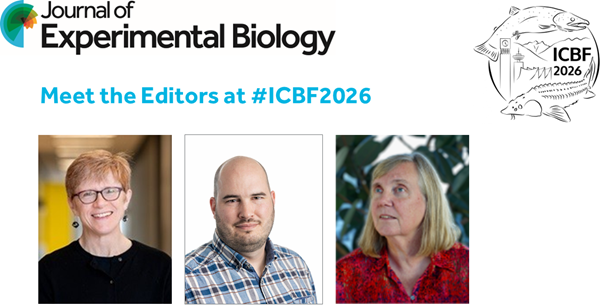
JEB is proud to be sponsoring the 16th International Congress on the Biology of Fish from 12-16 July in Vancouver, Canada. Call by the JEB table at the poster session at 3.30-5.30 pm on Mon 13 July to meet Editors Katie Gilmour, Trish Schulte and Jarren Kay and find out more about the journal, how we support the community and take home some JEB goodies.
Workshop - Integrating Physiology and Behavior in Assessment of Ectotherm Heat Tolerance
If you are an early-career researcher, you can apply now for a funded place at our Workshop taking place 7-10 March 2027. Organised by Michael Ørsted and Johannes Overgaard, this Workshop will unite leading thermal-ecologists, physiologists, and modelers to advance knowledge of thermal stress biology in ectotherms and establish a unified framework for analysing consequences of high-temperature stress.
Field stations in experimental biology research

As part of our Perspective series, Hema Somanathan and colleagues use their Perspective to call for the establishment of a network of well-funded field stations across India, to facilitate important field research across the country’s diverse ecosystems.
Investigating epigenetic inheritance
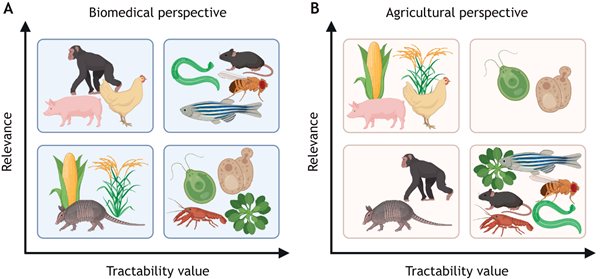
In their Commentary, Steadman, Vela and Burggren highlight the need to move away from traditional model animals in research on epigenetic inheritance, instead focussing on aligning model choice with the specific research question of interest.
Chimps’ wrists move the same as other apes’, despite different walking style
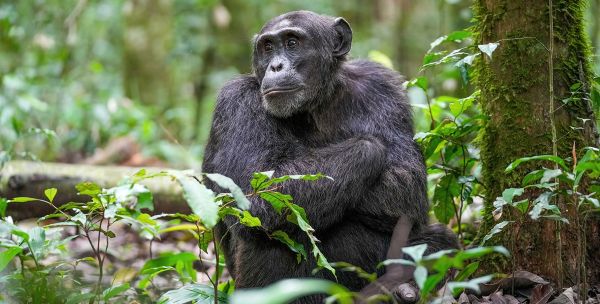
Walking on your knuckles is a weird way to get around, but it's normal for chimps and gorillas. Recently, Nathan Thompson and colleagues showed that although the hand posture is odd, the muscle contractions required are quite similar to a monkey's, which walk on their palms.

















 English (US) ·
  French (CA) ·