

 11 months ago
331
11 months ago
331
PROTECT YOUR DNA WITH QUANTUM TECHNOLOGY
Orgo-Life the new way to the future Advertising by AdpathwaySucculents make excellent houseplants with the right lighting conditions. Their thick, fleshy leaves store water, making them incredibly low-maintenance. They are also able to thrive in the dry (and often irregular) conditions inside most homes.
If you love dark and moody plants with deep, rich foliage, you’re not limited to a handful of high-maintenance tropicals. There are some gorgeous succulent specimens that would make excellent additions to your collection. They are easy to care for, and many are long-lived or reproduce readily.
Many succulent plants have an interesting habit of turning purple from cold or light exposure. For those that are already dark, this often means achieving nearly black foliage! Let’s take a look at some spectacularly dark and moody succulents for your indoor planters.
Self-Watering Planter

Marly’s Self-Watering Planter
Promo Watering Can
Aeonium ‘Zwartkop’
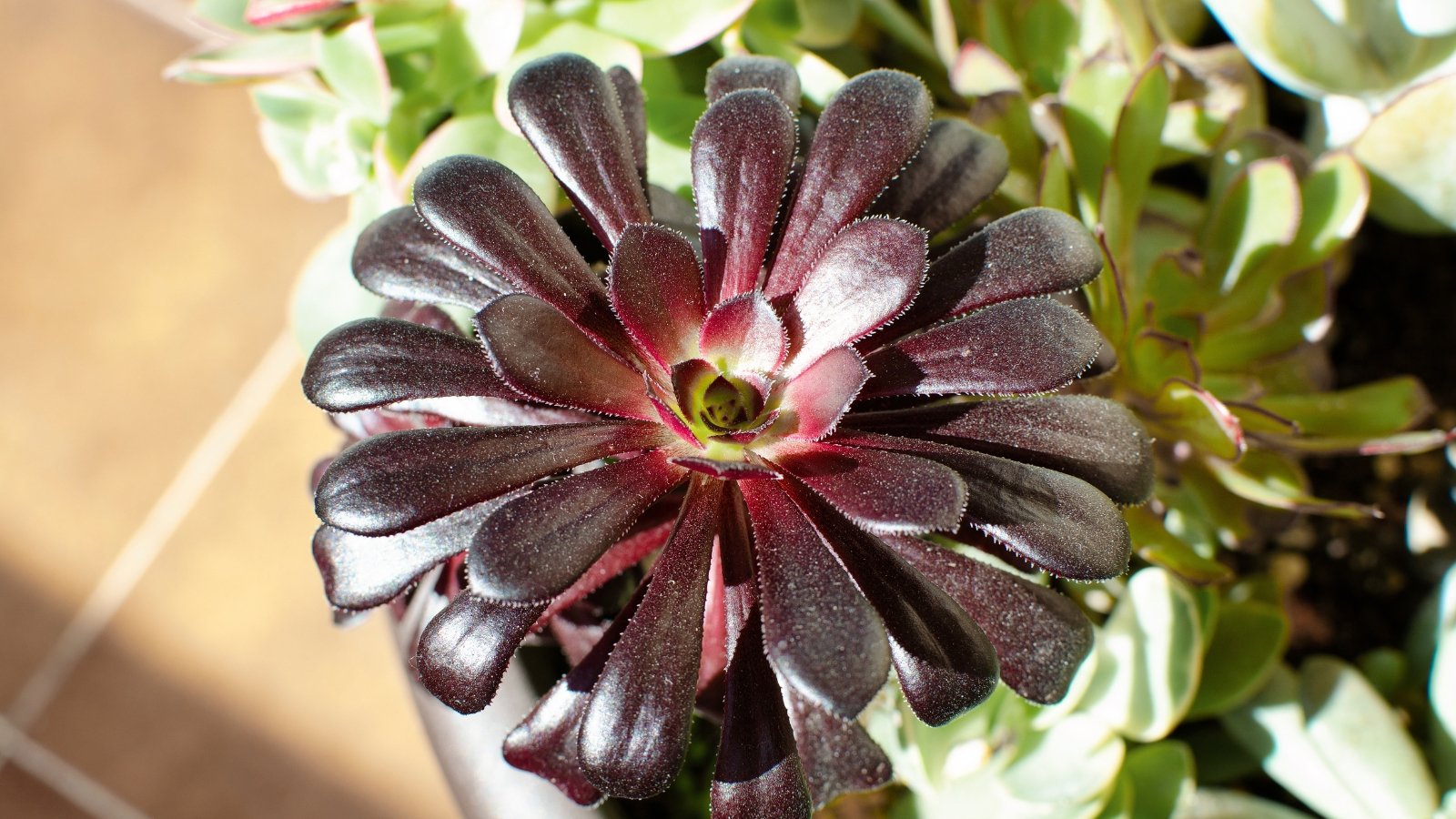 Deep purple rosettes become darker with more sun.
‘Zwartkop’ Aeonium is one of the most popular dark and moody succulent plants. It’s best known for its dark, dramatic rosettes and attractive form. The balanced rosettes have leaves so dark purple, they’re almost black. When young, they are bright green, which creates a green eye in the center.
The more sun you give it, the darker ‘Zwartkop’ will be. In lower light, they will be closer to burgundy. The rosettes form on branching stems, giving this succulent a sculptural form. In late winter, it produces bright, yellow flowers, creating a cheerful contrast.
Sempervivum ‘Black’
 Cold winters don’t stop its evergreen resilience.
Sempervivum ‘Black’ is an excellent succulent for dark and moody indoor planters. It’s great outdoors as well. Sempervivum is highly cold-tolerant and survives winters outdoors in zone 3 as an evergreen. Its pointed, fleshy leaves are green toward the center with deep purple tips.
This is a smaller, low-growing plant that prefers a lot of light to reach the deepest purple shades. In partial shade, the color softens to a reddish-green. They flower in summer, producing tall stalks of pink flowers. The rosette then dies, but leaves behind offsets to take its place.
Purple Wood Spurge
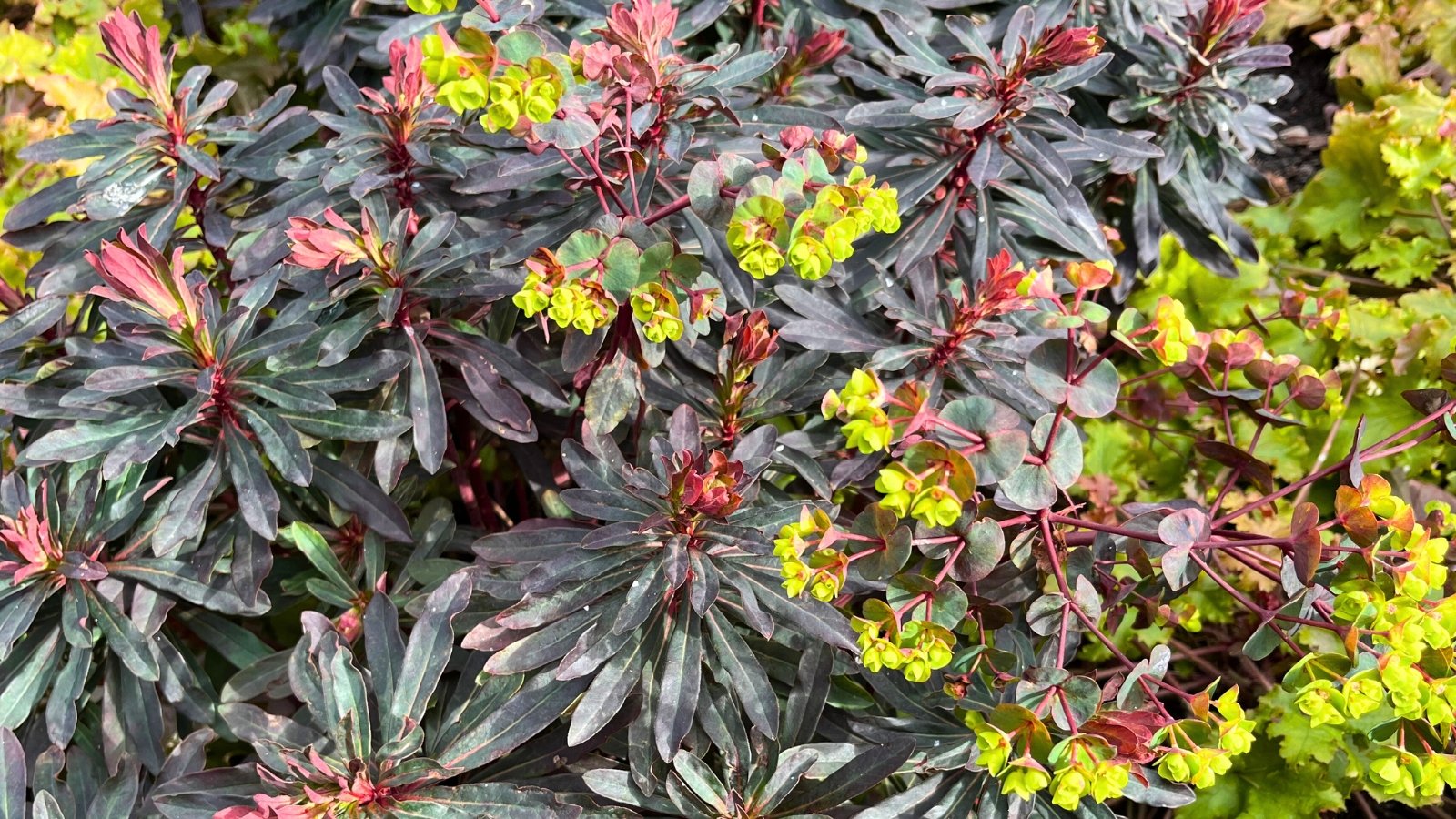 Light levels shift foliage from bronze to deep purple.
Purple wood spurge is an attractive, shade-tolerant, perennial succulent that’s ideal for your dark and moody collection. It has deep purple foliage, and in spring, it produces bright green flowers. It’s a long-lived perennial that prefers at least partial shade, making it an excellent houseplant.
The more light it gets, the deeper the color, as with most succulent plants. In low light, it will look more greenish-bronze. It doesn’t mind high humidity and is frost-resistant, as well. It’s a gentle spreader with milky sap that can be irritating to the skin and eyes. Wear gloves when you handle this one.
Aeonium ‘Medusa’
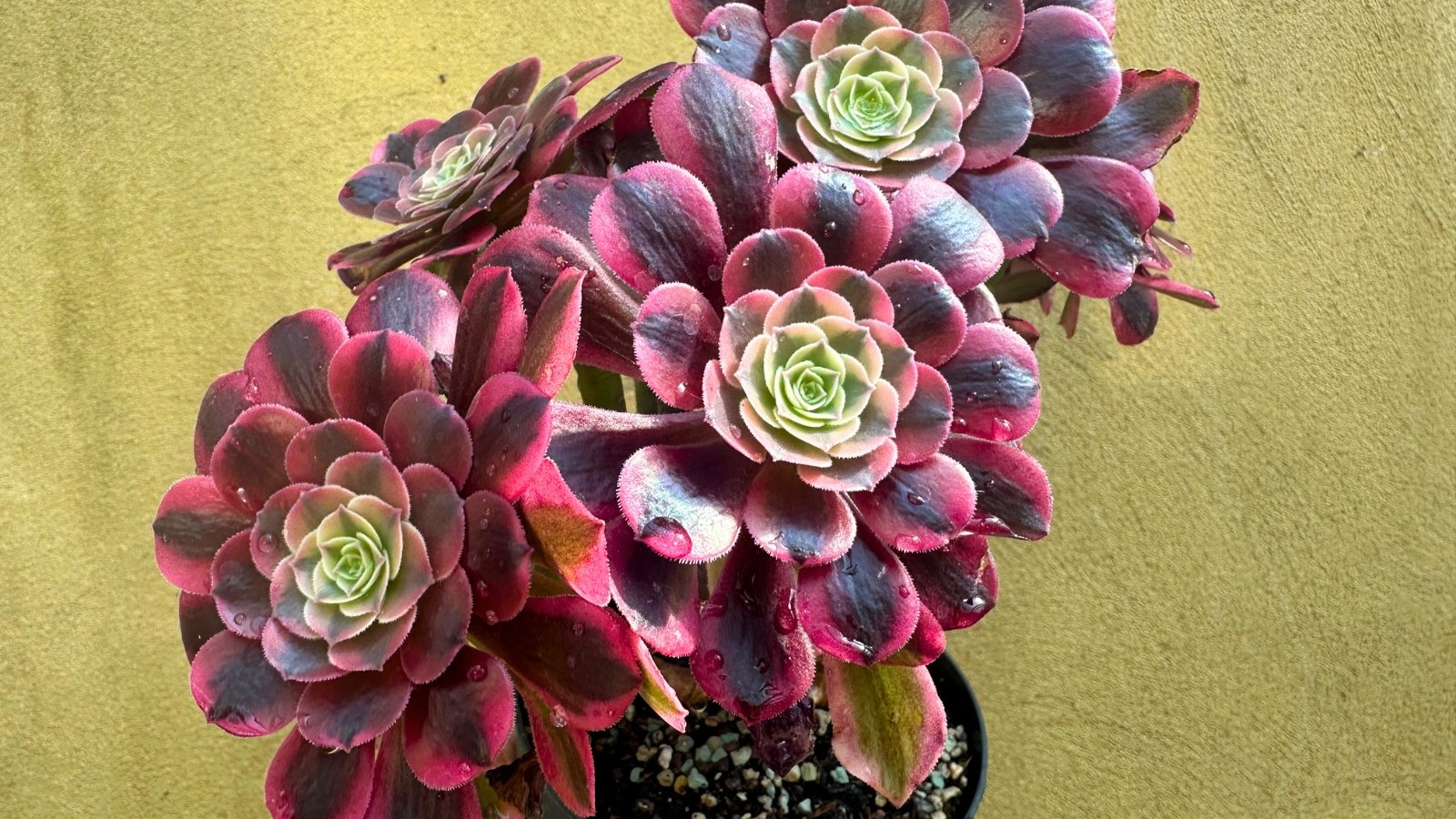 Indoor shelter is needed before autumn nights turn cold.
‘Medusa’ is a bold, variegated hybrid succulent that’s wonderfully dark and moody. The loose rosettes have fleshy, rounded leaves in shades of red, burgundy, and purple. Depending on light and temperature, they will be darker under more stress and lighter with less. The new leaves are chartreuse but quickly darken.
Aeoniums like partial shade or bright, indirect light. More light will deepen the color, and less will bring out more red tones. You can propagate by offsets or leaf cuttings. This one is not cold-tolerant at all, so make sure it’s indoors early enough in the fall to avoid temperatures below 45°F (7°C).
Echeveria ‘Black Knight’
 Pointed leaves darken beautifully under bright morning sunlight exposure.
‘Black Knight’ is a dark, moody, and dramatic succulent for your indoor planters. It’s one of the darkest available and has a unique form, which makes this a desirable cultivar. It grows in rosettes, but rather than being wide and rounded, the fleshy leaves are longer and narrower with pointed ends.
Bright, direct sunlight gives this plant its darkest tones. Full morning exposure is ideal. If it doesn’t get enough light, the leaves will stretch and turn green. In late summer, it sends up tall flower stalks topped with coral colored blossoms. Once a rosette blooms, it dies, but offsets quickly take its place.

Chinese Jade
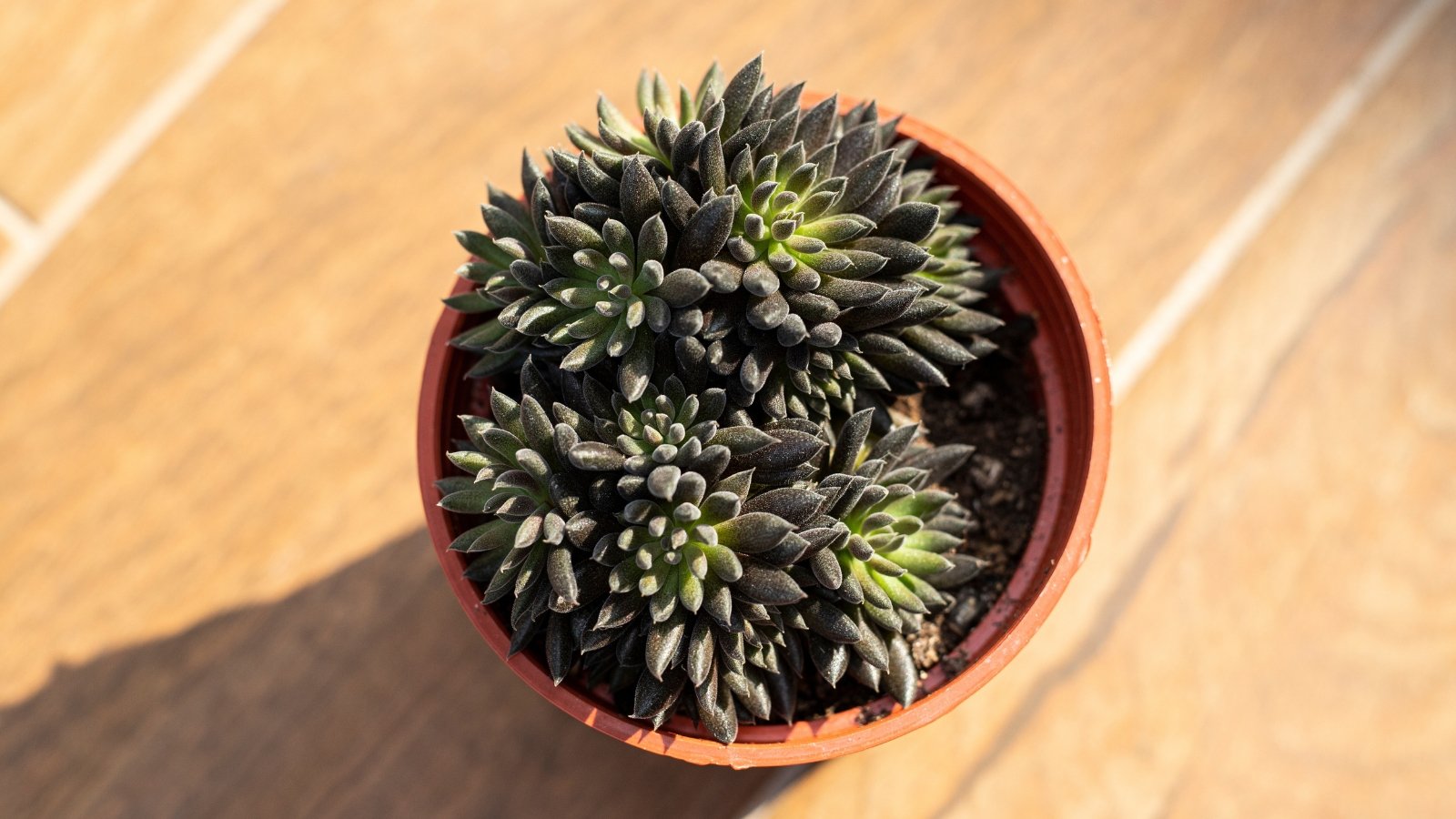 Compact rosettes form a spreading mat in containers.
This lesser-known succulent goes by the names Chinese jade, black jade, or Chinese stonecrop. It’s related to the common jade plant, but this dark and moody succulent has a different appearance and growth habit. It forms compact rosettes of deep green to nearly black, fleshy leaves. In bright light or cool temperatures, it becomes darker, and vice versa.
The rosettes are small, only reaching about three to four inches tall and wide. It’s not as common as most on this list, but it is highly desirable to goth gardeners. Late summer is when this plant flowers, and the pinkish, star-shaped blooms create a striking contrast. These are spreading and mat-forming, so give them a larger container.
Sedum ‘Dragon’s Blood’
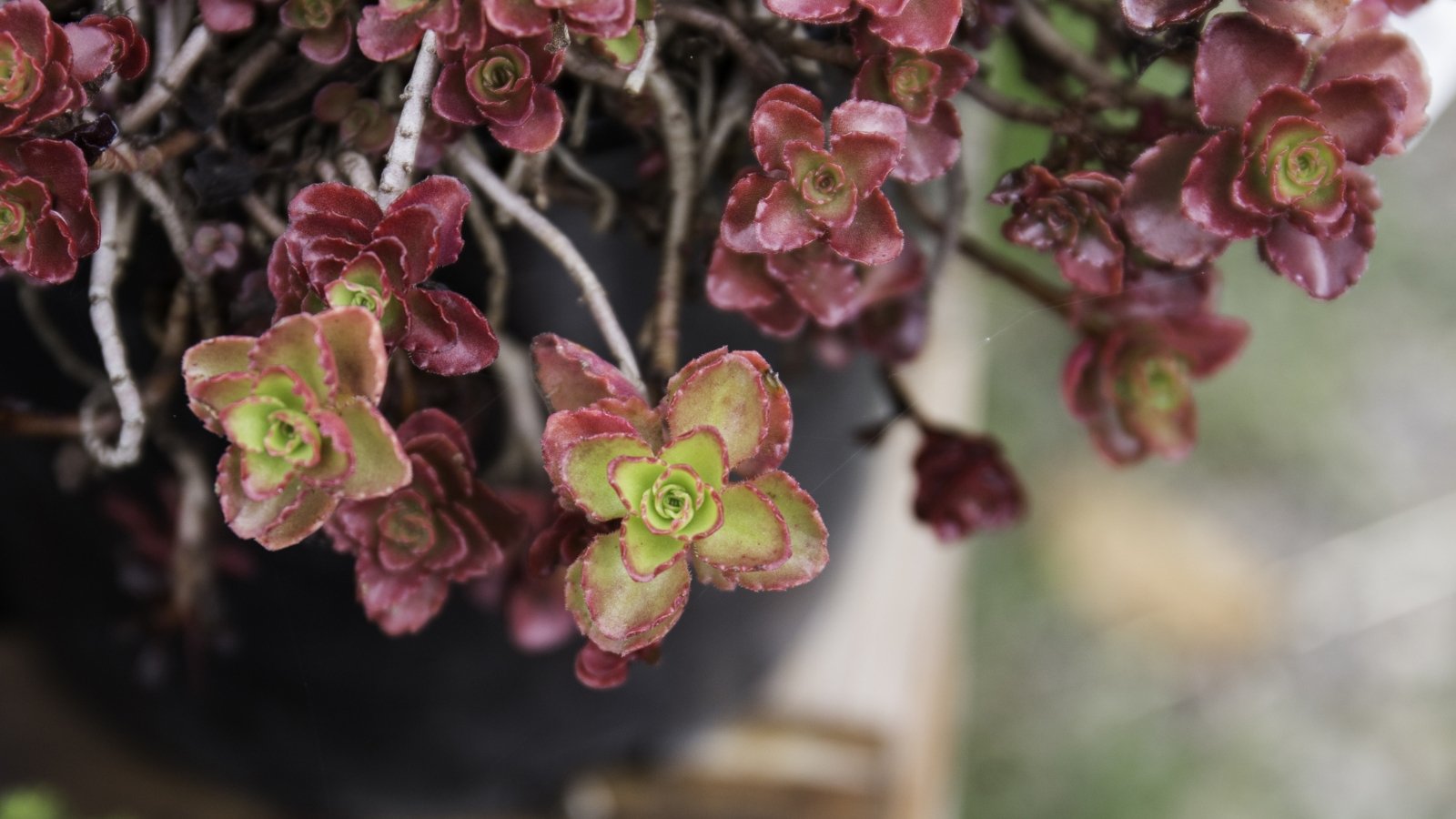 A dense mat of foliage makes a striking display.
Sedums are tough, cold-tolerant, and beautiful succulent plants. They’re great for your dark and moody succulent garden, whether it’s indoors or out. ‘Dragon’s Blood’ is a popular and beautiful cultivar that is native to the Caucasus region. It prefers poor, dry soils and forms a dense mat over time.
The leaves start out green, but as the season wears on, they deepen, first to burgundy or bronze in summer. Then, in the fall, they turn a brilliant crimson or blood-red. In mid to late summer, it produces clusters of tiny, pink, star-shaped flowers. It tolerates some shade, but more light means more color.
Sedum ‘Dark Magic’
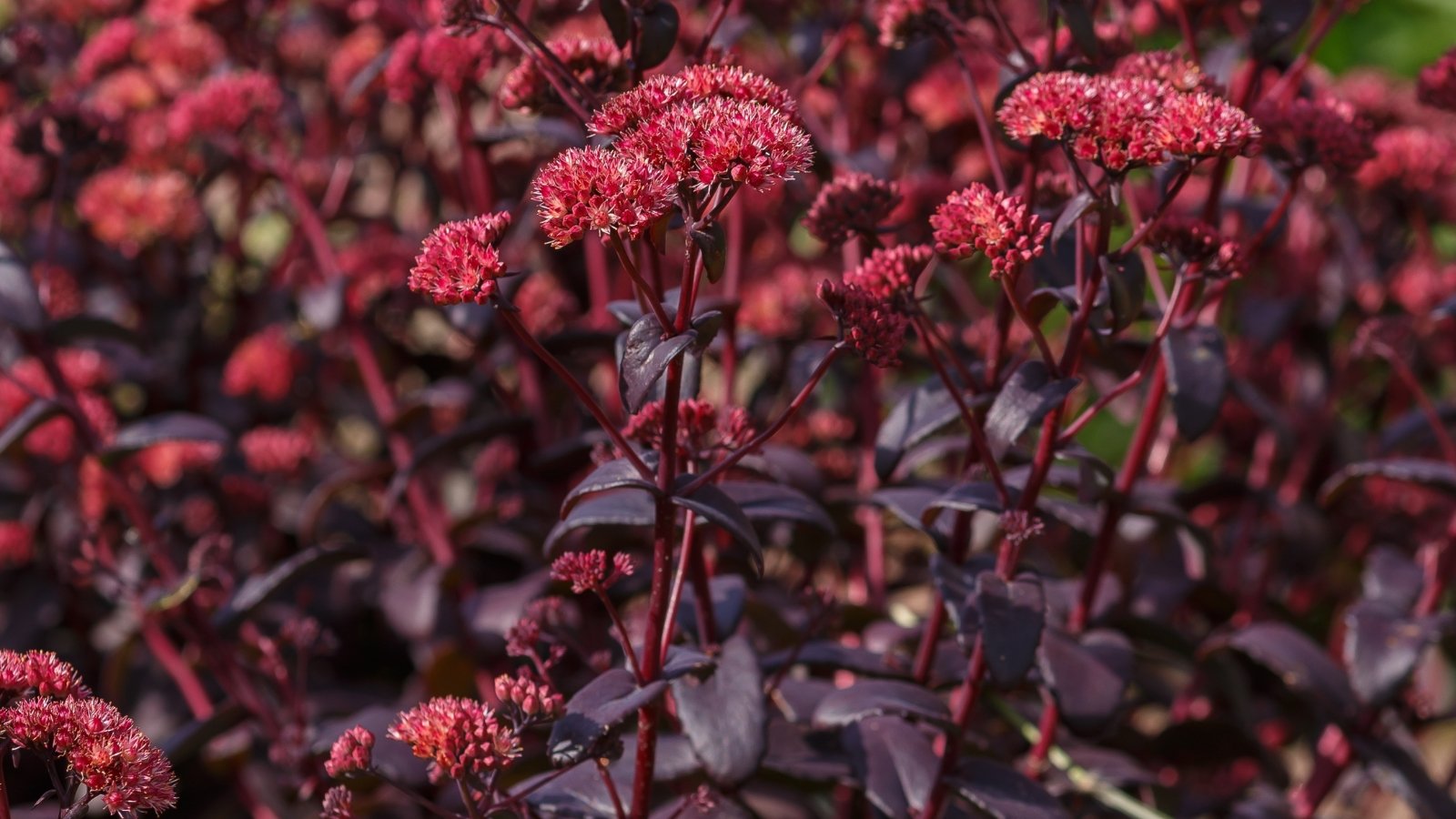 Compact growth fits perfectly in any sunny container.
Sedums are awesome succulent plants, loved for their vigorous growth and flowering habit. ‘Dark Magic’ is an enchanting cultivar with dark and moody foliage. It’s a compact variety, so it’s an excellent container plant. It shows its best colors when exposed to plenty of natural light.
In early fall, ‘Dark Magic’ is even more striking as it produces large clusters of bright pink flowers. It’s dramatic and a great pollinator plant. The flower heads hold their color well, so they dry nicely and are good for dried and naturalistic arrangements.
Sempervivum ‘Chocolate Kiss™’
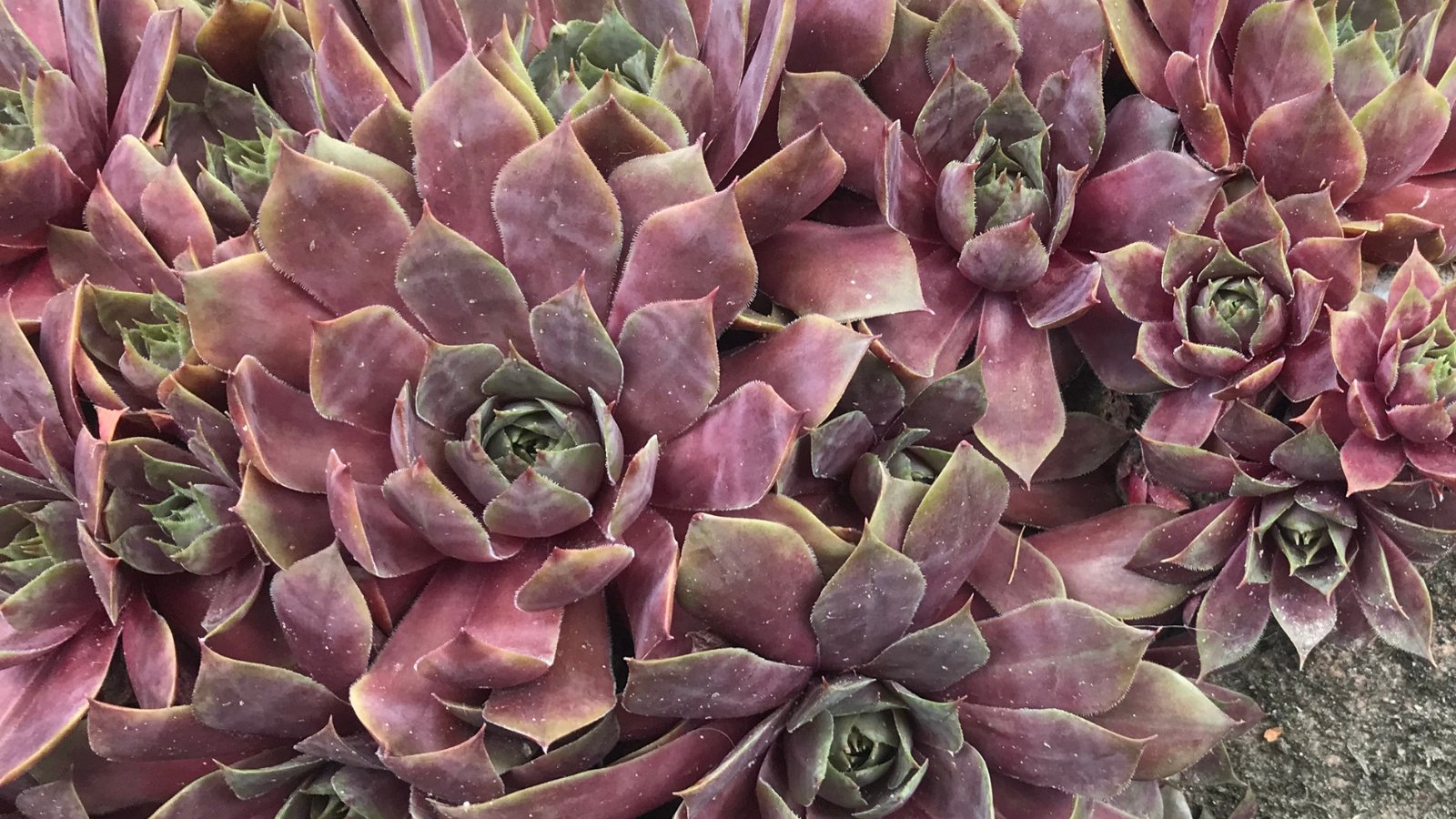 Deep chocolate rosettes form dense, evergreen mats beautifully.
Sempervivums are hardy alpine succulent plants that are both drought-tolerant and fully cold-hardy. Often called hens and chicks, these plants are low-maintenance and form dense mats over time. Like other succulents, they change color with stress from heat or light exposure.
‘Chocolate Kiss™’ is a striking cultivar with dark, rich, moody leaves. The evergreen rosettes are deep chocolate brown with a hint of purple. They are monocarpic, so they produce flowers once and then die. Offsets are typically abundant. The flowers are pink and star-shaped, growing on short stalks.
Echeveria ‘Black Madiba’
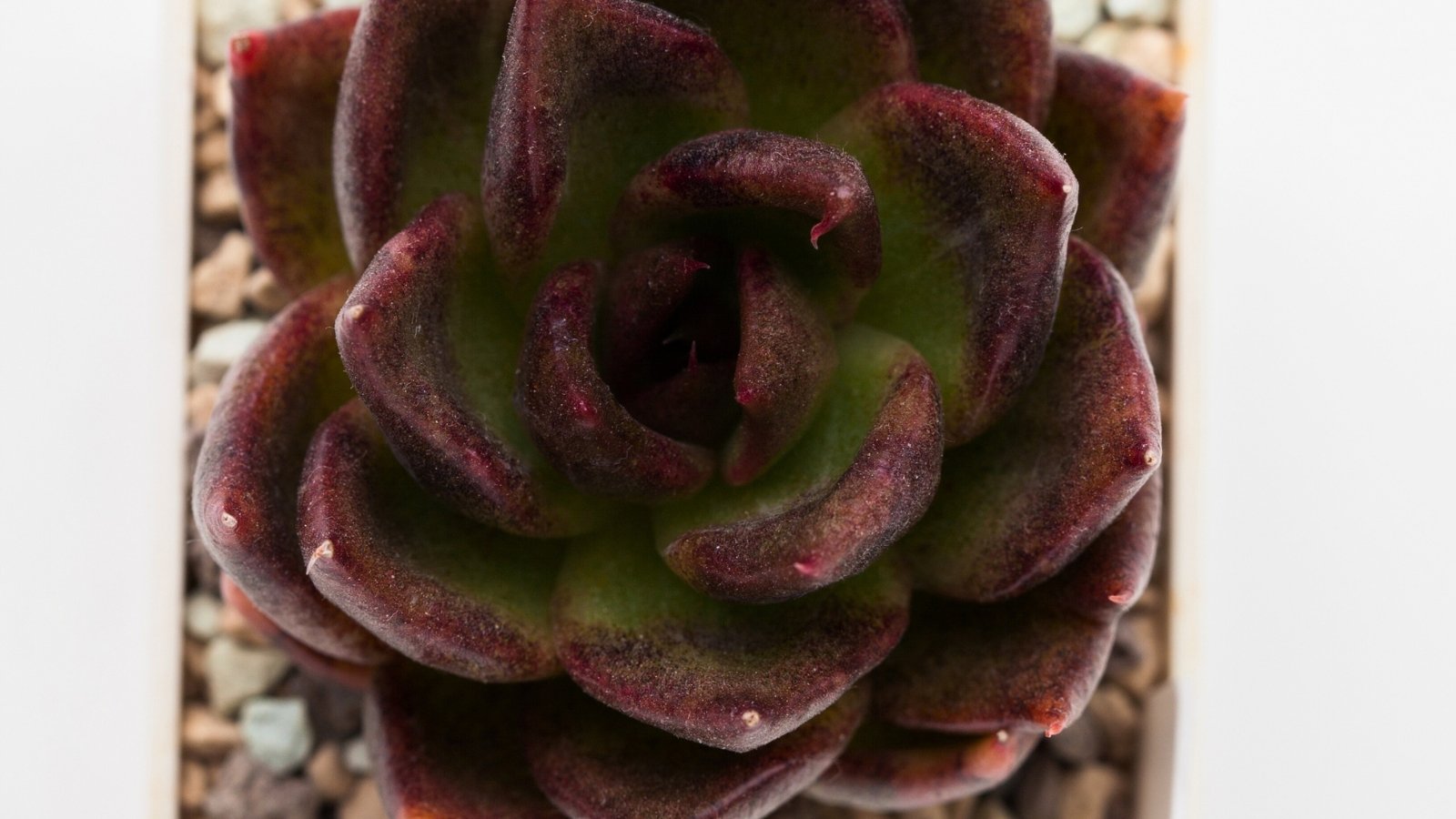 Olive-green leaves gradually deepen into rich burgundy-black.
This fun and funky echeveria has some of the most interesting dark and moody succulent foliage. ‘Black Madiba’ is one of a wide range of cultivars in the genus. Its spoon-shaped leaves start out olive green and mature to deep, burgundy-black. They darken with strong light.
The leaves of this cultivar typically have ruffled edges and a matte finish, which makes it easy to identify. In late spring, it produces tall, arching stems topped with small orange flowers. It’s a great container variety, and low-maintenance, as with other echeverias.
Aeonium ‘Black Swan’
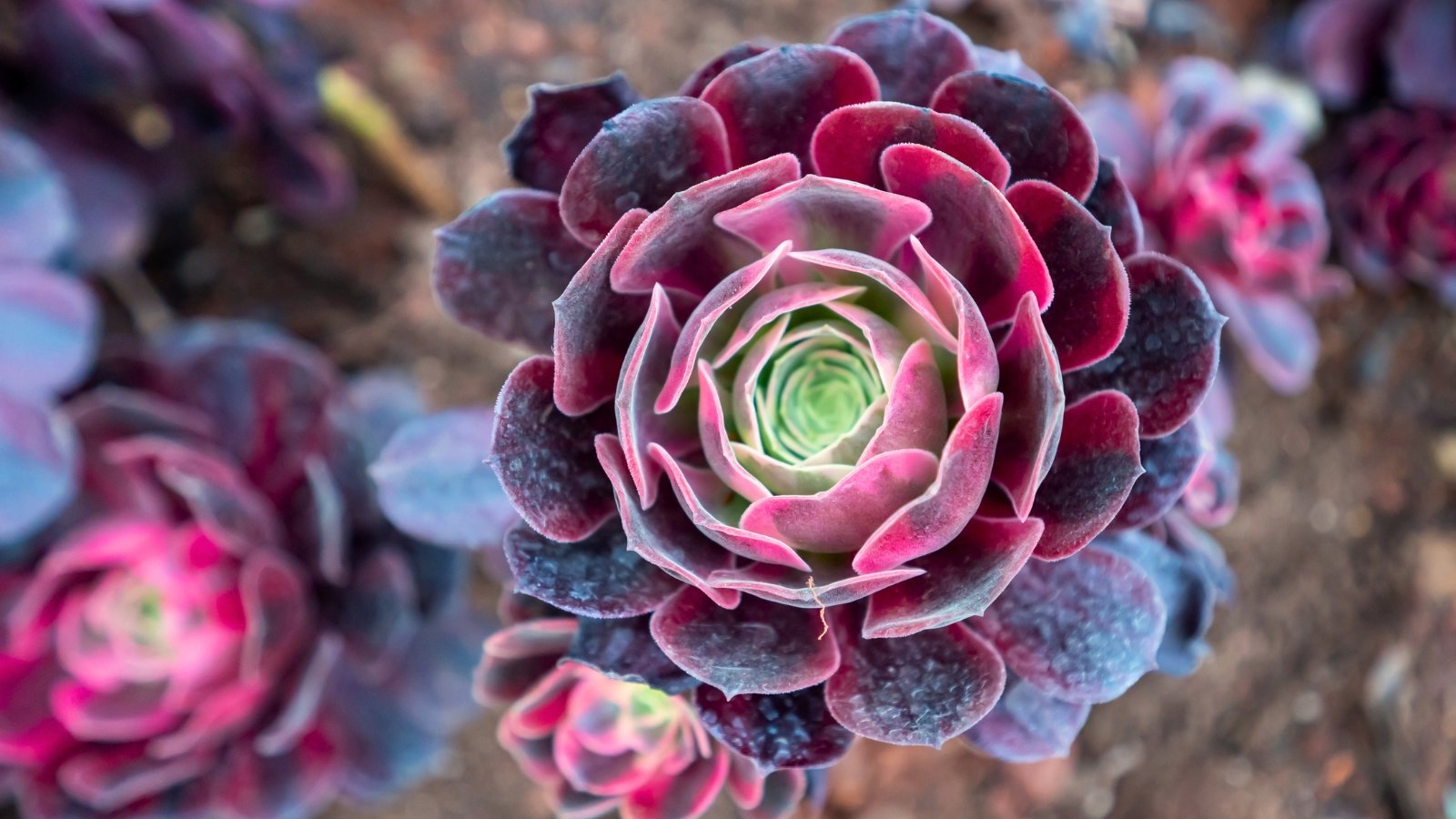 Elegant branches support spectacular rosettes year after year.
Aeoniums always create drama in the dark and moody houseplant collection and otherwise. These warm-climate succulent plants have an elegant branching form, which sets them apart from similar plants. ‘Black Swan’ has large, spectacular rosettes that form at the end of branches. Over time, it takes on the appearance of a small tree.
In bright indirect light, the foliage is lighter and shows a lot of striped variegation. In more direct sunlight, the colors deepen and the variegation is less noticeable. This is a winter or spring bloomer. Tall flower spikes bear yellow, star-shaped flowers, and as is common, the rosette dies after it blooms.
ZZ Plant ‘Raven’
 Glossy purple foliage almost appears black in shadows.
ZZ plants are excellent succulent houseplants that are low-maintenance and nearly indestructible. These are great beginner plants, and if you’re starting a dark and moody collection, ‘Raven’ is a perfect place to start. ‘Raven’ is a modern cultivar of this succulent plant with a stunning color-shifting habit.
The new foliage is bright green, but it gradually darkens to a deep, glossy purple. It looks nearly black, especially in lower-light situations. ZZ plants are great for limited light spaces. They are happiest in bright, indirect light, but will tolerate medium light. The appearance of this one is deceptive; it doesn’t look like the other succulents on this list, but it is one. As a result, it’s easy to overwater.
Sansevieria ‘Black Dragon’
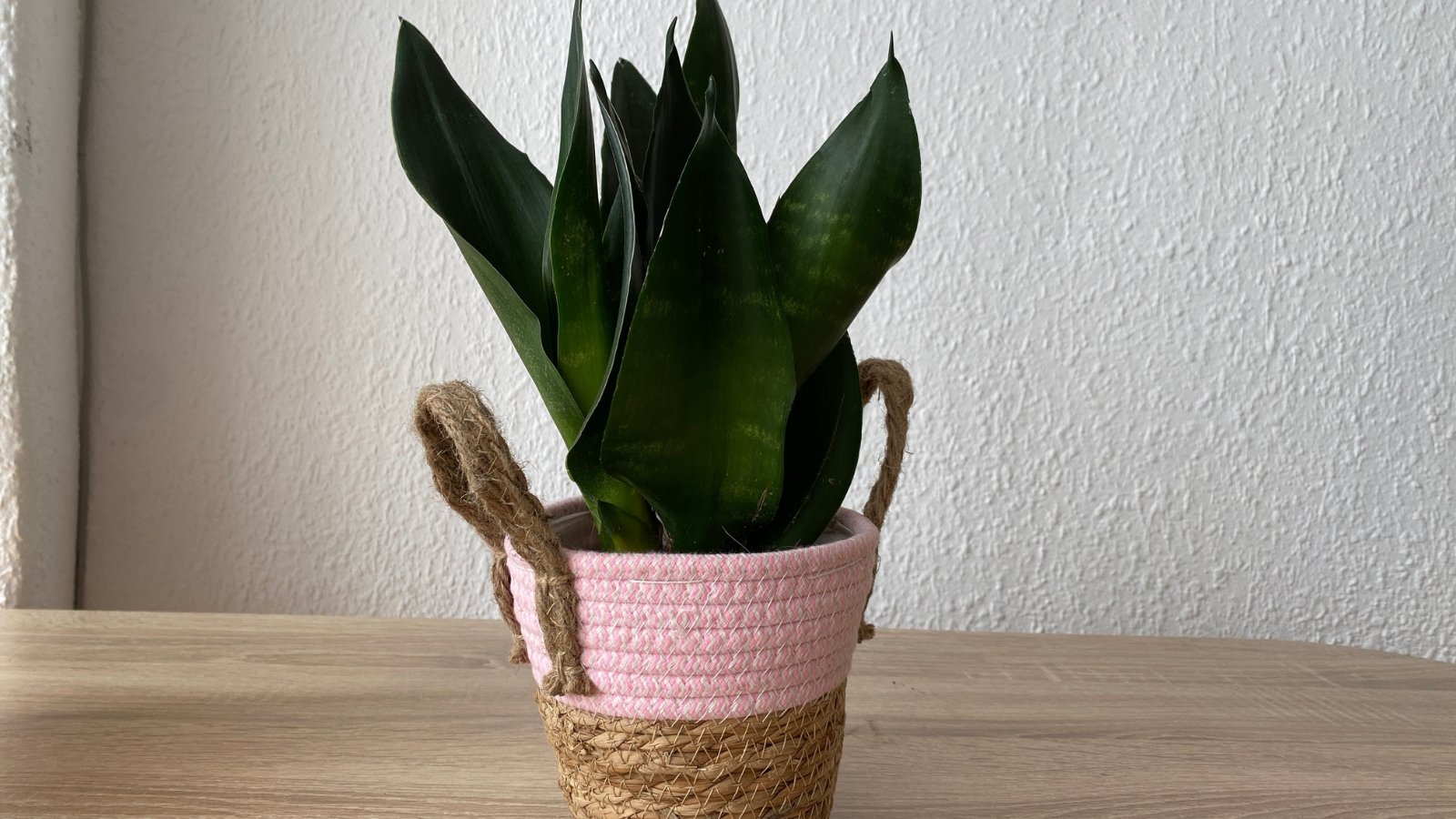 Compact plant thrives easily in low or bright light.
Sansevieria goes by different names. You may know this one as snake plant or mother-in-law’s tongue. It’s one of the easiest and most popular succulent houseplants. ‘Black Dragon’ is a compact variety that has rich, dark, moody leaves. Rather than the usual green with yellow accents, this one has deep emerald leaves that are often black near the ends.
Sanseverieras are incredibly easy to care for. They are flexible with light, tolerating bright indirect or lower light conditions. As with most succulent plants, allow the soil to dry between waterings, or you risk root rot. It’s listed by NASA and other research communities as one of the best plants for cleaning the air inside your home.


















 English (US) ·
  French (CA) ·