

 10 hours ago
6
PROTECT YOUR DNA WITH QUANTUM TECHNOLOGY
Orgo-Life the new way to the future Advertising by AdpathwayA crow-sized bird that lived about 150 million years ago, alongside the era of Archaeopteryx, appears to have already given up flying. The fossil, named Yuezhuornis yangyuanensis, combines bird-like hips and legs with serrated teeth and a sickle-shaped toe claw resembling those of small predatory dinosaurs, according to a study published Oct. 14 in Nature.
The timing is the surprise — flight is usually seen as the defining step in early bird evolution, yet this animal suggests that within the oldest known group of birds, at least one lineage had already returned to life on the ground. The authors call it the earliest known bird lineage to lose flight.
The find, from the Zhenghe Fauna in Fujian Province, southeastern China, dates to the Late Jurassic, about 148 to 150 million years ago, and adds to a growing picture that Jurassic birds were more varied in body plan and lifestyle than a single famous fossil suggested.
A Strange Mix of Bird and Raptor
The researchers, led by teams from the Chinese Academy of Sciences' Institute of Vertebrate Paleontology and Paleoanthropology and the Fujian Institute of Geological Sciences, described a fossil with features rarely seen together.
Its pelvis and hind limbs look like a bird's. But its closely spaced, serrated teeth resemble those of deinonychosaurs, the meat-eating dinosaur group that includes Velociraptor. Its second toe bends back unusually far and carries a curved, sickle-like claw, a trait known from dromaeosaurids and troodontids but not previously from birds.
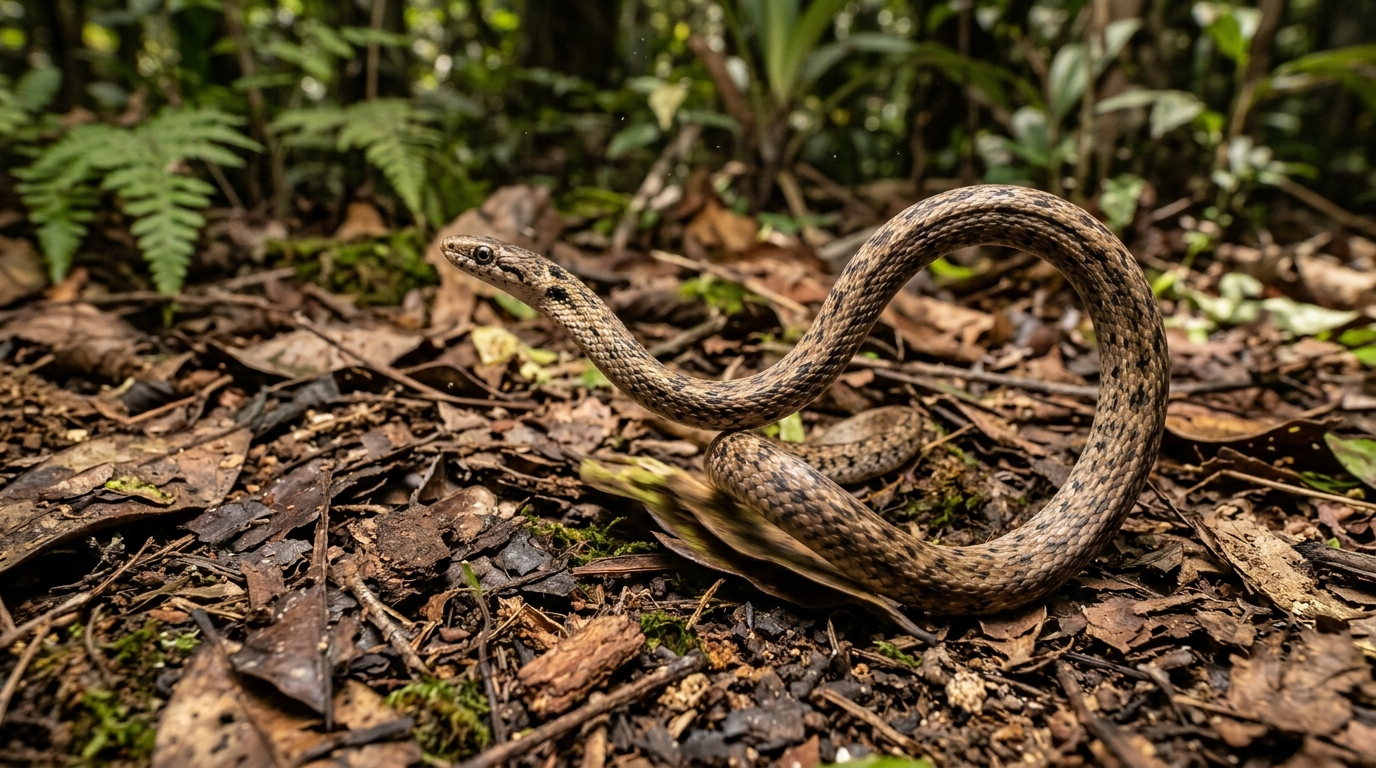
"We were struck by its extraordinary mix of features," said corresponding author Min Wang, according to ScienceDaily. The study estimates a body mass of about 821 grams (roughly 1.8 pounds), and a life reconstruction credited to Wang shows a ground-running, raptor-footed bird.
Evidence It Could Not Fly
The case for flightlessness rests on body proportions. Its forelimbs are roughly one-third shorter than its hind limbs, according to a Nature press summary. The team compared its limb measurements statistically with 377 living bird species, and the closest matches were ground-dwelling birds such as pheasants, along with some bird-related dinosaurs.
That is strong circumstantial evidence, but it is not a direct observation. No feathers or flight muscles preserve the answer, and the conclusion comes from comparing skeletal ratios. The species is also known from a single incomplete specimen, so the authors say more fossils are needed.
Its family tree position was tested with two methods, maximum parsimony and Bayesian tip-dating. Co-author Zhonghe Zhou places it just one step more advanced than Archaeopteryx, as the closest relative of another Zhenghe bird, Zhengheornis. Those placements can shift as new fossils emerge.
Archaeopteryx Was Never the Whole Story
For more than 150 years, Archaeopteryx, found in Germany's Bavarian limestone beginning in 1861, has been the iconic Jurassic bird. Paleontologist Steve Brusatte of the University of Edinburgh once called it "the textbook example of a creature caught in the act of evolution," in comments to Reuters published by Yahoo News about another Zhenghe find, the short-tailed Baminornis.
Archaeopteryx had feathered wings and is generally thought to have been capable of at least some flight. Yuezhuornis lived around the same time but took a different path, investing in strong legs and a predator's foot rather than wings.
Archaeopteryx is no longer alone. In 2025, researchers described Baminornis, a quail-sized bird about 150 million years old from the same Zhenghe area. It had a short, fused tail bone like modern birds, unlike Archaeopteryx's long, reptile-like tail, and it lived in a swampy landscape alongside the meat-eating dinosaur Fujianvenator, turtles and fish. Until that find, Archaeopteryx was the only unquestioned Jurassic bird, Reuters reported.
Together, these Fujian fossils show that by the Late Jurassic, birds already came in several body plans, some built for better flight and at least one apparently built for the ground. The region is becoming one of the most important windows on the dawn of birds.
The contrast matters — if one of the oldest birds was already flightless, then early birds were not a single march toward the sky. Some lineages may have tried flight, then specialized in other niches, much as ostriches, kiwis and penguins did tens of millions of years later.
Clues to How It Lived
The serrated teeth and sickle claw suggest an active hunter. Animals with similar features, such as small raptor dinosaurs, likely used the claw to pin or grip prey. A crow-sized ground bird with those tools may have chased insects, lizards, or other small animals on the forest floor, though the study's authors frame this as an inference from anatomy rather than direct evidence like stomach contents.
The authors suggest the bird filled an ecological niche early birds rarely used. Its home, the recently recognized Zhenghe Fauna, is still poorly understood, and further digs there could reveal the wider ecosystem.
This is a peer-reviewed study, but its conclusions depend on one partial skeleton and on statistical comparisons. The "earliest flightless" title could change if older fossils emerge or if new specimens alter the limb picture. The finding does not change modern bird biology or conservation guidance.
Next, paleontologists will look for more Yuezhuornis specimens and other birds in Fujian's Jurassic rocks. Nature World News will report new finds from the site.
The bottom line: a bird as old as Archaeopteryx appears to have already traded flight for running, while carrying a raptor's teeth and claw. One fossil cannot settle the story, but it suggests the first birds experimented far more widely than once thought.
What Readers Want to Know
What was discovered? A crow-sized Jurassic bird, Yuezhuornis yangyuanensis, from Fujian Province, China, about 148 to 150 million years old.
Why do scientists think it could not fly? Its forelimbs are about one-third shorter than its hind limbs, and its proportions match ground-dwelling birds.
How is it like a dinosaur? It had serrated teeth and a sickle-shaped second toe claw like those of small predatory dinosaurs.
How does it compare with Archaeopteryx? It lived around the same time and sits just one step more advanced, but it took a ground-dwelling path.
How certain is the finding? It rests on one incomplete specimen, so more fossils are needed to confirm it.
What did it eat? Its teeth and claws suggest it hunted small animals, but that is inferred from anatomy.
© 2026 NatureWorldNews.com All rights reserved. Do not reproduce without permission.




















 English (US) ·
 French (CA) ·