

 11 hours ago
7
PROTECT YOUR DNA WITH QUANTUM TECHNOLOGY
Orgo-Life the new way to the future Advertising by AdpathwayNASA has ended the science mission of its Neil Gehrels Swift Observatory after the spacecraft sank below 171 miles (275 kilometers), too low for its telescopes to hold steady on targets. Swift made its final observation on Oct. 20, and NASA said Oct. 23 that it expects the observatory to re-enter Earth's atmosphere within the next few weeks, according to NASA.
The spacecraft entered safe mode on Oct. 20, unable to offset rising atmospheric drag. The operations team at Penn State then sent a command that effectively ended operations and prepared Swift for re-entry, the agency said in a mission blog post.
For people on the ground, the practical question is safety. NASA has said the re-entry will be uncontrolled and that some components may survive, but a NASA spokesperson described the risk of harm to anyone on Earth as unlikely. For astronomers, the loss is a gap in the fast-response tools used to catch fleeting cosmic explosions.
Solar Activity Pulled Swift Down
Swift launched on Nov. 20, 2004, with no onboard propulsion to raise its orbit. At low altitudes, a thin trace of atmosphere drags on satellites. When the Sun is active, it heats and puffs up Earth's upper atmosphere, increasing that drag. NASA said solar activity sped Swift's descent, and drag rose again after science operations resumed in late August.
Nature World News previously reported that a commercial rescue attempt failed before it could boost the observatory. NASA said the high-risk servicing mission ended in August without attempting the boost. Controllers had paused pointed science for months to reduce drag, buying time but not saving the orbit.
The rescue itself was a quick-build experiment. Katalyst Space Technologies of Arizona won a $30 million NASA contract to re-boost Swift, built its LINK robotic spacecraft in about nine months and launched it on July 3, Space.com reported. LINK then suffered attitude-control problems, and NASA and the company called off the attempt.
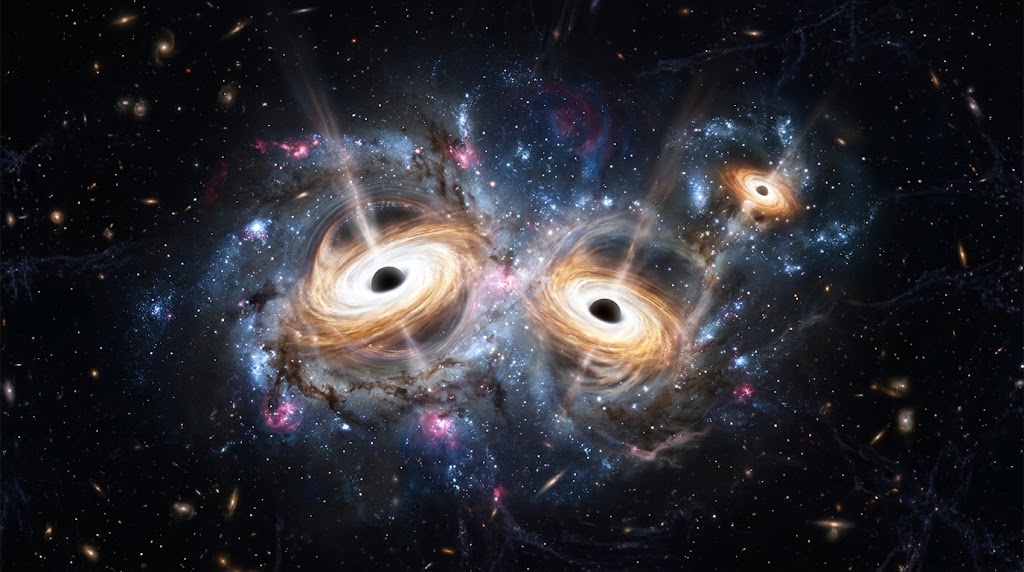
Once observations resumed, Swift studied hundreds more targets, including remnants of stellar explosions, active supermassive black holes and comets, before it could no longer keep up.
Two Decades of Catching Cosmic Explosions
Swift was built to catch gamma-ray bursts, the most powerful explosions in the universe, and swing its telescopes toward them within moments. Designed for a two-year mission, it worked for more than 10 times that long.
Its tally is large — Swift observed more than 2,000 gamma-ray bursts and studied more than 1,400 supernovae, according to NASA. It watched stars torn apart by black holes, monitored active galaxies, surveyed the X-ray sky, and observed asteroids and comets. Its data contributed to about 7,000 published papers.
One early result changed the field. In May 2005, Swift caught GRB 050509B, a burst lasting just 0.03 seconds, and detected 11 X-ray photons from its afterglow, the first afterglow seen from a short burst. Those observations supported the idea that short bursts come from merging neutron stars, a link later reinforced by gravitational wave astronomy.
"Swift delivered an incredible, lasting return on investment for the nation," said Shawn Domagal-Goldman, director of NASA's Astrophysics Division. The mission was renamed in 2018 for Neil Gehrels, its first principal investigator, after his death.
Principal investigator S. Bradley Cenko of NASA's Goddard Space Flight Center noted that Swift was designed as a satellite dedicated to gamma-ray bursts. Its quick-pointing design proved so flexible that it became a general rapid-response observatory for astronomers worldwide.
Re-Entry Risk and What to Watch
Swift's fall will be uncontrolled, meaning NASA cannot steer it to a remote ocean zone. Most of the spacecraft is expected to burn up, though some components could survive, NASA spokesperson Alise Fisher told Space.com. "The risk of harm coming to anyone on Earth is unlikely," she said.
Exact timing and location cannot be predicted weeks ahead. Re-entry forecasts for uncontrolled satellites narrow only in the final days, because solar activity and atmospheric conditions keep changing the decay rate. Oceans cover most of Earth's surface, so surviving pieces most often fall into water or remote areas.
Readers do not need to take any action. Anyone who finds suspected space debris should not touch it, since fragments can have sharp edges or residues, and should report it to local law enforcement. Treat social media claims of sightings with caution until official tracking confirms them.
The Archive and the Gap Ahead
Swift's data will keep producing science. Its full archive, nearly 22 years of brightness measurements and spectra plus more than 1.5 million ultraviolet and optical images totaling about 12 terabytes, is publicly available. Domagal-Goldman said the archive will support discoveries for decades.
The gap is real — Swift was a key tool for rapid follow-up of bursts, neutrino alerts and gravitational wave events. NASA said it will look for new ways to respond quickly to cosmic events using current missions in the meantime.
Next, NASA and U.S. tracking authorities will publish updated re-entry estimates as the date nears. Nature World News will report the confirmed re-entry time and location.
The bottom line: Swift's science mission is over after nearly 22 years, ended by drag that solar activity intensified. Its re-entry is expected within weeks; NASA considers the risk to people unlikely, and its archive will keep paying off long after the spacecraft is gone.
What Readers Want to Know
Why did NASA end Swift's mission? Swift sank below 171 miles, where drag stopped its telescopes from pointing steadily, and it entered safe mode on Oct. 20.
When will Swift re-enter? NASA expects re-entry within the next few weeks. Exact timing will narrow only in the final days.
Is falling debris a danger? NASA says some components may survive, but the risk of harm to anyone on Earth is unlikely.
Why did Swift fall faster than expected? Solar activity heated and expanded the upper atmosphere, increasing drag on the spacecraft.
What did Swift discover? More than 2,000 gamma-ray bursts, including the first afterglow from a short burst, plus 1,400-plus supernovae.
Can scientists still use Swift data? Yes. Its archive of about 12 terabytes is publicly available.
© 2026 NatureWorldNews.com All rights reserved. Do not reproduce without permission.
















 English (US) ·
 French (CA) ·