

 10 hours ago
8
PROTECT YOUR DNA WITH QUANTUM TECHNOLOGY
Orgo-Life the new way to the future Advertising by AdpathwayWeizmann Institute researchers found that removing MTCH2 pushed cells to burn more fuel and blocked fat-cell development, but the work is in cells and mice, not people.
A protein nicknamed Mitch appears to help decide whether a cell becomes a fat cell — at least in the lab. In experiments led by the Weizmann Institute of Science, immature mouse cells lacking the protein, formally called MTCH2, mostly failed to mature into fat cells, according to a summary of the research published Oct. 24.
About 80 to 90 percent of normal precursor cells developed into fat cells within six days. Among cells lacking MTCH2, only 5 to 10 percent did, and those cells stored far fewer fat droplets.
The finding draws attention because it works on a different lever than today's popular weight-loss drugs. Medicines such as semaglutide and tirzepatide act mainly on appetite, and researchers are looking for ways to target how the body stores and burns energy, ideally without losing muscle.
A Protein Stationed at the Mitochondria
Mitochondria are the structures inside cells that turn sugars, fats, and amino acids into usable energy. MTCH2 sits in the outer membrane of mitochondria and helps control how they fuse and how much fuel they take in.
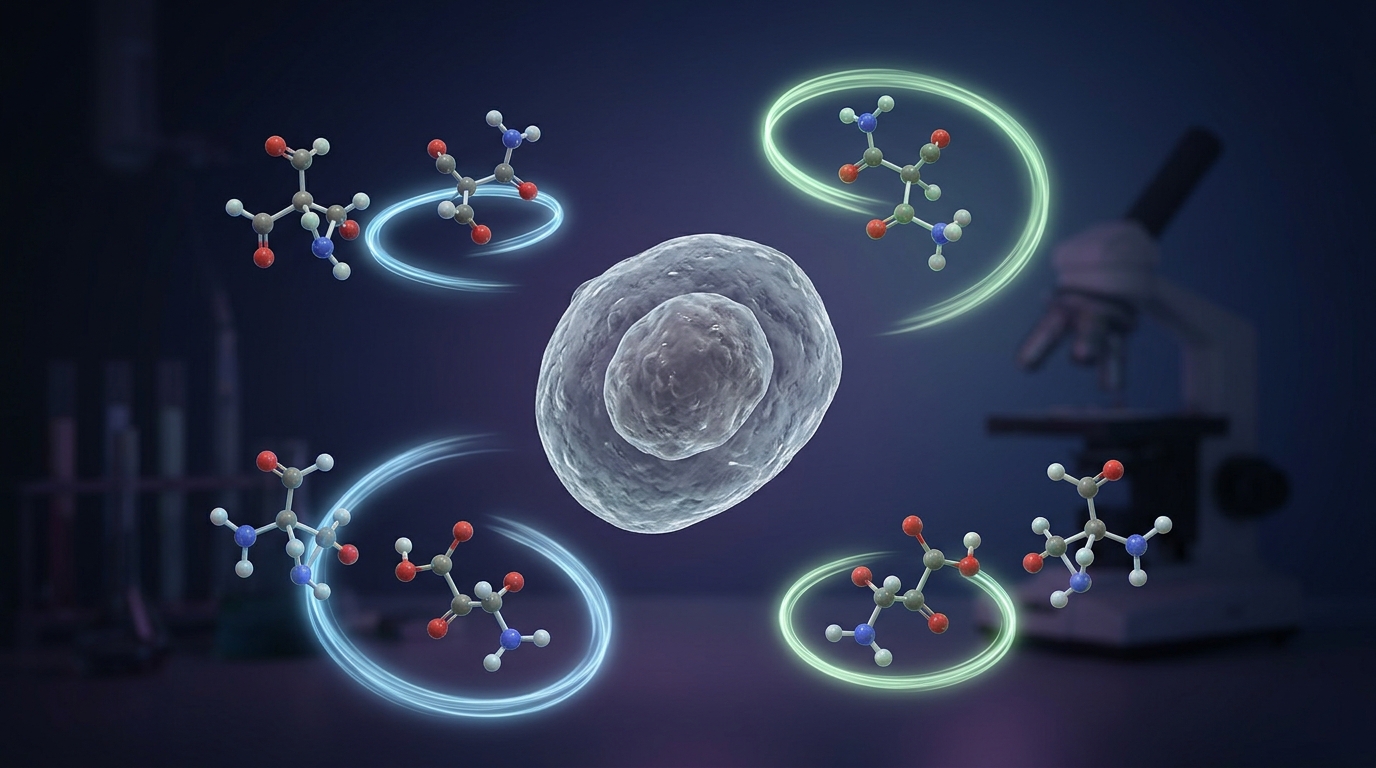
When the team removed MTCH2 from human cells, the cells ramped up cellular respiration and burned more carbohydrates, fats, and amino acids. The researchers tracked more than 100 metabolic compounds and found the cells even pulled fatty acids out of their own membranes to use as fuel.
"Mitch determines the fate of fat in human cells," said Professor Atan Gross, who led the work with Sabita Chourasia, according to the summary. In effect, cells without MTCH2 were so busy burning fuel that they lacked the building materials needed to make new fat.
Fat cells form through a process called adipogenesis, in which immature precursor cells switch on fat-storage genes and begin packing lipid droplets. That step requires a surplus of building blocks such as fatty acids. Chourasia reported that cellular respiration, the process cells use to make energy from nutrients, rose sharply without MTCH2, draining the surplus the cells would normally use to build fat. Imaging also showed changes in how mitochondria fused, which the team considers central to the effect.
From 80 Percent to Under 10
The fat-cell results were first published in The EMBO Journal in January 2025. A follow-up study in Nature Communications, published in October 2025 with collaborators at ETH Zurich, removed MTCH2 only from fat tissue in mice.
On a high-fat diet, those mice gained less weight and fat than normal mice while eating similar amounts. Their lean mass stayed comparable, glucose tolerance improved and cholesterol was lower. The researchers traced part of the effect to MTCH2's interaction with CPT1, an enzyme that controls how much fat enters mitochondria to be burned.
An earlier study that reduced MTCH2 in muscle found mice that resisted diet-induced obesity, had more oxygen-efficient muscle fibers, more endurance, and better heart function.
The fat-tissue effect also worked without UCP1, a protein that brown fat uses to burn energy as heat. That matters because many past obesity strategies tried to activate brown fat, and adults have relatively little of it. The research involved the Weizmann Institute, the University of Pennsylvania, the University of Texas at San Antonio and ETH Zurich, among other institutions.
The Weight-Loss Drug Muscle Problem
The research is getting attention now because of a known downside of current weight-loss medicines. A 2026 analysis of 20 trials involving 15,782 participants, cited in the summary, found that lean mass made up roughly 25 to 39 percent of the weight lost on several widely used medications. Resistance training helped preserve more lean tissue.
Losing muscle can matter for strength, balance and metabolism, especially for older adults. A treatment that encouraged the body to burn stored fuel rather than simply eat less could, in theory, complement appetite drugs. That remains a hypothesis — no one has tested an MTCH2-targeting drug in people.
The connection to everyday life is indirect for now. People taking GLP-1 drugs should keep following their clinicians' advice on protein intake and strength training, which current evidence supports, rather than waiting on early-stage research.
Lab Results, Not a Treatment
The limitations are substantial. The 80 to 90 percent versus 5 to 10 percent result came from a mouse cell line in a dish, which does not show that blocking MTCH2 would stop fat cells from forming in people. The other results come from genetically altered mice.
MTCH2 also has roles in cell survival and other mitochondrial functions, so blocking it throughout the body could cause unwanted effects. Healthy fat tissue stores energy, regulates blood sugar and produces hormones, and disrupting it could push fat into organs such as the liver, a known risk in conditions where fat tissue does not work properly.
The researchers say open questions include which tissues to target, whether muscle can be protected, and whether MTCH2 can be targeted safely with a drug. Answering them would take years of further animal studies before any human trial.
For now, the finding is best read as basic biology that clarifies how mitochondria influence fat storage. It adds a promising target to the list of ideas being explored beyond appetite control, without changing any current medical guidance.
What Readers Want to Know
What is Mitch? A nickname for MTCH2, a protein on the outer membrane of mitochondria that helps regulate how cells use fuel.
What did the experiments show? About 80 to 90 percent of normal mouse precursor cells became fat cells in six days, compared with 5 to 10 percent of cells lacking MTCH2.
Was this tested in people? No. The work used human and mouse cells in dishes and genetically altered mice.
How does this relate to GLP-1 drugs? Those drugs work mainly on appetite. MTCH2 research explores changing how cells burn and store fuel instead.
Could blocking MTCH2 be risky? Yes. MTCH2 has other jobs in cells, and disrupting fat tissue can push fat into organs.
Should people on weight-loss drugs change anything? No. Follow clinician guidance on protein and strength training.
© 2026 NatureWorldNews.com All rights reserved. Do not reproduce without permission.

















 English (US) ·
 French (CA) ·