

I've always been a little skeptical about predator decoys. The theory is simple enough: hang a realistic-looking bird of prey above your vegetable garden and smaller birds will steer clear, leaving your carefully tended crops alone. But do they actually work, or do birds quickly realise they're being fooled?
As someone who prefers to keep a wildlife-friendly garden, I was intrigued. After all, netting can be effective, but it can also be unsightly and potentially hazardous to critters if not installed correctly. Predator decoys promise a gentler (and, admittedly, more hilarious-looking) solution, using nature's food chain rather than physical barriers to keep hungry visitors at bay.
That made my veggie patch the perfect testing ground. My strawberries are growing in a small raised bed that's just beginning to produce ripe fruit, making them an irresistible target for birds. Or at least they should be; so far, the biggest threat to my harvest has actually been my two children, aged four and one, who seem to view ripe strawberries as a first-come, first-served buffet. (Spoiler: the decoy doesn't appear to work on small humans).
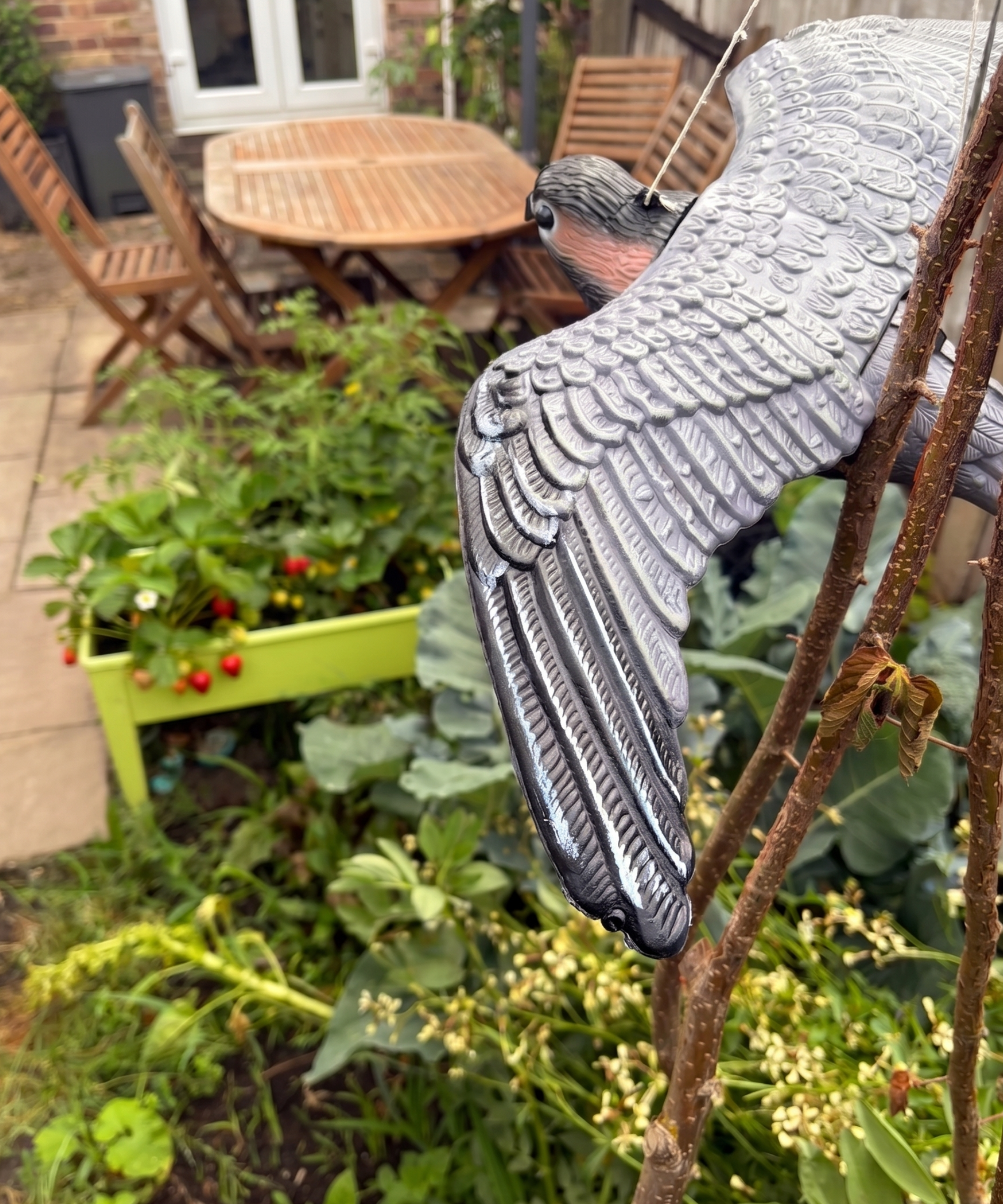
(Image credit: Kayleigh Dray/Future PLC)
Still, I was curious to see whether it would deter the local bird population. After all, there's a big difference between a product sounding sensible in theory and proving useful in a real garden. So, with that in mind, I treated myself to a decoy of my own...
Setting Up the Predator Decoy
One thing I quickly discovered is that some predator decoys can be surprisingly awkward to position. The one I fished out of my daughter's toybox (yes, a grandparent gifted her one by mistake; what of it?) needed to appear as though it was hovering or flying above the crops rather than sitting motionless on the ground, and this presented a bit of a challenge in my garden.
Now, I wasn't prepared to install a permanent pole or bracket just for the sake of an experiment, so I improvised by attaching the decoy to a pyramid trellis above my vegetable bed. As you can see above, the result looked, frankly, a little bonkers.
That said, gardeners with mature trees, fences, pergolas, or existing brackets will likely find installation much easier. In the right setting, a hanging decoy could look considerably more convincing than my makeshift setup.
Did It Actually Work?
Surprisingly, I think it might have. While it's impossible to know exactly what the birds are thinking (I can't even figure out what my own birth month bird has in mind), my strawberries have remained largely untouched throughout the trial. More tellingly, I've noticed sparrows and other small birds happily landing in nearby planters and flower beds while giving the area around the strawberry patch a noticeably wider berth.
Yes, fine; that's hardly scientific proof, but it does suggest the decoy is having some effect. If birds were completely ignoring it, I'd expect them to treat every part of the garden equally. Instead, they seem perfectly comfortable visiting other areas while avoiding the space directly beneath the faux predator.
Still, no deterrent is guaranteed to work forever. Many experts suggest birds can eventually become accustomed to static decoys, particularly if they're left in the same position for weeks on end. Moving them regularly is often recommended to maintain the illusion of danger.
Shop for Predator Decoys:
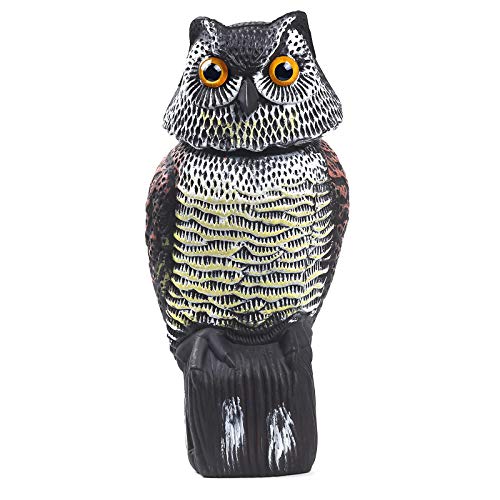
People are raving about this owl in the reviews, insisting it looks "super realistic" and they love the "way its head moves in the breeze".
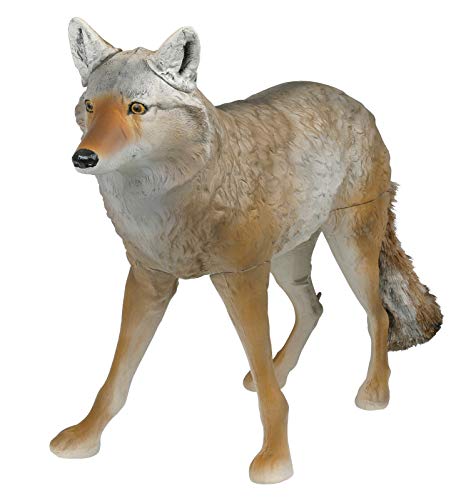
Flambeau
Lone Howler Coyote Decoy
Maybe the coyote is your birth month woodland animal; maybe you just like the look of this predator decoy. Either way, it scares birds off with ease!
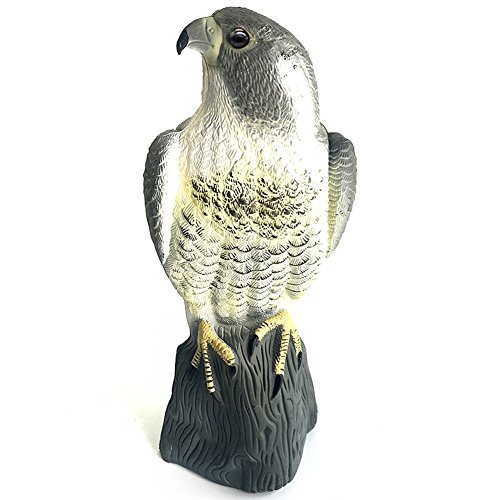
YOFIT
Fake Horned Hawk Decoy
All you have to do is pop this hawk in a visible location, such as a tree or shrub, then sit back and watch it show the other birds who's in charge.
If you're struggling with birds gobbling up your fruit and want a wildlife-friendly deterrent, I'd say a predator decoy is worth considering. It's easy to install, doesn't harm wildlife, and appears to have offered at least some protection for my strawberry crop.
That said, you'll need somewhere suitable to position it, and you may have to get creative if your garden lacks convenient structures. My trellis-mounted setup wasn't exactly a triumph of garden design, but hey, if it helps preserve a few extra strawberries, I can live with that.
Just don't expect it to keep determined toddlers away from your harvest. For that, I'm still waiting for someone to invent a more effective solution.

















 English (US) ·
  French (CA) ·