

 3 hours ago
3
PROTECT YOUR DNA WITH QUANTUM TECHNOLOGY
Orgo-Life the new way to the future Advertising by AdpathwayHollow melamine–formaldehyde microcapsules measuring between 20 and 30 micrometers can be successfully synthesized under mild conditions near neutral pH and room temperature using a prepolymer wall material. In an investigation evaluating reaction conditions to replace conventional high-temperature and strongly acidic synthesis routes, researchers demonstrated that utilizing a melamine–formaldehyde precondensate allows effective capsule wall formation at the droplet interface without requiring extensive pH reduction or elevated thermal energy.
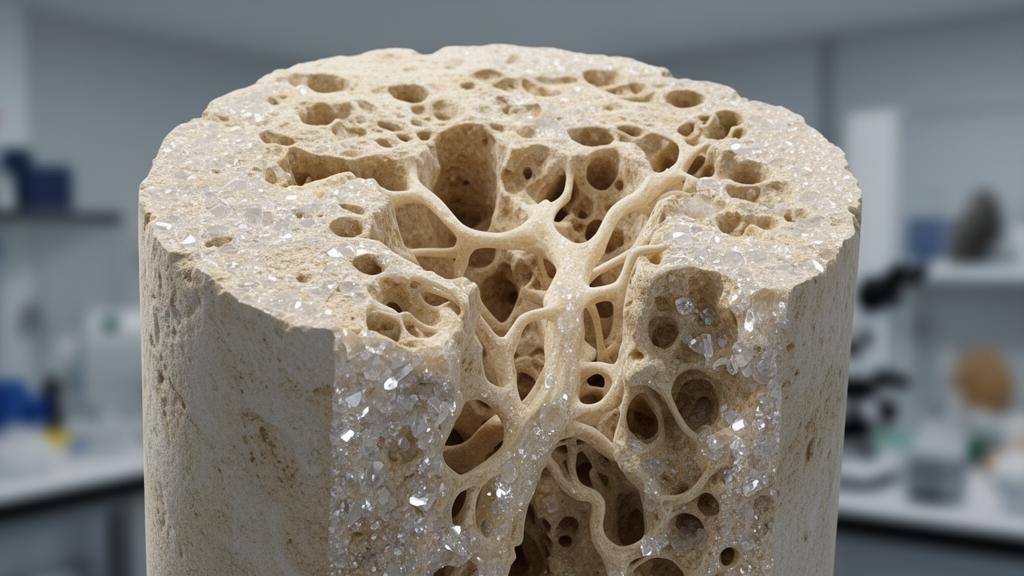
The study evaluated these hollow microcapsules specifically for introducing uniform pores into chemical mechanical polishing pads used in semiconductor wafer manufacturing. During chemical mechanical polishing, semiconductor wafers are pressed against a polishing pad and moved relative to one another in the presence of slurry to produce an ultra-flat surface through combined chemical reactions and mechanical abrasion. Because pad pores retain the polishing slurry and discharge polishing byproducts, pore dimensions and distribution directly influence overall polishing efficiency and planarization uniformity.
Conventional techniques for introducing pores into polishing pads present distinct manufacturing limitations. Solid-state microcellular foaming via high-pressure inert gas injection requires challenging optimization of gas saturation pressure, desorption time, and foaming temperature. Incorporating thermally expandable microcapsules provides direct pore size control, typically between 20 and 50 micrometers, but their flexible shells deform under kneading stress during resin incorporation, resulting in distorted pores. Melamine–formaldehyde was selected because of its high mechanical strength, which prevents shell collapse during pad fabrication.
Standard melamine–formaldehyde capsule preparation relies on in situ polymerization, where methylolated melamine condenses at the oil droplet interface under acidic conditions and elevated temperatures. However, emulsions with large droplets of several tens of micrometers are unstable and prone to breakdown under high thermal stress. Furthermore, gradually lowering the reaction solution to an acidic pH requires extended processing times and substantial quantities of pH adjusters, driving up costs in industrial production.
To produce uniform droplets with a target diameter of 30 micrometers, the research team used Shirasu-porous-glass membrane emulsification via an external-pressure micro kit. The glass membrane possessed an outer diameter of 10 millimeters, a wall thickness of 0.7 millimeters, a total length of 20 millimeters, and a pore size of 30 micrometers. Chlorobenzene served as the volatile core material, while the continuous phase consisted of a hydrolyzed styrene–maleic anhydride copolymer surfactant prepared by dissolving Scripset 520 in aqueous sodium hydroxide and distilled water at 80 degrees Celsius.
Testing the membrane emulsification conditions showed that increasing the transmembrane pressure reduced the average droplet size. The authors attributed this effect to higher shear stress breaking up droplets as the emulsion passed through the membrane pores. In contrast, altering the volume ratio did not influence the resulting droplet size, confirming that the Shirasu-porous-glass membrane reliably formed uniform 30-micrometer emulsion droplets across varied volume ratios at controlled pressures.
Capsule preparation proceeded by transferring the emulsion to a flask stirred at 150 rpm with a Teflon two-bladed rod and introducing Nikaredin S-176, an aqueous precondensate consisting mainly of monomethylol melamine. The emulsion was heated to target reaction temperatures, and the pH was adjusted through the dropwise addition of a 10 percent by weight citric acid solution. Following three hours of stirring, the continuous phase was separated by centrifuging at 8,000 rpm for 15 minutes three times, and the solid capsules were dried by freeze-drying for 48 hours.
Evaluating the reaction pH at 40 degrees Celsius revealed that satisfactory capsule formation occurred strictly within a range between pH 6.5 and pH 7.0. At pH 6.0, an excessive polymerization rate favored bulk aggregation over interface deposition, preventing capsule formation. At pH 7.5, a suppressed reaction rate led to droplet fusion and irregular fine particle generation. The authors determined that achieving robust capsule shells requires balancing the polymerization rate so that interfacial condensation is prioritized over bulk aggregation.
Thermogravimetric and differential thermal analysis of capsules prepared between pH 6.5 and pH 7.0 showed substantial weight loss at approximately 300 degrees Celsius under a nitrogen atmosphere. Although chlorobenzene has a normal boiling point of 130 degrees Celsius, the robust melamine–formaldehyde shell, measuring less than one micrometer in thickness, retained the solvent until thermal rupture occurred near 300 degrees Celsius. Bulk density and core retention rate measurements confirmed that non-hollow particles formed at pH 6.5, whereas capsules synthesized between pH 6.5 and 7.0 exhibited lower bulk densities, indicating that core solvent had escaped during freeze-drying to leave hollow cavities.
Investigation of polymerization temperatures at the optimal pH of 7.0 confirmed successful capsule synthesis across all evaluated temperatures from 30 to over 50 degrees Celsius. At 30 degrees Celsius, capsules exhibited an average diameter of 16.10 micrometers, which was smaller than the initial 28.38-micrometer emulsion droplets because the slower reaction rate failed to encapsulate larger droplets completely. Increasing the reaction temperature accelerated polymerization, and temperatures above 50 degrees Celsius yielded capsule diameters equivalent to the original emulsion droplet size.
Core retention rates and bulk density values both increased as the polymerization temperature rose, indicating that higher temperatures produced denser, stronger shell walls that hindered core release during freeze-drying. Electron microscopy confirmed partial shell breakage in capsules prepared at pH 7.0, further corroborating their hollow internal morphology. The authors concluded that the prepolymer method offers a cost-effective, industrially viable route for producing hollow microcapsules under mild conditions for CMP pad pore formation and general encapsulation tasks.
To characterize the physical dimensions and structural integrity of the microcapsules throughout testing, the researchers relied on multiple microscopic and analytical instruments. Optical microscopy using a Nikon ECLIPSE instrument enabled direct inspection of the initial oil-in-water emulsion droplets following membrane emulsification. For post-polymerization morphological evaluation, the investigators utilized a Quanta 400 scanning electron microscope manufactured by FEI. The acquired electron micrographs were quantitatively analyzed with D-Measure software, which determined both the average emulsion droplet sizes and the final capsule diameters by systematically measuring 200 individual samples per experimental condition.
Thermal properties and core retention behavior were tracked through thermogravimetry–differential thermal analysis using a Shimadzu DTG-60 H system. During each test run, microcapsule samples were heated up to 500 degrees Celsius at a constant heating rate of 10 degrees Celsius per minute within a controlled nitrogen atmosphere. Because the decomposition of the melamine–formaldehyde shell itself takes place at 400 degrees Celsius, any weight loss registered below that threshold directly reflected the expulsion of the volatile chlorobenzene core. By calculating the difference between sample weight before and after this loss event and dividing that figure by the initial weight prior to onset, the authors established the precise core retention percentage of the synthesized batches.
Bulk density determinations provided another key metric for tracking hollow cavity formation within the finished capsules. For these evaluations, capsule powder was placed into a graduated cylinder and subjected to mechanical tapping exactly 3,000 times before recording the resulting powder volume and mass.
To prepare the aqueous continuous phase, 3.5 grams of the styrene–maleic anhydride copolymer surfactant Scripset 520 were dissolved into a mixture containing 41.25 grams of 2 weight percent sodium hydroxide and 13.75 grams of distilled water. This basic mixture was heated at 80 degrees Celsius for two hours to induce hydrolysis before cooling to room temperature to yield 54 milliliters of continuous phase liquid.
During premixing, specified volume ratios of chlorobenzene were stirred into the continuous phase for 10 minutes prior to pressurized filtration through the glass membrane.
Subject of Research: Synthesis of hollow melamine–formaldehyde microcapsules under mild conditions for polishing pads
Article Title: Development of a hollow microcapsule preparation method under neutral pH and low temperature using melamine–formaldehyde prepolymer
Article References: Marumoto, H., Sayo, T., Kawasaki, T., Ohzuno, Y., Takei, T., & Yoshida, M. (2027). Development of a hollow microcapsule preparation method under neutral pH and low temperature using melamine–formaldehyde prepolymer. Polymer Bulletin, 84(1), Article 26. https://doi.org/10.1007/s00289-026-06770-2
Image Credits: AI Generated
DOI: 10.1007/s00289-026-06770-2
Keywords: melamine-formaldehyde prepolymer, hollow microcapsules, SPG membrane emulsification, chlorobenzene, chemical mechanical polishing, CMP pads, Nikaredin S-176, Scripset 520, monomethylol melamine, in situ polymerization, neutral pH synthesis, core retention rate, bulk density, freeze-drying, thermogravimetric analysis, pore formation, transmembrane pressure



















 English (US) ·
 French (CA) ·