

I've spent years looking for the best slow watering hacks. Like most gardeners, I've experienced that sinking feeling when a heatwave arrives just as I'm heading away for a few days, leaving me wondering whether I'll return to thriving plants or a collection of crispy stems.
Over the years, I've tested all sorts of solutions. Some have come from social media, others from fellow gardeners, and a few have been improvised using whatever I happened to have lying around the house. Most worked to a degree, but very few lived up to the hype of those bold self-watering claims.
My husband, an RHS-trained gardener with more than 20 years of professional experience, is even harder to impress. In his view, a thick layer of mulch and a properly installed irrigation system remain the most effective ways to keep plants watered and healthy when you're not around. That said, even he admits that not everyone has the time, budget, or inclination to install irrigation, and there are situations where a simple slow watering solution makes perfect sense. And, with a super El Niño event predicted by several weather agencies this year, we could all use a little extra help keeping our yards hydrated.
So, which slow watering hacks actually work? And which are the very best?
My Favorite Slow Watering Hacks
After plenty of trial and error, these are the three slow watering hacks I'd actually recommend – including one ancient technique that my husband now can't stop talking about.
Strap in, folks.
3. Plastic Bottles
Look, I love an upcycling project (see my teacup bird feeders if you require proof), so this is probably the slow watering hack I've used most often because it's quick, cheap, and requires almost no preparation.
The basic idea is simple: fill a plastic bottle with water, puncture a small hole in the cap, and place it upside down in the soil near your plant. As the water slowly drains out, it helps keep the surrounding soil moist. I've also experimented with wick systems using cotton and found they can work surprisingly well for small containers.
Check it out:
I have had some luck with this hack in the past. In fact, I would be so bold as to say that, for pots and patio planters, it's a genuinely nifty solution; honestly, f you're heading away for a weekend or simply know you're going to miss a watering session, it can buy you valuable time.
The downside? Bottles tend to empty fairly quickly during hot weather, and they're not particularly effective for larger beds. In my experience, they work best as a temporary fix rather than a long-term watering strategy.
2. Perforated Water Reservoirs
(Image credit: Schulzie / Getty Images)
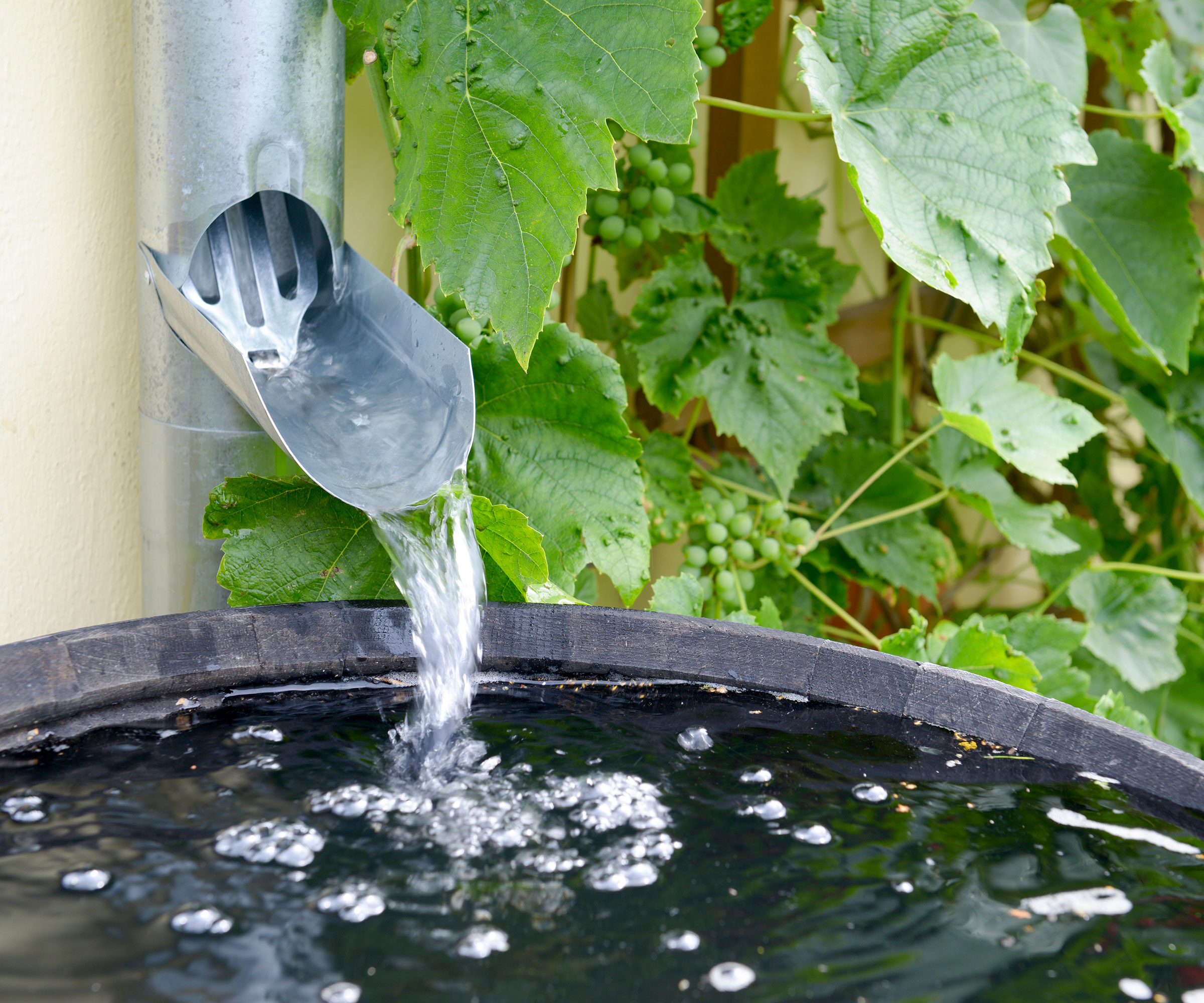
Another clever method? Why, the controversial rain harvesting trend that demands we puncture a container or rain barrel with small holes so that the water inside can seep gradually into the surrounding soil.
According to the RHS, “Irrigation systems and technologies abound, but savvy gardeners might take note from their community-growing counterparts who are known to puncture small holes in water butts strategically placed to provide a slow-flow of water into the soil for storage and free up capacity for the next rain event, helping to minimize mains water use.'
It feels almost sacrilegious to puncture a water barrel, but it is cheap, simple, and surprisingly effective... so long as, you know, it actually rains.
1. Olla Pots
Of all the slow watering methods I've tried, olla pots are the ones I've been most impressed by. An olla (pronounced "oy-ya") is an unglazed terracotta vessel that's buried in the soil with only the neck visible above ground. Once filled with water, the porous clay slowly releases moisture into the surrounding soil as plants need it.
What I love about this system is that it doesn't feel like a gardening hack at all. It's an ancient irrigation technique that's been used for thousands of years in regions including China, North Africa, and Central and South America. Long before timers and drip lines existed, growers understood that buried clay pots could provide a steady supply of water directly to plant roots.
The science behind them is surprisingly simple. As the soil around the pot dries, water naturally moves through the terracotta walls. When the soil is already moist, the flow slows down. The result is a self-regulating system that delivers water where it's needed most while reducing waste.
Shop Olla Pots:
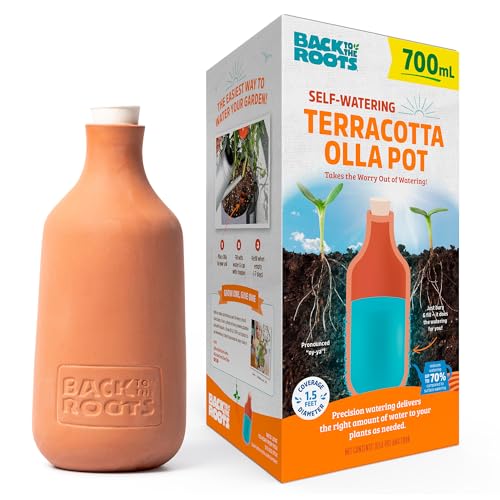
Back to the Roots
Self-Watering Terracotta Olla Pot
Built to support the needs of two large plants over a long weekend, this budget-friendly olla pot is a brilliant investment.
![4 Pcs Ollas Terracotta Watering Pots Large - 14 Oz Self Watering Planter Insert Olla Watering System for 1-Week Easy to Refill - Clay Plant Watering Globes for Outdoor & Indoor Plants [4, Multicolor]](https://cdn.mos.cms.futurecdn.net/X9KRWWDFF9vXR87tHwEF3X.jpg)
GARDENBRO
4 Pcs Ollas Terracotta Watering Pots
One self-confessed plant killer has heaped praise on this olla kit, insisting they only need to water once a week with it in situ.
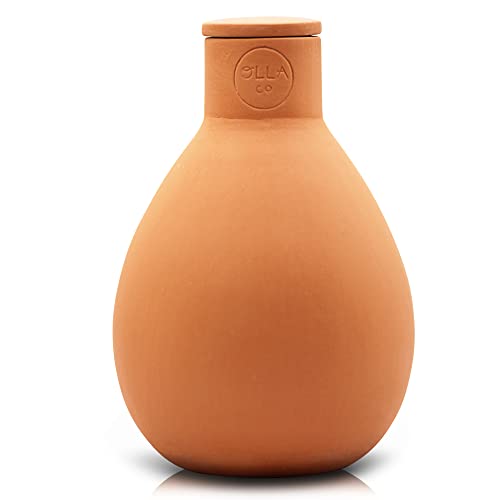
The Olla Company
Classic Olla Watering Pot With Lid
Planning a longer vacation? The makers of this olla say you can combine it with upcycled water or wine bottles for extended watering.
As water is released below the soil surface, far less is lost to evaporation, which means you don't just save on water; plants develop deeper root systems, too. And they're also surprisingly affordable, as you can buy ready-made olla pots for under $10 (or even make your own using two inexpensive terracotta pots sealed together).
Perhaps the biggest endorsement comes from my husband. He's spent more than two decades working professionally in horticulture and is boringly, infuriatingly quick to dismiss any and all gardening shortcuts that promise too much. Yet whenever the topic of watering comes up, he finds himself recommending olla pots left, right, and center.
(Image credit: Darrell Gulin / Getty Images)
That doesn't mean they're a replacement for mulching or a well-designed irrigation system. But if you're looking for a simple, low-maintenance way to keep plants hydrated during summer, they're one of the few slow watering solutions that genuinely live up to the hype.
After years of experimenting with different watering tricks, they're the method I'd reach for first. Give it a go, and see if you wind up feeling the same way!

















 English (US) ·
  French (CA) ·