

PROTECT YOUR DNA WITH QUANTUM TECHNOLOGY
Orgo-Life the new way to the future Advertising by AdpathwayHighlights
The Sierra de Bahoruco is Hispaniola’s premier birding area. Accessing these north-slope sites will bring you into a variety of habitats, including dry forest, semi-deciduous forest, humid broadleaf forest, cloud forest, mid-montane grasslands, and pine forest. Of the 34 Hispaniolan endemics, only Ridgway’s Hawk, Eastern Chat-Tanager, and Gray-headed Palm-Tanager are not found in the area. The outstanding feature of the Bahoruco’s north slope is the montane broadleaf evergreen forest or cloud forest, which is marked by large tree ferns at about 1,200 m elevation.
Key Bird Species and Families
Key species are the endemics Broad-billed and Narrow-billed Tody, Hispaniolan Woodpecker, Antillean Piculet, Antillean Siskin, H. Lizard Cuckoo, H. Crossbill, H. Euphonia, Black-crowned Palm-Tanager, Bay-breasted Cuckoo, H. Emerald, Flat-billed Vireo, White-winged Warbler, Green-tailed Warbler, Least Pauraque, H. Nightjar, the critically endangered Ridgway’s Hawk, etc.
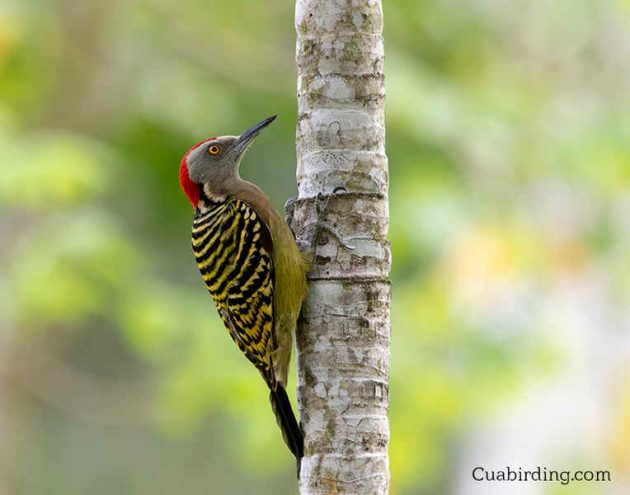
Hispaniolan Woodpecker (Melanerpes striatus)
Best Regions for Birding
Puerto Escondido – The Puerto Escondido area and the Rabo de Gato trail contain some of the premier birding walks in the Dominican Republic. This is one of the “must-see” stops for serious birdwatchers visiting the country. All but two of the 34 bird species endemic to Hispaniola may be found in the Sierra de Bahoruco, and the north slope is a great place to start. A tour of the north slope of the Bahoruco mountains begins at the small town of Puerto Escondido and surrounding areas. The area known as Rabo de Gato is an interesting narrow strip of riparian habitat with a surprising mix of birds. Riparian areas and water in general are rare in the limestone-based Sierra de Bahoruco because water tends to seep through the limestone and run underground. As such, we often find many interesting birds congregating around water sources. Beginning from the Villa Barrancolí campground just outside of Puerto Escondido, the fairly level trail at Rabo de Gato can be walked in an hour or two without difficulty. Both the Broad-billed and Narrow-billed Todi occur here, as well as Hispaniolan Lizard-Cuckoo, Antillean Piculet, Flat-billed Vireo, White-necked Crow, Hispaniolan Oriole, Antillean Euphonia, Hispaniolan Amazon, Hispaniolan Oriole, and occasionally the Bay-breasted Cuckoo.
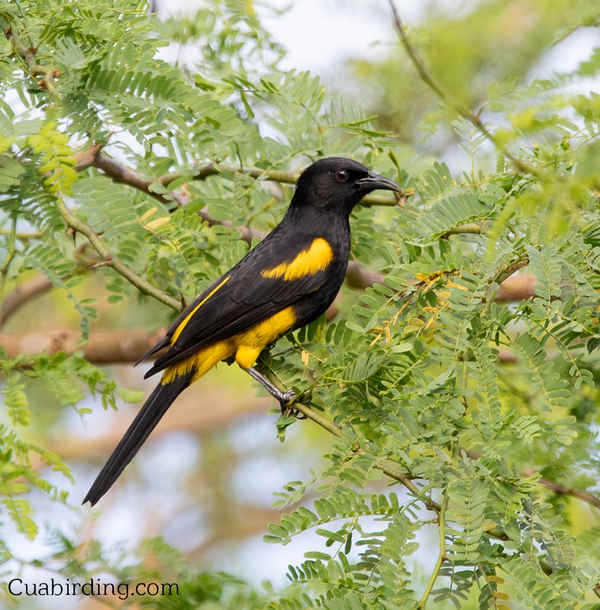
Hispaniola Oriole
La Placa, Piculet Road, and Los Naranjos are all within a new refuge, the 17,400 hec Loma Charco Azul Biological Reserve (also known as La Placa), that was created primarily to protect threatened birds of the dry and transitional forests. Of particular note in this area are such species as the Bay-breasted Cuckoo, Flat-billed Vireo, Hispaniolan Amazon, Hispaniolan Nightjar and Least Pauraque, as well as up to 35 species of over-wintering Neotropical migratory bird species and some regional columbids like Key West Quail-Dove, Plain Pigeon and Zenaida Dove.
Moving west and closer to the border, we’d find ourselves in the best site for high-elevation endemics, Acuacate and the road above Zapotén. Species include the Scaly-naped Pigeon, White-fronted Quail-Dove, Hispaniolan Emerald, Hispaniolan Trogon, Narrow-billed Tody, Rufous-throated Solitaire, La Selle Thrush, Green-tailed Ground-Tanager, Hispaniolan Highland-Tanager, Western Chat-Tanager, Hispaniolan Spindalis, Antillean Euphonia, Antillean Siskin, Golden Swallow, etc. Be advised, however, that in order to maximize the chance of seeing the most difficult species, such as the threatened La Selle Thrush, you should arrive before dawn. This means, however, start driving from Puerto Escondido no later than 4 am. in order to reach this area at the break of dawn. The site is only reachable with a high-ground-clearance 4WD vehicle, which is about 3/4 of the drive.
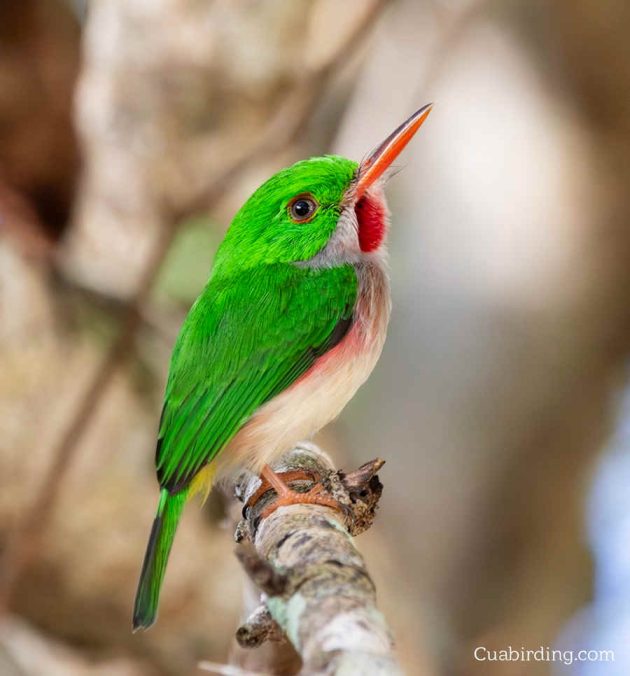
Broad-billed Tody
 Screenshot
Aguacate – Aguacate and Zapoten are moist broadleaf zones and the beginning of the cloud-forest zone. The Loggerhead Kingbird is frequently seen here. Aguacate is also a good place to look for endemic Hispaniolan Parakeets as well as the locally common Olive-throated Parakeet. Finally, keep an eye out for the Gray-crowned Palm-Tanager, which has been recorded at this point. Be sure not to confuse this species with the very similar juveniles of the common Black-crowned Palm-Tanager.
Zapotén and La Selle Corner – Beyond Aguacate, the road enters a brief stretch of pine forest, and then arrives at Zapotén, where there is a new guard house. It is best, however, to continue beyond Zapotén to reach La Selle Corner. Here you are on the lower edge of the cloud-forest zone. The White-fronted Quail-Dove will sometimes forage in the road, and the Western Chat-Tanager may be heard calling nearby.
Swallow Point – Going further up above La Selle Corner, Swallow Point is a good, clear lookout across the lower elevations of the Bahorucos. This is a particularly good place to see the threatened Golden Swallow, which here, in season, may be seen entering a nesting cavity in a small cliff. From here the road continues through cloud forest for another 3-4 km before entering the main pine forest.
Pine forest – Beyond Swallow Point, the forest soon turns to primarily pine, sometimes with a broadleaf component to the understory. Listen closely for the irregular metallic clacking of the Hispaniolan Crossbill, which is often heard before it is seen. Antillean Siskin and Hispaniolan Antillean Elaenia are also partial to pine forests, as is the increasingly rare Plain Pigeon.
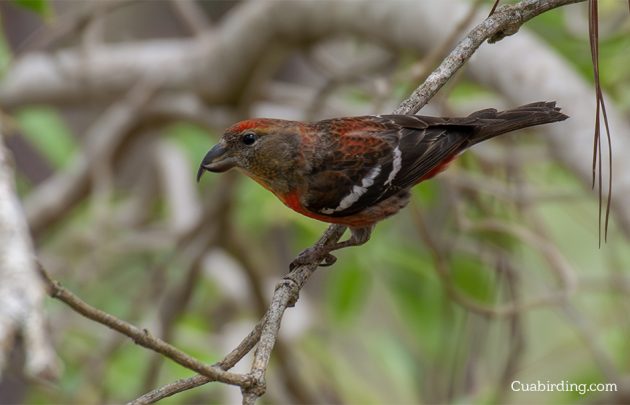
Hispaniolan Crossbill
Due to driving distance and logistics, a minimum of 3 days, 2 nights, is recommended if someone wants to visit and spend time birding all these sites.
Best Birding Season
Most people seem to want to come during the months of November through April, but birding is great all year round. Summer is usually wet and hotter, and there’s a chance of being hit by a tropical storm, or in the worst and infrequent case, a hurricane. Winter is dry, cooler, and we have the overwintering migrants, so more species can be seen and added to the trip list. The beginning of the breeding season for most species is great, March-May, especially for photographers, since birds tend to show better and males wear their bright breeding plumage.
Birding Trip Suggestion(s)
Multiple Days, including the northern and southern slopes of Sierra de Bahoruco:
- Day 1 – Santo Domingo to Puerto Escondido.
- Day 2 – Zapotén, pine forest, Los Naranjos. Puerto Escondido for night birding.
- Day 3 – La Placa, Piculet Rd. Southern shores of Enriquillo Lake, Barahona.
- Day 4 – Pedernales (Southern slopes of Sierra de Bahoruco).
- Day 5 – Eastern Bahoruco for Eastern Chat-Tanager and White-Fronted Quail-Dove, Santo Domingo.
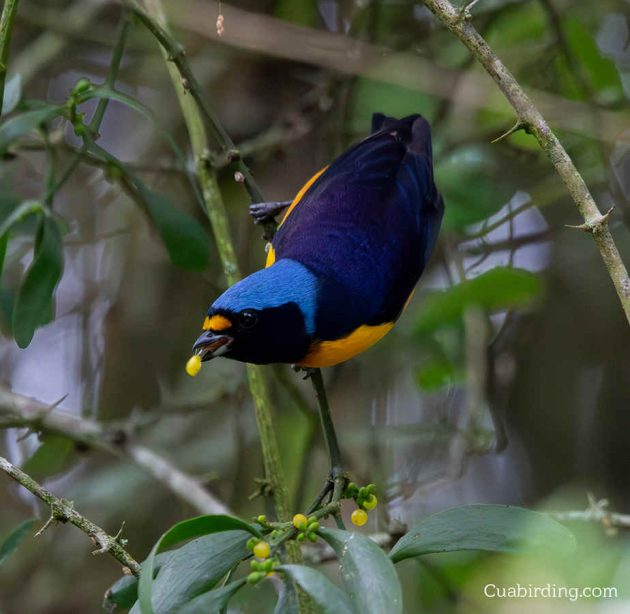
Hispanolian Euphonia
Practical Tips
- Always bring a light rain jacket, light field clothes, long pants, long sleeves, and a layer if visiting high-elevation sites.
- Your field equipment is a must; you might not find a decent pair of binoculars in the stores.
- I have a great quality spotting scope, so guests don’t need to haul one along, unless they plan on using it before/after the tour.
Books
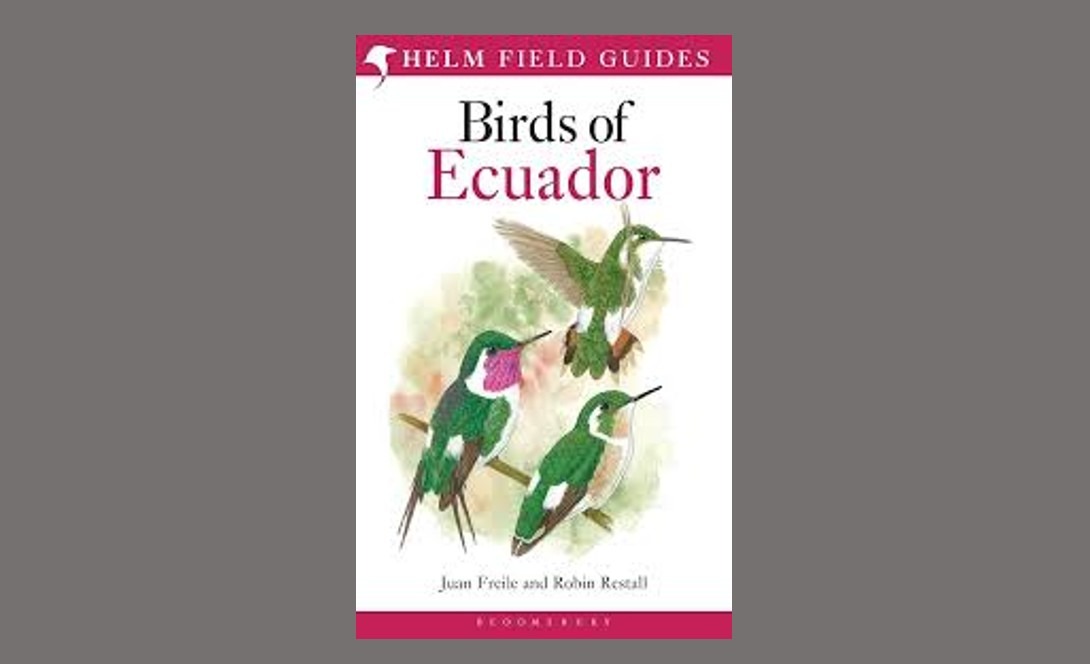
Field Guide to the Birds of the Dominican Republic and Haiti by Steven Latta, Christopher Rimmer, and Kent McFarland
Links
By Ivan Mota
Ivan Mota is a professional bird guide based in the Dominican Republic. He can be reached at [email protected]


















 English (US) ·
  French (CA) ·