

 1 day ago
6
1 day ago
6
PROTECT YOUR DNA WITH QUANTUM TECHNOLOGY
Orgo-Life the new way to the future Advertising by AdpathwayPanama's government declared a national state of emergency Saturday as more than 100 aftershocks rattled the country following Friday's magnitude 7.7 earthquake, and the education ministry closed every public and private school on Monday, Oct. 12, so engineers can inspect damaged buildings. Officials reported damage in all 10 provinces and two Indigenous territories but had not attributed any deaths to the quakes as of Saturday, according to the Associated Press.
The emergency shifts the story from the shaking itself to recovery and continued risk. Presidential Minister Juan Carlos Orillac said homes, schools, health facilities, roads and hotels were among the damaged sites, while families near the epicenter slept outdoors as aftershocks continued. For U.S. readers, the disruption also reaches beyond Panama's borders because the country's Tocumen International Airport is a major connecting hub for flights between the United States and Latin America.
Damage Spreads From the Azuero Peninsula to Panama City
The U.S. Geological Survey's event page places the magnitude 7.7 mainshock about 12 kilometers (7 miles) west-southwest of Pitaloza Arriba in Herrera province at a depth of about 12.6 kilometers (8 miles). It struck at 12:56 p.m. local time (1:56 p.m. EDT) on Friday, Oct. 9. Some early wire reports gave a depth of 10 kilometers, but the reviewed USGS solution lists 12.6 kilometers.
The USGS issued a red alert in its PAGER impact system and estimated that about 4.6 million people felt moderate to severe shaking. A magnitude 6.6 aftershock followed Friday afternoon, and later aftershocks reached magnitude 5.8, 5.5 and 5.2.
Malitzie Rivera, deputy director of the National Civil Protection System, said 27 people were injured, with injuries ranging from minor to moderate. The AP reported that civil protection tallied roughly 420 damaged homes and about as many public schools, along with seven hotels, at least 13 churches and nine bridges. A later preliminary civil protection count cited by The Rio Times lists more than 1,100 damaged homes and 419 schools, and officials stress that all figures will change.
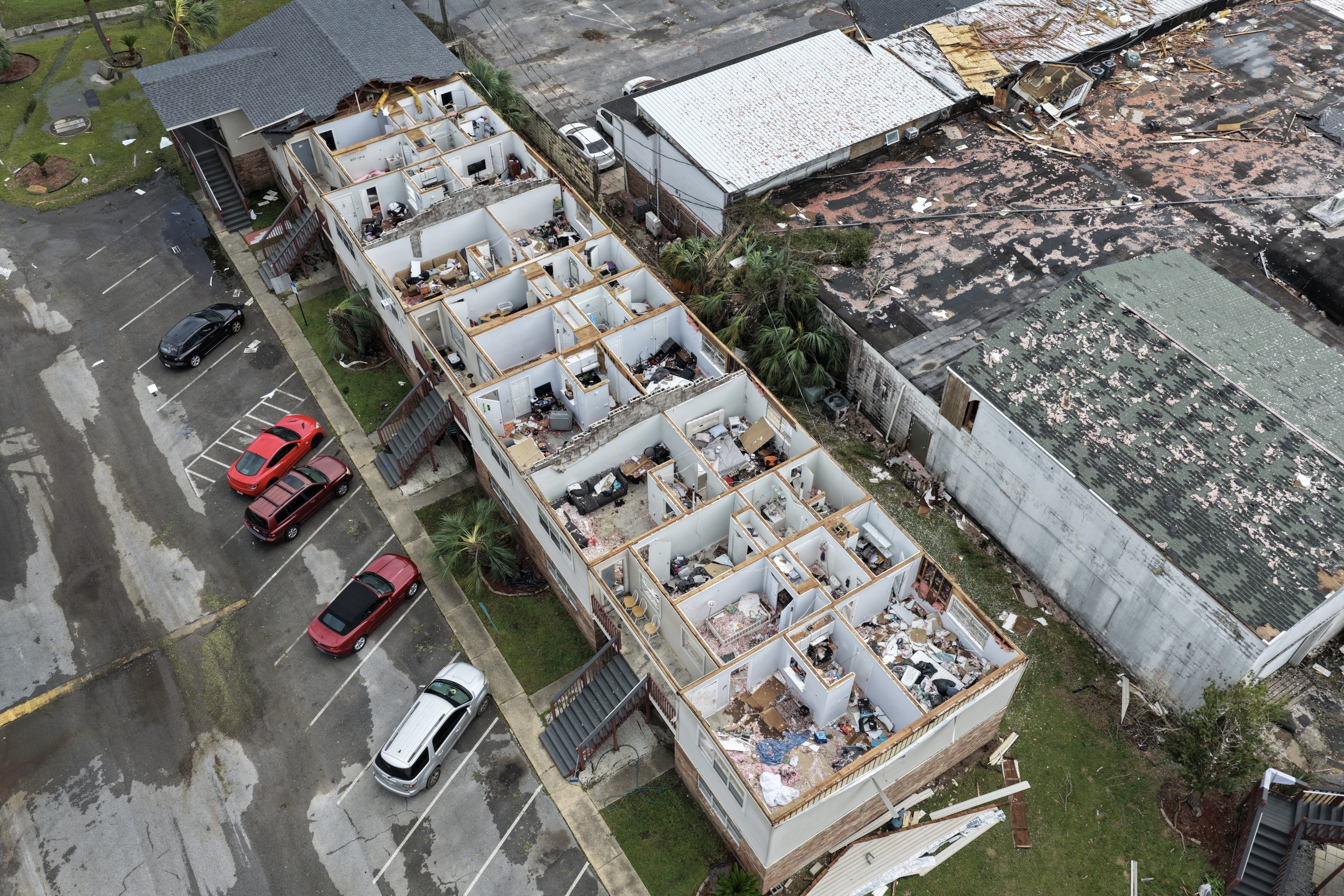
Most of the damage is concentrated in Veraguas, Herrera, Coclé and Los Santos. In La Villa de Los Santos, homes and the colonial-era Church of San Atanasio collapsed. About 300 people were evacuated from Isla Caña off the Los Santos coast because of rising seas and rough surf, and some communities were cut off by landslides and road damage.
One water treatment plant serving the Panama City area was operating at 20% capacity on Saturday, and tent facilities with cots were set up at six hospitals. Education Minister Ventura Vega said first surveys found 219 damaged schools, 24 of which will need to be rebuilt.
USGS Aftershock Forecast Points to a Long Week
The most useful number for families deciding whether to reenter damaged homes — the USGS aftershock forecast — points to more strong shaking. As of 15:50 UTC Sunday, the agency's catalog had recorded 54 aftershocks of magnitude 3 or greater, 14 of magnitude 5 or greater and two of magnitude 6 or greater across the sequence region.
For the week beginning Sunday, the USGS model puts the chance of at least one more magnitude 5 or larger aftershock at about 96%, with a likely range of zero to 13 such events. The chance of a magnitude 6 or larger aftershock is about 33%, and the chance of a magnitude 7 or larger is about 4%. The chance of an earthquake larger than the original magnitude 7.7 is below 1% for the week.
Those are probabilities — not predictions of timing or location. They matter most for anyone living in buildings already cracked by Friday's quake.
Scientists have described the main rupture as unusually damaging because it was shallow. "It was a very messy event, and shallow, which is not good," Jonathan Tytell, a geophysicist at the U.S. National Earthquake Information Center, told Bloomberg. He added that the energy was close to the surface and had little distance to dissipate.
The USGS says the quake's focal mechanism shows strike-slip faulting along the complex boundary around the Panama microplate. The National Earthquake Information Center said it was the strongest quake in that part of Panama since at least 1951, Bloomberg reported. An early USGS estimate suggested economic losses could exceed $1 billion.
Carlos Valdés, head of the seismology department at the National Autonomous University of Mexico, told the AP that Panama's strict building codes, particularly for high-rises in the capital, may help explain the comparatively low toll. Engineering reviews have not been released.
Travel, Shipping and Households Feel the Effects
The Panama Canal Authority said operations continued normally along the global trade route while technical teams inspected facilities. The Rio Times, citing Infobae, reported minor damage to four canal office buildings with no impact on navigation, which eases concerns about shipping delays for U.S. importers.
Air travel is less settled. Tocumen International Airport briefly suspended operations after the first quake and has paused takeoffs and landings while staff checks runways after felt aftershocks. Hundreds of travelers on Panama-based Copa Airlines were stranded at airports across the region, the AP reported. Copa is allowing customers with tickets issued by Oct. 9 for travel from Oct. 9 to Oct. 14 to rebook through Oct. 31 without change fees, request travel credit or seek refunds, The Rio Times reported.
The U.S. State Department said it mobilized a disaster response team with search-and-rescue expertise and pledged $5 million in humanitarian aid.
Residents in the affected provinces should follow guidance from Panama's civil protection system on whether buildings are safe to reenter, keep emergency supplies ready, and drop, cover, and hold on if strong shaking returns. U.S. travelers with plans to fly through Panama this week should check flight status directly with their airline before leaving home.
Open Questions for the Recovery
The consolidated damage count has not been released, and agencies' figures still differ. The education ministry has not said when schools will reopen after Monday or which campuses will remain closed longer, and officials said some isolated communities had not yet been fully assessed.
The government set aside up to US$100 million for relief and repairs, The Rio Times reported, but the full cost of rebuilding homes, schools and historic churches is not yet known.
The USGS updates its aftershock forecast daily, with the next scheduled update at about 16:00 UTC on Monday, Oct. 12. Nature World News will update this story as Panamanian authorities release consolidated damage figures and school reopening plans.
The bottom line is that Panama avoided a large death toll but faces a long recovery and a real chance of additional strong aftershocks this week. Residents should rely on official inspections before returning to damaged buildings, and travelers should confirm plans with airlines rather than social media reports.
What Readers Want to Know
What happened in Panama?
A magnitude 7.7 earthquake struck Herrera province at 12:56 p.m. local time on Friday, Oct. 9, followed by a magnitude 6.6 aftershock and more than 100 additional aftershocks. The government declared a state of emergency on Saturday.
Were there deaths?
Officials had not attributed any deaths to the earthquakes as of Saturday. Panama's civil protection system reported 27 people injured.
Which areas are hardest hit?
Damage is concentrated in Veraguas, Herrera, Coclé and Los Santos, though officials reported damage in all 10 provinces and two Indigenous territories.
Are more strong aftershocks likely?
Yes. The USGS forecast issued Sunday gives about a 96% chance of at least one magnitude 5 or larger aftershock in the following week and about a 33% chance of a magnitude 6 or larger.
Is the Panama Canal open?
Yes. The Panama Canal Authority said operations continued normally while inspectors checked facilities, and only minor damage to office buildings was reported.
Are schools closed?
Yes. The education ministry closed all public and private schools nationwide on Monday, Oct. 12, while engineers inspect buildings.
What should U.S. travelers do?
Check flight status with your airline before traveling. Copa Airlines is offering free changes, credits or refunds for eligible tickets for travel from Oct. 9 to Oct. 14.
© 2026 NatureWorldNews.com All rights reserved. Do not reproduce without permission.















 English (US) ·
  French (CA) ·