

 5 hours ago
4
PROTECT YOUR DNA WITH QUANTUM TECHNOLOGY
Orgo-Life the new way to the future Advertising by AdpathwayUpdate Note: This article reports new context on how a Princeton Plasma Physics Laboratory ignition calculation applies to fusion machines using tungsten walls, following Nature World News' earlier coverage. Latest sources reviewed: the Physical Review Letters study and ITER project statements.
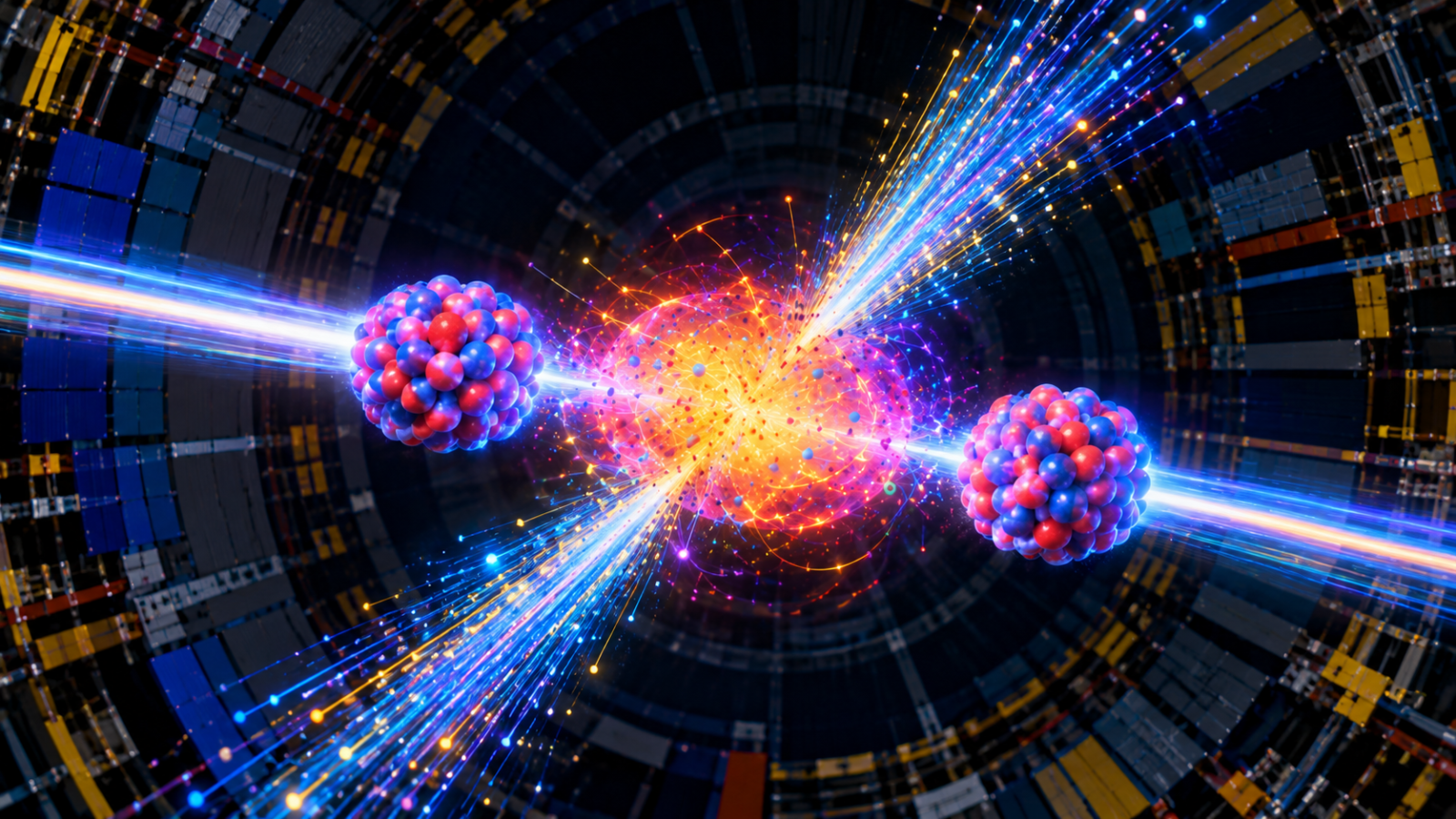
A new calculation from the Princeton Plasma Physics Laboratory (PPPL) suggests that tungsten contamination of about one part in 10,000 could roughly double the plasma pressure needed to reach fusion ignition, according to a summary of the study published in Physical Review Letters. That warning carries extra weight because ITER, the world's largest fusion project, has chosen tungsten to armor its main chamber walls.
ITER is replacing beryllium with tungsten across about 600 square meters (roughly 6,500 square feet) of plasma-facing wall as part of a project re-baselining, according to ITER Newsline. Tungsten is now "widely accepted as the best candidate plasma-facing material for future fusion power plants," ITER said, but burning plasmas can tolerate only very small amounts of it in their core.
For the engineers designing fusion power plants, and for the ratepayers and investors who may one day pay for them, the question is no longer whether tungsten matters — it is how tightly it must be kept out of the fuel.
The Mountain Pass Behind the Tungsten Finding
Nature World News previously reported on PPPL's calculation of a heat-first route to fusion ignition, which focused on how heating plasma before raising its density might reach ignition with less energy. Ignition is the point where fusion reactions keep the plasma hot without outside heating.
The researchers compare the usual approach to climbing straight over a mountain. Their alternative goes through a lower point on the ridge called the Cordey saddle. "Go around the peak instead. You reach the same place in a much smarter way, and you use far less energy," said lead author Luis Delgado-Aparicio.
The tungsten result comes from what the team added to the decades-old Lawson criterion: helium ash, wall contamination, radiation losses and heat leakage that grows with temperature. Those effects raise the saddle and make the pass harder to cross.
Helium ash is the spent product of fusion that dilutes the fuel if it is not removed. Synchrotron radiation is energy lost as charged particles spiral in a reactor's strong magnetic field. Neither had been folded into the ignition criterion this way before, the team said.
The added losses are not all bad news. The researchers found they may counteract thermal runaway, helping a burning plasma settle into a stable state rather than overheating.
Why a Trace of Tungsten Raises the Bar
Tungsten is favored for walls because it has the highest melting point of any metal and erodes slowly. The trouble starts when atoms knocked off the wall drift into the hot plasma, where they radiate away energy that would otherwise keep fusion going.
In the PPPL calculation, about one tungsten atom per 10,000 fuel particles roughly doubled the pressure needed for ignition. In a three-dimensional version of the analysis, the required pressure could exceed the plasma's stability limits, meaning the plasma could become unstable before igniting.
"When you put them in, the picture changes, and it becomes quite important," co-author Masayuki Ono said of the loss effects that simpler models leave out. The team said liquid lithium coatings on reactor walls could limit tungsten contamination and reduce heat loss, and spin-polarized fuel could raise the fusion reaction rate.
Reactor Designers Weigh Tungsten Against Its Risks
ITER's decision reflects years of experience. Its project said the physics case for full-tungsten operation is much stronger than when ITER was established in 2007, thanks to results from tokamaks in Germany, France, China and South Korea. Europe's JET machine earlier received an ITER-like wall to test such materials, Physics Today reported.
ITER also acknowledged remaining uncertainties, including how well results from medium-sized machines will scale up. The PPPL paper adds a quantitative reason to keep tungsten levels extremely low and to test protective strategies such as lithium.
Evidence check: this is peer-reviewed theory and calculation, not an experiment. Existing machines have not reached the temperatures linked to the Cordey saddle, and the authors gave no figure for how much energy their route would save. The team's next step is detailed computer simulation. Outside coverage reviewed for this article, including ScienceAlert, quoted no independent experts.
A Long Road From Calculation to the Grid
Fusion will not affect household electricity bills soon — the timeline is measured in years, not months. The study points to engineering choices, such as wall materials and fuel purity, that designers must settle long before any plant connects to the grid.
The groups with the most at stake are fusion engineers, national laboratories and private companies racing to build pilot plants, along with public funders. The work was funded by the Department of Energy's Office of Science, Office of Fusion Energy Sciences, with additional support from earlier DOE early career and long-pulse tokamak research awards. ITER, which is backed by an international partnership that includes the United States, is still working through its revised schedule after the re-baselining that brought the tungsten switch.
"While more study is needed, we are excited by these results," said co-author Jonathan Menard. What happens next is simulation work at PPPL and continued tungsten experiments at tokamaks worldwide. The bottom line is that a trace of wall metal could make ignition far harder, and machines built with tungsten walls will need to keep that metal almost entirely out of the fuel.
What Readers Want to Know
What did the PPPL study find about tungsten?
Tungsten contamination of about one part in 10,000 could roughly double the plasma pressure needed for ignition.
Why does that matter for ITER?
ITER is switching its main chamber wall armor from beryllium to tungsten, so keeping tungsten out of the plasma is essential.
What is the mountain pass idea?
The team calculated that heating plasma before increasing its density could reach ignition through a lower point called the Cordey saddle.
Was this tested in a reactor?
No. It is a theoretical calculation, and current machines have not reached the temperatures involved.
How could reactors limit tungsten?
The researchers point to liquid lithium wall coatings and spin-polarized fuel as possible strategies.
Will this lower my electric bill?
Not soon. Fusion power plants remain years away, and this work addresses design choices.
© 2026 NatureWorldNews.com All rights reserved. Do not reproduce without permission.
















 English (US) ·
 French (CA) ·