

 1 hour ago
5
PROTECT YOUR DNA WITH QUANTUM TECHNOLOGY
Orgo-Life the new way to the future Advertising by AdpathwayA comprehensive scoping review synthesising over two decades of published medical literature demonstrates extensive, bidirectional links between infectious diseases and chronic non-communicable conditions, challenging the traditional public health paradigm that manages them in isolation. Published in Infectious Diseases of Poverty, the investigation conducted by an international research team highlights how persistent infections directly initiate malignancies and organ damage, while pre-existing non-communicable diseases simultaneously increase patient susceptibility to severe infections. Historically, global health policy, clinical specialities, and health-care financing mechanisms have operated in separate vertical silos, treating communicable pathogens and chronic lifestyle disorders as independent domains. The authors emphasise that the growing coexistence of these health threats creates a complex double burden, particularly in low-income and middle-income nations where health systems face dual pressures from emerging infectious outbreaks and rising rates of chronic illness.
The methodological framework of the investigation followed established guidelines for scoping reviews, systematically mapping global evidence published between January 1, 2000, and April 20, 2026. The researchers searched major scientific databases including PubMed, Web of Science, and Scopus using broad combinations of terminology related to communicable conditions, chronic diseases, comorbidities, and biological interactions. Across the identified literature, the investigators prioritized English-language systematic reviews, meta-analyses, and population-level studies examining human cohorts, while intentionally excluding studies based exclusively on in vitro models, animal experiments, or non-peer-reviewed commentaries. From an initial pool of 5,799 retrieved bibliographic records, two reviewers independently conducted two-stage screening across titles, abstracts, and full texts to select eligible studies, resolving discrepancies through structured discussion to extract epidemiological effect estimates, relative risks, odds ratios, and corresponding confidence intervals.
From the broader database search, 41 systematic reviews and meta-analyses, supplemented by 11 targeted observational studies including cohort and case-control investigations, satisfied all predefined inclusion criteria, yielding a total evidence synthesis of 52 publications. The collected evidence was categorized into two central thematic domains: the direct oncogenic role of specific infectious pathogens in malignant transformation, and the reciprocal impact of chronic metabolic, cardiovascular, and respiratory diseases on host vulnerability and infectious disease severity. The authors noted that global epidemiological data from authoritative international bodies, including the World Health Organization and the Global Burden of Disease Study 2021, demonstrate that non-communicable conditions accounted for 41 million global deaths in 2021 alone, representing 74% of all worldwide mortality, even as recurring and emerging viral threats continue to impose acute population health risks.
In their assessment of infectious precursors to chronic illness, the authors documented that pathogens account for a substantial fraction of global cancer incidence, reflecting 16.1% of incident malignancies in 2008 and 12.2% in 2018 based on carcinogenic classifications established by the International Agency for Research on Cancer. Established viral drivers of cancer featured prominently across the synthesized systematic reviews, notably hepatitis B virus and hepatitis C virus, which serve as primary infectious causes of hepatocellular carcinoma. Infected individuals exhibit a 12.5-fold higher risk of liver cancer when carrying hepatitis B and an 11.2-fold higher risk with hepatitis C compared to uninfected controls, with the two viruses accounting for global attributable fractions of 52% and 21% of hepatocellular carcinoma cases respectively in 2022. Similarly, high-risk strains of human papillomavirus account for an estimated 90% of cervical and anal cancers, 70% of vulvar and vaginal cancers, 60% of penile cancers, and 70% of oropharyngeal carcinomas, while Epstein-Barr virus is associated with over 95% of nasopharyngeal carcinomas in high-incidence zones of Eastern and Southeastern Asia.
The review detailed major parasitic and bacterial infections that establish chronic oncogenic pathologies through sustained tissue inflammation and cellular damage. Chronic infection with the parasitic fluke Schistosoma haematobium is classified as a Group 1 human carcinogen, increasing the risk of bladder cancer by approximately 2-fold to 15-fold and detected in 82.4% of bladder cancer specimens in highly endemic regions, where up to 85% of squamous cell bladder carcinomas are attributed to infection. Food-borne liver flukes Clonorchis sinensis and Opisthorchis viverrini significantly increase the odds of cholangiocarcinoma by 4.49-fold and 3.69-fold, respectively, yielding an overall 4.24-fold elevated odds among infected cohorts. Among bacterial agents, Helicobacter pylori, which maintained a global prevalence of 43.1% between 2011 and 2022, increases the risk of non-cardia gastric cancer by 2.5-fold in Asian populations and 5.4-fold in European and North American populations, although eradication therapy achieves an estimated 36% relative reduction in gastric cancer incidence among patients without pre-existing neoplasia.
Examining the reciprocal pathway, the scoping review demonstrated that non-communicable chronic conditions substantially weaken host defences, heightening susceptibility to infection and worsening acute clinical outcomes. Individuals diagnosed with type 2 diabetes mellitus demonstrate an estimated 1.5-fold to 4-fold elevated risk of acquiring infections compared to populations without diabetes, driven in part by chronic hyperglycaemia that impairs both innate and adaptive immune responses. The authors noted consistent findings across meta-analyses linking diabetes to heightened vulnerability to pulmonary tuberculosis, severe influenza, and bacterial pneumonia.
Cardiovascular disease and chronic respiratory conditions similarly compound the clinical severity of infectious diseases while suffering acute exacerbations triggered by infection. During the Omicron variant wave of SARS-CoV-2, pre-existing heart disease was associated with an approximate 27% increase in the risk of hospital admission, while pre-existing heart failure was linked to a 78% higher risk of death. Furthermore, synthesized meta-analyses revealed that patients suffering from chronic obstructive pulmonary disease were more than five times as likely to develop severe COVID-19 as patients without underlying lung pathology, while individuals with pre-existing cancer faced a 3.6-fold higher risk of severe coronavirus disease.
The researchers contextualized these complex interactions within a multidimensional epidemiological triangle encompassing pathogen transmission, host immune competence, and social or environmental determinants. Host defence mechanisms undergo predictable shifts across the lifespan, maturing from childhood into early adulthood before progressively declining with advancing age, a physiological trajectory that intersects directly with the steep rise in chronic disease prevalence among older adults. In addition to age-related biological vulnerability, broader socioeconomic determinants—including poverty, overcrowded living environments, inadequate sanitation, and limited health-care access—jointly foster the transmission of infectious agents while promoting chronic metabolic disease through poor dietary nutrition and economic barriers to ongoing therapy, creating entrenched comorbidities such as coexisting tuberculosis and diabetes in resource-constrained communities.
Public health disruptions documented during recent global outbreaks further underscore the practical consequences of fragmented health-care delivery and vertical disease financing. During the emergency response to COVID-19, widespread redirection of clinical personnel, hospital facilities, and diagnostic resources towards the acute viral outbreak severely interrupted routine chronic disease management.
The authors conclude that addressing the dual burden of infectious and non-communicable conditions requires a decisive move away from isolated, disease-specific programmes towards integrated clinical and prevention frameworks. Clinical management models can achieve substantial public health benefits by coordinating childhood and adolescent vaccination programmes against oncogenic viruses like hepatitis B virus and human papillomavirus alongside routine screening, lifestyle modification support, and early medical intervention for metabolic and cardiovascular disorders. Systemic health policies that bridge traditional funding streams and combine primary prevention, infection control, and chronic disease surveillance represent essential strategies for mitigating synergistic health risks and building sustainable health systems worldwide.
Subject of Research: Bidirectional epidemiological and clinical interactions between infectious diseases and chronic non-communicable diseases
Article Title: Co-managing the double burden: strategies for simultaneously tackling infectious and non-communicable diseases
Article References: Li, J.-J., Fu, M.-L., Kong, L.-F., Zhao, Z.-Y., Ohore, O. E., Bergquist, R., Tanner, M., & Yang, G.-J. (2026). Co-managing the double burden: strategies for simultaneously tackling infectious and non-communicable diseases. Infectious Diseases of Poverty, 15(1), Article 85. https://doi.org/10.1186/s40249-026-01477-y
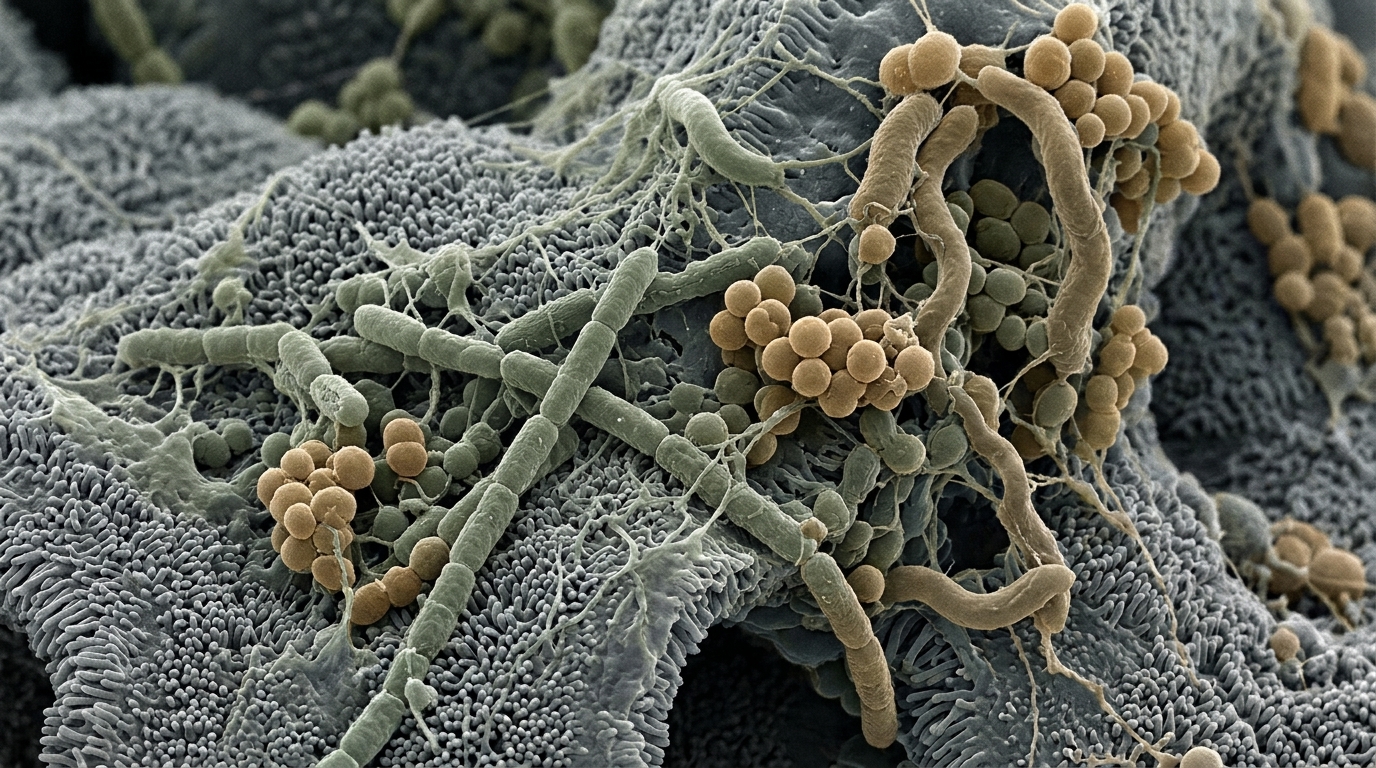
Image Credits: AI Generated
DOI: 10.1186/s40249-026-01477-y
Keywords: infectious diseases, non-communicable diseases, hepatitis B virus, hepatitis C virus, human papillomavirus, Helicobacter pylori, Epstein-Barr virus, Schistosoma haematobium, liver flukes, type 2 diabetes mellitus, cardiovascular disease, chronic obstructive pulmonary disease, SARS-CoV-2, hepatocellular carcinoma, gastric cancer, cholangiocarcinoma, public health policy, disease comorbidity




















 English (US) ·
 French (CA) ·