

PROTECT YOUR DNA WITH QUANTUM TECHNOLOGY
Orgo-Life the new way to the future Advertising by AdpathwayAvis Dam lies just east of Windhoek, where the Avis River was dammed by South African colonial authorities in the 1930s to supply the growing town with water. In a country this dry, a reservoir is surely necessary but simultanoeusly a symbol of optimism – Avis is often less full than its engineers would have hoped. What it lacks in water it makes up for in views. A walking trail circles the reservoir, climbing over rocky hillsides of thorn scrub with the city in one direction and nothing much in the other. I paid the reserve an early morning visit during a short stay in Windhoek, the crisp and clear winter air providing a lovely setting for a short walk. Admittedly, I did not do the whole walk, as my main target can best be found pretty close to the parking lot.
Pairs of Pririt Batis worked their way through the acacias, the males with a neat black breast band and the females with a cinnamon wash on the throat. Like most batises they were constantly on the move, preening insects from the foliage, which made photography an exercise in patience.
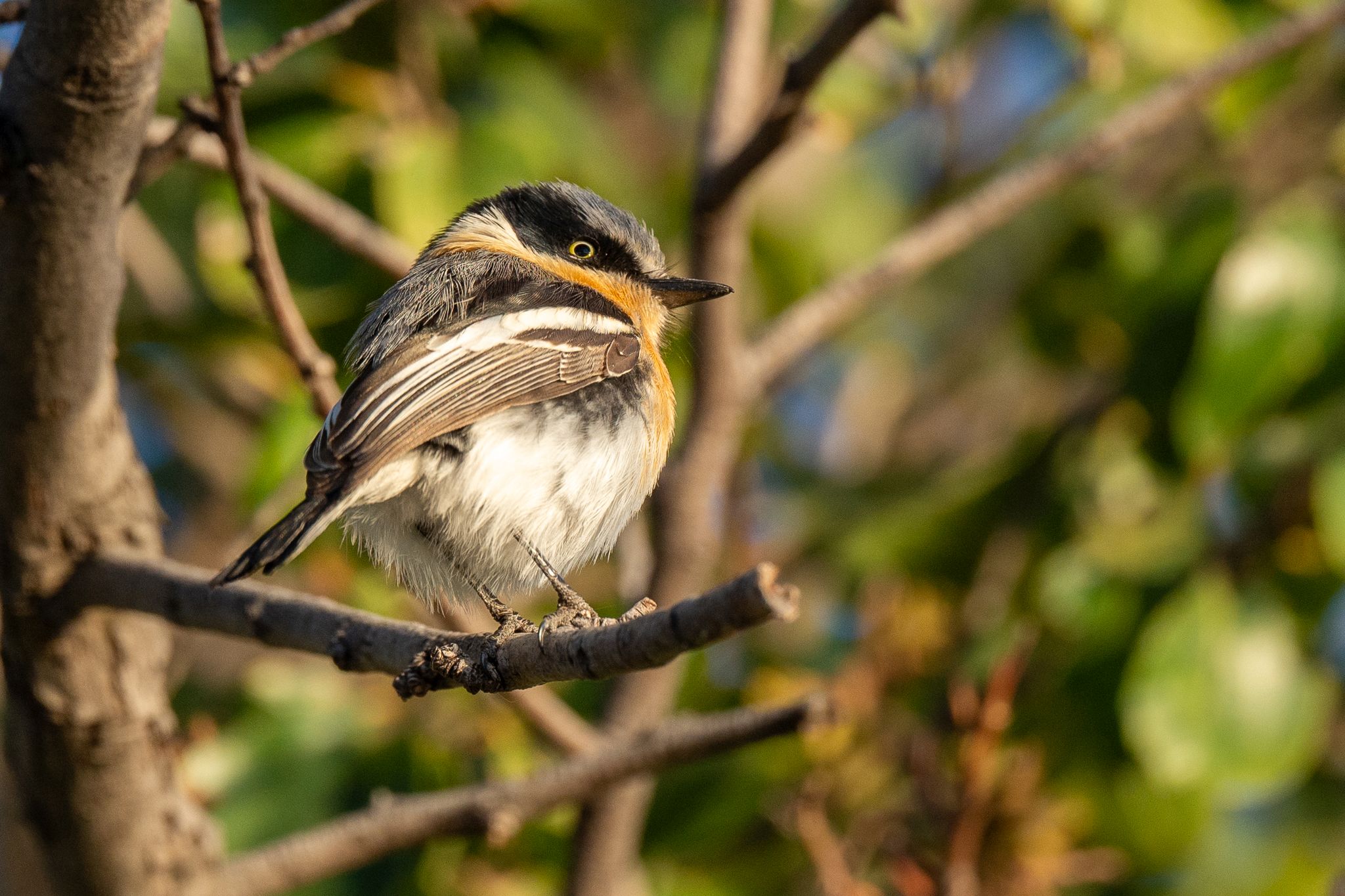 Pririt Batis
There was still more than enough water to hold a good number of waterbirds. Over 30 Great White Pelicans floated on the open water, floating along the surface with an expression that seemed to indicate a mixture of boredom and disdain. Sometimes however, their facade broke when one individual came across a school of fish, and some agitation ensued as a group of pelicans would run up a smaller group of fish and jerk their bills into the water.
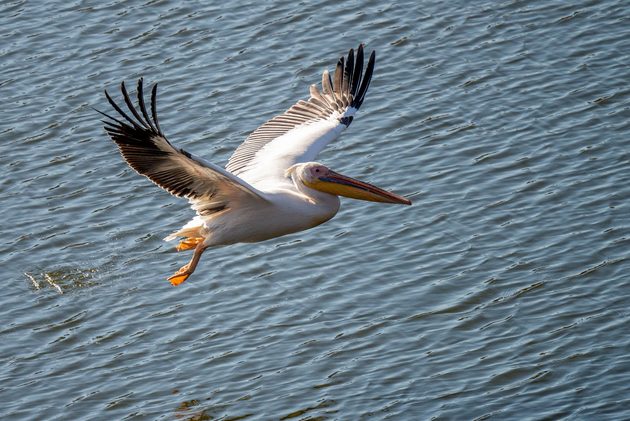 Great White Pelican
More exciting for me was a group of Maccoa Ducks, which I’ve only seen a handful of times before. Males in breeding plumage are a deep chestnut with a black head and a bill of an almost unreal sky blue. The species is a stiff-tailed duck, including several members that are globally threatened.
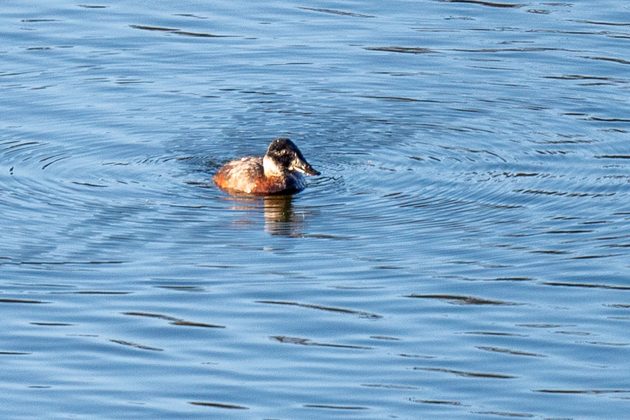 Maccoa Duck
The rocky slopes held plenty of Rock Hyraxes, sunning themselves on boulders with the air of retirees who enjoy a well-earned respite from the rat race – although that term begs the inclusion of the favourite fact recounted by tour guides, that their closest living relatives are elephants and sea cows. Despite having spent several weeks in Namibia researching human-elephant conflict, I did not manage to identify similar dynamics in the pachyderms’ little cousins.
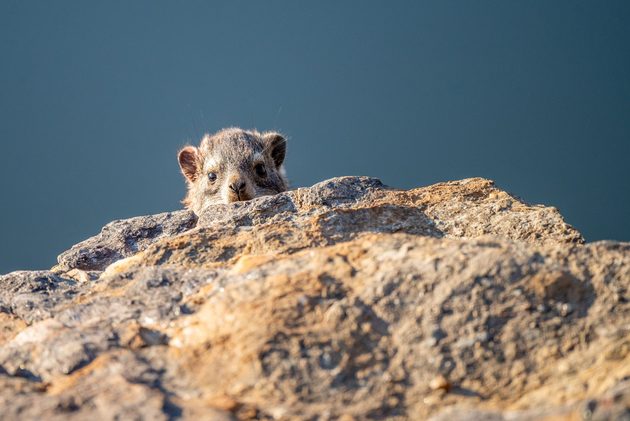 Rock Hyrax
My main target, though, was the Rockrunner. This near-endemic of Namibia and southern Angola has been a taxonomic nomad, at various times called a babbler, a warbler and a “Damara Rockjumper”, before settling in the African warbler family Macrosphenidae. Whatever it is, it lives up to its English name. Although I eventually came across a very obliging individual perched in a bush, my initial two sightings consisted of blurry tan balls shooting across a boulder. I had seen this species once ten years previously – in Daan Viljoen Game Reserve on the other side of town, but this was a much better sighting.
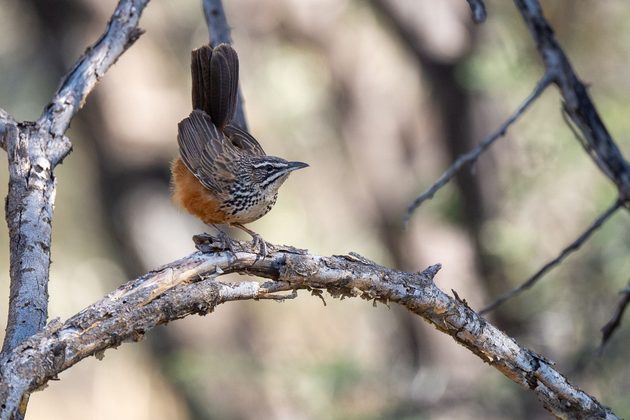 Rockrunner
For a site twenty minutes from the capital, Avis Dam delivers a great array of birds – despite only going for a morning walk in winter without migrants present, I tallied over 50 species. If you’re passing through Windhoek with a free morning, I can’t think of a better way to spend it.

Written by Luca
Family holidays to nature reserves and the abundance of nature books including bird guides at home paved the way for Luca Feuerriegel to be a committed birder by the time he was in his early teens. Growing up in Namibia, South Africa, and Sri Lanka provided the perfect setting for this interest. Luca recently completed his BSc in the Netherlands and currently spends his time working (and birding!) before starting his MSc.

















 English (US) ·
 French (CA) ·