

 1 month ago
63
1 month ago
63
For travelers who enjoy exploring the highlands, rural landscapes, and cultural traditions beyond Cebu’s busy cities and famous beaches, the Sanggi Festival in Tabogon offers a meaningful and colorful reason to travel north.

Sanggi Festival in Tabogon, Cebu
Held in the municipality of Tabogon in northern Cebu, the festival is a celebration of agriculture, harvest, thanksgiving, and devotion to San Isidro Labrador, or St. Isidore the Laborer. The word sanggi is associated with harvesting, making the festival a tribute to the farmers whose hard work has long supported the community.
What makes the Sanggi Festival particularly interesting is that it is more than a street-dancing event. Its performances tell the story of life in the fields, from planting and sowing to harvesting and giving thanks for a successful season. Traditional farming movements, colorful costumes, lively Cebuano music, and religious celebrations come together to create an experience that reflects the identity and spirit of the Taboganon people.
For visitors, the festival is also an opportunity to discover a quieter side of Cebu, where mountains, agricultural communities, coastal landscapes, and local traditions coexist.
The History of the Sanggi Festival
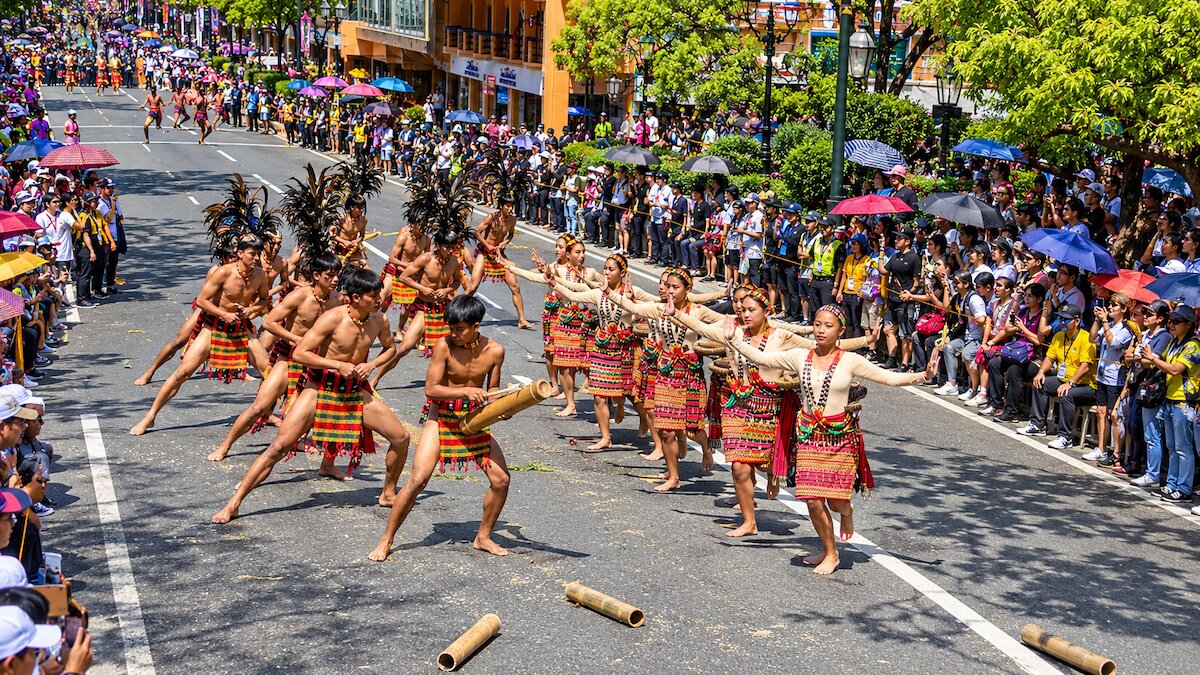
 Sanggi Festival By Herbertkikoy – Own work, CC BY-SA 4.0, Wikimedia Commons
The Sanggi Festival was launched in 2013 during the administration of then Mayor Eusebio Dungog. It developed from Tabogon’s desire to establish a festival that would strongly represent the municipality’s agricultural identity and the importance of farmers and rural communities.
Before Sanggi, Tabogon celebrated the Pausbaw Festival, another celebration closely connected with agricultural development and the role of farmers and carabaos in local life. Sanggi continued this agricultural theme but placed greater emphasis on the cycle of farming, harvest, and thanksgiving.
The festival’s cultural presentations draw inspiration from important stages of agricultural work. These include pamugas (sowing), sanggi (harvesting), and pasalamat (thanksgiving). Through dance and music, performers recreate the physical movements and emotional journey of farming—from the demanding work in the fields to the joy of a successful harvest.
The festival is also deeply connected with the annual feast of San Isidro Labrador, the patron saint of farmers. This religious connection adds a spiritual dimension, as the celebration recognizes both the people’s hard work and their gratitude for the blessings of a fruitful harvest.
After being interrupted during the COVID-19 pandemic, the Sanggi Festival was revived in 2023. The revival aimed to help preserve Tabogon’s cultural traditions and introduce them to younger generations. The festival has continued to represent the municipality’s agricultural heritage, faith, and community pride.
What Does “Sanggi” Mean?
The word sanggi is associated with the Cebuano concept of harvesting. It perfectly reflects the central theme of the festival: the gathering of the fruits of hard work.
Agriculture remains an important part of Tabogon’s identity, and the festival celebrates not only local crops but also the perseverance and dedication of the people who work the land.
The festival’s performances traditionally present a story that begins with labor and ends with celebration. Sowing, farming, harvesting, and thanksgiving are transformed into colorful choreography. The result is a festival that feels energetic and festive while remaining closely connected to everyday life in rural Cebu.
Things to Do and See During the Sanggi Festival
1. Watch the Sanggi Festival Street Dancing
The street-dancing presentation is one of the biggest highlights of the celebration. Groups of performers dressed in colorful costumes dance through designated streets, performing movements inspired by agricultural life.
Expect energetic choreography that reflects planting, cultivating, harvesting, and celebrating the land’s bounty. The performances are often accompanied by rhythmic music and props inspired by farming traditions.
For first-time visitors, the street dancing is the best way to understand the story behind the festival.
2. Experience the Grand Ritual Showdown
After the street presentations, festival contingents may perform in a grand showdown or cultural presentation.
This is where the storytelling becomes more theatrical. Performers combine dance, music, costumes, and agricultural imagery to convey Tabogon’s identity and the meaning of Sanggi.
The showdown is particularly enjoyable for visitors who appreciate cultural performances and photography.
3. Join the Town Fiesta Atmosphere
The Sanggi Festival coincides with Tabogon’s fiesta celebrations in honor of San Isidro Labrador.
During the fiesta period, visitors can experience a more festive atmosphere throughout the town. Religious activities, community gatherings, local entertainment, and other special events may take place alongside the cultural festival.
The combination of faith and celebration gives the event a distinctly Cebuano character.
4. Visit the Local Church
A visit to the local church is a meaningful part of the Sanggi Festival experience.
San Isidro Labrador is the patron saint associated with farmers and agricultural workers, making the religious celebration an important part of the festival’s identity.
Visitors attending the fiesta can witness how faith remains closely connected with everyday life and agricultural traditions in the community.
5. Explore the Countryside and Highland Areas of Tabogon
Travelers who love the highlands should consider extending their visit beyond the festival.
Tabogon has a landscape shaped by upland communities, agricultural areas, hills, and a coastline facing the Visayan Sea. Driving through the municipality offers glimpses of rural Cebu that many visitors miss when traveling only between Cebu City and the province’s major tourist destinations.
The festival period is an excellent time to appreciate the connection between the celebration and the landscapes that inspired it.
6. Try Local Food and Support Small Businesses
Fiesta celebrations are always a good opportunity to experience local food.
While the exact food stalls and vendors vary each year, visitors should explore local eateries, markets, and temporary food areas during the celebration. Trying regional dishes and buying from local vendors are also great ways to support the community.
Sanggi Festival Schedule of Activities
The exact Sanggi Festival program changes from year to year, so visitors should treat the following as a typical or sample schedule of activities rather than a fixed annual timetable.
The festival is traditionally associated with Tabogon’s fiesta celebration in May and is connected with the feast of San Isidro Labrador.
Sample Sanggi Festival Schedule of Activities
| Opening activities and community events | Several days before the main festival |
| Religious novena and church activities | Days leading to the fiesta |
| Local sports and community competitions | Fiesta week |
| Cultural and musical programs | Fiesta week |
| Food and trade activities | Fiesta week |
| Sanggi Festival street dancing | Main festival day |
| Grand ritual showdown | Main festival day |
| Fiesta Mass in honor of San Isidro Labrador | Main fiesta period |
| Community celebration and thanksgiving activities | Main festival day and surrounding dates |
| Closing programs | After the main celebration |
The main festival program may include street dancing and a grand showdown, with additional cultural, religious, and community activities taking place throughout the fiesta period.
Travel Tip: If you are planning a trip specifically for the festival, confirm the official schedule with the local government shortly before your trip because performance times, parade routes, and supporting events may change.
How to Get to Tabogon, Cebu
From Cebu City
The most common way to reach Tabogon is by traveling north from Cebu City.
Head to the Cebu North Bus Terminal and look for buses traveling toward northern Cebu. Depending on the available route, you may need to take a bus directly to Tabogon or travel toward a nearby northern Cebu destination and transfer to local transportation.
Travel time varies depending on traffic, road conditions, stops, and the bus route, but travelers should generally allow several hours for the journey.
By Private Vehicle
Traveling by private car is one of the most convenient ways to explore Tabogon, especially if you also want to visit upland communities and countryside attractions.
From Cebu City, follow the northern route through the municipalities and cities of northern Cebu toward Tabogon. Allow extra travel time during the fiesta period, as roads near the town center may be busy.
From Mactan-Cebu International Airport
Visitors arriving at Mactan-Cebu International Airport can travel to Cebu City’s northern transport terminal and continue by bus toward Tabogon.
If your flight arrives late in the day, consider spending the night in Metro Cebu before beginning your journey north the following morning. This can make the trip less tiring and give you more flexibility with transportation schedules.
Important Travel Tips for the Sanggi Festival
Arrive Early on Festival Day
Street-dancing areas and major viewing points can become crowded. Arrive early if you want a good viewing position or plan to take photographs.
Book Accommodation in Advance
Accommodation options in smaller municipalities can be more limited than in Cebu City. If you are attending the festival, arrange your stay as early as possible.
You may also consider staying in a nearby municipality in northern Cebu and traveling to Tabogon for the main festival activities.
Prepare for the Weather
May can be hot and humid in Cebu, although weather conditions can vary.
Bring:
- Drinking water
- Sunscreen
- A hat or cap
- Comfortable clothing
- Comfortable walking shoes
- A small umbrella or rain jacket
Carry Cash
Digital payments are increasingly common, but smaller stores, transport operators, and market vendors may still prefer cash.
Bring enough Philippine pesos for food, transportation, and small purchases.
Respect Religious Activities
The Sanggi Festival is connected with the feast of San Isidro Labrador.
When attending Masses, processions, and other religious activities, dress respectfully and avoid disrupting worshippers.
Explore Beyond the Main Festival
Do not spend your entire visit waiting for the parade.
Tabogon is worth exploring for its rural landscapes and local atmosphere. Take time to appreciate the countryside and learn more about the community behind the festival.
Confirm the Annual Program
The festival’s exact dates and activities can change.
Always check the latest announcements from the local government before finalizing transportation and accommodation plans.
Frequently Asked Questions About the Sanggi Festival
When is the Sanggi Festival held?
The Sanggi Festival is traditionally celebrated in May as part of Tabogon’s fiesta honoring San Isidro Labrador. Travelers should always confirm the official annual schedule before making travel plans.
Where is the Sanggi Festival held?
The festival is held in the municipality of Tabogon in northern Cebu, Philippines.
What is the Sanggi Festival celebrating?
The festival celebrates agriculture, the harvest, thanksgiving, community life, and devotion to San Isidro Labrador, the patron saint of farmers.
What does Sanggi mean?
Sanggi is associated with the Cebuano concept of harvesting, reflecting the festival’s central theme of gathering the fruits of agricultural labor.
What is the highlight of the Sanggi Festival?
The major highlights are the colorful street dancing and grand cultural or ritual showdown, where performers present stories inspired by farming, harvesting, and thanksgiving.
Is the Sanggi Festival a religious festival?
Yes. While it is strongly focused on agriculture and culture, the festival is also connected with the annual feast of San Isidro Labrador.
How far is Tabogon from Cebu City?
Tabogon is located in northern Cebu and requires a long overland journey from Cebu City. Travel time depends on traffic, transportation schedules, and the number of stops, so visitors should allow several hours.
Is Sanggi Festival worth visiting?
Yes, especially for travelers interested in Philippine festivals, rural culture, agriculture, and destinations beyond Cebu’s major tourist centers. It offers a more community-centered experience and provides insight into the traditions that shape life in northern Cebu.
Final Thoughts
The Sanggi Festival is one of those celebrations that allows travelers to see a deeper and more authentic side of Cebu.
Rather than focusing solely on spectacle, the festival tells the story of the people of Tabogon: their work, agricultural traditions, faith, and gratitude. From the symbolic movements of sowing and harvesting to the colorful energy of the street dancers, every major element reflects the relationship between the community and the land.
For travelers who love exploring the highlands and countryside, attending the Sanggi Festival is an excellent excuse to venture beyond the usual Cebu itinerary. It combines culture with rural scenery, religious tradition with joyful celebration, and history with a strong sense of community.
Visit during the fiesta season, watch the dancers bring agricultural life to the streets, explore the surrounding countryside, and take time to appreciate the simple but powerful message at the heart of Sanggi: hard work, a fruitful harvest, and gratitude for the blessings received.
Follow and subscribe to OutofTownBlog.com on Facebook , Twitter, Instagram, Pinterest, and YouTube for more Travel-related updates.
Read:


















 English (US) ·
  French (CA) ·