

PROTECT YOUR DNA WITH QUANTUM TECHNOLOGY
Orgo-Life the new way to the future Advertising by Adpathway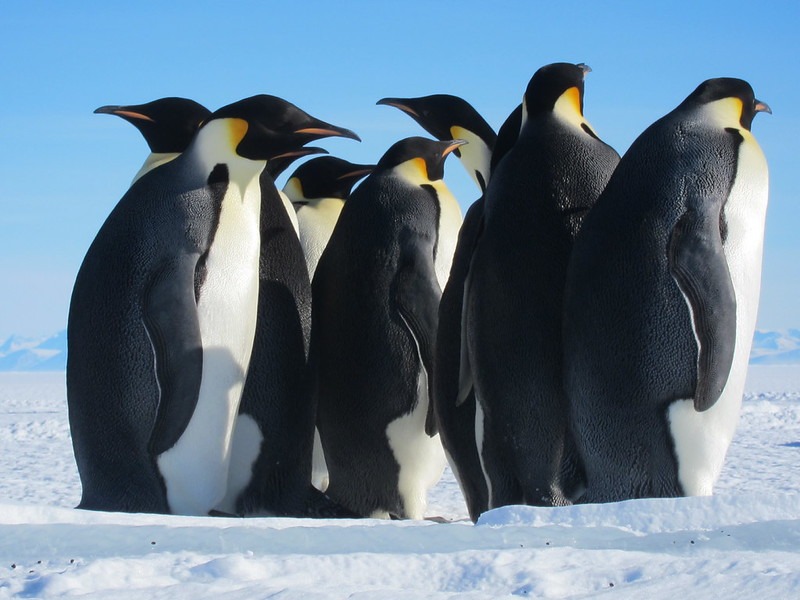
Well, they are not really bad at being birds – evolutionarily speaking, they are extremely good at being exactly the birds they are. But they fail at the things humans stereotypically expect birds to do. So, if you confront them with what is listed below, they will just shrug and say “Joke’s on you” (also a great song by Hallelujah the Hills).
Emperor Penguin: Bad at selecting a decent location for incubation
It breeds during the Antarctic winter, incubating an egg for around two months while fasting at maybe -50 degrees Celsius. Somehow, it still works, but why not do the same in Hawaii? Bonus points for being well-adapted, but this adaptation solves a problem that could have easily been avoided in the first place.
Common Cuckoo: Bad at parenting
Or maybe it is all just an excuse for laziness – “You take care of the chicks, I wouldn’t be good at it anyway”?
Ostrich: Bad at flying
Ask kids what makes birds special, and they will probably mention flight first. Which is why the ostrich and some of its relatives decided to gain weight and give up on this amazing ability. A bit like buying a car and then filling it with so much luggage that it can no longer move.
White Tern: Bad at nest building
This tern does not construct a nest. Instead, it lays its single egg, often delicately balanced, on a branch, building, or rock. Apparently, they are fully aware of the dangers of this, as this HBW quote shows: “Because of the precarious location of eggs, adults are extremely careful when settling on or rising from their eggs”.
Swifts: Bad at walking
To the extent that some species cannot take off from flat ground (source: HBW)
Great Crested Grebe: Also bad at walking
“On land, they are clumsy because their feet are placed so far back on their bodies.” (RSPB)
Oilbird: Bad at using daylight
The oilbird experiences darkness not only at night while foraging but also during the day in the blackness of its cave, using both vision and echolocation. Its retina has the highest rod density recorded in any vertebrate, which would not really be necessary if it kept to regular business hours.
Hoatzin: Bad at digestion
Using foregut fermentation to digest vegetation seems like a good idea – if you are a cow. Not so much if you still want to fly while having the bulky digestive system this requires.
Great Frigatebird: Bad at swimming
While this would be totally ok for a landbird, it is decidedly weird for a bird that lives and feeds exclusively in tropical and subtropical seas. Apparently, frigatebirds never swim voluntarily and have great difficulty rising from the sea once in the water. The waterproofing of their feathers is believed to be inadequate.
Common Poorwill: Bad at staying awake
This is the only bird that spends long periods during winter completely inactive. Individuals in the southern part of the range are completely inactive on as many as 90% of all winter days, and body temperatures can go as low as 5°C.
Of course, all these birds survive perfectly well despite their supposed shortcomings. Which rather undermines the whole point of this post.
Photo: “emperor penguins” by sandwichgirl is licensed under CC BY-NC-ND 2.0.

Written by Kai Pflug
Kai has lived in Shanghai for 22 years. He only started birding after moving to China, so he is far more familiar with Chinese birds than the ones back in his native Germany. As a birder, he considers himself strictly average and tries to make up for it with photography, which he shares on a separate website. Alas, most of the photos are pretty average as well. He hopes that few clients of his consulting firm—focused on China’s chemical industry—ever find this blog, as it might raise questions about his professional priorities. Much of his time is spent either editing posts for 10,000 Birds or cleaning the litter boxes of his numerous indoor cats. He occasionally considers writing a piece comparing the two activities.


















 English (US) ·
  French (CA) ·