

PROTECT YOUR DNA WITH QUANTUM TECHNOLOGY
Orgo-Life the new way to the future Advertising by Adpathway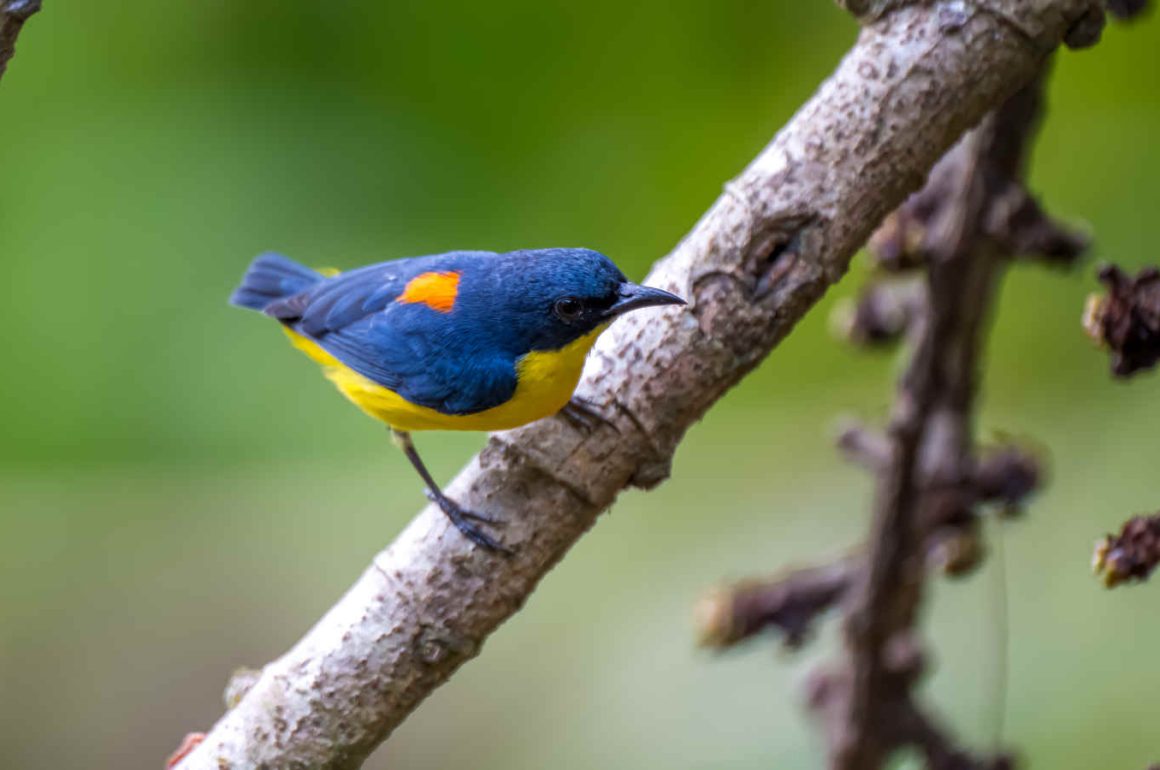
The Philippines has about 10–12 flowerpecker species, of which 7–9 are strictly Philippine endemics.
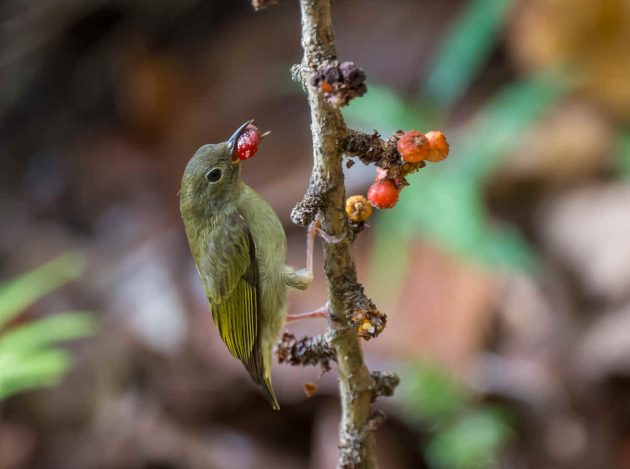
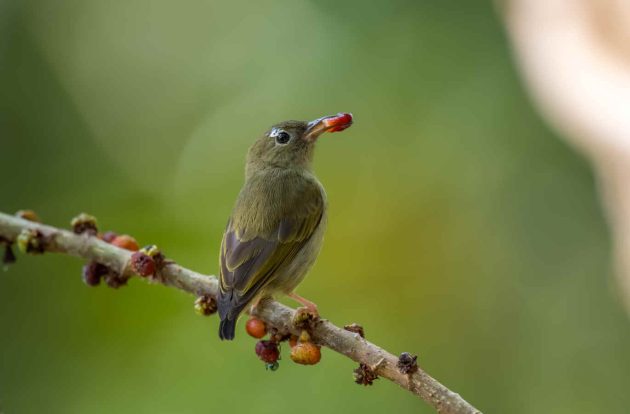
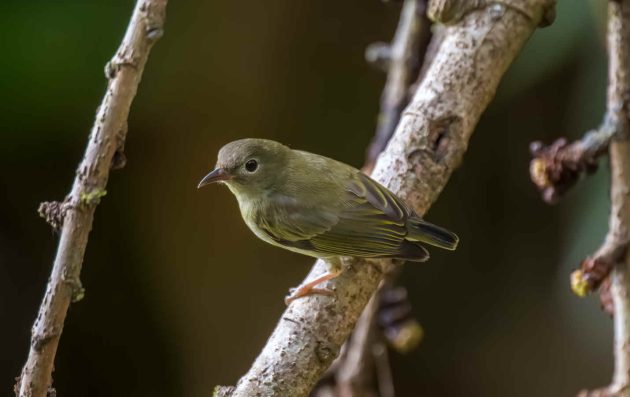
One of the endemics is the Buzzing Flowerpecker, which the HBW does not outright call boring-looking, but the term “simple-patterned” probably has a similar meaning and might be the bird description equivalent of “beautiful soul”.
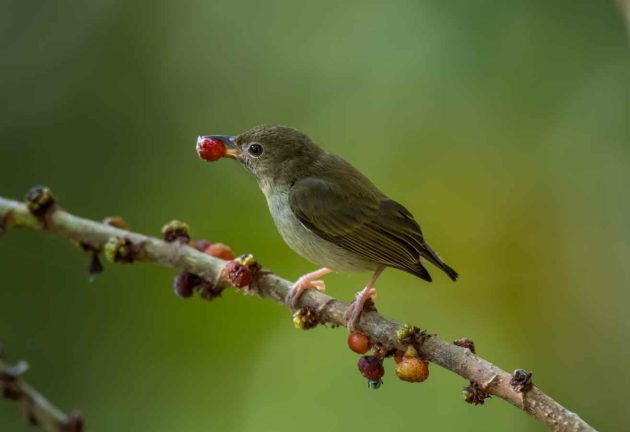
The scientific name Dicaeum hypoleucum focuses on the white belly.
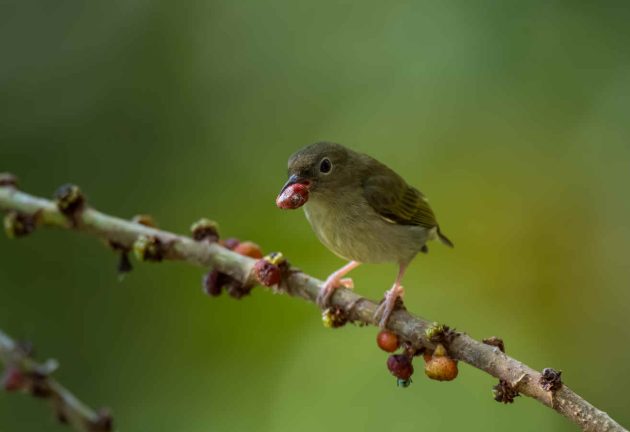
It is a common bird, and apparently relatively easy to photograph (just counting the number of halfway decent shots I got of the bird).
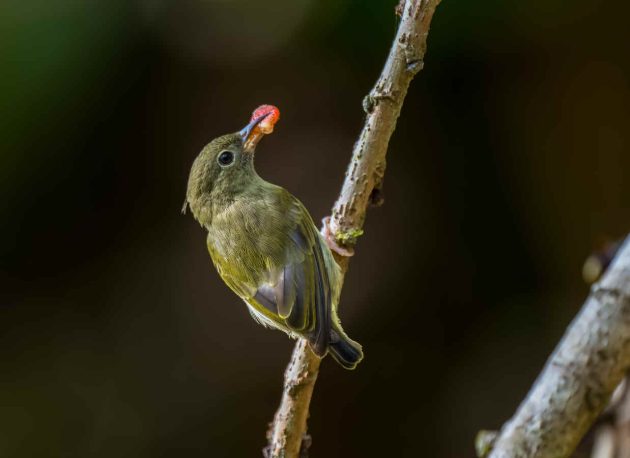
Like the other flowerpeckers in this post, it does not peck at flowers much (what good would that do anyway) but rather lives mainly on fruit.
While there is a paper exclusively focusing on the species, it does not lend itself to extracting some interesting facts or even soundbites:
“A phylogeographic approach revealed the presence of three discrete genomic lineages corresponding to the three phenotypic lineages. Yet phylogenetic reconstructions repeatedly generated conflicting topologies with high levels of uncertainty, and significant ABBA/BABA tests imply uneven patterns of allele sharing that cannot be explained without invoking gene flow … This high level of phylogenomic discordance explains the inconsistent and conflicting results recovered across phylogenetic reconstructions. Finally, multispecies coalescent modelling revealed that a polytomy (i.e., simultaneous three-population split) with ongoing gene flow between adjacent lineages provides the best fit to the empirical data.”
Practical advice to parents: Show the paper above to your kid if he/she wants to be an ornithologist, but you would rather she/he become an accountant.
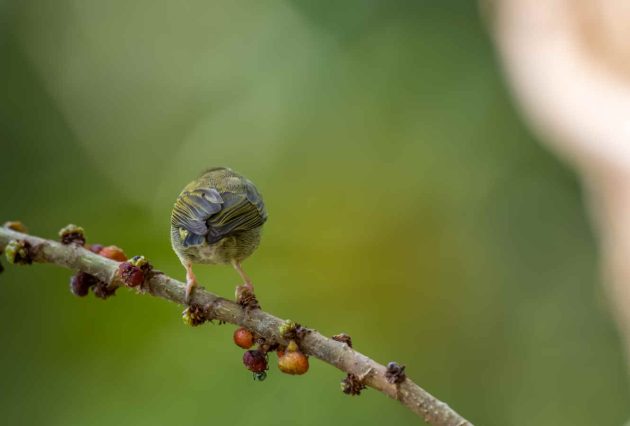
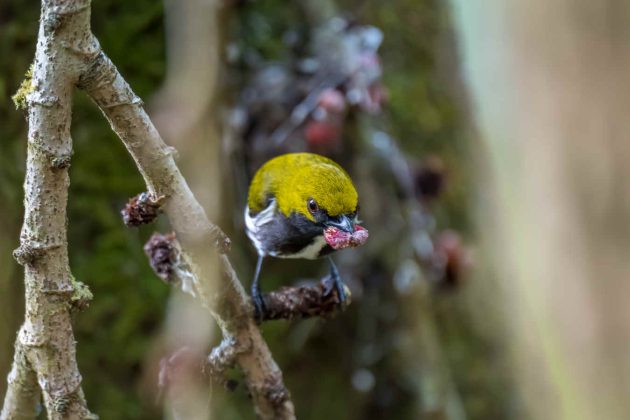
Moving up on the flowerpecker attractiveness scale, here is the Olive-backed Flowerpecker, another endemic.
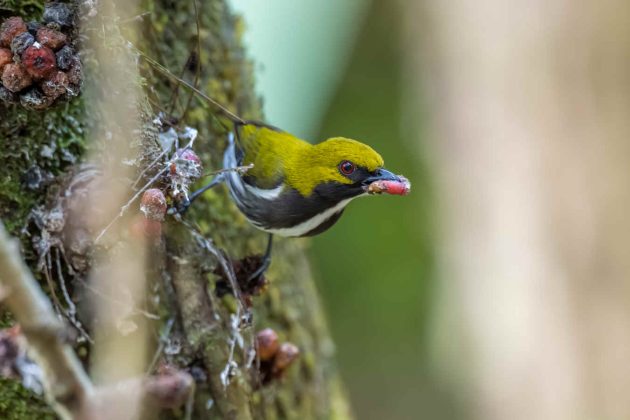
While listed as Least Concern, the HBW also notes that the species is poorly known and uncommon in all parts of its range.
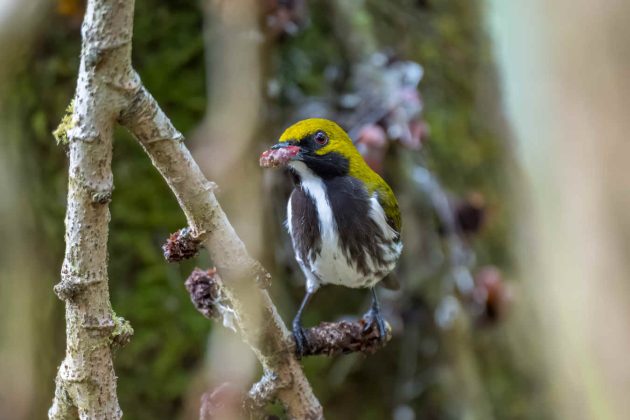
The brevity of the HBW entry and the lack of any specific papers on the species confirm this assessment.
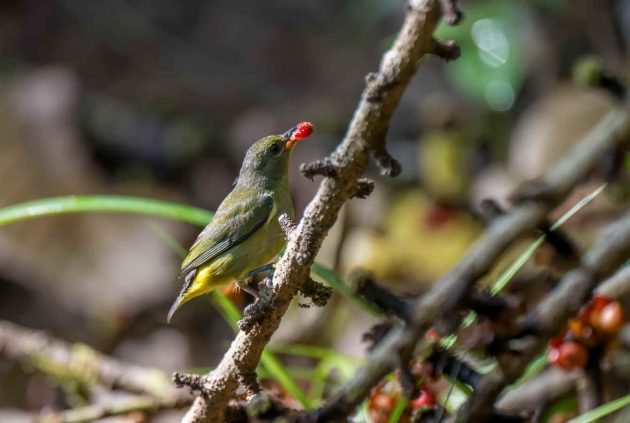
The last endemic flowerpecker I saw is also the most interesting, the Red-keeled Flowerpecker.
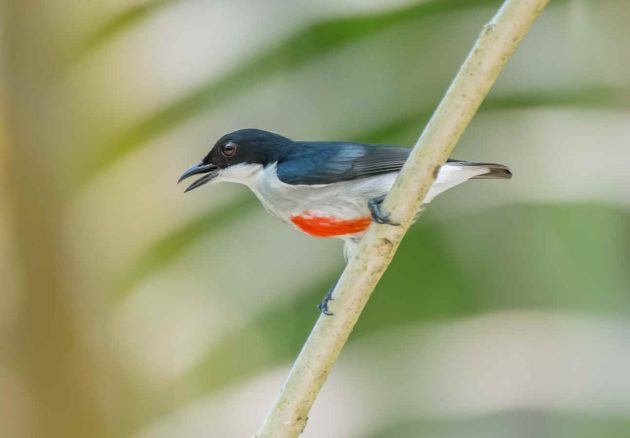
Strangely, the obvious and exciting red keel of the species is not referred to in the rather boring scientific name Dicaeum australe (meaning southern).
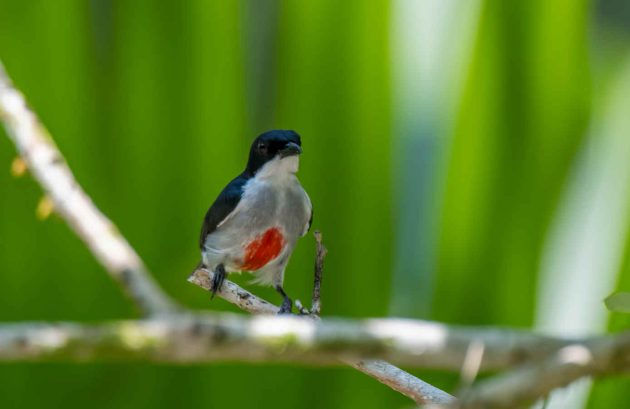
Like the Olive-backed Flowerpecker, both sexes look similar.
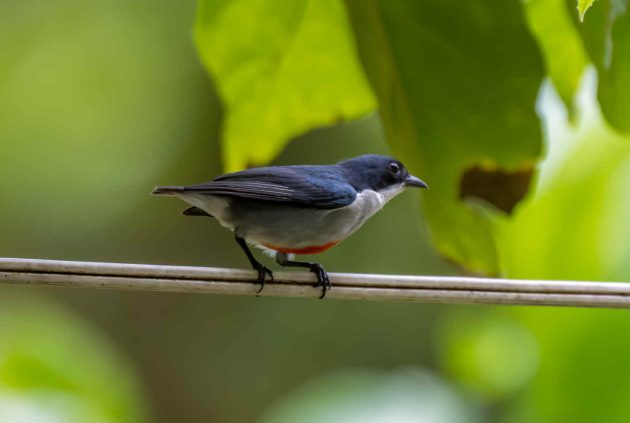
Again, the HBW is puzzled about the lack of research on the species: ” In view of its relative abundance, this flowerpecker’s ecology and biology are surprisingly poorly known.”
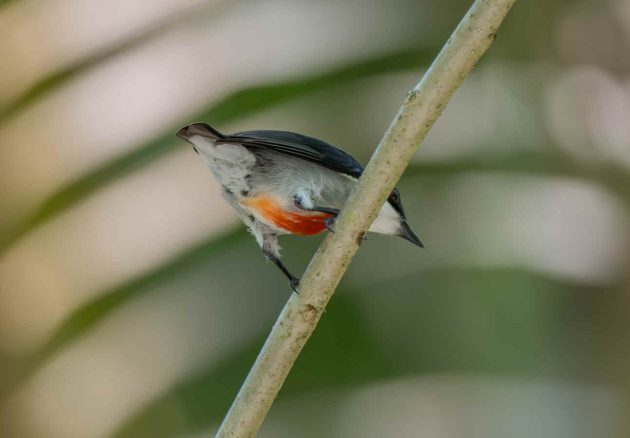
Finally, the Orange-bellied Flowerpecker had the distinction of being the only non-endemic flowerpecker I saw on this trip.
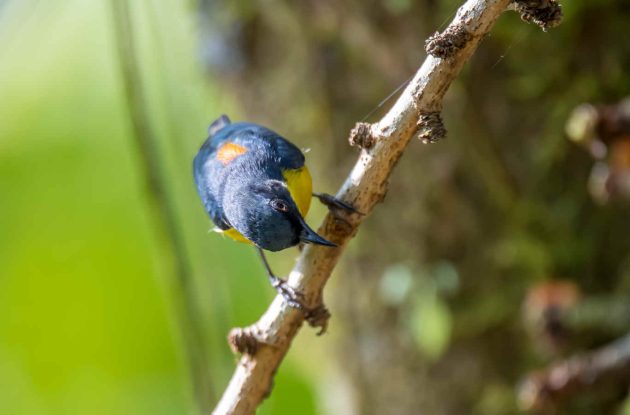
As I accessed Google via a VPN and by chance just happened to go via the Netherlands when searching, I accidentally learned the Dutch name of the bird: Oranjebuikhoningvogel. A bit hard to take a country with such bird names seriously, I am afraid (though most likely the German name, which I did not look up, does not sound any better).
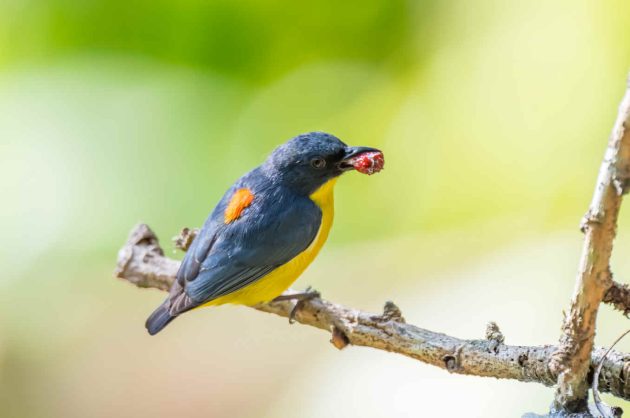
The scientific name Dicaeum trigonostigma makes the bird sound vaguely religious to me, though disappointingly, it only indicates that the bird has a triangular mark.
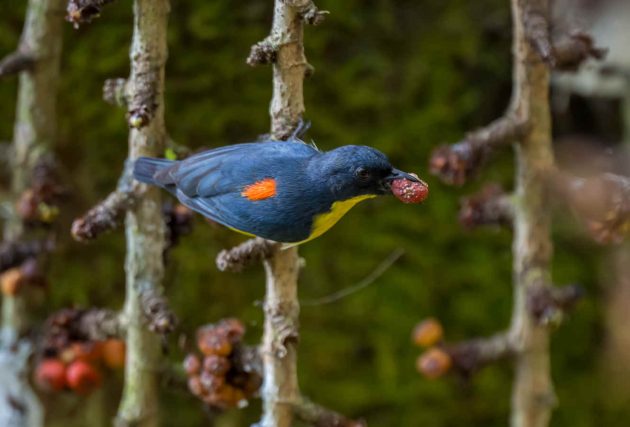
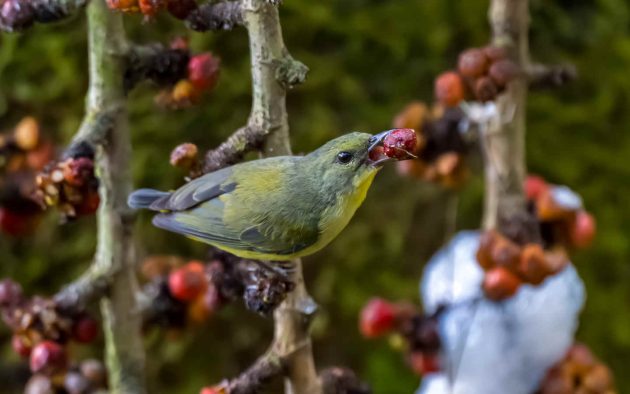
eBird highlights the difference between the male (bright and colorful, difficult to miss) and the female (comparatively dull), a difference that does little to encourage equal treatment between the sexes among birders.
Its widespread distribution all over Southeast Asia partly explains the large number of subspecies recognized: 17.
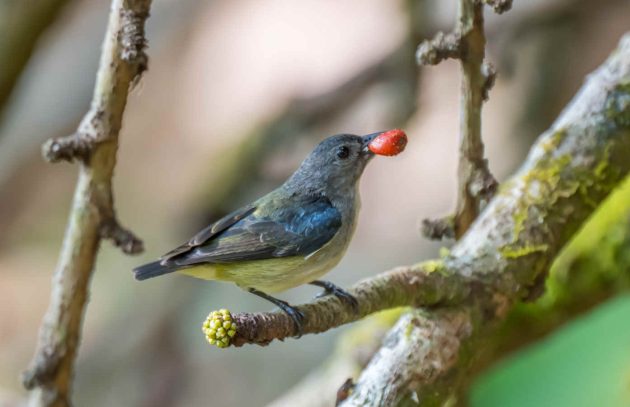
But even with this number of subspecies – and a distribution that must include the campuses of several universities – I could not find a single paper exclusively focusing on the species.

Written by Kai Pflug
Kai has lived in Shanghai for 22 years. He only started birding after moving to China, so he is far more familiar with Chinese birds than the ones back in his native Germany. As a birder, he considers himself strictly average and tries to make up for it with photography, which he shares on a separate website. Alas, most of the photos are pretty average as well. He hopes that few clients of his consulting firm—focused on China’s chemical industry—ever find this blog, as it might raise questions about his professional priorities. Much of his time is spent either editing posts for 10,000 Birds or cleaning the litter boxes of his numerous indoor cats. He occasionally considers writing a piece comparing the two activities.

















 English (US) ·
  French (CA) ·