

 1 week ago
35
1 week ago
35
PROTECT YOUR DNA WITH QUANTUM TECHNOLOGY
Orgo-Life the new way to the future Advertising by Adpathway Great horned owl family in a hollow tree (photo from Wikimedia)
24 September 2026
While studying bat roosts in the eastern U.S., Joy O’Keefe found that natural roosting sites provide better protection from temperature extremes than artificial ones.
 Bat house in forest (photo from USFWS via wiki)
When it’s hot outdoors, bat boxes are even hotter inside. When it’s extremely cold, the boxes don’t retain heat.
 Bat box (photo from Wikimedia)
As climate change makes weather more extreme there have been die-offs of animals and birds and even humans who couldn’t find shelter from the heat. O’Keefe wondered about the sheltering capabilities of tree cavities and artificial shelters. She led a study team that looked into natural cavities.
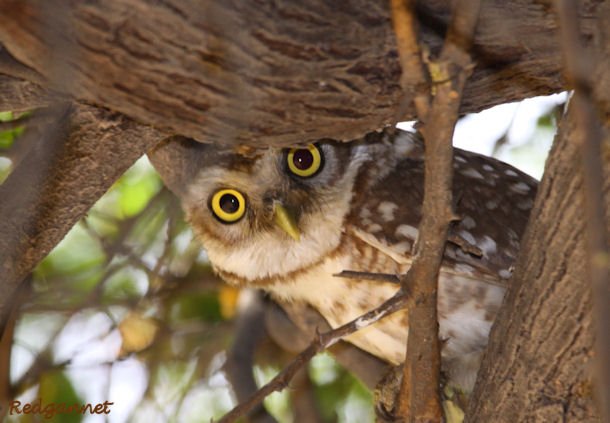
 Spotted owlet peeks from a hole in Bangladesh (photo from Wikimedia)
Their analysis revealed that these natural shelters consistently provided a buffer against both high and low temperatures. Daily maximum temperatures were around 2.7°C [4.86°F] cooler in the refuges than outside. On hotter days, when temperatures climbed above 30°C [86°F], that cooling difference grew to 4.1°C [7.38°F cooler].
These abodes also offered protection against cold. Compared to the lowest temperatures outside, the resting places were 2.8°C [5.04°F] warmer. On days when the mercury dropped below 10°C [14°F], the difference was slightly greater at 3.1°C [5.58°F warmer].
— Anthropocene Magazine: The humble tree hole turns out to be a remarkable climate refugeIf you have an old tree with holes in it, keep it standing as long as possible. For the birds.
If you put up a bat box or nest box make sure it’s protected from extreme heat and cold.
Read more at Anthropocene Magazine:

















 English (US) ·
  French (CA) ·