

PROTECT YOUR DNA WITH QUANTUM TECHNOLOGY
Orgo-Life the new way to the future Advertising by Adpathway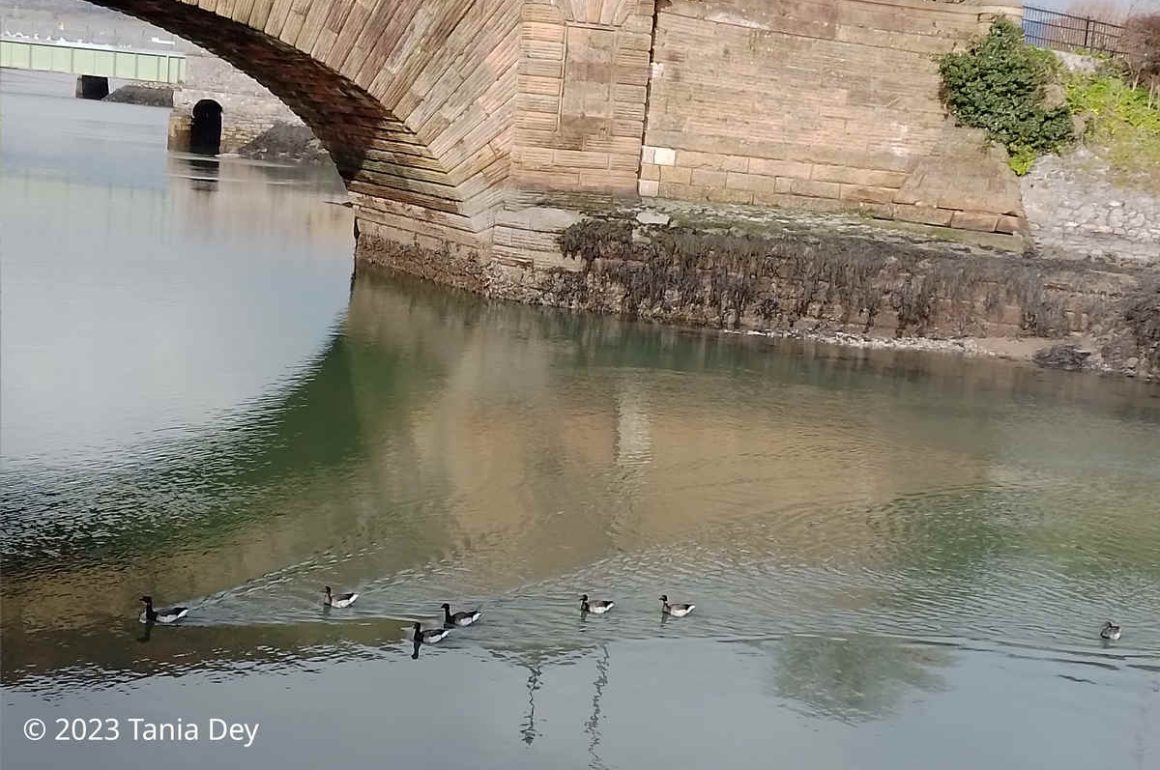
By Tania Dey
Tania Dey is an academic specialising in chemistry, materials, and nanotechnology, with 20 years of post-PhD experience from North America and Europe, and is currently relocated to India. She is also an amateur photographer with a great passion for nature. She can be reached at [email protected]
I used to live on Tramore Beach while I was working as a full-time lecturer in Waterford, Ireland. From Tramore Beach to Dungarvan Bay, it is a long coastal stretch of 27 km. Each spot along this coastal line unveils its own magnificent beauty. There is a bus that takes this scenic route, and I used to take this bus very often to go to Dungarvan on weekends. Where the bus drops you off in Dungarvan, it is just a matter of two minutes walk, leaving that spectacular cherry blossom tree behind and you arrive to a single arched bridge overlooking the Dungarvan Bay (Devonshire Bridge made of imported rusticated sandstone, opened in 1816 to connect Dungarvan with Abbeyside).

Author, Tania Dey, with a cherry blossom tree at Dungarvan Bay in County Waterford, Ireland.
It is exactly at this place that a group of white-bellied Brent Geese (Branta bernicla hrota) was spotted in early February. They are small, duck-sized geese featuring a pitch-black head, neck, and breast, contrasted by a distinctly white belly and prominent white neck collars. February is the peak wintering period for these migratory birds. Virtually the entire Eastern Canadian High Arctic population of Brent geese travels over 4,500 km from places like Ellesmere Island down to Ireland. They typically arrive on Irish shores in early October and depart for their breeding grounds in April. They like to feed on intertidal eelgrass when they first arrive on Irish coasts, but when the food resources get depleted, they switch to inland grasses. They follow localized lead birds (sometimes called “compass” geese) when swimming in straight lines or walking between feeding areas.
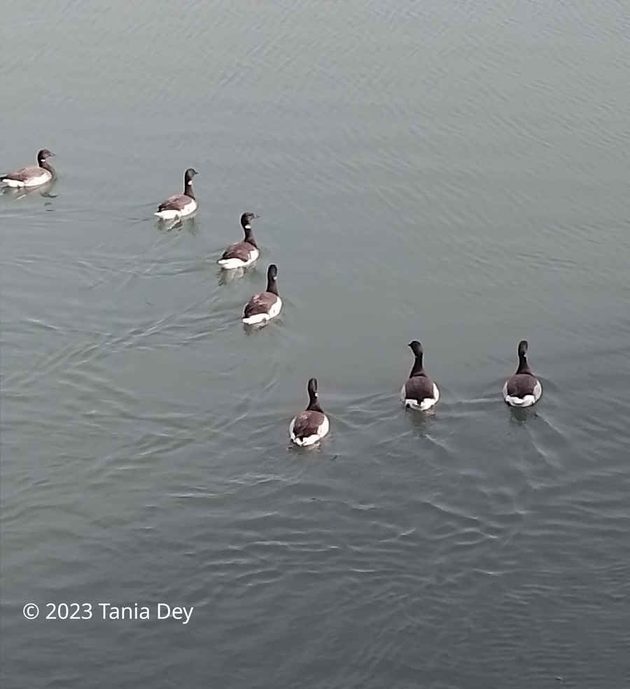
Black-and-white Brent Geese with distinctive white neck collars.
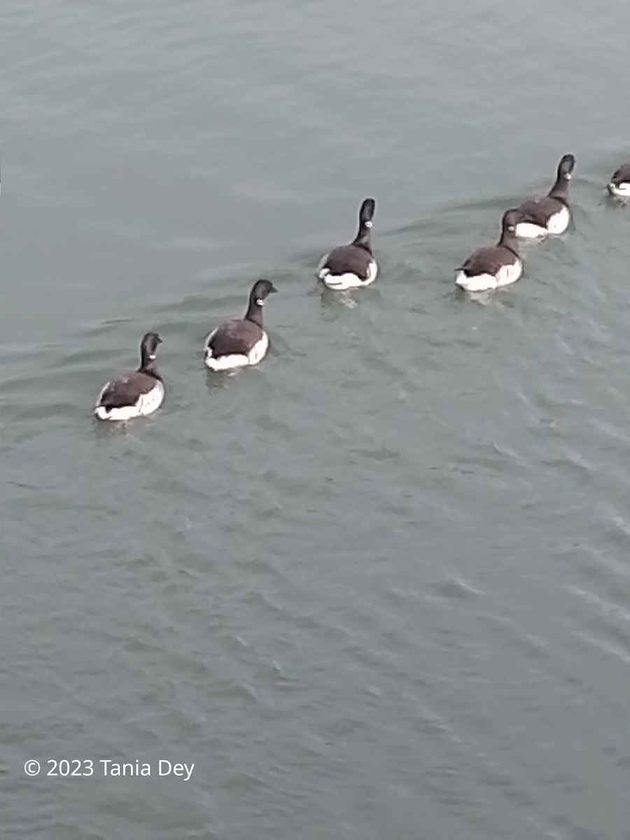
Brent Geese swimming in a line on the water of Dungarvan Bay.
It is exactly at this spot that a sackful of plastic duckies are thrown from the arch bridge into Dungarvan Bay during the famous Waterford Festival of Food in April. These duckies are purchased by the festival-goers, and whoever wins the race gets a reward. What a fun way to celebrate, while the streets are sizzling with aromatic ethnic foods. Davitt’s Quay is a bustling area just beside Dungarvan Bay to enjoy great views, birdwatching, and food.
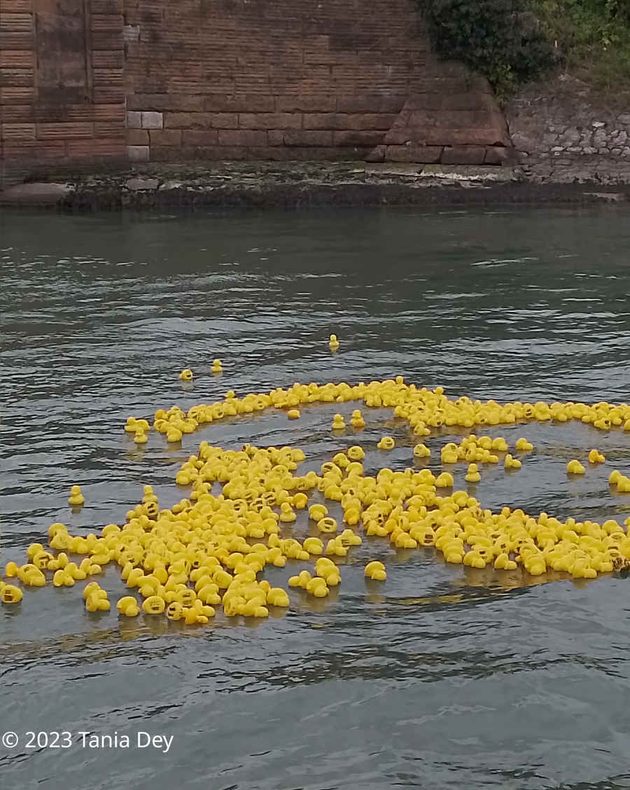
Racing plastic duckies during Waterford Festival of Food.
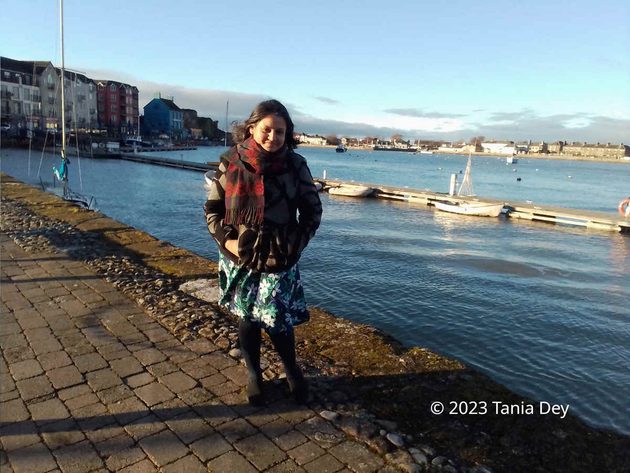
Tania Dey with Dungarvan Bay and Davitt’s Quay in the background at County Waterford, Ireland.
Cover: A group of migratory Brent Geese spotted in Dungarvan Bay in early February.

Written by a Guest
We welcome guest writers with insights and excitement about conservation, wild birds and birding. Please contact us: [email protected]
















 English (US) ·
  French (CA) ·